







Concrete Barriers
HERMEQ supplies concrete barriers and precast concrete blocks for construction sites, roads and secure perimeters. The range includes crash tested temporary vertical concrete barriers (TVCBs), the SVEA temporary motorway crash barrier, concrete jersey barriers and concrete security blocks. Precast concrete is the usual choice where security comes first, because each unit weighs up to 2.5 tonnes and cannot be moved without lifting plant. For building work, the range also includes interlocking concrete blocks for walls, storage bays and counterweights.




Types of concrete barriers
The range divides between barriers built to stand beside moving traffic and barriers built to block access or to build walls and bays.
Concrete jersey barriers
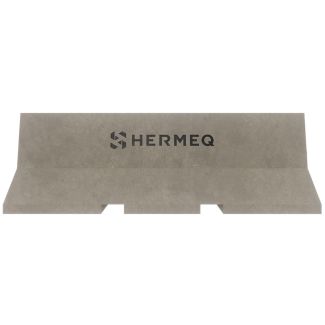
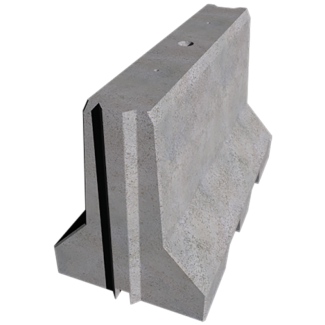
The concrete jersey barriers are the general purpose unit of the range. Each has a sloped profile and an interlocking joint that locks it to the next unit. They suit site perimeters, anti-vehicle protection around yards and compounds, edge protection, and traffic management where a run stays in place for the life of a job. The lightweight concrete jersey barrier is a shorter unit that works alongside the standard barrier in tighter spaces.
Temporary vertical concrete barriers (TVCBs)
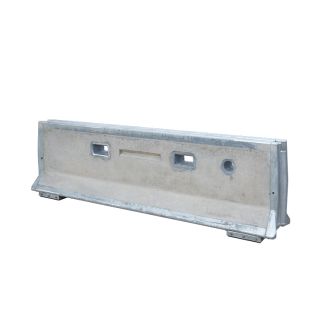
The upright face of temporary vertical concrete barriers (TVCBs) takes less width than a sloped profile. This matters where a footpath or a work zone has to fit beside a running lane. They are crash tested and are used on roads and construction sites to separate vehicles from pedestrians and from the works.
TVCBs with mesh fencing or timber hoarding
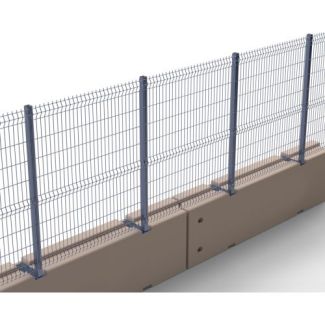
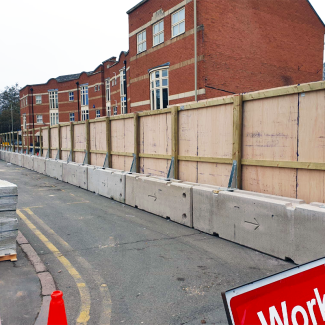
A TVCB topped with fencing gives a single line that segregates traffic at ground level and secures the site above it, to a height of 2.4 metres. The TVCB with mesh fencing keeps sight lines open for drivers and for site security. The TVCB with timber hoarding screens the works and gives a solid face for signage.
SVEA temporary motorway crash barrier
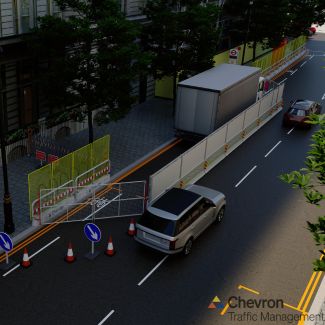
The SVEA temporary motorway crash barrier is a modular concrete system designed by Chevron. It is built for motorway interventions, road upgrades and urban construction zones beside live traffic. Hinge units take the line through changes of direction on angled or constrained sites.
Concrete security blocks
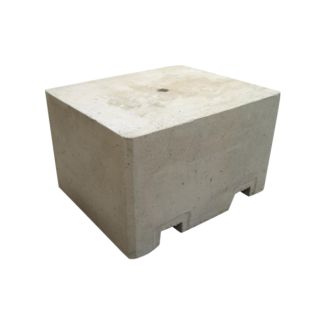
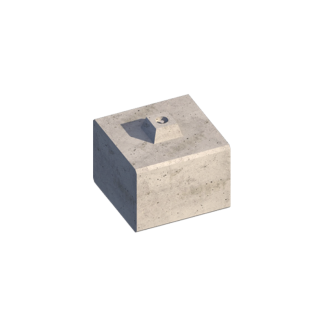
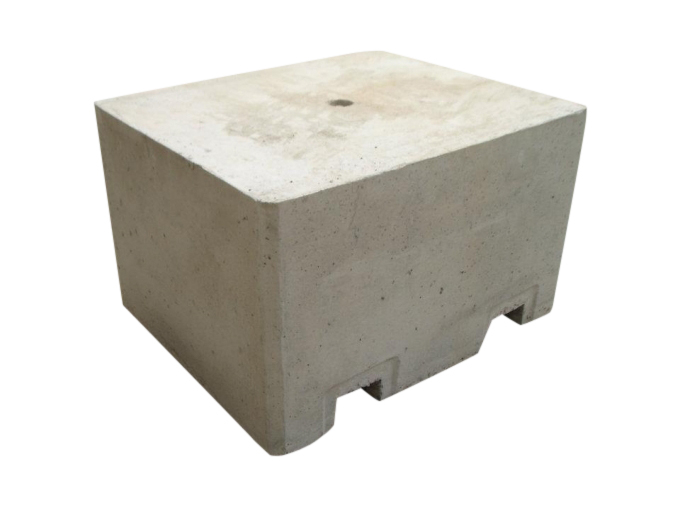
Concrete security blocks are single solid units. They are used to close an entrance, block an unused access to land or a vacant site, and stop vehicles driving onto ground where they are not wanted. Where an entrance has to open and close every day, parking and security barriers are the product for it.
Interlocking concrete blocks
Interlocking concrete blocks stack and lock into each other. They build freestanding walls, storage bays for aggregates and bulk materials, counterweights, support for industrial buildings and coastal erosion defences. Each block has the strength of a permanent block, and a wall built from them can be lifted, moved and rebuilt when the site changes.

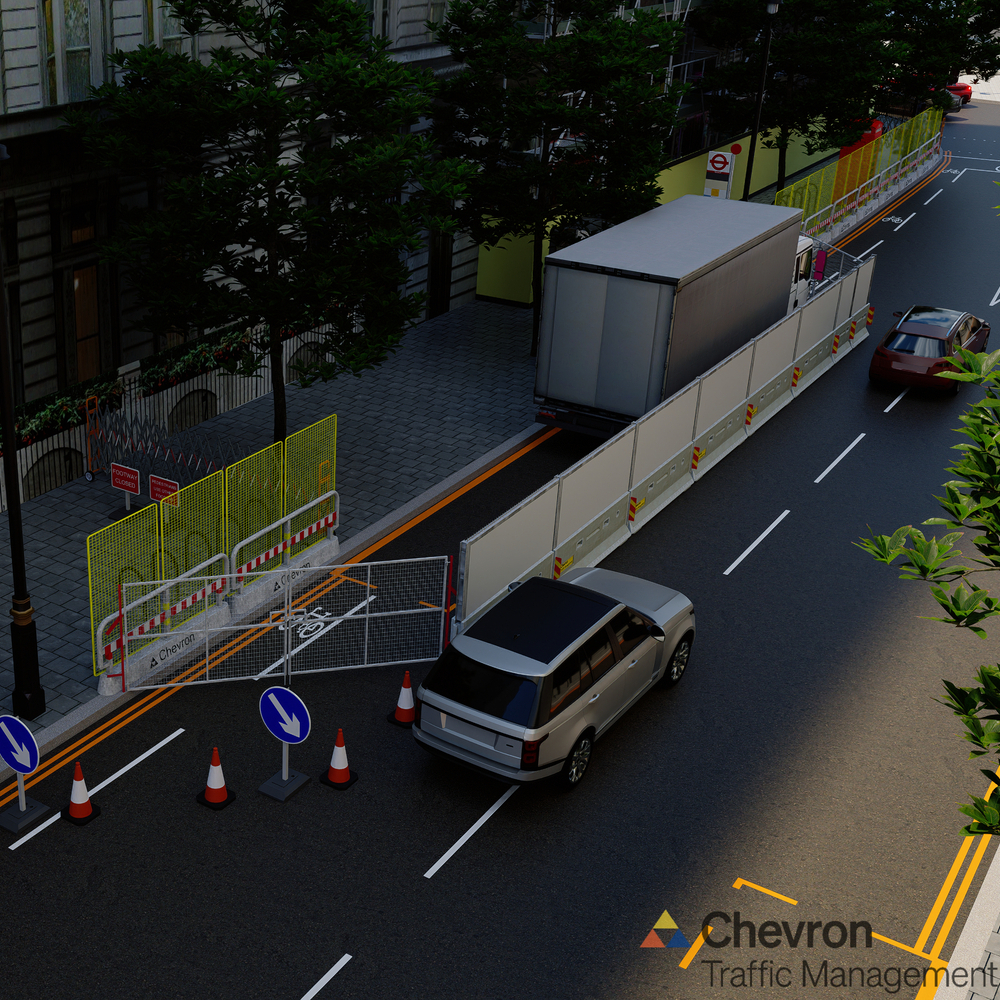
Concrete road barriers and crash barriers for roadworks
A crash tested system is the right product wherever the barrier separates a work zone or a pedestrian route from moving traffic. A mass block is the right product where the job is to stop vehicles getting in.
In the first case, the barrier has to contain and redirect a vehicle in a known way, so the choice is a TVCB or the SVEA system. SVEA is tested to EN 1317 classes T2, T3, N1 and N2. It stands freestanding on asphalt and connects through interlocking end connectors, with no anchors or loose parts. In the second case, jersey barriers and security blocks do the work through their weight, and jersey barriers also lock together at the joints.
At roadworks, the temporary traffic management plan is drawn up under the Department of Transport's Traffic Signs Manual, Chapter 8. The barrier is chosen to the containment that plan sets. Working width matters as much as the class. A tested barrier moves back on impact, so the space behind it has to stay clear of plant, materials and people. Steel road restraint is covered by the Armco crash barriers range. Lighter lane and works delineation is covered by the road and traffic barriers range.
For a secure works entrance off a live road, the construction site pit lane is a pre-designed layout built on SVEA barriers.
Concrete barrier sizes and weights
Every unit in the range needs lifting plant to place it, so weight shapes the planning more than any other dimension.
Weights and lifting
Units weigh from 375 kg for a counterweight block to 2.5 tonnes for a TVCB. Settle the lifting method before ordering. That means a forklift with tines that suit the slots in a jersey barrier, or a lorry-mounted crane or telehandler rated for the heaviest unit at the reach needed. On a site that no lifting plant can reach, water filled road barriers are placed by hand and filled in position.
Lengths and making up a run
Barriers come in fixed lengths, so a run is planned in whole units from one end, with the remainder made up at the other. Each part of the range has a unit for closing the gap. The lightweight jersey barrier finishes a jersey run, and half-length interlocking blocks bond the corners and ends of a wall. A crash tested system performs as tested only over its minimum installed length, which for SVEA runs from 22.8 m to 34.2 m depending on the configuration.
Ground and anchoring
The ground under a barrier line decides how well the line holds its position. Firm, level ground such as asphalt, concrete or compacted hardcore keeps units in line and joints closed. Soft or uneven ground lets units settle and tilt, and it opens the joints between them. On grass or made ground, a base of compacted stone is laid before any barrier goes down.
Popular Categories

Crowd Control and Pedestrian Barriers
View Products >

Traffic Barriers
View Products >

Expandable Barriers
View Products >
Frequently Asked Questions
The sloped interlocking unit is a jersey barrier. The upright crash tested unit is a temporary vertical concrete barrier, shortened to TVCB. Both are also called concrete barrier blocks, concrete dividers and concrete road blocks, and the stacking interlocking blocks are known in the trade as Lego blocks.
The price depends on the type of barrier, the length of the unit and the finish, and painted units cost more than plain grey ones. Each product page shows its price ex VAT.
Jersey barriers and security blocks do not need fixing, because their weight and interlocking joints hold them in position. TVCBs can be supplied with fixing kits where the traffic management plan or the ground calls for a fixed line.
Yes. The interlocking joint on a concrete jersey barrier lets a section be lifted out with a forklift and set back in, so an emergency access route can be opened through a perimeter. For an opening used every day, vehicle and pedestrian gates are made to fix directly to TVCBs, so the gate sits within the barrier line.
Yes. Runs of jersey barriers and walls of interlocking concrete blocks are used to hold back and divert water around sites, yards and roads, and interlocking blocks are also used against coastal erosion. For doorways, gateways and other openings in buildings, the flood prevention barriers range is made for the job.
Concrete suits a line that stays in place for the length of the job and has to resist being moved by vehicles or people. Water filled barriers suit a line that changes often, such as a daily lane closure or an event layout, because they can be emptied, moved and refilled between layouts.