







Edge Protection
HERMEQ supplies a growing range of edge protection and fall prevention systems that guard against one of the most serious risks on a construction site: a fall from an open edge. Each system puts a physical barrier between the people working at height and the drop, so the risk is controlled at the edge itself and does not depend on personal equipment. Mesh edge protection barriers on posts make up most runs. Sheet pile clamps, stair guard safety posts, SG4 guardrail feet, aluminium staging with handrails and pontoon barriers cover the excavations, stairwells, walkways and waterside edges where a standard run does not fit.






Types of edge protection
The edge being protected decides the type: slab and frame edges take mesh barriers on posts, shored excavations take clamps on the sheet piles, stairwells take stair guard posts, and walkways, pontoons and structures with work going on beneath each have a system of their own.
Mesh edge protection barriers
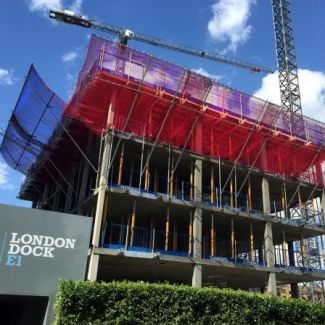
Our mesh edge protection barriers are the main system for the open edges of a building under construction: slab edges, floor perimeters, frame edges and flat roofs during the build. Galvanised mesh panels drop into posts along the edge to form a continuous guarded run, which can be lifted and moved up the building floor by floor as the structure rises.
Edge protection posts and sliders
Edge protection posts carry the panels and set the line of the run, and they come in two heights. Edge protection sliders fit to the post so the barrier height can be adjusted on it, which allows a run to be set level along an edge where the fixing points sit at different heights.
Sheet pile clamps for excavation edge protection
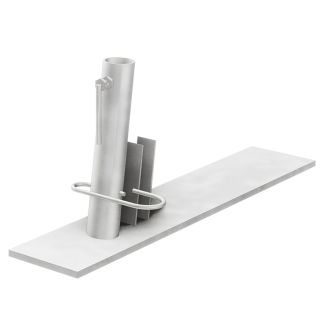
Sheet pile clamps take edge protection into groundworks and civils, where the edge is the top of a shored excavation. The clamp fixes to sheet piles, trench sheets or a narrow concrete slab and takes a post, so the same mesh barriers used on the building can guard a trench, a pit or a basement dig. Choose them where the sheets stand proud of the ground and there is no slab to fix into.
Stair guard safety posts
Stair guard safety posts protect internal stairwells and open stair voids during renovations and new builds. The posts stand on a base plate and take scaffold boards in slots to complete the guard. Every post is universal and works at a corner or in a straight run, so one stock of posts covers any stair layout on housing and fit-out work.
SG4 guardrail feet
SG4 guardrail feet, also known as the Shorguard Shoe, belong to the SG4 guardrail system, a fully galvanised temporary rail. The system allows work to continue underneath it without any part of the guardrail being taken down. It is the right system where trades below need clear access while the edge above stays protected.
Handrail and board walkway staging
Aluminium staging with handrails is a guarded walkway: a staging board with aluminium handrails along one or both sides, used to span between supports on scaffolding and other work at height. The double sided version is the one to choose where both sides of the walkway are open.
Pontoon barriers
Pontoon barriers are built for floating pontoons on marine and inland waterway works, where the open edge is above water. Their powder coat resists corrosion in wet conditions, and they suit both temporary and semi-permanent pontoon installations.
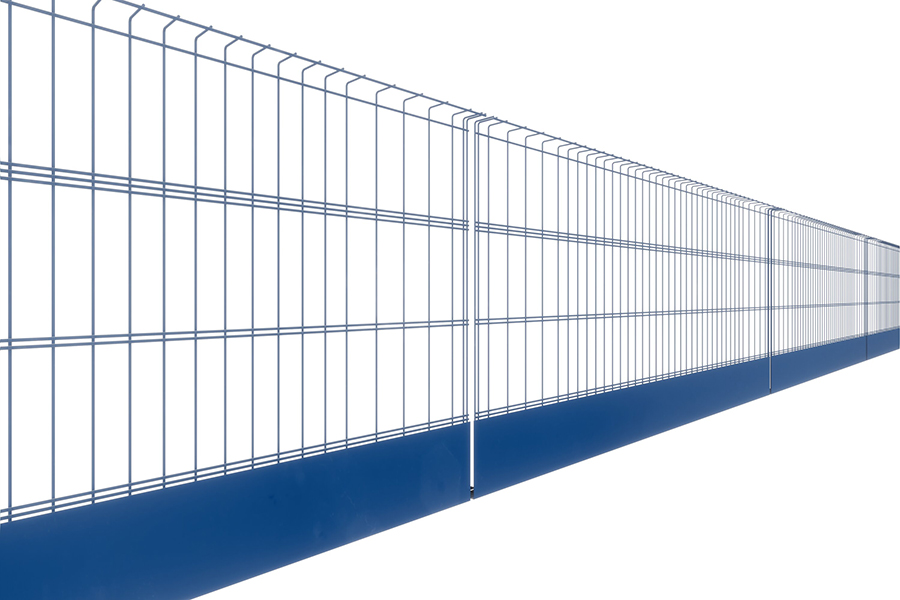
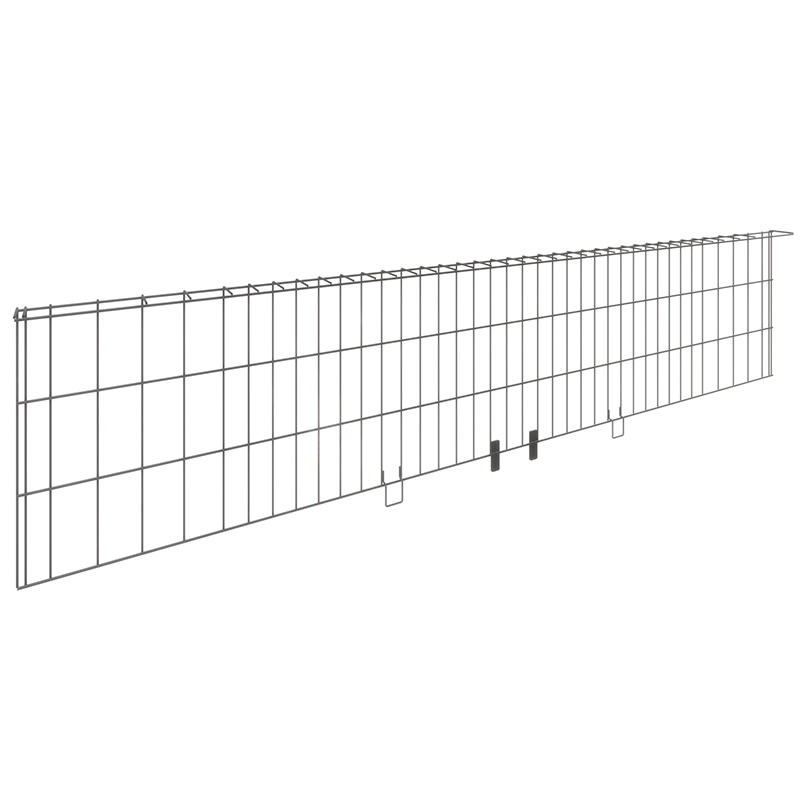
Edge protection height: 1.1m standard or raised to 1.7m
A standard run of mesh barriers stands 1.1m high, and that is the height for most slab, frame and roof edges where people work at floor level behind the barrier. Where a higher edge is called for, the height enhancement barrier raises the run to 1.7m without the standard panels being replaced. A raised run is the right choice on frame edges above footpaths, roads or other public areas, on any edge where the PSCS or the main contractor's safety and health plan specifies a taller guard, and wherever people will stand on trestles, hop-ups or stacked materials close to the barrier. A working surface raised beside the edge lowers the effective height of the guard by the same amount, so a run that is high enough at floor level may fall short once a platform goes in next to it.
Planning a temporary edge protection run
Fixing to the edge you are protecting
The edge decides the fixing, and a survey before ordering establishes the thickness and condition of the slab, whether a steel frame or sheet piles are available to clamp to, and whether the client allows drilling into finished surfaces. On sheet piles and trench sheets, the edge protection sheet pile clamp fixes each post to the sheet. Posts are counted from the length of the run and the panel length, with one added at each corner and change of direction. Where an edge cannot take a fixing at all, plan the work there around safety nets or other collective fall arrest first, and personal fall protection from the height safety PPE range only where those cannot be used.
Corners, openings and short runs
The mesh barrier comes in a full length and a half length, and the shorter panel closes the gap at the end of a run or between two corners where a full panel will not fit. Any opening in the run, such as a landing point for materials from a crane or telehandler, is agreed in advance with the PSCS and closed again as soon as the load is in, because a gap between panels is an unguarded edge however short it is.
Protecting people below the edge
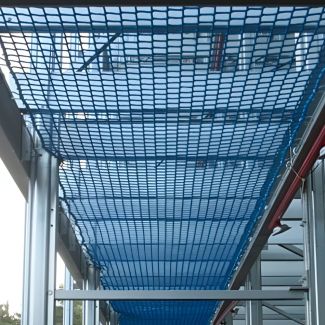
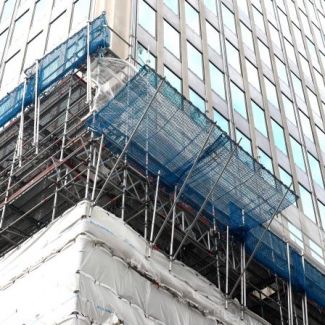
Barriers keep people and loose items on the slab, but on multi-storey frames and demolition work the area below also needs protection from anything that falls past the edge. Catchfans fix to the wall, the slab or the scaffold and stop falling items before they reach public areas or lower work zones, while the mini catchfan for scaffolding has the guardrail clip built into its body. A fenced and signed exclusion zone at ground level sits beneath any edge where work is going on above.
Storage and transport between jobs
Loose posts, clamps and sliders are the parts of an edge protection kit that go missing between jobs. Post stillages keep them together on the lorry and stack on top of one another in the yard, and the scaffolding storage range holds the rest of the kit.
Popular Categories

Scaffolding Parts
View Products >

Scaffold Ladders & Stairways
View Products >

Scaffolding Stillages
View Products >
Frequently Asked Questions
Edge protection is a temporary barrier fixed along an open edge, such as a slab edge, roof perimeter, stairwell or excavation, that stops a person falling before the fall can happen. It is collective protection: it guards everyone working near the edge at once, with no harness or anchor point needed for each person.
Where a fall from an edge could cause injury, the Safety, Health and Welfare at Work (General Application) Regulations 2007 require work at height to be planned, with collective measures such as guardrails put in place before personal protection is relied on. On construction projects, the Safety, Health and Welfare at Work (Construction) Regulations 2013 add two roles: the PSDP identifies edge risks at design stage and records them in the preliminary safety and health plan, and the PSCS coordinates how edges are protected on site as the work progresses. The Health and Safety Authority publishes guidance on work at height for duty holders.
No. The mesh barrier panels are made with a toe board as part of the panel, so a run of barriers is complete without loose boards.
The barriers are a standard Z-design, which makes them compatible and fully interchangeable with similar systems. New panels can therefore be added to a fleet already on site from another supplier, provided the existing posts and panels are the same Z-design pattern.
Yes, wherever a barrier can be fitted. Collective protection that prevents a fall comes before personal equipment that arrests one. Harnesses and lanyards are for work where a barrier is not practicable, and HERMEQ supplies them in its height safety PPE range.
Yes. The mesh barriers come in several powder-coated colours, and they can also be supplied in a company's own colours and branding.