







Groundworks Lifting Accessories
HERMEQ supplies groundworks lifting accessories for moving heavy and awkward materials around site with the plant already there. Mechanical well ring lifters and materials lifting cages move concrete rings and loose materials as single, controlled lifts. Bulk bag and sand bag carriers fit a forklift or telehandler, so full and part filled bags are lifted and placed by machine.
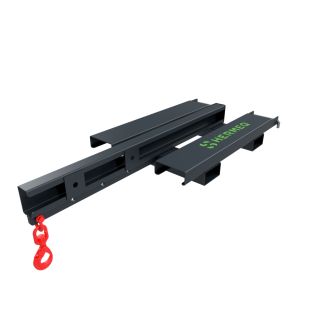
Low profile jib attachments, in fixed and extending versions, give the same machines a lifting hook for awkward loads where working space is tight, with a choice of loading positions along the jib. Kerb stone handles and lifters, a magnetic lifter for steel road plates, a fork mounted magnet sweeper and trench access equipment complete the range.


Groundworks lifting accessories for each job
Each accessory in this part of the groundworks and shoring equipment range is matched to one kind of load, so the choice starts from what the gang is moving: kerbs, bags, rings, loose materials or steel.
Kerb stone handles and kerb lifters
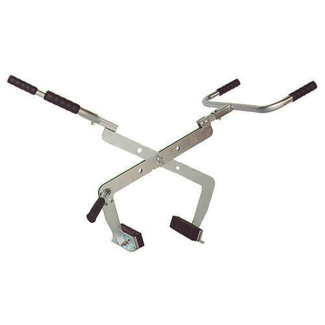
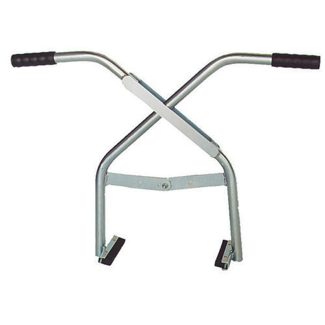
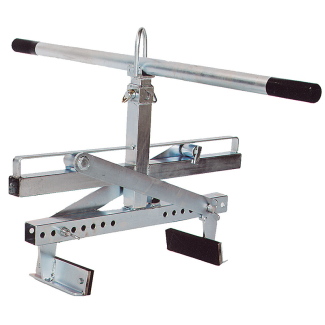
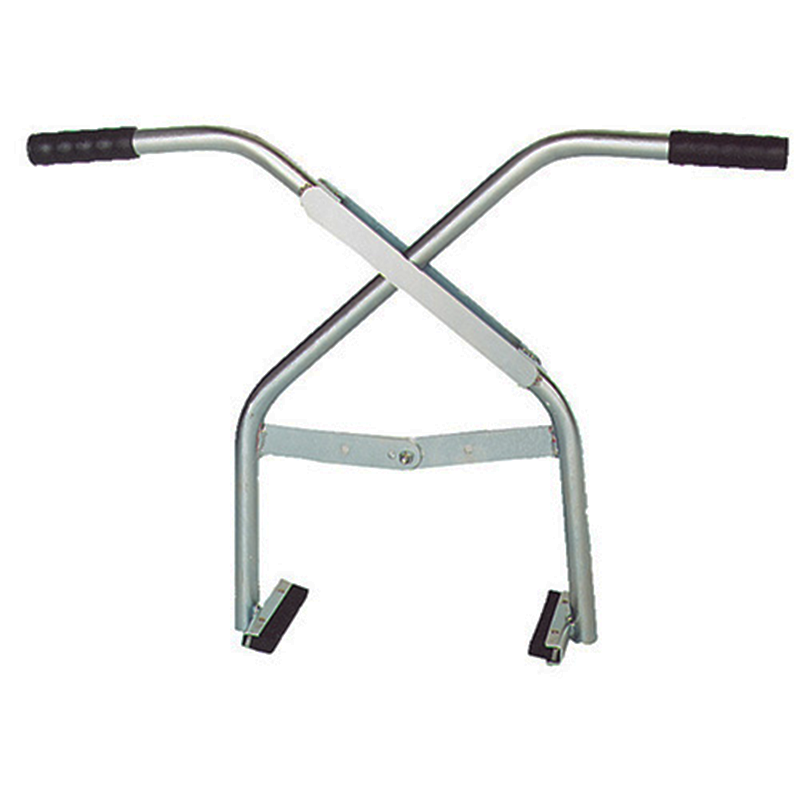
Four tools take kerb laying from hand carrying to lifting from a crane hoist, with rated loads running from 150 kg to 500 kg across them. The manual kerb stone handle and the multipurpose handle are the lighter end, for standard concrete kerbs moved and set by hand along a footpath, road edge or car park, with the multipurpose handle rated for heavier units. The universal kerb stone lifter takes steps, edging angles and other bulky precast pieces as well as kerbs, which makes it the choice where one tool has to handle the whole order. For the heaviest kerbs, the multipurpose kerb stone handle with lift ring hangs from a crane hoist, so the decision comes down to the weight of the kerb and the machine on site.
Jib attachments for forklifts and telehandlers
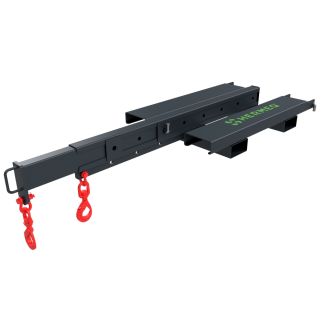
A jib attachment gives a forklift or telehandler a hook, so loads that will not sit on the forks, such as drainage pipes, precast chambers and lintels, can be slung and lowered into place. The low profile jib attachment and the low profile extending jib are built for awkward loads in tight working space.
Bulk bag and sand bag carriers
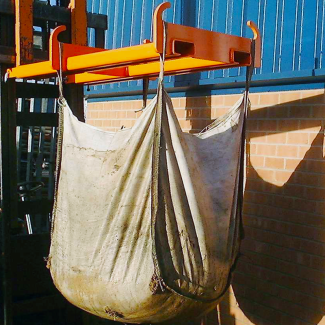
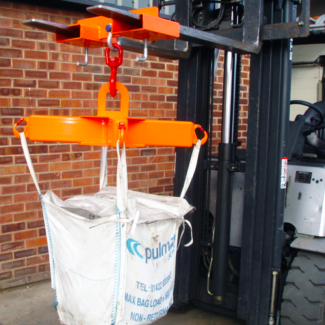
The bulk bag carrier and the sand bag carrier fit the forks of a forklift or telehandler and lift bags by their loops, so aggregate, sand and spoil are carried across site and set down at the point of work. Both are available in ratings up to 2000 kg.
Materials lifting cages
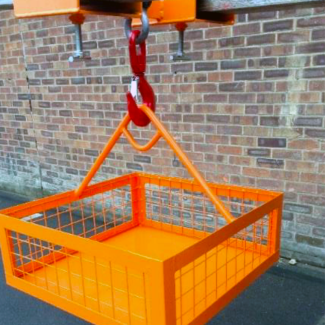
A materials lifting cage holds loose items that cannot be slung safely, such as blocks, fittings, hand tools and small plant, so they go up or down as one contained load. Wet concrete belongs in concrete pouring skips, which are made to carry and discharge it.
Well ring lifters
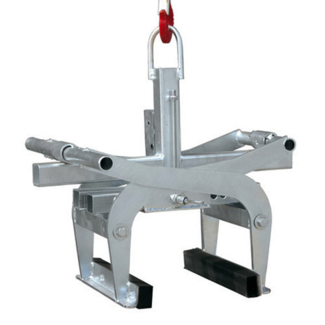
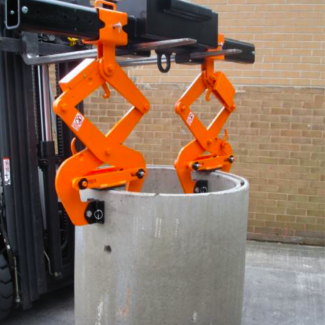
The mechanical well ring lifter grips concrete well rings so they are lifted from the stack, lowered into the excavation and set on the ring below. It suits drainage, soakaway and chamber work where rings are stacked one on another and each has to land level on its seat.
Magnetic lifters and fork mounted magnets
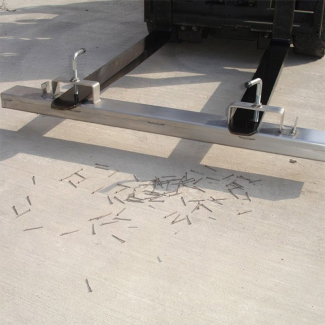
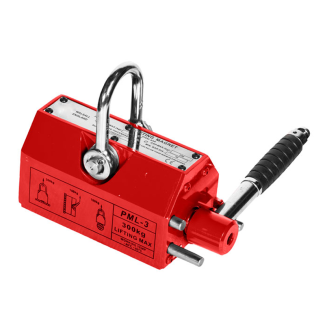
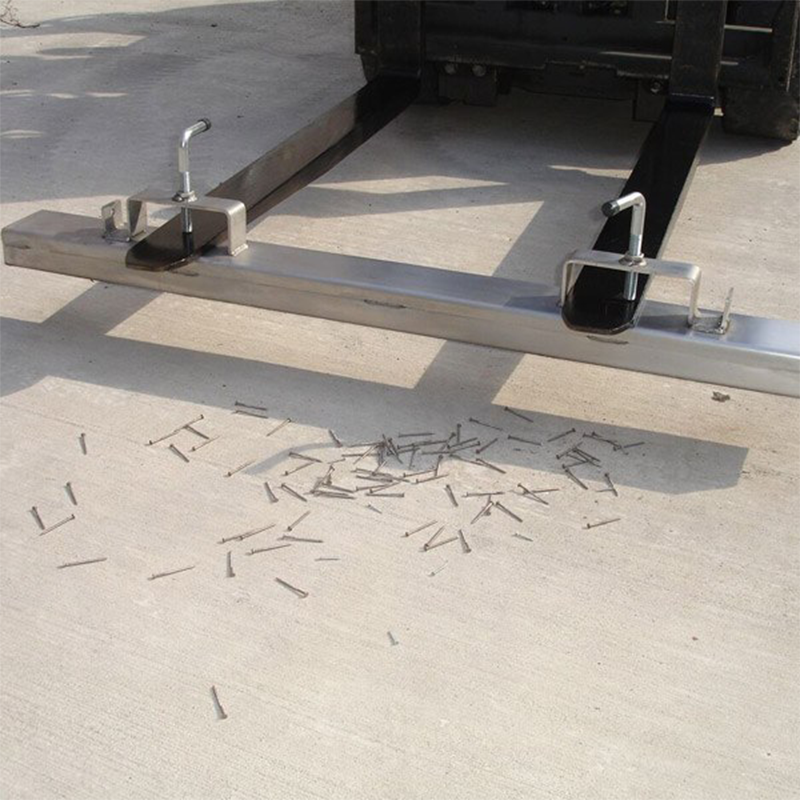
The two magnets in the range do different jobs and are easily confused. The fork mounted magnet sweeper is used on the forks of a forklift and driven over haul roads, compounds and car parks to pick up nails, screws, banding and steel offcuts before they puncture tyres; it is a sweeper and does not lift loads. The permanent magnetic lifter for road plates holds steel with a permanent magnet that needs no power supply, and it conforms to EN 13155. It is used to lift steel road plates into place over an open excavation and back off again.
Fork mounted attachments or hook mounted lifters
The machine already on site is the best starting point, because the range divides into accessories that fit the forks and lifters that hang from a hook. Fork mounted attachments suit sites run with a forklift or telehandler: the jibs for awkward loads at reach or height, the bulk bag and sand bag carriers for bagged materials, and the magnet sweeper for keeping running surfaces clear of steel debris.
Hook mounted lifters suit a crane, or an excavator set up for lifting duties. The multipurpose kerb stone handle with lift ring sets heavy kerbs in line from a crane hoist, and the permanent magnetic lifter places road plates from a hook. Where a site has a telehandler and no crane, a jib attachment can carry a hook mounted lifter as well, provided the weight of the lifter and the load together stays inside the jib's rating at the working position.
Capacity, reach and fit on the machine
Once the type and the machine are settled, two checks decide the exact product: the rating needed for the load and, for a fork mounted attachment, the fit to the forks.
Rated capacity and reach
On a jib attachment the rated load falls as the hook moves out along the jib. Choose the capacity needed at the reach where the load will actually hang, not the headline figure, which across the jib range runs up to 4000 kg at the closest position. For kerb lifters, bag carriers and magnetic lifters, size from the heaviest single item on the job: weigh the heaviest kerb or step in the order, and allow for bags of aggregate or sand that have taken on rain.
Fork pockets and the host machine
A fork mounted attachment has to suit the forks it goes on. Where the product page lists the largest fork section and the fork spread the pockets take, those figures are checked against the forklift or telehandler before ordering, since worn, tapered or oversized forks may sit loose or not enter at all.
Trench access and confined space equipment
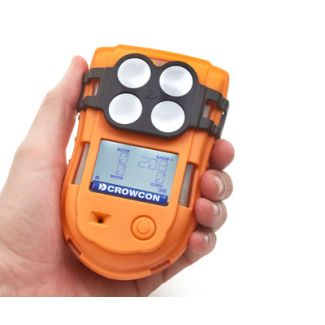
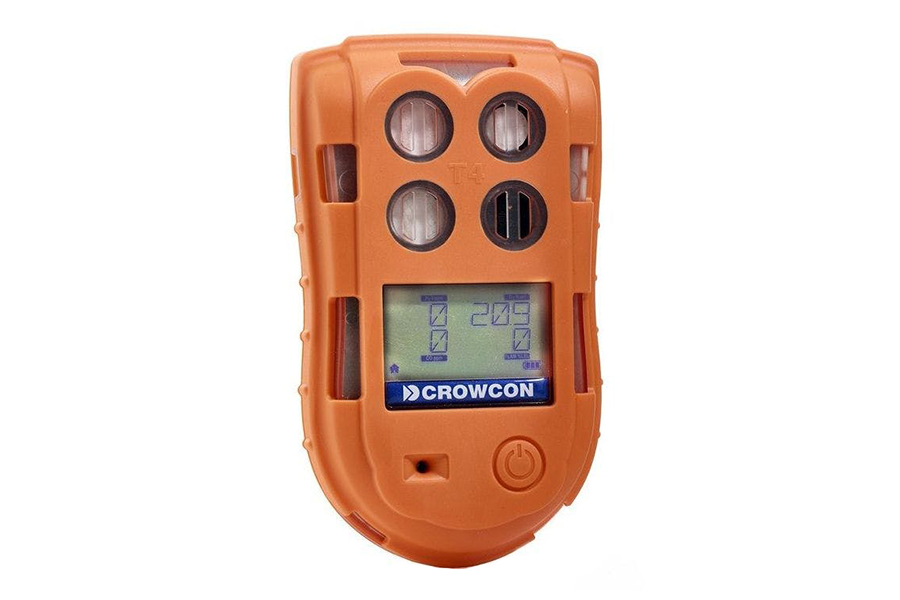
Three products cover getting people into and out of excavations, chosen by whether the crew walks in or is lowered on a line. Entry into a chamber or manhole is planned under the Safety, Health and Welfare at Work (Confined Spaces) Regulations 2001, and the air is tested with a portable multi gas detector before anyone goes in.
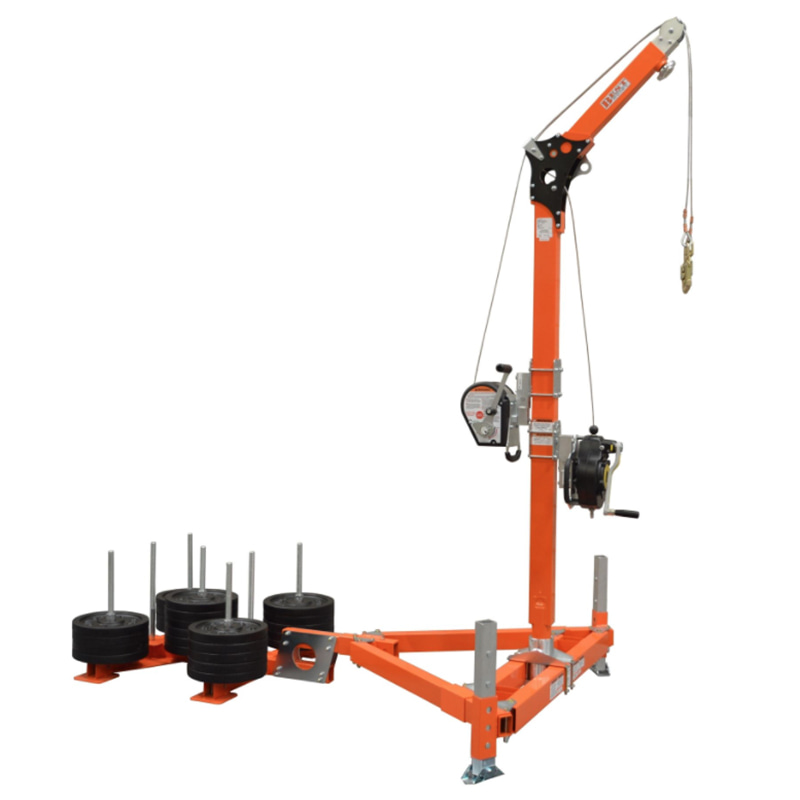
Counterbalance davit system
The counterbalance davit system is an anchor for raising and lowering people into confined spaces, held by counterbalance so it needs no permanent base plate. It is the choice where one crew works several chambers or manholes on a job and the davit moves between entry points. It is certified to EN 795 Class B, EN 360 and EN 1496.
Two person access tripod
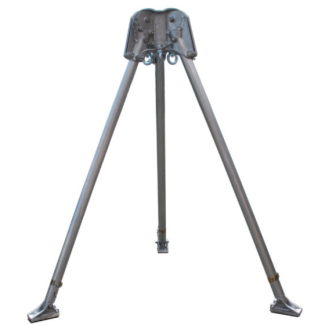
The two person access tripod stands over a single opening, such as a manhole, chamber or narrow trench, and carries the line for entry, retrieval and rescue. It suits a fixed entry point where there is no need to move between openings.
Temporary aluminium stairway
The temporary aluminium stairway gives walk-in access to excavations and changes of level, and it is light to move and quick to erect. It is used where people go in and out through the shift, such as foundation digs and trenches supported with trench sheets.
Popular Categories

Road Forms
View Products >

Trench Covers & Road Plates
View Products >

Bog Mats
View Products >
Frequently Asked Questions
Under the Safety, Health and Welfare at Work (General Application) Regulations 2007, lifting accessories, and equipment that lifts people such as a rescue tripod or davit, are thoroughly examined by a competent person at least every six months, and other lifting equipment at least every twelve months, with a report kept of each examination. An accessory is also examined after any damage or event that could affect its safety. Between examinations, the person using it checks it before each lift.
Yes. An attachment adds its own weight and moves the load centre further from the mast or boom, so the machine's rated capacity with it fitted is lower than on bare forks. The forklift or telehandler manufacturer gives the derated capacity or load chart for the attachment, and the lower of that figure and the attachment's own rating sets the maximum load.
Yes. The bulk bag carrier lifts full and part filled bulk bags and sand bags alike, which suits a site handling both.
No. A permanent magnetic lifter lifts only magnetic material such as steel, so aluminium and composite plates are lifted by their own lifting points with chains or slings. Steel road plates are the plates a magnetic lifter is made for.
The low profile jib attachment has a set length with several hook positions along it, each with its own rated load. The low profile extending jib extends to give a choice of ten loading positions, so it reaches loads further from the machine. Choose the extending version where loads have to be placed at varying distances, such as across a trench or behind an obstruction.