







Spill Pallets and IBC Bunds
Spill pallets, also called bunded pallets, hold drums and IBCs of oils, acids, alkalis and non-hazardous chemicals over a sump, so a leak is caught before it reaches the floor, the ground or the nearest drain. The range covers single, double and multi-drum pallets for 205 litre drums in several configurations, made in polyethylene or galvanised steel. Open pallets suit indoor stores and covered units suit the yard. Single and double IBC bunds take 1000 litre intermediate bulk containers, and enclosed cabinets hold larger mixed stores of IBCs and drums.
-
-
-
-

-

-
-

-
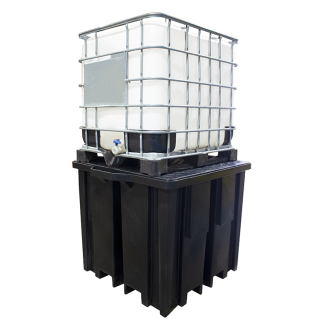 Recycled Polyethylene IBC Spill Pallet (with 4 way Forklift access)€964.55 €1,186.40
Quick 5 Day Delivery
-

-
-

-
-

-
-
-
-
-
-
-
-
-
-
-
-
Drum spill pallets for one to eight drums
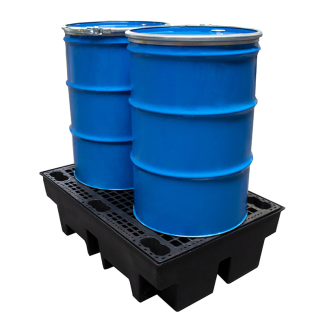
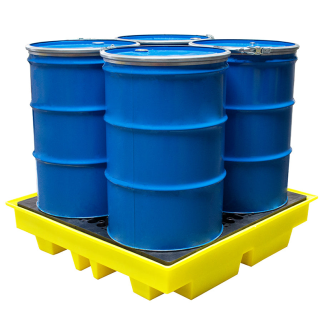
A drum spill pallet stands 205 litre drums on a grid above a sump, and the range runs from a single drum to eight on one pallet. The right format depends on how many drums the store holds and how they are loaded and used.
Single and double drum pallets
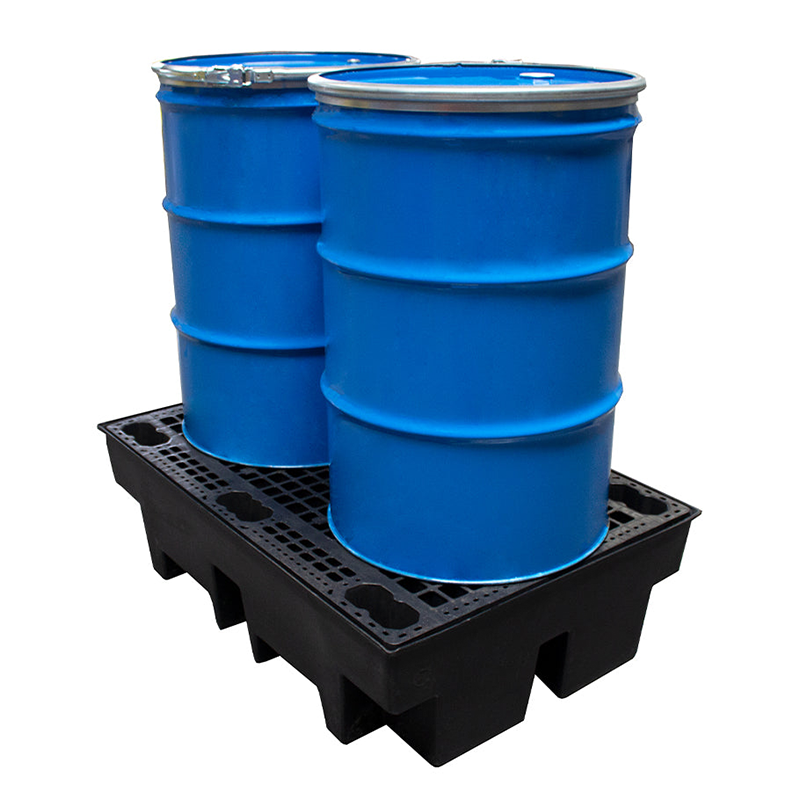
A single drum pallet suits a workshop, plant maintenance point or compound where one drum of oil or coolant is kept in use. It is also the quarantine point for a drum that is leaking or damaged, which can stand on its own sump until its contents are transferred. A double pallet takes the drum in use and a full spare beside it, and the spill pallets for 205 litre drums come in several versions for one or two drums.
Three, four and eight drum pallets
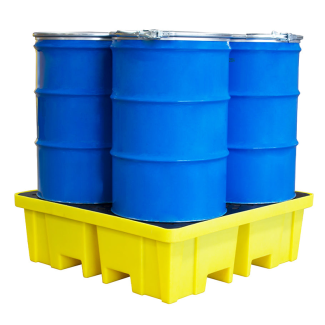
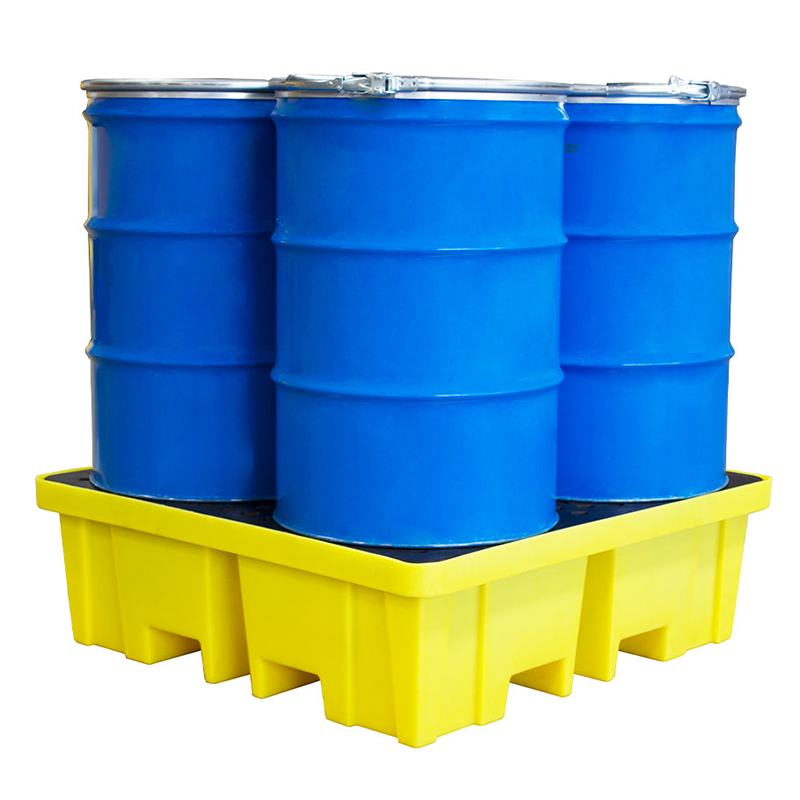
Multi-drum pallets suit a depot or site store where several drums of the same or compatible products are kept in one bunded row. Four drums is the common size for a site drum store. The eight drum version of the drum spill pallets puts a whole store on a single sump, which leaves fewer pallets to inspect.
Low profile drum spill pallets
A low profile drum spill pallet sits as close to the ground as its sump allows, so drums can be rolled on or set down from a drum trolley without a forklift. It is the format to choose where drums are loaded and unloaded by hand.
Extra capacity sumps
An extra capacity drum spill pallet has a larger sump than a standard pallet for the same number of drums. It is the choice for a busy drum store, where drums are opened, worked from and changed over more often than in a store of sealed stock.

IBC bunds and IBC spill pallets
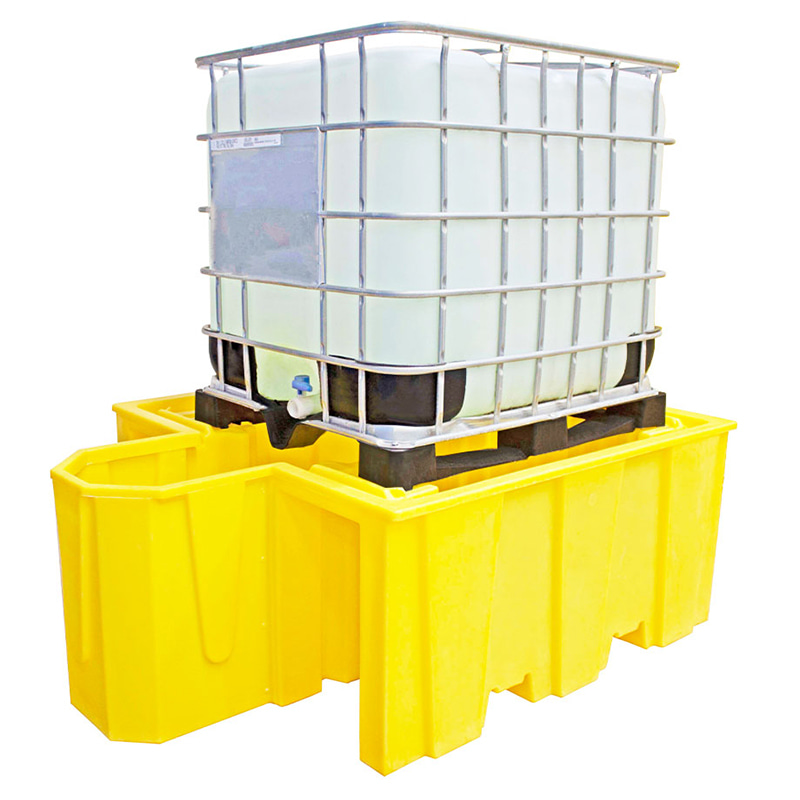
An IBC bund works on the same principle as a drum pallet, sized for a 1000 litre intermediate bulk container, and holds one IBC or two side by side. The choice between them follows how many products are kept in bulk and whether a full spare stands beside the one in use.
Single IBC spill pallets
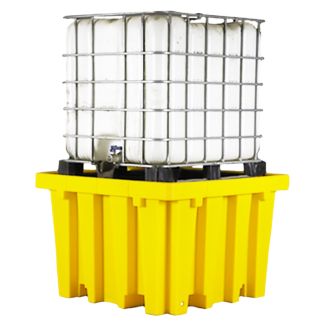
A single bund is right where one product is drawn from one IBC, such as a release agent on a precast yard, AdBlue at a plant depot or a cleaning chemical at a wash bay. The polyethylene single IBC spill pallets come with or without a grid, so the IBC can stand on a deck or sit directly in the sump. The tall single IBC spill pallet with grid has a removable grid that holds the IBC clear of the sump floor, and 4-way forklift entry.
Double IBC bunds
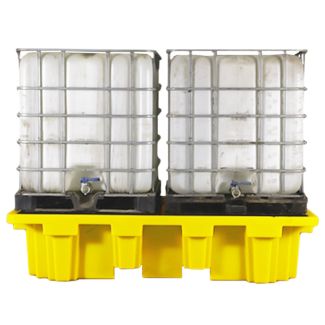
A double bund takes two IBCs side by side on one sump. It suits a store that keeps a full IBC next to the one in use, so the changeover happens without moving any containment, and a store that holds two compatible products in bulk. The polyethylene double IBC bunds come with or without a grid. The double IBC spill containment pallet has a removable grid across both bays, and either format leaves one sump to check in place of two.
Covered spill pallets for outdoor storage
Rain that falls into an open sump takes up the capacity a spill needs, and in a wet spell an uncovered pallet can fill with water before any product has leaked.
Open pallets indoors and under a canopy
An open pallet is right in a warehouse, workshop, plant shed or roofed bay where no rain reaches the sump. Drums and IBCs stay easy to load, reach and inspect, and the open drum pallets and IBC bunds are the simplest format for any store with a roof over it.
Covered IBC bunds with raincovers
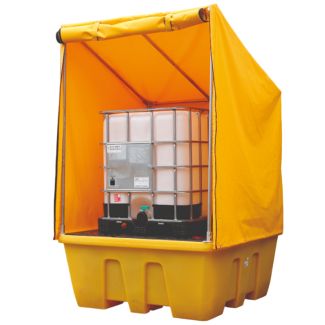
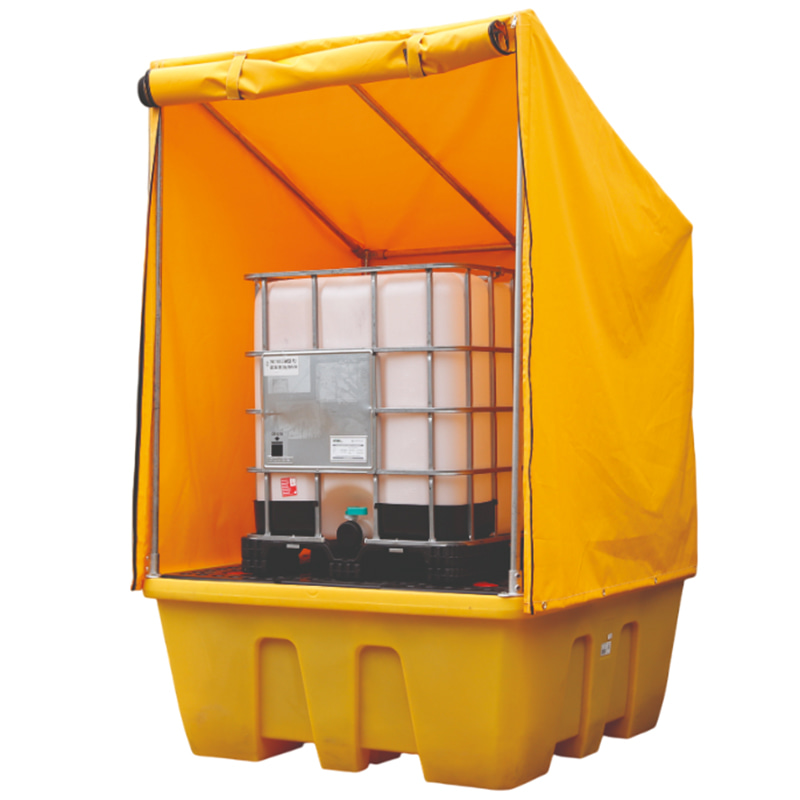
The covered single IBC bund has a flexible raincover with a front access flap, so the tap and dispensing platform can be reached without taking the cover off. The covered double IBC bund has a rainproof cover over both IBCs and an overflow tray. Both are made from weatherproof recycled polyethylene and are the choice for IBCs kept outside and drawn from regularly.
Hard covered drum storage
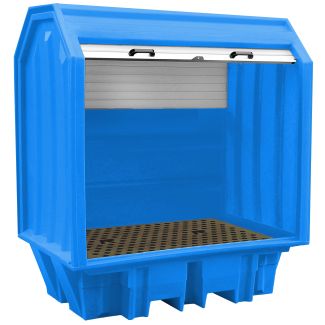
Hard covered drum storage closes a rigid polyethylene cover over a bunded base. It is the choice for drums kept outside for long periods, where a rigid cover keeps rain, dirt and site debris off the drums and out of the sump.
IBC and drum storage cabinets
Once a store runs to several IBCs and many drums, IBC and drum storage cabinets bring them into one enclosed store, in sizes holding up to 24 IBCs and 96 drums. A cabinet is the next step when a yard of separate covered pallets has become harder to inspect, secure and keep dry than one enclosure.
Plastic and steel spill pallets
Polyethylene suits most oils, acids, alkalis and general chemicals, while galvanised steel is the material for aggressive and flammable substances. Both come in formats for drums and for IBCs.
Polyethylene and recycled polyethylene
Most of the range is made from polyethylene, which resists a broad range of chemicals, does not rust and is light to move into position. It is the usual choice for acids and alkalis, lubricants and water-based products. Recycled spill pallets for drums, and recycled versions of the IBC bunds, are made from 100% recycled polyethylene for sites that track recycled content in what they buy.
Galvanised steel
Galvanised steel spill pallets are the alternative to plastic for aggressive and flammable substances, such as fuels, solvents and the more aggressive oils and chemicals, and they take up to eight drums. Galvanised legs hold the underside of the sump off the ground, which keeps it out of standing water and leaves it visible during an inspection. Galvanised steel IBC bunds come for one or two IBCs and suit the same contents held in bulk.
Sump capacity, forklift access and dispensing
Once the type, cover and material are known, three details decide whether a pallet suits the store, and sump size comes first because it is the figure an inspector or a licence condition checks.
Sizing the sump
The common rule is that a sump holds at least 110% of the largest container it serves, and that is the basis on which the range is sized. Sites operating under an EPA licence work to the bunding conditions written into that licence, which can set a larger figure where several containers share one bund, so the licence is the number to size against.
2-way or 4-way forklift access
Pallets with 2-way pockets are lifted from two opposite sides, which suits pallets lined up against a wall or in a row where only the front face can be reached. Pallets with 4-way pockets can be picked up from any side, which suits an open yard, a compound where the forklift approaches from different directions, or a pallet that is moved often. The spill pallets with 4-way forklift access are for drums, and the recycled IBC bund with 4-way forklift access does the same for a single IBC.
Dispensing on the pallet
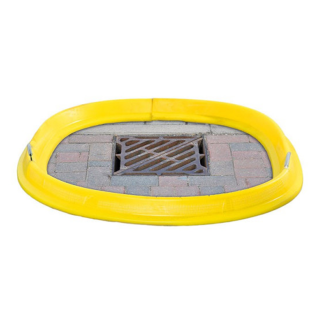
Where product is drawn off on the pallet, the drip from an IBC tap and the splash from filling a smaller container both need to land inside the bund. The integral dispensing areas and drip trays on the single IBC bunds sit under the tap for this purpose. In a drum store, an extra capacity sump leaves margin for a decanting spill on top of a leak from the drum itself. Spill absorbents kept beside the pallet deal with drips that land outside it. Where drums are moved near a gully, drain covers close it off until the work is done. For a larger spill elsewhere on site, keep spill kits from the waste and spill equipment range at each work area.
Popular Categories

Wheelie Bins
View Products >

Skips for Sale
View Products >

Forklift Tipping Skips
View Products >
Frequently Asked Questions
The law sets duties rather than naming a product. The Safety, Health and Welfare at Work Act 2005, enforced by the Health and Safety Authority (HSA), requires employers to manage the risks from the substances on their site, and the Local Government (Water Pollution) Acts make it an offence to let polluting matter such as oil enter waters. Sites holding an EPA licence also have bunding and storage conditions written into the licence. Standing drums and IBCs on a bund is the usual way to meet all three, because it stops a leak reaching the ground or a drain.
Only when they are compatible. Acids and alkalis go on separate pallets, as do oxidisers and flammable liquids, because two products that meet in a shared sump can react. The handling and storage section of each product's safety data sheet sets out what it must be kept apart from.
Lift the removable grid where one is fitted, then recover the liquid with a hand pump or spill absorbents, depending on the volume. The recovered liquid and used absorbents are waste and go to an authorised waste contractor, with anything contaminated by oil or chemicals handled as hazardous waste. Wipe the sump clean and let it dry before the grid and containers go back.
Check the sump as part of the site's routine inspections, and after heavy rain for any pallet that stands outside. Liquid in the sump means a leak or rainwater, and either way it is removed before the capacity is relied on again, with rainwater that has mixed with product disposed of as waste. Look for cracks or splits in polyethylene, corrosion or damage on steel and damaged forklift pockets, and record each check.
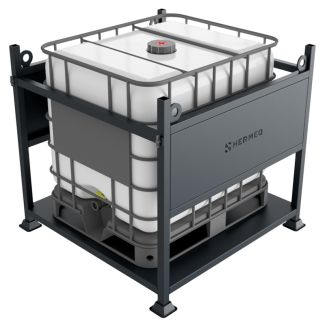
An IBC is usually set onto a bund by forklift on its own pallet base and lowered squarely onto the grid or sump floor. Where a crane or lorry-mounted crane does the lift, the IBC lifting cage holds the container, carries lifting eyes at its four corners and has a safe working load of 1.5 tonnes. Lifting accessories such as a cage come under the examination requirements of the Safety, Health and Welfare at Work (General Application) Regulations 2007.