







Flood Barriers
Flood barriers from HERMEQ keep floodwater out of homes, business premises and sites, and they go down quickly once a warning is issued. The range serves residential, commercial and local authority flood defence. It covers self-filling Floodstop barriers in two heights, the FloodFence modular barrier, which needs no ballast, and corner units that turn a run or tie it into a wall. The barriers are used against flash floods, tidal surges and rising river levels. Because the units are lightweight, modular and reusable, the same barriers serve emergency response and planned protection at properties where flooding recurs.


Temporary flood defence barriers
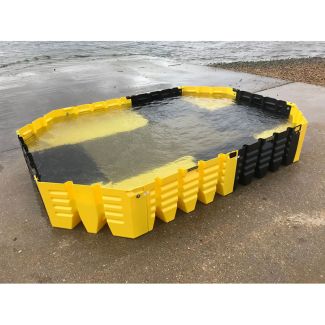
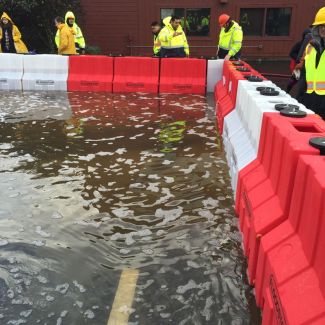
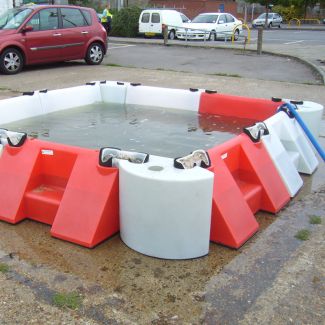
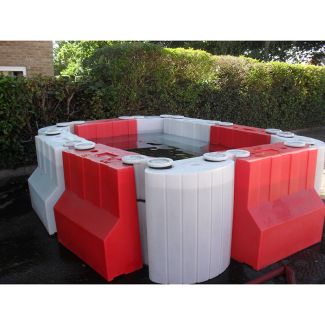
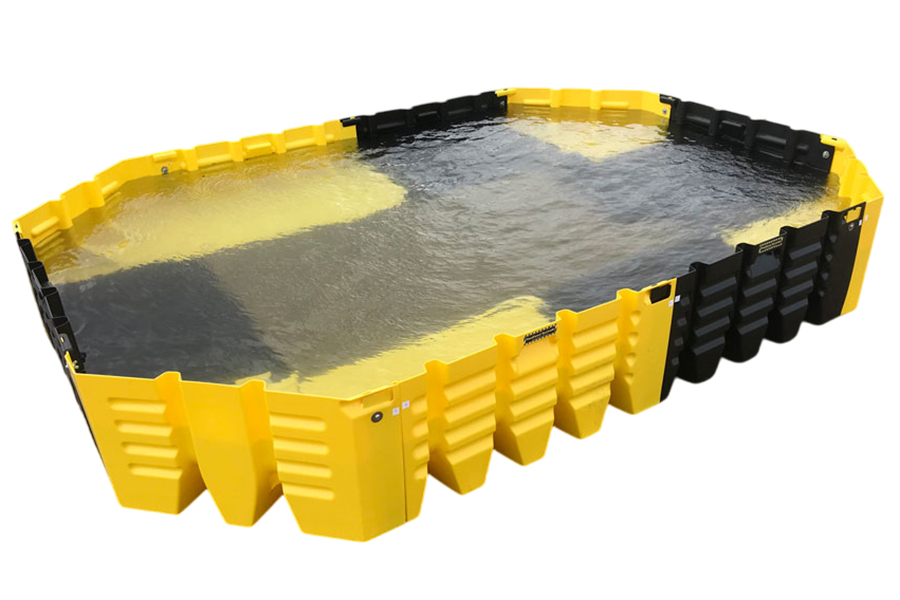
HERMEQ supplies two flood barrier systems that hold their line in different ways. Floodstop units fill with water and are held down by its weight, while FloodFence needs no ballast and packs down compactly between floods. Together they cover barrier heights from 0.45m to 0.9m.
FloodFence modular flood barrier
The FloodFence modular flood barrier suits premises and temporary works areas that flood often and need a barrier that is quick to set out and easy to put away. There is no ballast to add, so nothing needs to be filled or weighed down once the modules are connected. Its low weight and compact storage make it the practical choice where a barrier goes down several times a season.
Floodstop 0.5m self-filling flood barrier
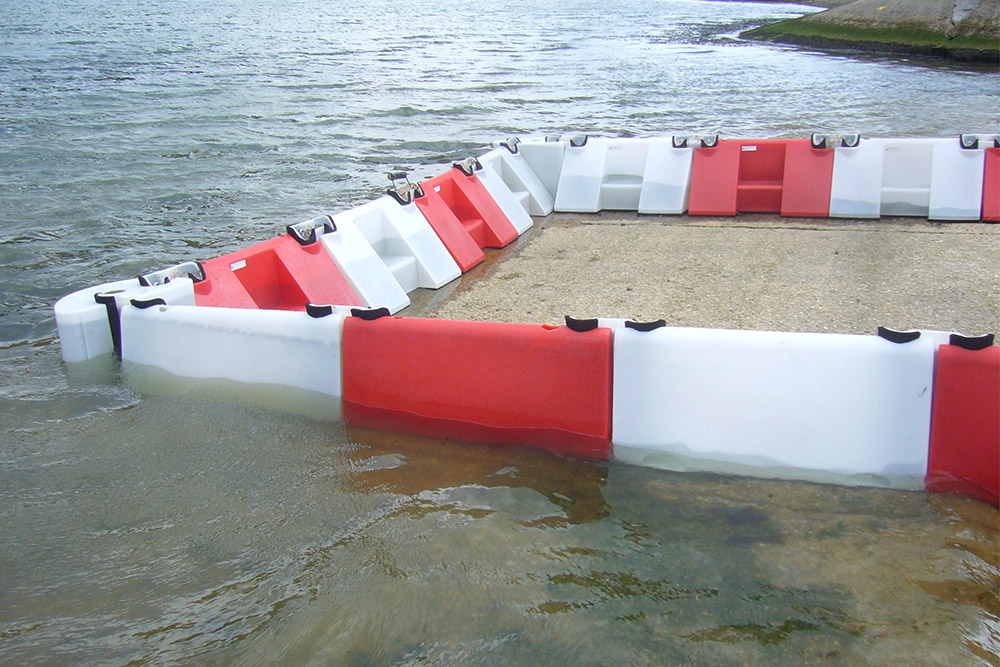
The 0.5m Floodstop flood barrier is the general-purpose unit for property and site runs. The units assemble to any length and can be arranged in any direction, so one stock of barriers can close a doorway in one flood and enclose a yard in the next. Choose it where the expected water level sits comfortably below its height and the line has to follow walls, kerbs and corners.
Floodstop 0.9m barrier for deeper water
The 0.9m Floodstop flood barrier is the taller, heavier unit for frontages where water is expected to stand deeper. It fills itself in the same way as the shorter Floodstop. It should not be mistaken for water filled road barriers, which buyers also search for as temporary water filled barriers. Those are made to separate traffic and pedestrians on roads and sites and are not designed to hold back floodwater, whereas Floodstop is the water-filled barrier built for flooding.
Flood barriers for doors, homes and sites
Every barrier in the range stands free on the ground, so the same units can protect a single doorway or a long open boundary.
Doorways, garages and building entrances
Many door flood barriers sold for homes are fixed systems, with channels drilled into the frame or brickwork either side of the opening and boards that drop into them. HERMEQ flood barriers work differently: a short free-standing run sits in front of the doorway, garage or entrance and ties into the wall at each end with a corner unit, so nothing is fixed into the building. This suits rented premises and entrances where drilling the frame is not wanted.
Driveways, yards and car parks
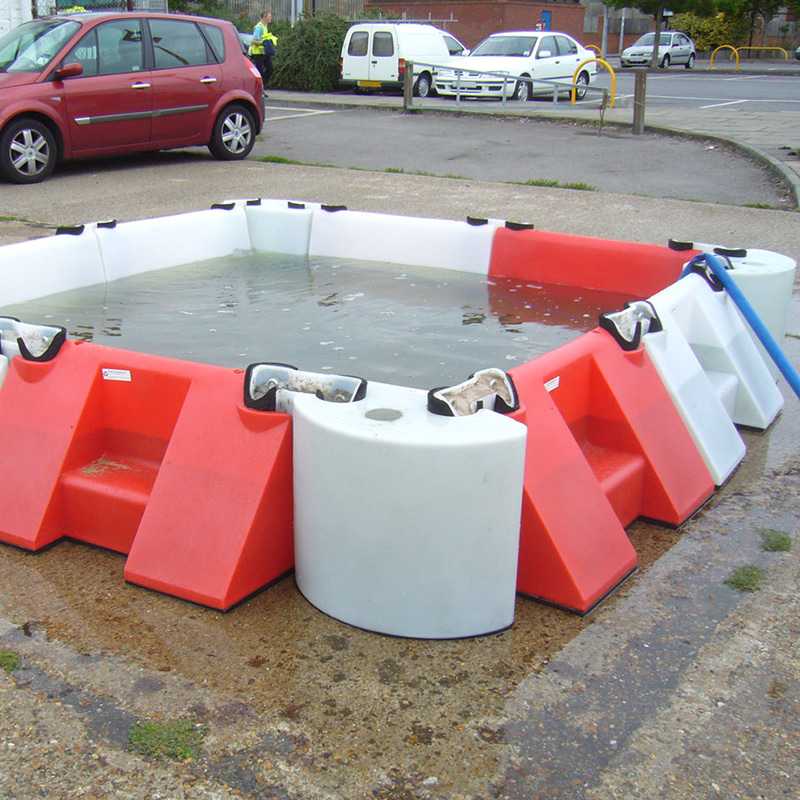
Open ground calls for longer runs than a doorway, often with several turns to follow a boundary wall or close off a ramp or vehicle entrance. The 0.5m Floodstop and FloodFence both link into long lines. Corner units let the run change direction and meet the wall without a gap.
Construction sites and temporary works
On a construction site, flood barriers keep surface water out of excavations, basements under construction, compounds and stored materials. FloodFence is designed for temporary works areas where water could cause damage, and it is light enough to lift and move as the work moves on.
Riverside and coastal frontages
Property beside rivers and the sea faces water that rises with the tide or the river level and can stand against a barrier for hours. The 0.9m Floodstop is the barrier for these lines. Its corner unit lets the run follow a quay or riverside wall, make a riverside turn or finish at the end of a fence line.
Planning a flood barrier run
Measuring the line and counting units
Measure the line the barrier will follow along the ground, from wall to wall or around the area being protected, taking in every bend that a plan drawing would straighten out. Each Floodstop unit covers a metre of run, and each FloodFence module covers 0.91m once connected, so divide the measured length by that figure and round up to avoid coming up short on the day. The length taken up by corner units comes off the straight run.
Corners, angles and wall ends
Every change of direction, and every point where the run meets a wall or post, needs a corner unit. Each corner has to match its own system and height. The 0.5m Floodstop corner unit and the 0.9m Floodstop corner unit are multi-hub units that take acute angles and make the watertight join to a wall or post. The FloodFence corner turns a FloodFence run.
Preparing the line before a flood
The barrier goes down on a clear, swept surface, with stones, grit and debris removed so that each unit sits flat along its full length. Walk the route before the wet season and note where it crosses drainage gullies, kerbs, steps or changes in level. Each of these points needs a decision on where the line runs.
Popular Categories

Crowd Control and Pedestrian Barriers
View Products >

Traffic Barriers
View Products >

Expandable Barriers
View Products >
Frequently Asked Questions
Flood barriers in the range are priced per unit, so the total depends on the length of the run, the barrier height and the number of corner units. The price of each barrier and corner is shown on its product page, so a measured line gives an accurate total.
Modular flood barriers go up and come down faster than sandbags and need fewer people to place them. They are also reused from one flood to the next. Sandbags have to be filled, carried and stacked, need a stock of sand on hand before a warning, and are usually thrown away once floodwater has soaked them.
Yes. Floodstop barriers are designed to be deployed by one person, and the light FloodFence modules can be carried and connected by hand.
Yes, the units are reusable. After a flood they are emptied, rinsed of silt and dried, then stored somewhere dry and close to where they will be needed. FloodFence modules connect and store in a compact stack, which suits premises with little storage space.
Set the barriers out once Met Éireann issues a rainfall warning or your local authority issues a flood alert for the area, and before water reaches the line. Floodstop units fill themselves as water arrives. Where water will arrive fast, as in a flash flood, they can be pre-filled as they are placed. Waiting until water is visible usually leaves too little time to complete the run.