







Crane Lifting Equipment
Crane lifting equipment from HERMEQ lifts and moves heavy loads on construction, industrial and material-handling sites, from wet concrete and spoil to brick packs, tools and operatives. The range covers work on the ground and at height, and every piece lifts from a crane, a forklift or overhead steelwork.
It includes crane-liftable attachments (concrete and muck skips, goods, IBC, storage and access cages, crane forks, block grabs and kerb lifters) along with chain blocks, lever hoists and beam clamps for manual hoisting. The equipment serves building sites, warehouses and industrial projects.




Crane skips for concrete, muck and waste
The skips in the range fall into two groups: concrete skips carry wet concrete to the pour and release it through a controlled gate, and muck skips carry spoil, rubble and site waste away from the work face. Capacities run from 150 to 4000 litres across the range.
Twinflow concrete skips
A twinflow concrete skip is the general-purpose pouring skip for groundworks and frame contractors. It empties through the bottom for mass pours into bases and slabs, and through a side outlet when concrete has to be placed into shuttering.
Coneflow concrete skips
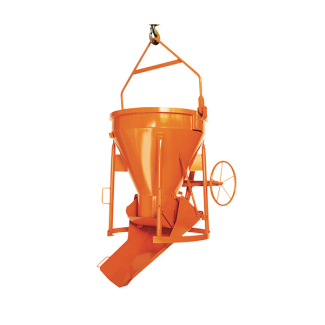
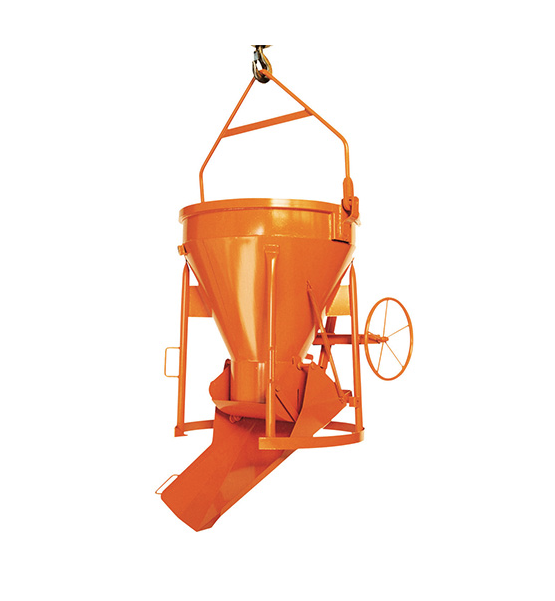
The geared coneflow concrete skip lies on its side with a lateral outlet and hangs from a lifting beam. It suits larger pours into bases and shutters, where a geared gate gives the operative fine control of the flow at the discharge point.
Concrete pouring skips with a hose
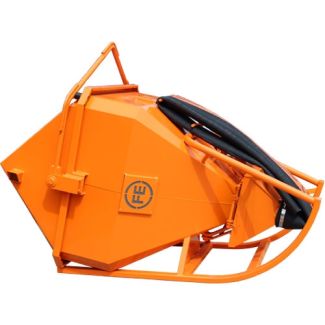
For columns and walls, the choice is a concrete pouring skip with a hose, known on site as a column skip or tremie skip. The hose carries the concrete down inside the formwork and places it low in the form, which matters in tall, narrow shutters where a free fall from the top would let the mix separate.
Boat skips
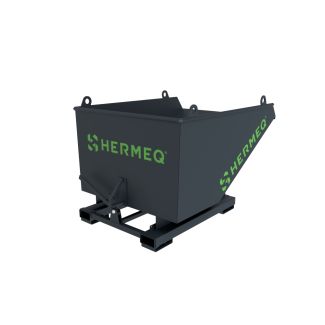
Boat skips are the standard muck skip for spoil, rubble and heavy waste lifted out of basements, trenches and upper floors. The crane lifted boat skip covers general muck-away up to the larger site volumes. The self-dumping boat skip tips its own load at the discharge point.
Drop bottom skips
Drop bottom skips open underneath, so they are the choice when bulk waste or spoil has to be emptied from above into a larger skip, a lorry body or a muck-away bay.
Circular tipping skips
A circular tipping skip, often called a circular muck skip, hangs from a fold-down hanger and tips itself once the operative releases the safety lock. It suits muck and debris from refurbishment, bricklaying and drainage work, where volumes are modest.
Crane lift tipping skips
Crane lift tipping skips carry lifting lugs for an overhead crane, so waste can be lifted from a loading point in a factory or workshop bay and tipped where the crane sets it down. The different colours let a site separate waste streams, such as general waste, timber and metal, under its own colour code.
Crane lifting cages and goods cages
Each cage is chosen by what travels inside it: materials, containers, tools or people.
Goods carrying cages
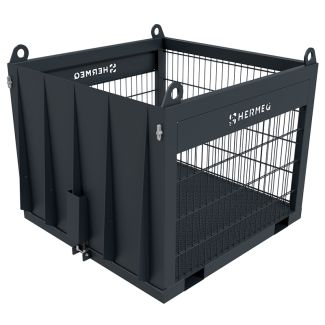
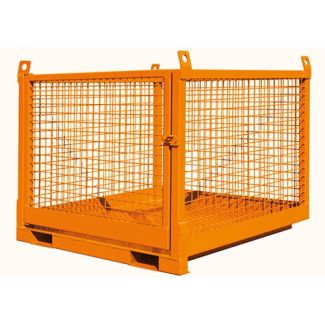
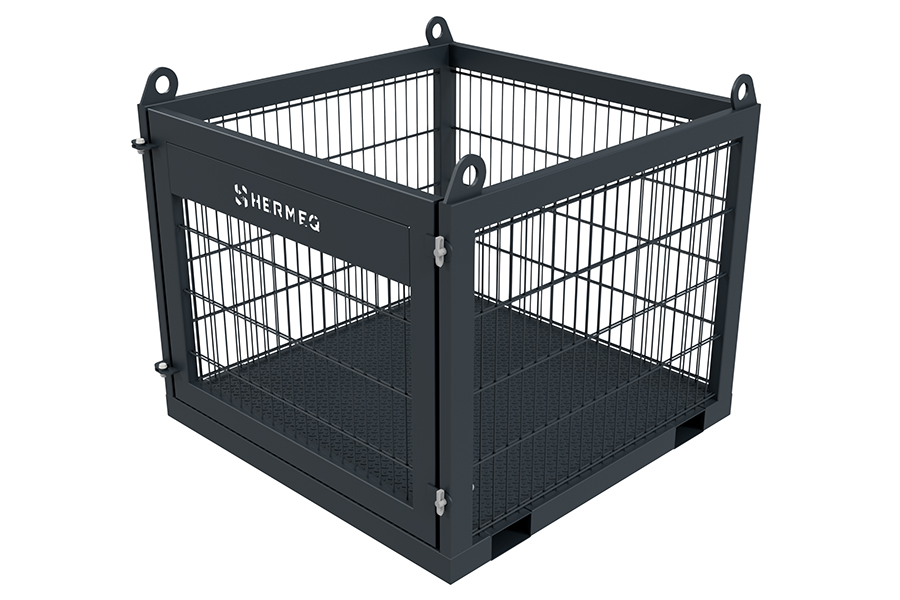
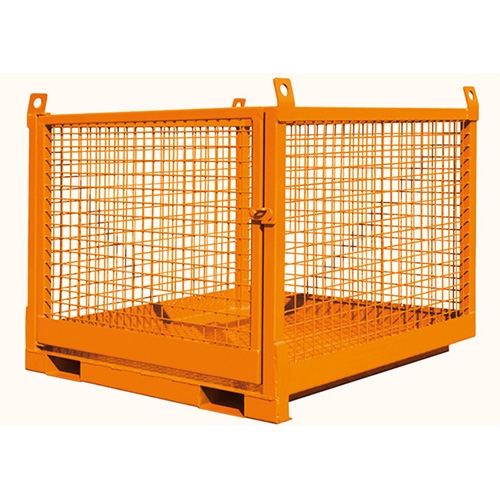
Goods cages carry loose and awkward site materials, from fixings and blocks to formwork parts, that cannot be strapped to a pallet. The steel crane lift goods cages come in two load ratings. The heavy duty goods carrying cage also comes in double-width versions with a loading ramp.
IBC lifting cages
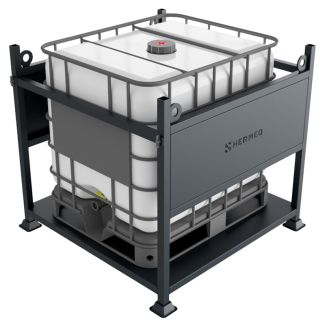
The IBC lifting cage houses an intermediate bulk container, so water or admixture in an IBC can be lifted to a floor or moved round site on the lifting eyes at each corner.
Lockable lifting crates
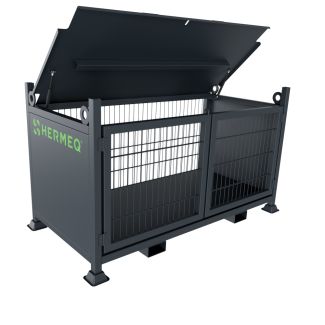
The forklift and crane lifting crate is a sheet steel box with a locking lid and full-width front doors, for tools, small plant and equipment that stay packed between moves.
Access cages
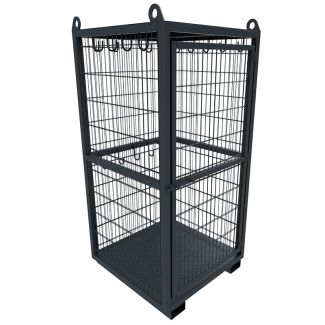
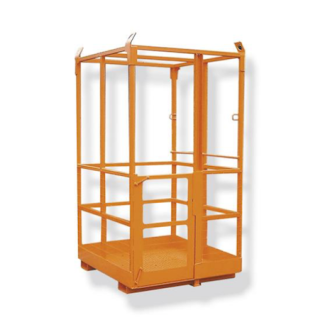
The crane and fork mounted access cage carries operatives to work at height where a scaffold or platform cannot reach, such as fixing on steelwork or cladding. It is slung from the crane on chains or lifted on forklift tines. Operatives inside it use harnesses and lanyards as the lift plan sets out, alongside the rest of the working at height equipment on the job.
Rescue stretcher cages
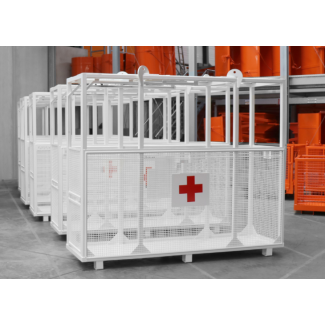
The crane rescue stretcher cage holds a casualty on a stretcher with a first-aider beside them, for recovery from a deep excavation, a shaft or an upper deck where stairs and ladders give no route out. Doors at both narrow ends let the stretcher go in and out from whichever side the crane sets down.
Crane forks, block grabs and kerb lifters
Building materials go on the attachment that matches how they arrive: packs and pallets on forks or a grab, loose material in a basket, and single heavy units on a lifter.
Crane pallet forks
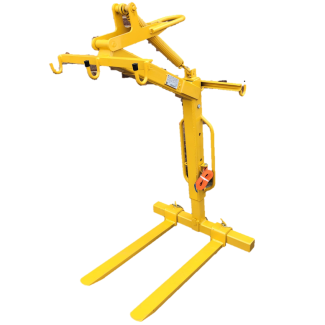
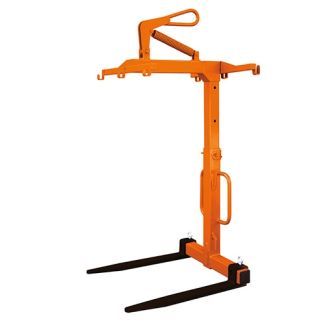
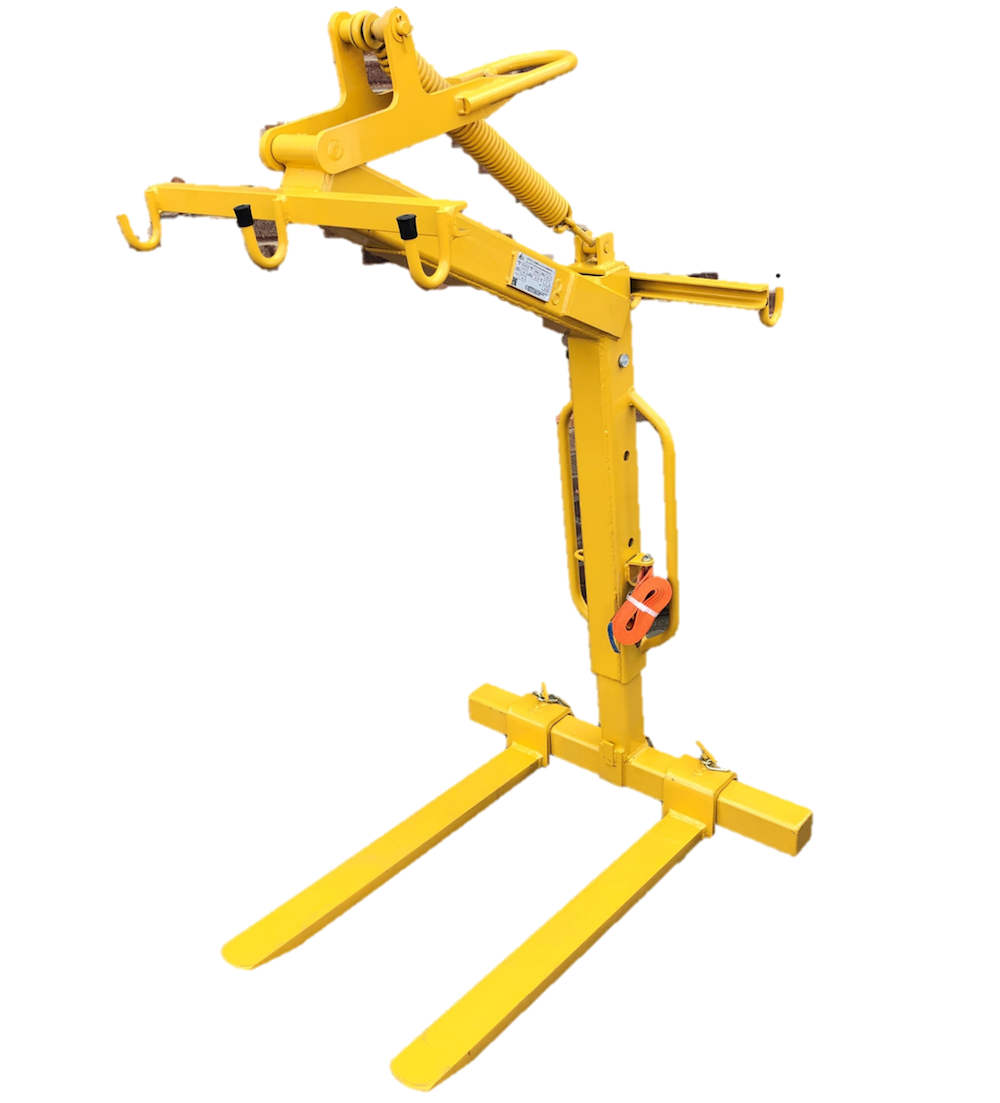
The self-balancing crane pallet forks hang from the crane hook and balance automatically under the load, carrying palletised materials and brick packs to a scaffold or loading bay.
Telescopic self levelling crane forks
The telescopic self levelling crane forks are built for packs of bricks. The frame adjusts to the pack and the tines stay level under load, so a bricklaying gang can have packs landed flat on the scaffold lift.
Block lifting grabs
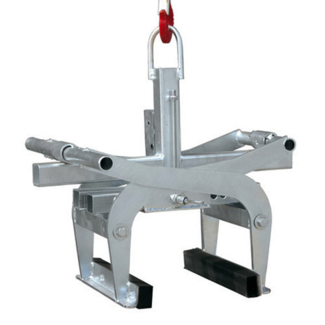
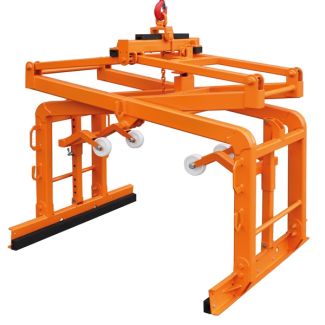
A block lifting grab clamps a pack of bricks, slabs or paving blocks from the sides. It suits loads set down tight against others, or in places where fork tines would have no room to withdraw.
Brick baskets
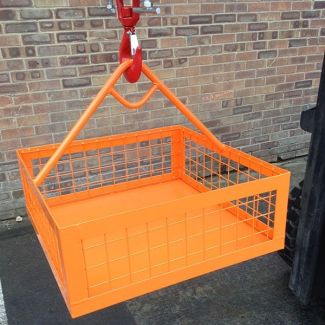
Loose bricks, part packs, offcuts and mixed small materials go in a brick basket lifted from an overhead crane point. Crane forks are the wrong attachment here, because once the banding is off a pack, open tines have nothing to hold the bricks.
Kerb stone lifters and handles
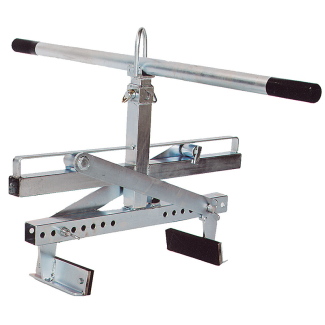
Kerbs, steps, edging angles and other single heavy units are lifted one at a time on a clamp that adjusts to a wide span of widths. The universal kerb stone lifter takes the lighter units. For heavier stones, the multipurpose kerb stone handle has a lift ring that suits almost any crane hoist.
Crane or forklift lifting attachments
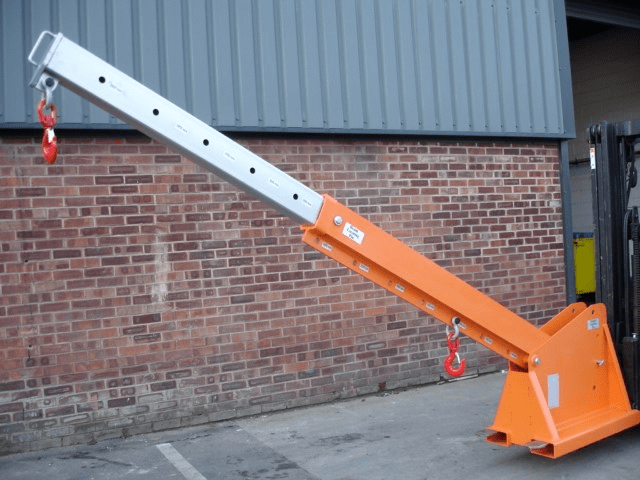
Some of the range lifts only from a crane hook, some only from forklift tines, and much of it does both. The goods cages, the lockable crate and the access cage take a crane sling or forklift tines, so the same piece can come off a lorry on a forklift and go up the building on the crane. On sites with no crane, and in yards and warehouses, two fork-mounted attachments give a forklift a crane-style lift.
Fork mounted jibs
A fork mounted extendable jib slides onto the tines and gives the forklift a hook with adjustable reach and angle, for tall or awkward loads such as pipes, frames and plant that will not sit on forks.
Crane drum tilters
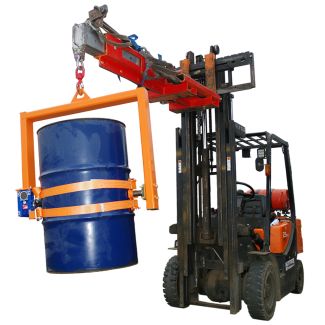
The crane drum tilter is a forklift-mounted attachment for steel and plastic drums. It lifts a drum and tilts it under control, so oils and liquids can be moved and emptied without rolling or lifting a full drum by hand.
Chain blocks, lever hoists and beam clamps
Manual hoists lift and position loads where a crane cannot reach or is more machine than the job needs, such as setting plant in a plant room, hanging pipework or lining up steel. They hang from overhead steelwork, usually on a beam clamp.
Chain blocks
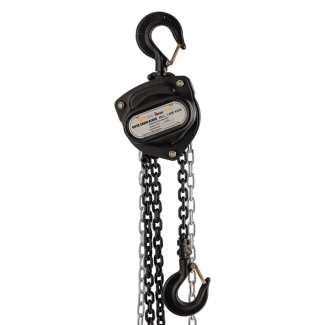
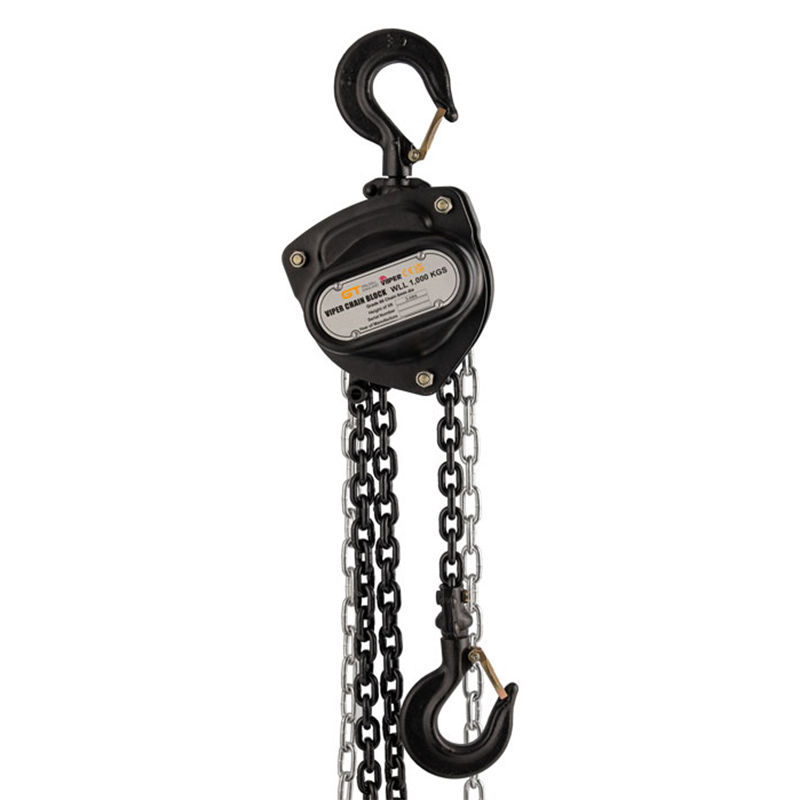
Chain blocks, also called chain hoists, make straight vertical lifts and lowers from a fixed point as the operative hauls the hand chain. HERMEQ chain blocks meet the working load limit performance requirements of EN 13157.
Ratchet lever hoists
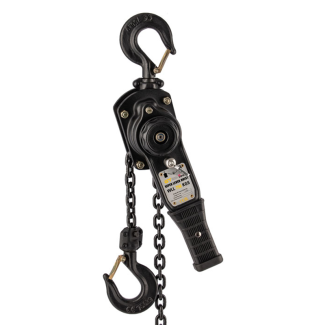
A ratchet lever hoist, also known as a lever chain hoist or ratchet lever block, raises, lowers and pulls loads by a lever and ratchet. Because it is worked by lever, with no hanging hand chain, it suits tight spaces and horizontal pulls.
Beam clamps
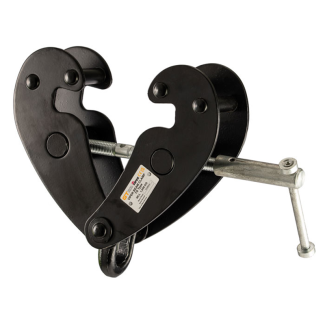
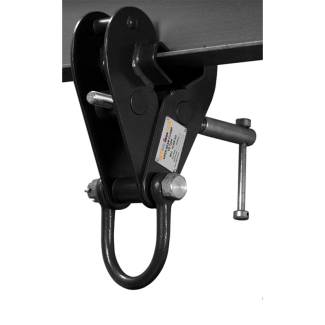
Adjustable beam clamps grip the flange of an I-beam and give a hoist or rigging an anchor point without drilling or welding the steel. Heavy duty beam clamps take the range up to 20 tonnes and meet the working load limit performance requirements of EN 13155.
Between jobs, chains, slings, shackles, hooks and clamps can be kept in a lockable rigging storage cage, which has its own crane lugs and fork pockets for moving round site.
Matching the attachment to the crane
Once the type is chosen, the attachment has to suit the crane that will lift it and the rigging that will connect it.
Safe working load and crane capacity
The crane carries the attachment as well as the load, so the weight on the hook is the skip, cage or forks plus their contents, along with the chains or slings. That total has to sit within the crane's rated capacity at the radius of the lift. On most cranes the capacity falls as the hook moves out, so the check is made at the furthest point the load will travel to.
Lifting eyes, lugs and fork pockets
The way a piece connects decides the rigging it needs. A single lifting eye on a beam or hanger takes one crane hook or a swivel, while a cage or skip with four lugs needs a four-leg chain sling with legs long enough to sit at a safe angle and hang the load level. Fork pockets have to match the tines of the forklift or telehandler that will carry the piece. Checking these against the chains, slings and plant already on site before ordering avoids a delivery that cannot be lifted on the day.
Lifting equipment inspection and certification
The Safety, Health and Welfare at Work (General Application) Regulations 2007 cover the use and examination of lifting equipment and lifting accessories, from the crane itself to the skips, cages, forks, chains, hoists and clamps hung from it. A competent person thoroughly examines lifting accessories, and any equipment used to lift people, at least every six months, and other lifting equipment at least every twelve months, as well as after any event that could affect its safety. The report of thorough examination, known on site as the GA1, travels with the equipment so it can be produced on request. Each piece is marked with its safe working load, and anything damaged or unmarked is taken out of use until it has been examined.
The Health and Safety Authority (HSA) inspects against these regulations.
Popular Categories

Temporary Edge Protection
View Products >

Temporary Stairs & Bridges
View Products >

Fall Arrest Systems
View Products >
Frequently Asked Questions
A lifting accessory is any item that sits between the crane or hoist and the load without being part of the machine. Chains, slings, shackles, hooks and lifting beams count, and so do attachments such as beam clamps, crane forks, block grabs and kerb lifters. Each accessory is marked with its own safe working load and examined in its own right.
The crane's capacity at the working radius sets the upper limit. Wet concrete and wet spoil are heavy for their volume, so that limit is often reached by a smaller skip than the space at the loading point would allow. Within it, a larger skip means fewer lifts on a mass pour, and a smaller one suits column work, refurbishment and tight loading points.
A concrete skip is made for wet concrete, and its gate and outlet are sized for a flowing mix, so rubble and broken material can lodge in it and stop the gate closing. Muck and waste go in a boat skip, a tipping skip or a drop bottom skip.
People are lifted only in a cage designed for carrying people, such as the crane and fork mounted access cage in this range. Goods cages, crates, skips and crane forks are for materials and are never used to carry a person.
On most sites a pack of bricks or blocks lifted on crane forks travels inside a safety net or enclosure. Banding can fail in the air, and the net keeps the bricks from falling onto the working area below.