







Scaffolding Accessories
HERMEQ scaffolding accessories are the parts that set up a safe work zone on and around the scaffold. The Temporary Aluminium Stairway is light enough to carry into place and gives the workforce stepped access to platforms at height. Scaffold lights mark tube and poles in poor light, so people see the structure before they reach it and accidents are avoided. ReadyFix transoms hold scaffold boards in place and cut the equipment and labour needed to erect and strike a lift. The 6 tonne base jack is the traditional levelling option for system scaffolding, and the trestle equipment turns builders trestles into a guarded platform for work at height.









Scaffolding parts and accessories by name
Each part in the range does one job on the scaffold, and choosing by that job is the quickest route to the right part: joining tube, carrying boards, getting people between levels, or marking the structure in poor light.
Scaffold couplers and prop bracing couplers
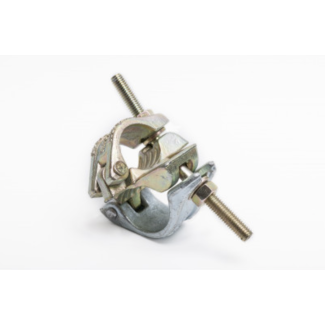
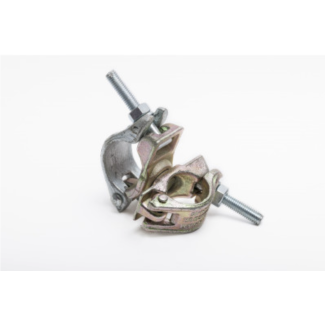
Scaffold couplers clamp one scaffold tube to another and are the fitting a tube and fitting scaffold is built from. Where adjustable steel props need bracing with tube, the prop bracing double coupler joins the tube to the prop at 90 degrees, and the prop swivel coupler turns through 360 degrees for braces set at an angle. Tube itself and the wider set of fittings are under scaffold boards, tube and fittings.
ReadyFix transoms and scaffold tube ties
ReadyFix transoms are prefabricated, double-ended transoms that hold the scaffold boards in place across the lift, and they work with a tube and fitting scaffold. Because they arrive made up, erecting and striking each lift takes fewer loose fittings and less time. Scaffold tube ties give a simple anchor point for a handrail run on scaffold tube and come as single and double ties.
Steel ladder beams
Ladder beams span a gap that standards cannot stand in, such as a doorway, a vehicle opening or a run over a lower roof, and carry the boards across it. Steel ladder beams are the standard choice, and galvanised ladder beams carry a zinc coating for scaffolds that stand outdoors for long periods.
Scaffold ladders and ladder access gates
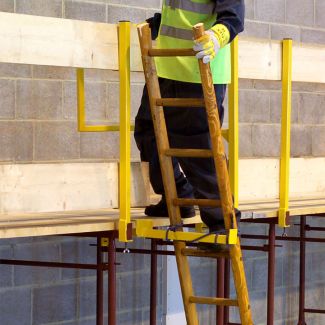
Steel scaffold ladders give access from one lift to the next, tied into the scaffold and extending above the landing so users have a handhold as they step off. The ladder access gate closes the opening at the top: its spring pulls it shut behind each user, and its toe board keeps the toe board line unbroken across the gap. The full range of scaffold ladders, step ladders and temporary stairs is under ladders and stairways.
Temporary aluminium and steel stairways
A stairway replaces a ladder where people carry tools and materials between levels all day, or where a whole gang uses one access point. The temporary aluminium stairway is carried into place by hand and set up in minutes, so it suits work zones that are tight or hard to move around. The modular steel stairway is built from units that connect to suit the height and is fixed to scaffold or a concrete slab, for access between floors in phased construction and for embankment slopes and trench crossings on groundworks and civils jobs.
Scaffold lights
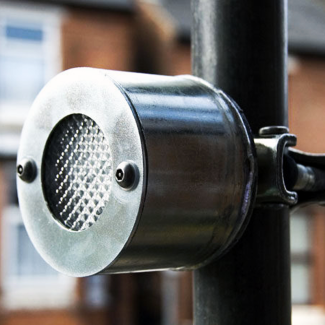
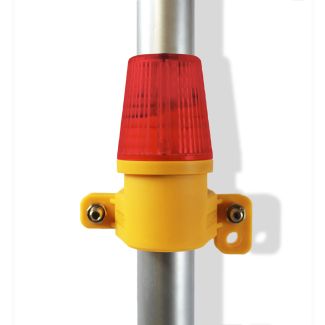
Lights mark scaffold tube in poor light, at footpath level where pedestrians pass and at corners where vehicles turn close to the structure. The vertical mount safety light fixes on top of an upright tube with a bracket and screws, and it can also be bolted to a flat surface. The side mount site safety light clamps to the side of a tube, and its 360 degree lens is seen from every direction. The scaffold light is a battery-powered flashing lamp in a steel case on a swivel fitting.

Scaffold base jacks and base plates
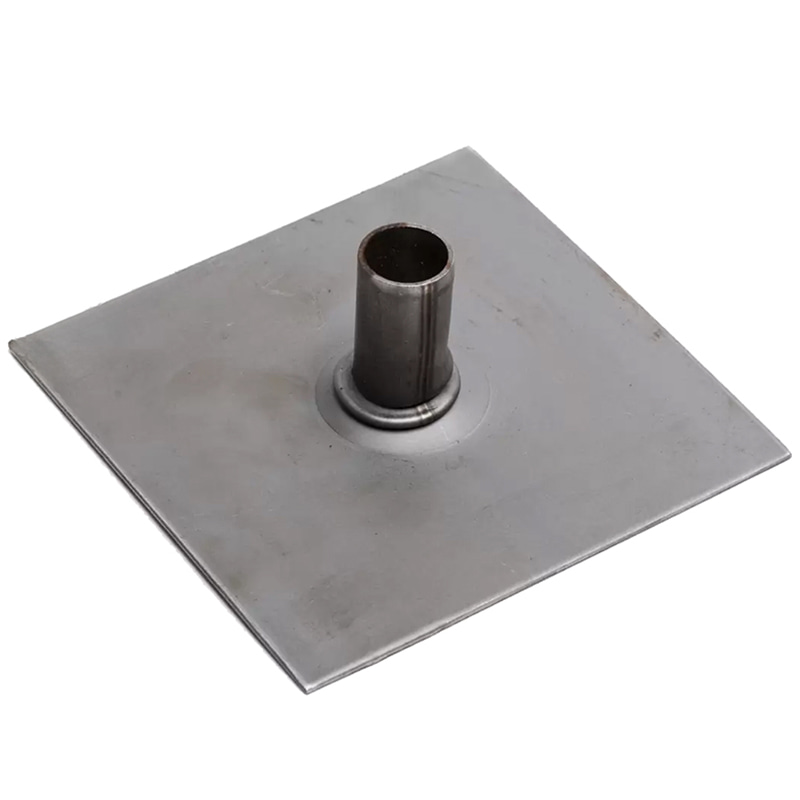
The ground under each standard decides whether it needs a plate or a jack. Scaffold base plates spread the load of a standard over a wider area and are enough where the scaffold stands on a firm, level base such as a concrete slab or a car park; they come in economy and heavy duty grades. Where the ground is uneven or slopes, a base jack adds a threaded spindle above its plate, so each standard can be wound up or down until the first lift is level. The 4 tonne base jack is the economy jack for general levelling, and the heavy duty base jack is the traditional levelling jack for system scaffolding, which takes the range up to 6 tonnes per jack. Choose the heavy duty jack for system scaffolds and where the scaffold design puts heavier loads through each standard. On soft ground, plates and jacks sit on timber sole boards that spread the load further still. Each jack is set to its height before the ledgers of the first lift are fixed and levelled, with the spindle kept within the adjustment the scaffold design allows.
Brick guards and catchfans for falling objects
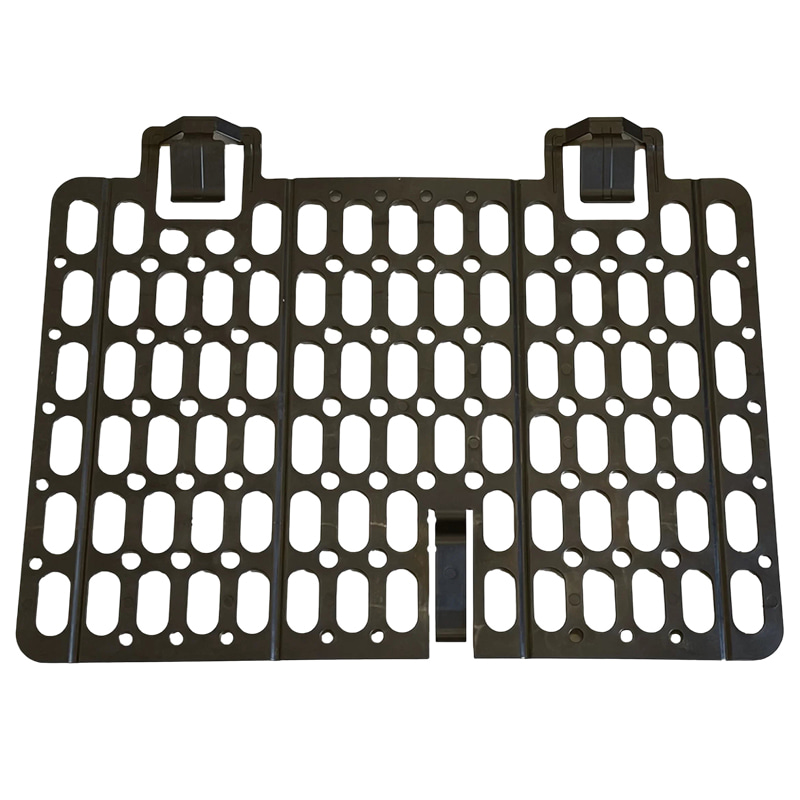
Both stop falling objects, at different points on the structure. Scaffold brick guards are recycled plastic panels that hook onto the guardrail and clip to the toe board, closing the gap between them so bricks, blocks and tools stay on the working lift. They suit bricklaying and loading lifts, and they stack flat for transport between jobs. A catchfan works further out: it projects from the scaffold, the wall or the slab edge and catches items that fall past the building line before they reach people below, and it is most common on multi-storey construction and demolition. Catchfans come in several fixing types, and the mini catchfan is a scaffold-only version with the guardrail clip built into its body. On a busy lift over a footpath or a working area, the two are often used together, with brick guards keeping materials on the platform and the catchfan taking anything that still falls.
The SG4 Shorguard shoe is the guardrail foot for the SG4 temporary guardrail system, a galvanised rail that leaves the area beneath it free to work under. Guardrail systems and other edge protection and fall prevention have their own category, and debris netting is under scaffold sheeting.
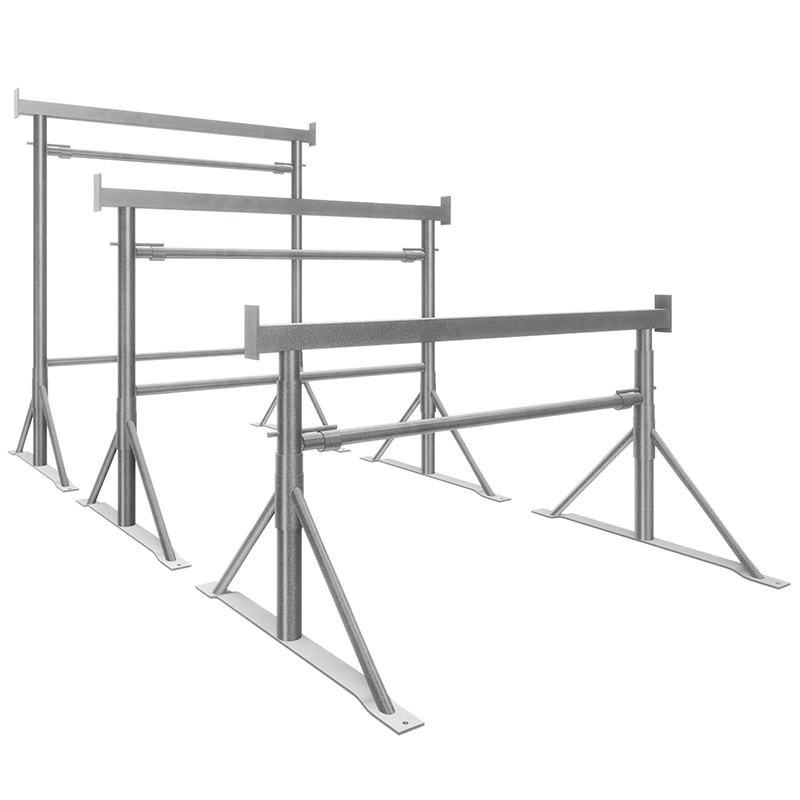
Trestle scaffolding accessories
Builders trestle tables carry boards for low-level work, and the parts below turn a run of trestles into a guarded working platform.
Trestle safety posts and trestle gates
Trestle safety posts fix to the trestle at their base and hold scaffold boards or timber planks in brackets on the post, so the boards form guardrails along the open sides of the platform. The trestle gate closes the way onto the platform, so there is one controlled entry point and the guardrail stays complete when the gate is shut.
Trestle ladder brackets
The trestle ladder bracket attaches to the trestle system and gives a fixed point for climbing onto the platform, in place of stepping up from the side or over the guardrail.
S brackets and stabilisers
Trestle board S brackets hold the ends of overlapping boards together where two runs of boards meet over a trestle, so a board cannot ride up or slide off its neighbour as people walk across the joint. Trestle stabilisers steady the trestles on taller platforms, and they go on at set-up, before the boards, posts and guardrails.
Rubbish chutes, stair treads and U-heads
These parts work alongside the main scaffolding on construction and demolition sites.
Rubbish chute hoppers and sections
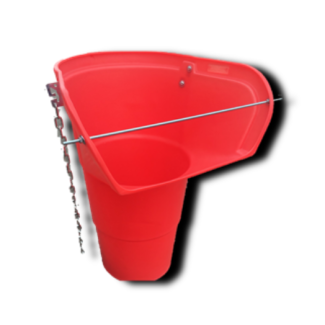
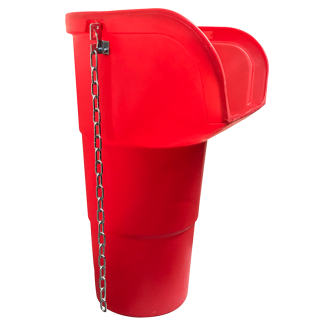
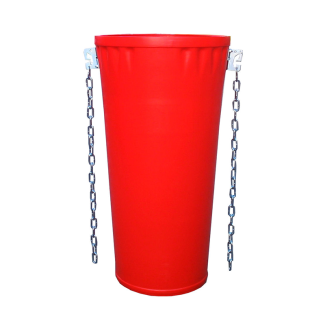
Rubbish chutes carry waste and debris from height down into a skip or container below. Each chute starts with a hopper at the top, either a rubbish chute top hopper or a side entry hopper, which is supported on wire and chain. Rubbish chute sections then stack beneath the hopper to make the funnel that runs down into the skip.
Steel and anti slip stair treads
Steel stair treads build or repair site staircases, indoors and out. Anti slip steel stair treads have a nosing bar welded to the front edge and drilled end plates that bolt to the stair stringers, for steps that stay wet or muddy.
U-heads
U-heads fit the top of adjustable steel props or system scaffolding and hold timber beams in place, for example under formwork or when propping a floor. They come in fixed and adjustable types.
Popular Categories

Scaffolding Parts
View Products >

Scaffold Ladders & Stairways
View Products >

Scaffolding Stillages
View Products >
Frequently Asked Questions
Stabilisers are recommended for trestle tables used at a height of 1.2 metres or more. Fit them when the platform is first set up, before the boards, safety posts and guardrails go on, so the trestles are steady while the rest of the platform is built.
The steel scaffold ladders in the HERMEQ range are manufactured and tested to EN 131 Parts 1, 2 and 3, the European standard for ladders. They are made under a BSI Kitemark licence and an ISO 9001 quality management system.
The vertical mount and side mount safety lights come with amber, clear or red lenses. Where the scaffold stands on a public footpath, follow any lighting conditions in the council's scaffolding licence, and elsewhere choose the colour to the site's own marking code. Keeping the same code across the whole site means drivers and pedestrians read the lights the same way at every scaffold.
Yes. The standard catchfan is available in scaffolding fix, wall fix and slab fix versions, in standard and XL lengths. The mini catchfan is the exception: it is a scaffold-only product with the guardrail clip built in.
Rubbish chute hoppers and sections come in three standard sizes, 20, 22 and 30 inch, colour coded red, yellow and black. Build the whole chute from one size, with the hopper and every section matching.
Scaffolding on construction sites comes under the Safety, Health and Welfare at Work (Construction) Regulations 2013, and work at height under the Safety, Health and Welfare at Work (General Application) Regulations 2007, both enforced by the Health and Safety Authority. Accessories such as brick guards, ladder gates and trestle guardrails are fitted and checked as part of the scaffold they belong to.