







Temporary Handrail Systems
HERMEQ handrail systems build temporary guardrail at the open edges of roofs, slabs, scaffolds and working platforms for contractors, roofing firms and facilities teams. The range starts with the SG4 guardrail system on Shorguard Shoe feet, a fully galvanised free standing rail that goes up without any fixings into the building. For rails connected to a scaffold or structure, galvanised high yield scaffold tube builds a standard temporary handrail. It is joined with scaffold fittings or Kee Klamp type fittings, which are the simplest ways to connect a run of tube.

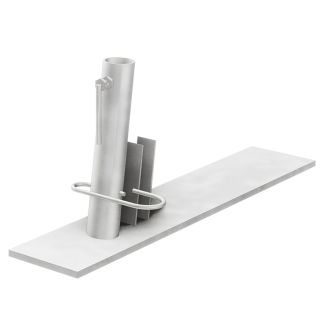
Free standing guardrail or scaffold tube handrail
The choice turns on whether the rail can be fixed to anything at the edge. Where it cannot, a free standing guardrail stands on its own feet. Where a scaffold, frame or sound structure is there to couple to, a scaffold tube handrail is built onto it.
SG4 free standing guardrail
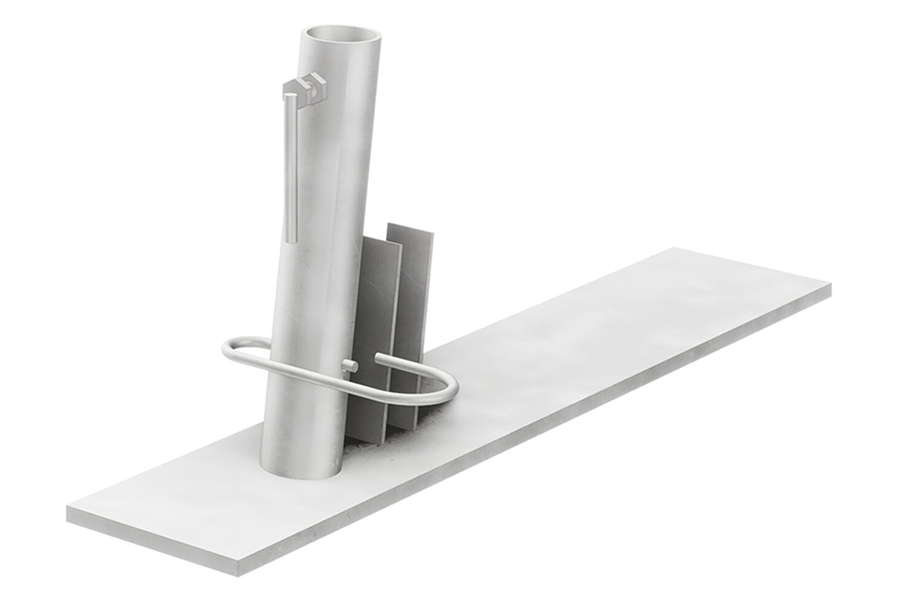
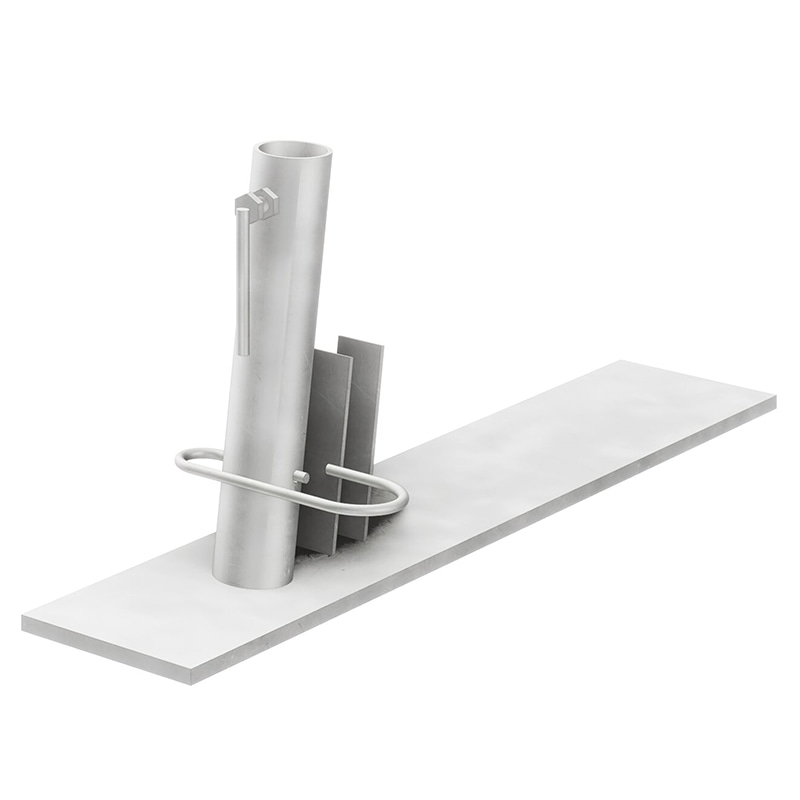
The SG4 guardrail system stands on SG4 handrail feet, known as the Shorguard Shoe, which sit on the surface and hold the uprights with no drilling, bolting or clamping to the building. This is the format for finished flat roofs, membranes and slabs where a fixing would breach the surface or the client will not allow one.
Scaffold tube handrail
A scaffold tube handrail is assembled from tube and fittings and coupled to standards, a frame or the structure itself, so it follows the shape of the job around a scaffold lift, along a slab edge, round a returned corner or over a change in level. Choose it where there is something sound to fix to and the rail has to match a layout that a standard system cannot follow.
Rubber block and tray ballasted guardrails are in the temporary edge protection range, alongside complete perimeter systems for edges where a guardrail on its own is not the full answer.
Roof handrail systems and site uses
Flat roofs and roof refurbishment
On a roof, the surface decides the rail as much as the edge does. Membranes, felt and insulated decks puncture easily, so the feet or bases have to sit flat on the finish, clear of outlets, upstands and rooflights, and each end of the run has to close back to a parapet or a fixed point. The route for carrying feet, uprights and tube up to the roof and back down should be planned before the job starts. A hoist or a protected stair keeps loose components from being dropped over the edge.
Scaffolds and working platforms
On a scaffold lift or working platform, the rail has to run without gaps. Corners, returns and the ends at ladder and stair access are all closed, so there is nowhere a person stepping backwards could pass through. Where the risk is materials falling onto a footpath, a street or a lower working area, safety fans catch the debris that a rail and toe board do not stop.
Slab edges, stairwells and openings
Slab edges, lift shafts, stairwells and service openings stay open through the frame and fit out until the permanent balustrade or infill goes in. Each one needs a rail, and any rail taken down for a delivery is put back before anyone works near the edge again. Where people need to cross an opening or reach another level, access stairways and bridges carry them over it, and the rail closes the remaining sides.
Galvanised scaffold tube for handrail
High yield tube
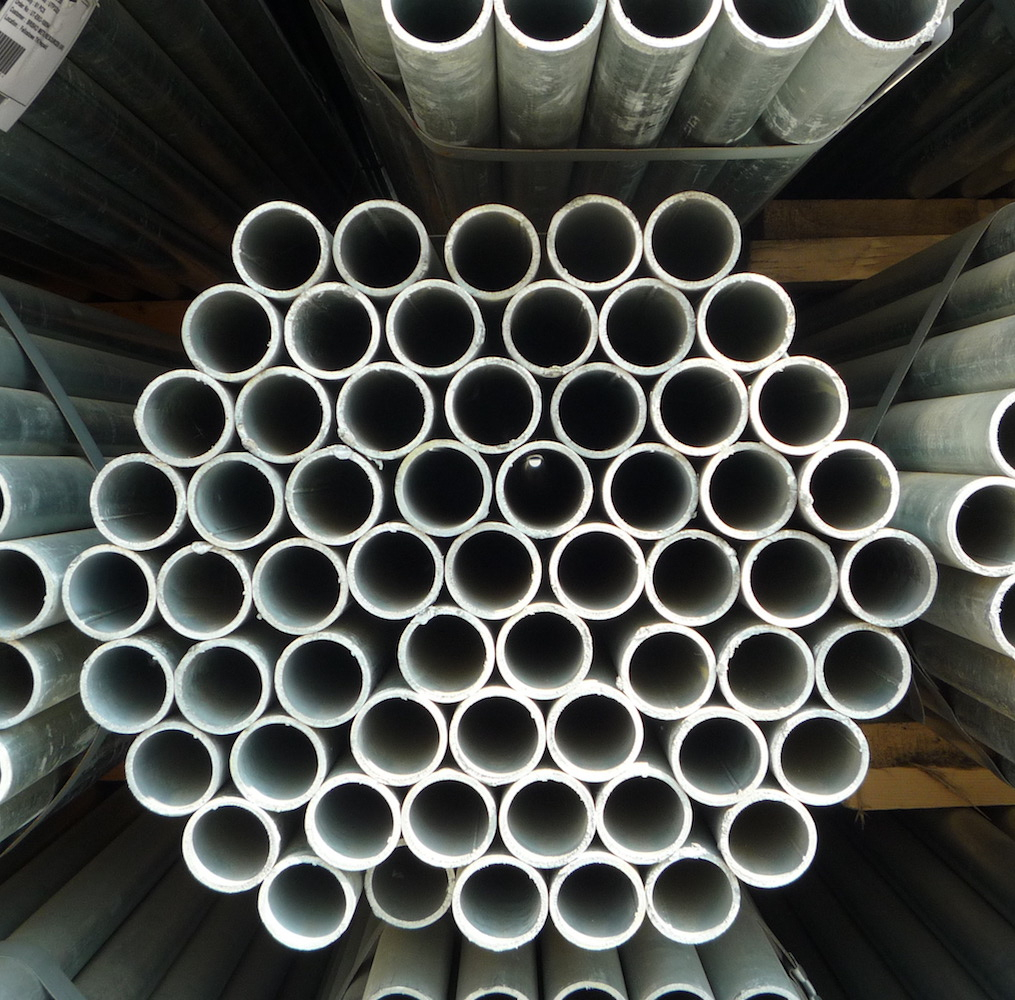
The high yield scaffold tube in the range is galvanised steel tube supplied to EN 10219-1, the standard for structural hollow sections. High yield is the grade scaffolding contractors build with, so a guardrail made from it matches the scaffold it is coupled to.
Choosing tube lengths for the run
Lengths run from 1.5 m to 6.4 m, so a run can be ordered in whole tubes that span between supports with overlap at the couplers, and nothing needs cutting on site. Use the long lengths for top and intermediate rails on long straights, and the short lengths for returns, gaps between uprights and runs around obstructions.
Fittings and connections
The tube takes standard scaffold fittings and couplers, sold in the scaffold boards and tube range. Right angle and swivel couplers fix rails to uprights, and sleeve couplers join lengths. It also takes Kee Klamp type fittings, which tighten with a hex key and give a neater rail. Couplers are the usual choice for rails tied into a scaffold, and Kee Klamp type fittings suit stand alone rails that are put up and taken down often.
Guardrail requirements
Guardrails at open edges fall under the Safety, Health and Welfare at Work Act 2005, which the Health and Safety Authority (HSA) enforces. The Safety, Health and Welfare at Work (General Application) Regulations 2007 cover work at height and set requirements for guard-rails, toe-boards and barriers. They also give collective protection such as a guardrail priority over personal protection, so fall arrest systems and harnesses and lanyards are for edges where a rail cannot do the job. On construction projects, the Safety, Health and Welfare at Work (Construction) Regulations 2013 bring edge protection into the planning. The PSDP addresses it at design stage, and the PSCS sets out in the safety and health plan how it is provided, maintained and checked. In practice this means a rail at every open edge and a toe board wherever tools or materials could fall on people below. The rail is inspected once it is up, and again after any change, adaptation or severe weather.
Popular Categories

Temporary Edge Protection
View Products >

Crane Lifting Equipment
View Products >

Temporary Stairs & Bridges
View Products >
Frequently Asked Questions
On site the two words are often used for the same rail, although they describe different jobs. A guardrail is a barrier at an open edge that stops a person falling over it, and it normally has a top rail, an intermediate rail and a toe board. A handrail is a rail to hold, as on a stair or ramp, and the top rail of a guardrail is often called the handrail.
Yes. The SG4 guardrail system is designed so that work can carry on under the rail without any part of the guardrail being removed. Before choosing a format, check whether roofers, cladders or other trades will need to work at or under the rail line, because a rail that has to come down for them leaves the edge open.
Both formats come apart into components that can be used again. SG4 feet and rails lift away without leaving fixings in the surface, and a tube handrail is dismantled coupler by coupler, with the tube and fittings returned to stock. Before each reuse, check the tube for bends, damage and corrosion, and check the fittings for worn threads.
A harness and lanyard is needed where a rail cannot protect the person. This includes putting up or taking down the guardrail at an open edge, work that has to happen on the far side of the rail, and roofs or leading edges where no rail can be installed.
Galvanising coats the steel in zinc, which protects it from rust while the rail stands outdoors for months and while the tube is stored between jobs. This matters for handrail, because the same tube is often reused on job after job.