







Stage Barriers
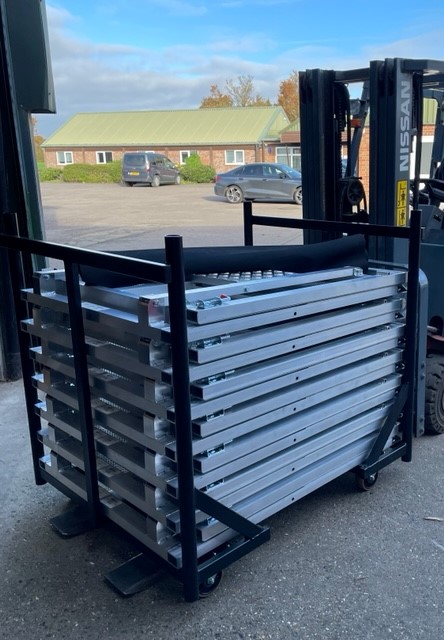
HERMEQ stage barriers are stainless steel front of stage barriers, also called pit or concert barriers, for outdoor festivals, concerts and sporting events. They stand up to the weather and clean down quickly after heavy use. The Front of Stage Barrier Enclosure is the core of the range. Its straight sections and its internal and reverse angle sections join in several configurations, from a single run across the stage front to a complete enclosure for a large audience. A powder-coated finish is available alongside stainless steel. The Barrier Transport Dolly moves the sections around the site at load-in and de-rig.
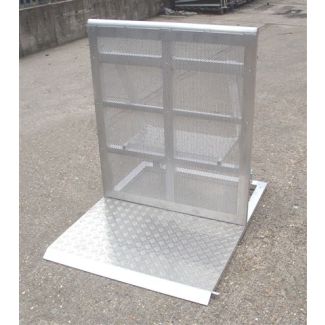
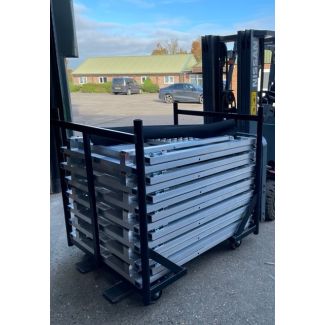
Front of stage barrier sections
Every section of the front of stage barrier enclosure joins to the next, so a run is planned as a count of straight sections for the lengths that run true, plus an angle section for each change of direction. The 180 degree straight section makes up most of any run and is the section ordered in the largest numbers. It carries the line across the stage front and along each side of the pit.
Stainless steel is the standard finish, and powder-coated sections are available as the alternative. Powder coating suits a stage front where the look matters, such as a televised event or a branded festival site. Keeping each run to one finish lets the line read as one.
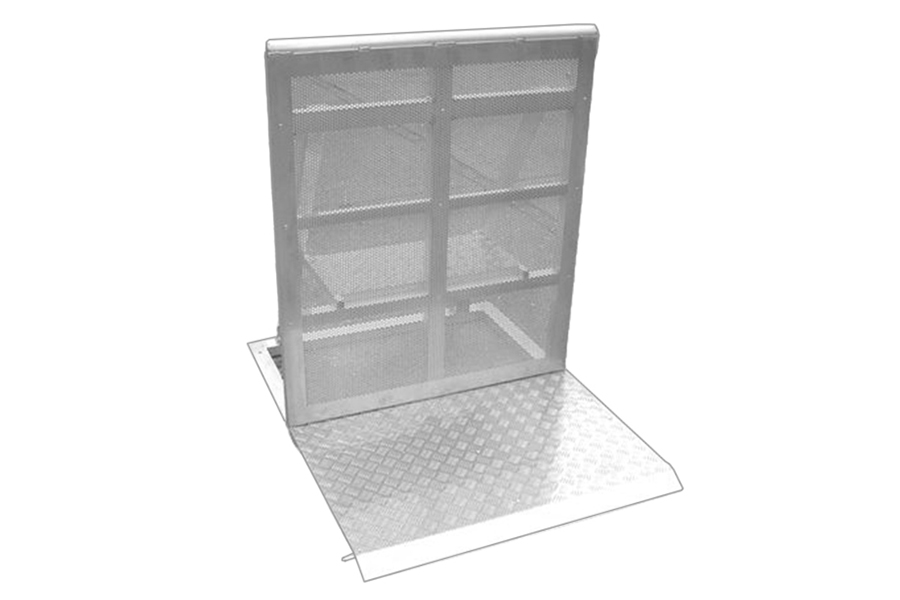
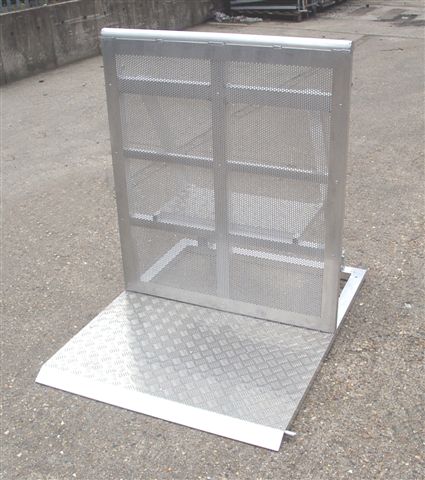
Internal and reverse angle stage barriers
Internal sections turn the barrier in towards the stage and reverse sections turn it out, and most layouts need both. The internal angles follow the stage front and close the pit at each end. The reverse angles are used where the line steps outwards into a wing or a return, or bends around something in its path.
Both come in 11.25, 22.5 and 45 degree sections, and the angles add up. Two 45 degree sections, four 22.5 degree sections or eight 11.25 degree sections all turn the line through a right angle. A rectangular stage front with square corners needs only the 45 degree sections. A thrust stage, a curved front or a very wide stage is better served by the finer angles. Spreading a turn over several smaller sections gives a smooth curve with no sharp corner, and crowd pressure gathers at sharp corners.
Stage barriers or crowd control barriers
A stage barrier belongs at the front of the crowd, where the audience presses towards the performers, and it holds the pit open between the crowd and the stage. The rest of the event site needs different products from the HERMEQ barriers range.
Lighter crowd control barriers and pedestrian barriers are the right choice away from the stage, on queue lanes at the gates, routes between arenas, bar and toilet areas and the site perimeter. They are quick to place in large numbers along queues, routes and perimeters. At the stage front, where the crowd presses forward and the pit has to stay open, the front of stage barrier enclosure is the product for the job.
Planning a concert barrier line
The layout follows the stage, the size of the expected crowd and the teams working in the pit. The logistics follow the number of sections.
Festivals and outdoor concerts
At festivals and outdoor concerts, the pit needs enough depth for the teams working in it to move along the whole line and to bring someone out of the crowd without crossing the stage. The returns at each end of the stage close the pit off from the audience. The layout also needs a clear route from the pit to the first aid point and backstage. On uneven ground, the line is set out on the firmest footing available and walked once it is built.
Sporting events
Sporting events use stage barriers in front of presentation stages and at concerts in stadiums, often on shorter runs. Access points for stewards, medical teams and broadcast crews are planned into the layout before the sections are counted, because every opening changes the number of straights and angles.
Moving and storing the barriers
The barrier transport dolly carries up to nine sections. The number of dollies for a job therefore follows from the number of sections in the run, with enough to clear the whole line in one pass at de-rig, when time is shortest.
Popular Categories

Crowd Control and Pedestrian Barriers
View Products >

Traffic Barriers
View Products >

Expandable Barriers
View Products >
Frequently Asked Questions
The pit is the working space between the front of stage barrier and the stage itself. It is closed to the audience and used by security staff, first aid teams and stage crew, and by photographers where the event admits them.
Mojo Barriers is the name of a manufacturer of front of stage barrier systems, and the events trade adopted it as a general name for the type. A buyer looking for Mojo barriers is usually looking for front of stage barriers, whichever company makes them.
Measure the full barrier line on the site plan, across the stage front and back to the stage at both ends of the pit. Divide the straight lengths by the length of one straight section, then add the angle sections for each turn. Allow a few spare straights for setting out on the day.
Stainless steel sections are washed down with water to remove mud and spilt drink, and a pressure washer speeds up the job on a long run. Each section is dried and checked for damage before it is stacked, so the set goes into storage ready for the next event.
An outdoor event with an audience of 5,000 or more needs a licence from the local authority under Part XVI of the Planning and Development Act 2000. The application includes an event management plan that shows the site layout, the barrier lines and the crowd management arrangements, and the local authority reviews it with the Gardaí and the emergency services. For a smaller event, the organiser and their safety adviser prepare the plan and agree it with the venue or landowner.