







Vehicle Access Barriers
HERMEQ supplies vehicle access barriers and access management products for car parks, sites, yards and restricted areas, covering manual and automatic raise arm barriers, swing and bi-folding gates, rising bollards and parking posts. Fixed bollards keep vehicles out of restricted areas for the long term. Gates and raise arm barriers control access at parking facilities, checkpoints and the entrances to restricted areas, opening by hand or under power for authorised traffic. The manual models need little maintenance and no power supply.









Raise arm barriers, barrier gates and bollards
Manual raise arm barriers
A manual barrier, also called a boom barrier or rising arm barrier, is a hinged arm that a driver or attendant lifts by hand and locks down once the vehicle has passed. The standard manual raise arm barrier covers most car park and yard entrances. The heavy duty raise arm barrier is built for the widest openings, such as lorry entrances to depots and sites.
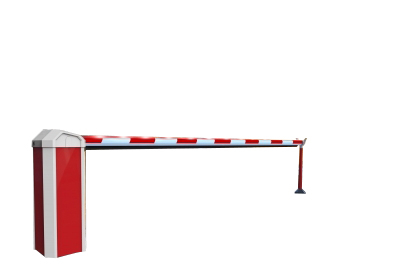
Automatic raise arm barriers
An automatic barrier, or boom gate, raises its arm under power when an authorised vehicle arrives and lowers it again behind. HERMEQ's automatic car park barriers are used at parking facilities, checkpoints and restricted entrances, and as a traffic calming measure that keeps through traffic off a route while buses and emergency services use it.
Swing gates and rectangular car park barriers
A swing car park barrier is a steel box section arm that turns horizontally on its post, so it needs no headroom and suits entrances under canopies, trees or overhead cables. The galvanised rectangular car park barrier is a framed gate for car park entrances and exits. Both are chosen where an entrance is closed out of hours and opened by hand.
Automatic swing and bi-folding speed gates
Full-height automatic gates close a secure perimeter, such as a depot, utility compound or industrial site, and open under power for authorised vehicles. Automatic swing gates open through a wide arc to give a clear vehicle opening. Automatic bi-folding gates and bi-folding speed gates fold in on themselves as they open, so they need far less room than a swing gate and open faster. They suit busy entrances with little space for a leaf to swing.
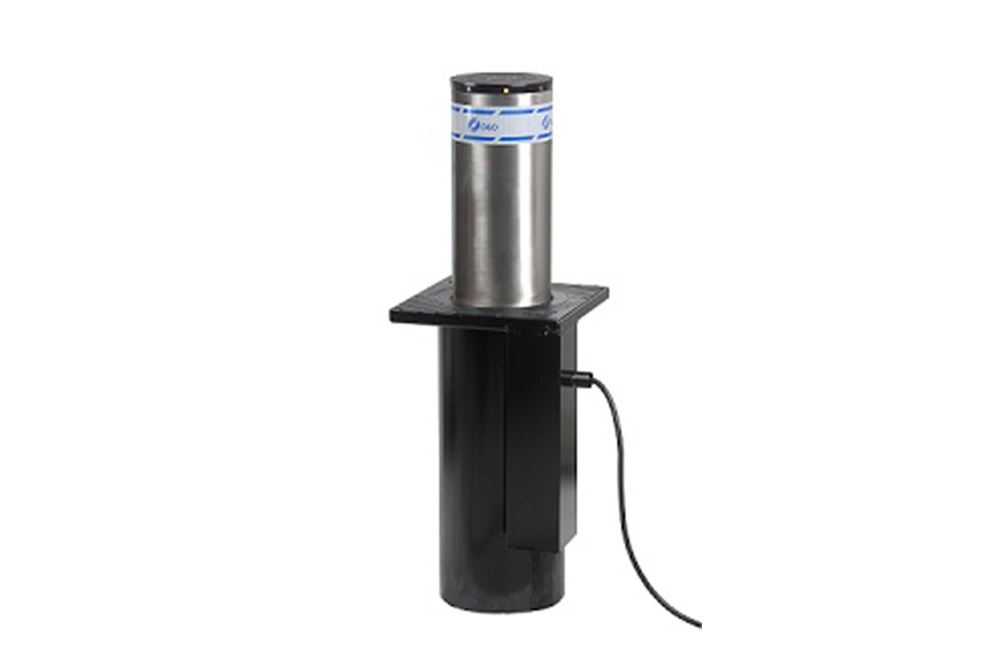
Automatic rising bollards
A rising bollard, also called a retractable bollard, sits flush with the road to let a vehicle over and rises to close the route behind it. The stainless steel automatic rising bollards carry LED lights on top for visibility at night. They are chosen where a route must be physically closed to traffic yet opened on demand for deliveries, refuse collection or emergency vehicles.
Fixed bollards
Fixed bollards are for places where vehicles never pass: shopfronts, footpaths, play areas, building entrances and the edges of car parks. Stainless steel bollards give a clean, permanent line in pedestrian precincts and in front of shops at risk of ram raids. Mitre top bollards have an angled cap and a more architectural look for communal and residential areas. The yellow and black bollards are made for high visibility protection inside and outside warehouses.
Retractable and removable parking posts
An anti parking post keeps a single bay, a driveway or a service entrance clear until the keyholder lowers or removes it. Retractable parking posts with an integral lock retract into the ground and lock without a separate padlock. Padlockable retractable parking posts take a padlock of the user's choice. Removable parking posts lift out of their ground socket altogether, and Stealth parking posts are a keyed post for reserved spaces, with galvanised fixed posts in the same range.
Traffic safety bollards
Traffic safety bollards are non-illuminated sign bollards that direct drivers around an island, a barrier approach or a one-way system on private car parks, site roads and yards.

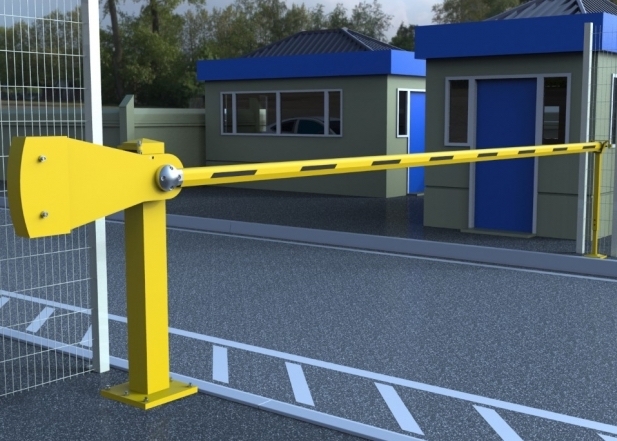
Manual or automatic vehicle access barriers
Manual barriers suit entrances with an attendant or a gatehouse, entrances used only a few times a day, and sites with no power supply at the gate. Automatic barriers and gates suit entrances with frequent traffic or no one on duty, such as staff car parks, depots and residential schemes, where waiting for someone to lift an arm would back traffic up onto the road outside.
In general, an automatic car park barrier needs three things on site. The first is a mains supply, run in ducting to the barrier cabinet. The second is a trigger that tells the barrier a vehicle is authorised: typically an induction loop cut into the surface, a fob or card reader, a keypad or a number plate recognition camera, chosen and wired at installation. The third is safety detection, usually photocells or a loop beneath the arm, which holds the arm or gate open while a vehicle or person is in its path. A second loop on the exit side lowers the arm once the vehicle has cleared it.
Access control for car parks, sites and yards
Car parks and reserved spaces
At the main entrance, the deciding questions are how many vehicles pass in the busiest hour and whether the car park is locked overnight. The wider choice of car park entrance and exit barriers has its own range. Inside the car park, a retractable or removable parking post keeps a reserved bay clear until the keyholder lowers it.
Construction site entrances
A site entrance has to clear articulated lorries, concrete trucks and low loaders, so its opening is set by the widest delivery vehicle and its turning path. A heavy duty arm barrier or a swing barrier controls the gap in the hoarding for the length of the build.
Pedestrian areas and public spaces
Local authorities and facilities teams laying out pedestrianised streets, plazas and campus roads space their bollards so that pedestrians, buggies and wheelchairs pass freely while a car cannot. Stainless and mitre top bollards carry the permanent line and slow traffic at the edges of shared surfaces, and a retractable post or rising bollard at one point in the line gives access to service and emergency vehicles.
Barrier width, fixing and locking
Opening width and span
The first measurement is the clear width between kerbs, walls or gate posts, checked against the largest vehicle that uses the entrance and the room it needs to turn in. Raise arm barriers in the range span up to 9 metres, and double leaf automatic gates cover wider openings again.
Ragged or flanged bollards and posts
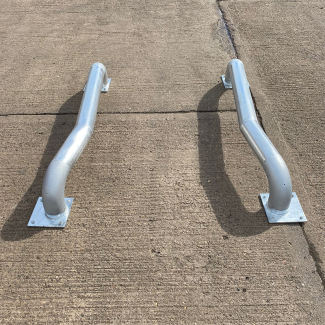
The fixed stainless, mitre top and yellow and black bollards, and the fixed posts in the Stealth range, come in two fixings. A ragged bollard has an extended root that is cast into a concrete foundation, so it suits new groundworks or a surface that is being broken out and reinstated. A flanged bollard has a base plate that bolts to an existing concrete slab, or to tarmac with a sound concrete base beneath, and goes in without excavation. Cast-in fixing is the usual choice where a bollard guards against impact, and bolt-down fixing suits existing paving and indoor floors.
Locks and keying
Stealth posts are either identically keyed, so one key opens every post, or randomly keyed, so each key opens only its own. Identical keys suit a fleet, a depot or a facilities team managing many bays, and random keys suit allocated bays where each tenant opens only their own post.
Temporary road and site closures
Concrete blocks and barriers
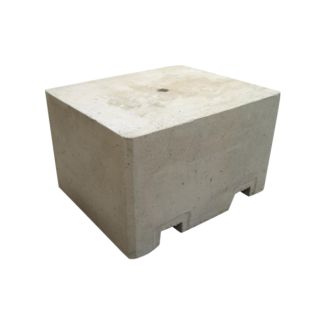
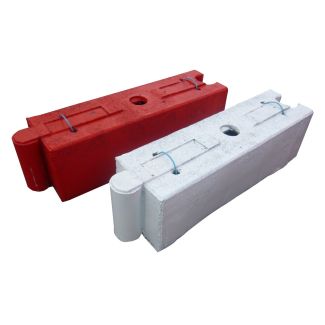
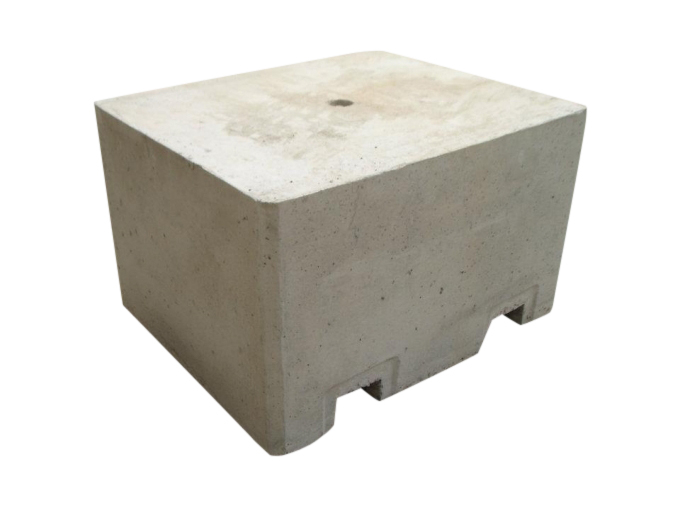
Closing a road, an unused entrance or a vacant site to vehicles calls for weight on the ground. Concrete security blocks sit across an opening to block it outright. Concrete Jersey barriers interlock into a continuous line, and a section can be lifted out for emergency access. Temporary vertical concrete barriers are crash tested for roads and sites where traffic runs beside pedestrians. Further perimeter products are grouped under car park and security barriers.
Cone bars and Oaklog barriers
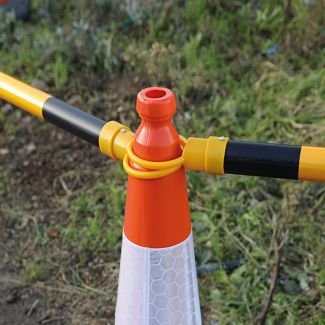
Extendable cone bars loop between traffic cones to close a temporary site entrance or a lane within the site, and lift off when the entrance opens. Oaklog barriers are self-weighted and interlock, so a run can be set out by hand for a temporary or semi-permanent closure.
Popular Categories

Vehicle Access Mats & Track Mats
View Products >

Road Plates
View Products >

Timber Mats
View Products >
Frequently Asked Questions
How wide an entrance can a raise arm barrier cover?
The heavy duty manual raise arm barrier spans up to 9 metres, which covers lorry entrances to depots and sites. The standard manual and automatic barriers suit narrower car park and yard entrances, and each product page gives its arm lengths. For a wider opening that has to be closed to full height, double leaf automatic swing gates come in widths up to 10 metres.
Will a raise arm barrier stop a vehicle forcing entry?
A raise arm barrier controls who enters: it shows that the entrance is closed and opens for authorised vehicles, and a parking post does the same for a single bay. To physically stop a vehicle, the route needs automatic rising bollards, fixed bollards set in concrete, or concrete security blocks or Jersey barriers. An arm barrier at the entrance and fixed bollards in front of buildings and pedestrian areas can be combined on the same site.
What does installing automatic rising bollards involve?
A rising bollard sits in a housing set into an excavated pit and surrounded in concrete, so the work starts as a groundworks job. The pit is drained so that water does not collect around the mechanism, and ducting carries power and control cables to the control cabinet. Buried services are located and marked before digging, and the electrical connection is made by a qualified electrician.
Where should a parking post go in a parking bay?
A parking post usually sits on the centre line of the bay, so a car straddles it when it is lowered. It is set far enough in from the open end of the bay that a car cannot park in front of it, and clear of the kerb and any wheel stop.
What standards apply to automatic gates and barriers?
The automatic swing gates and automatic bi-folding gates in the range comply with EN 12453, the European standard for the safety in use of power operated gates, which the NSAI publishes as I.S. EN 12453. It sets requirements for limiting the force a moving gate can apply and for the safety devices that protect people and vehicles in its path.