







Fall Arrest Systems
A fall arrest system stops a worker who falls from height before they strike the ground or the structure below. The range also covers restraint, which keeps a worker from reaching the edge at all, and recovery equipment that brings a worker who has fallen back to safety. HERMEQ supplies davit systems, restraint kits and tripods alongside fall arrest kits, retractable fall arrest blocks, formwork posts and overhead anchors, with options for each stage of construction work.
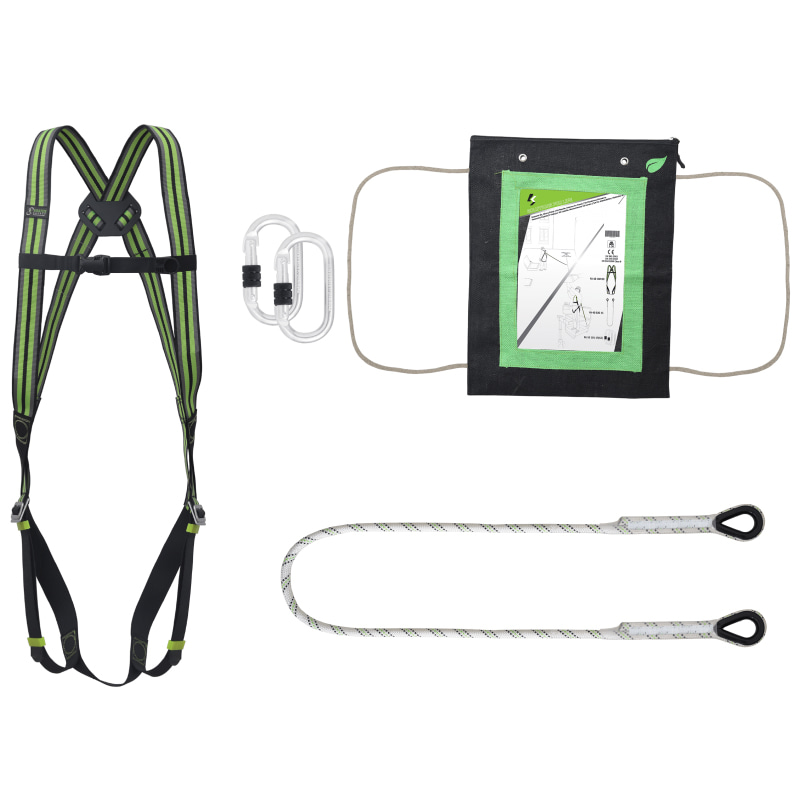
The kits are made up for construction, with harness, lanyards and hooks packed together, and steel karabiners are supplied for connecting components into a complete system. For transport and haulage, a freestanding overhead anchor protects drivers and loaders working on trailer beds.
-

-

-

-

-

-

-

-

-

-

-

-
 Wire Rope Fall Arrest Block c/w Integrated Recovery System - 15m€715.70 €880.31
Quick 5 Day Delivery
-

-

-

-

-

-

-

Fall arrest equipment: kits, blocks and anchorage
Most of the range is sorted by what the worker connects to: columns and slab decking take a fall arrest post, steel beam flanges take a beam trolley, concrete takes a chemical anchor point or cast-in sockets, an open trailer bed takes a ballasted overhead anchor, a span between two anchors takes a temporary lifeline, and a shaft or manhole takes a tripod or davit.
Fall arrest and restraint kits
A kit brings the harness, lanyards and connectors together in one bag, matched to the job, so each worker is issued a set that works together. The construction fall arrest kit and the 2 point scaffold fall arrest kit are made up for work at an open edge, with shock absorbing lanyards and, in the construction kit, scaffold hooks. Spare screw locking karabiners replace connectors lost or damaged on site.
Fall arrest blocks and inertia reels
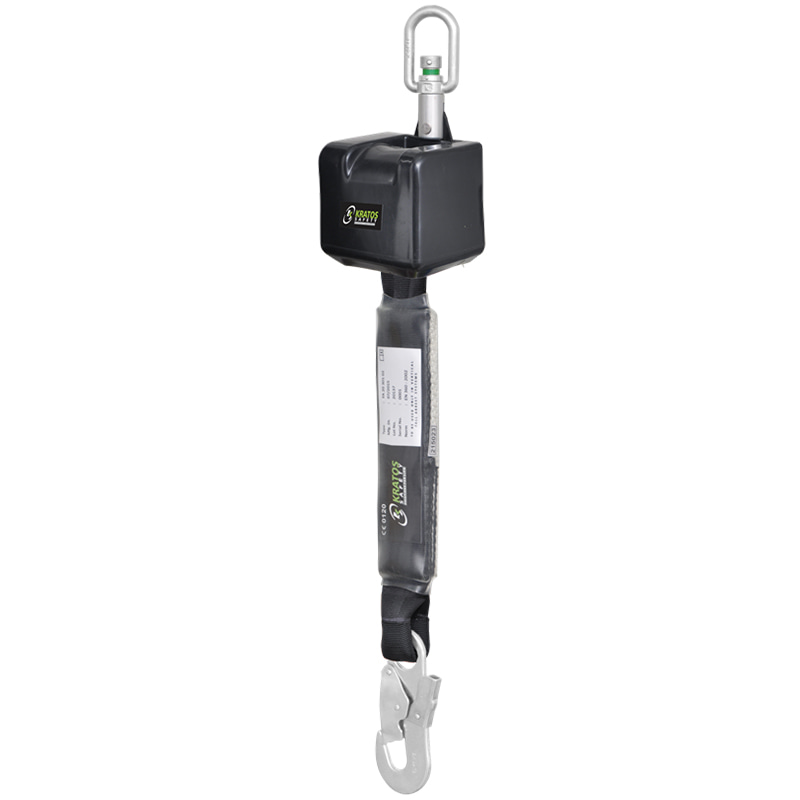
A fall arrest block, known on site as an inertia reel, retractable fall arrester or self retracting lifeline, pays line out and takes it back in as the worker moves, and locks when a fall begins. Lengths across the range run from 2.5 m to 20 m, in webbing or steel wire rope. The Helixon-S retractable fall arrest block is suitable for horizontal as well as vertical use, and the wire rope fall arrest block covers the longest working lengths.
Fall arrest posts for formwork and slab decking
These systems put an anchor above the deck before the slab, or anything over it, exists. The heavy duty fall arrest system for formwork is set at a column and lets the decking gang work all the way round it. The aluminium fall arrest system is the lighter alternative, put up by one person with no crane. The portable fall arrest post comes as a set with its own harness and fall arrest block, for a crew that needs the anchor and the personal equipment in one order.
Overhead anchor systems for trailers and structures
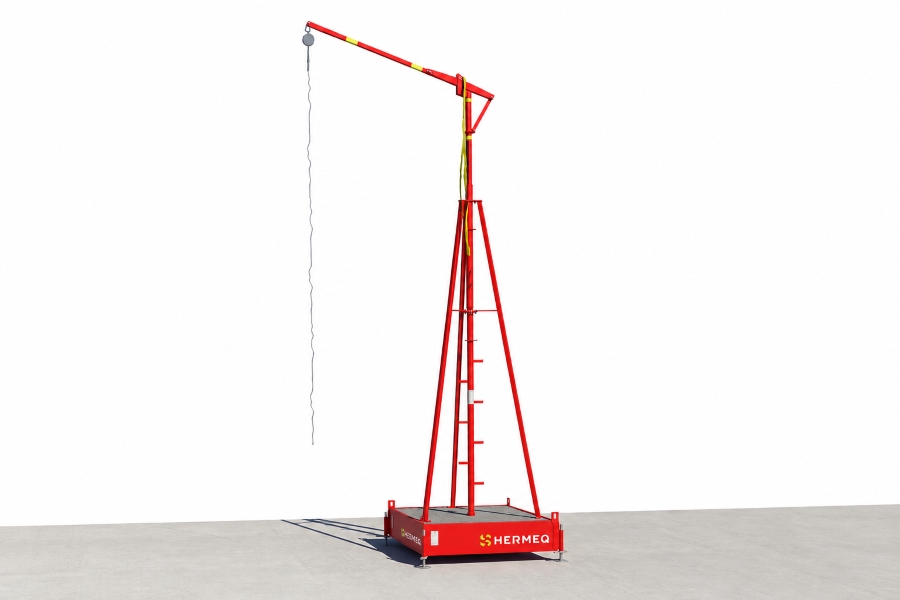
The MultiPercher raises an anchor point high above the work area on a cantilevered arm, so the worker below is connected from overhead. The MultiPercher trailer fall arrest system stands on a concrete filled ballast bin beside the vehicle, needs no fixing to the trailer and comes with a webbing fall arrest block. The socket mounted MultiPercher overhead anchor drops into a floor socket, wall socket, I-beam bracket or cast-in socket, for formwork, structural steel, inspection and maintenance work.
Anchor points, beam trolleys and temporary lifelines
Where the structure is already built, the anchor fixes to it. The stainless steel anchor point is set with a chemical anchor and gives one worker a fixed point to tie off to. The beam anchor trolley, also sold as a sliding beam anchor or beam clamp, adjusts to the flange of a steel beam and runs along it, so the worker stays connected while moving along the steelwork. The horizontal temporary lifeline is a polyester webbing line tensioned between two anchors, for continuous connection along a walkway, a roof or a run of steel.
Davits, tripods and recovery blocks
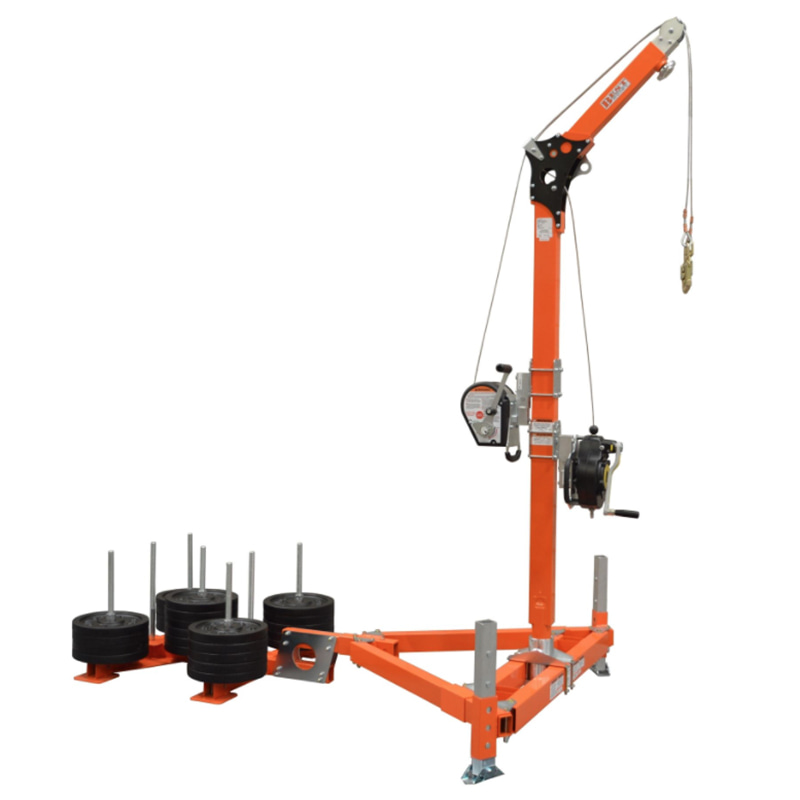
Manholes, shafts, tanks and other confined spaces need an anchor directly above the opening that can lower a worker in and bring them out again. The confined space tripod stands over a single opening on aluminium legs. The counterbalance davit needs no permanent base plate and moves between several entry points on the same job. The fall arrest block with integrated recovery arrests a fall and then lets the team at the top raise or lower the worker.
Fall arrest or fall restraint
Fall restraint stops a worker from reaching the edge, so a fall cannot start, while fall arrest lets the worker reach the edge and stops the fall once it has begun.
Restraint uses a lanyard of fixed or adjusted length from an anchor set back from the edge, long enough to reach the work and short enough to hold the wearer back from the drop. It is the right choice wherever the task does not put anyone at the edge itself, such as plant on a flat roof or work on an elevated platform, and it is what the 1 point restraint kit and the 2 point restraint kit are made up for. Because the worker never falls, restraint needs no clearance below and no rescue from suspension.
Arrest is the choice when the work is at the edge, as on a scaffold lift, a formwork deck or a trailer bed, or when no anchor can be placed far enough back to restrain. It needs clear space below the worker for the equipment to stop the fall, and a rescue method in place before work starts.
Restraint and arrest are both personal protection, and on site they come after the collective measures in the wider working at height equipment range, such as temporary edge protection at a slab edge or roof perimeter. Personal fall protection covers the work those measures cannot.
Fall arrest on scaffolds, formwork, trailers and roofs
Scaffolding
On a scaffold the anchor is the tube itself, so the lanyard ends in a scaffold hook whose wide gate closes round a standard or ledger. Moving along a lift means passing standards, transoms and couplers, and a twin lanyard lets the worker clip one leg ahead before releasing the other, so they stay connected the whole time. Twin lanyards and spare harnesses are in the fall arrest harnesses and lanyards range.
Formwork and concrete frames
During decking there is no slab above and often nothing to tie off to, so the anchor comes from a fall arrest post set at a column or, on frames that rise floor by floor, from a socket cast into the previous pour.
Trailers, flatbeds and loading bays
Sheeting, strapping and loading on a trailer bed put the worker at a short drop to the yard, with open sky overhead and a vehicle the fleet operator will not have drilled or modified. The freestanding MultiPercher answers each of these from beside the vehicle, and inside a loading bay with a steel frame or a concrete soffit, a fixed overhead anchor on the building does the same work.
Flat roofs and roof plant
Most work on a flat roof, from servicing plant to clearing outlets, can be done in restraint, because the anchor can sit well back from the perimeter. Set the lanyard length from the anchor so that the worker cannot reach the edge or any fragile rooflight, since a fragile rooflight will not carry a worker's weight.
Fall clearance, anchorage and rescue
Fall clearance below the work
Fall clearance is the distance needed below the worker's feet for the equipment to stop a fall before they strike the ground, a lower lift or the structure. A shock absorbing lanyard first pays out its full length and then extends as the absorber opens, while a retractable block locks within a short distance of the fall starting. On low drops such as a trailer bed or the first lift of decking, a lanyard can reach full length before it has arrested the fall, so the right connector there is a retractable block on an overhead anchor. Check the clearance given in the instructions for each connector against the drop on site before the equipment is issued.
Anchor strength and position
An anchor placed overhead shortens the free fall and reduces the swing that follows when a worker falls to one side of it. Whatever the type, the anchor must be fixed to a structure that can take the load of an arrested fall, which for a chemical anchor means sound concrete and installation to the resin maker's instructions.
Block length, webbing or wire rope
Webbing suits short lengths and lighter, frequent use close to the anchor, where the retractable webbing fall arrest block is the compact option. Wire rope covers the longer lengths in the range, for work further below or out from the anchor. Choose the length from the height between anchor and work and the furthest point the worker has to reach.
Rescue and recovery after a fall
A worker held in a harness after an arrested fall has to be reached quickly, so the rescue method is chosen and bought at the same time as the arrest equipment. A recovery block lets the team raise or lower the worker from the anchor that arrested the fall, and a tripod or davit does the same over a confined space, where entry does not start until the retrieval line is rigged.
Popular Categories

Temporary Edge Protection
View Products >

Crane Lifting Equipment
View Products >

Temporary Stairs & Bridges
View Products >
Frequently Asked Questions
A fall arrest system stops a worker who has already fallen and limits the force passed to the body as the fall is stopped. A personal fall arrest system is made up of an anchorage, a connector such as a shock absorbing lanyard or a retractable block, and a full body harness.
The user checks the harness, lanyard or block, and connectors before every use, looking for cuts, wear, damaged stitching, corrosion and connectors that do not close and lock. A competent person also carries out a detailed periodic examination at least every 12 months, as EN 365 requires, and more often where the manufacturer's instructions or the risk assessment call for it.
Equipment that has arrested a fall is withdrawn from use straight away and labelled so that nobody picks it up again. A shock absorbing lanyard whose absorber has opened is discarded. A harness, anchor or block is examined by a competent person, or returned to the manufacturer where its instructions say so, before it goes back into service.
More than one worker can connect only where the anchor or lifeline is rated for that number of people. The horizontal temporary lifeline is tested for two users, while the stainless steel anchor point and the beam anchor trolley are each for one person. Each worker connects with their own lanyard or block.
The Safety, Health and Welfare at Work Act 2005 sets the employer's general duties, and the Safety, Health and Welfare at Work (General Application) Regulations 2007 cover work at height and the selection and use of personal protective equipment. On construction projects the Safety, Health and Welfare at Work (Construction) Regulations 2013 also apply, with the PSDP and the PSCS planning and coordinating work at height. Entry into manholes, tanks and shafts also comes under the Safety, Health and Welfare at Work (Confined Spaces) Regulations 2001, which require rescue arrangements to be in place before anyone goes in.