







Site Hoarding
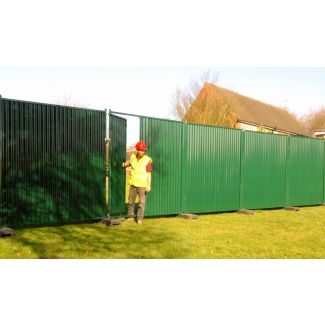
Site hoarding from HERMEQ forms a solid, fully clad perimeter around construction and demolition sites that hides the work from view and keeps the public out. Portable steel hoarding panels stand in feet and clip together without excavation, so a small crew can put up, move and take down a line quickly, which keeps labour costs down, and the panels are reused from job to job. The range runs from portable panels to heavy duty on-ground and in-ground systems and concrete barrier hoarding, ordered online in the height and finish the site needs. Stabilisers, block trays and anti-lift brackets add wind resistance and security to the line.
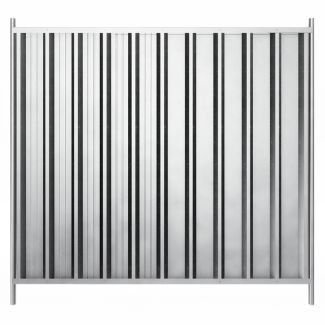
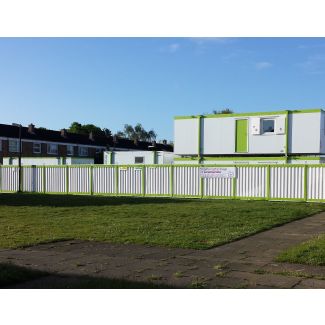
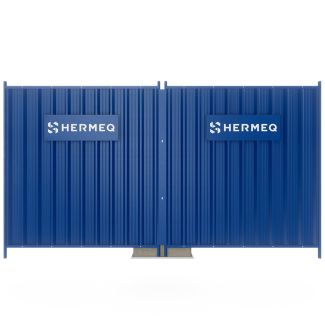
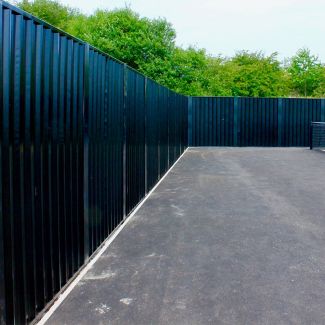



Site hoarding panels and systems
The range divides into portable steel panels that stand in feet, heavy duty systems held by ballast or posts for long and exposed lines, and hoarding built on concrete barriers for boundaries beside plant and traffic.
Portable steel hoarding panels
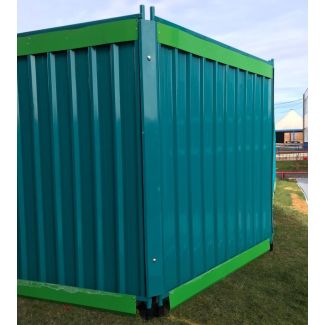
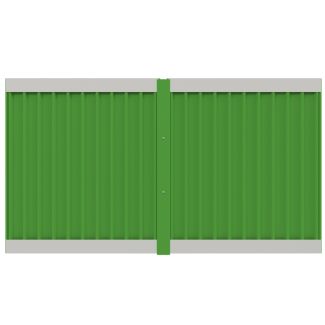
Fully clad portable steel hoarding panels are the standard choice for building and demolition perimeters, compounds and short programmes, because they go up without digging and move as the work moves. The steel hoarding and ballast calculator builds a complete run from its length, with stabilisers and fittings added to the order.
Hybrid steel and mesh hoarding panels
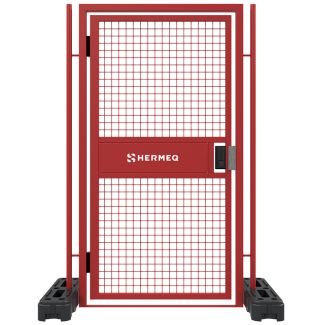
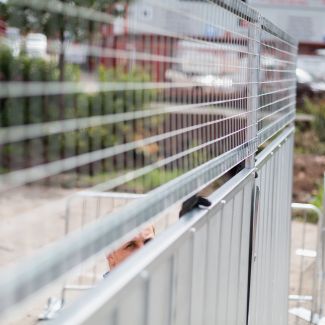
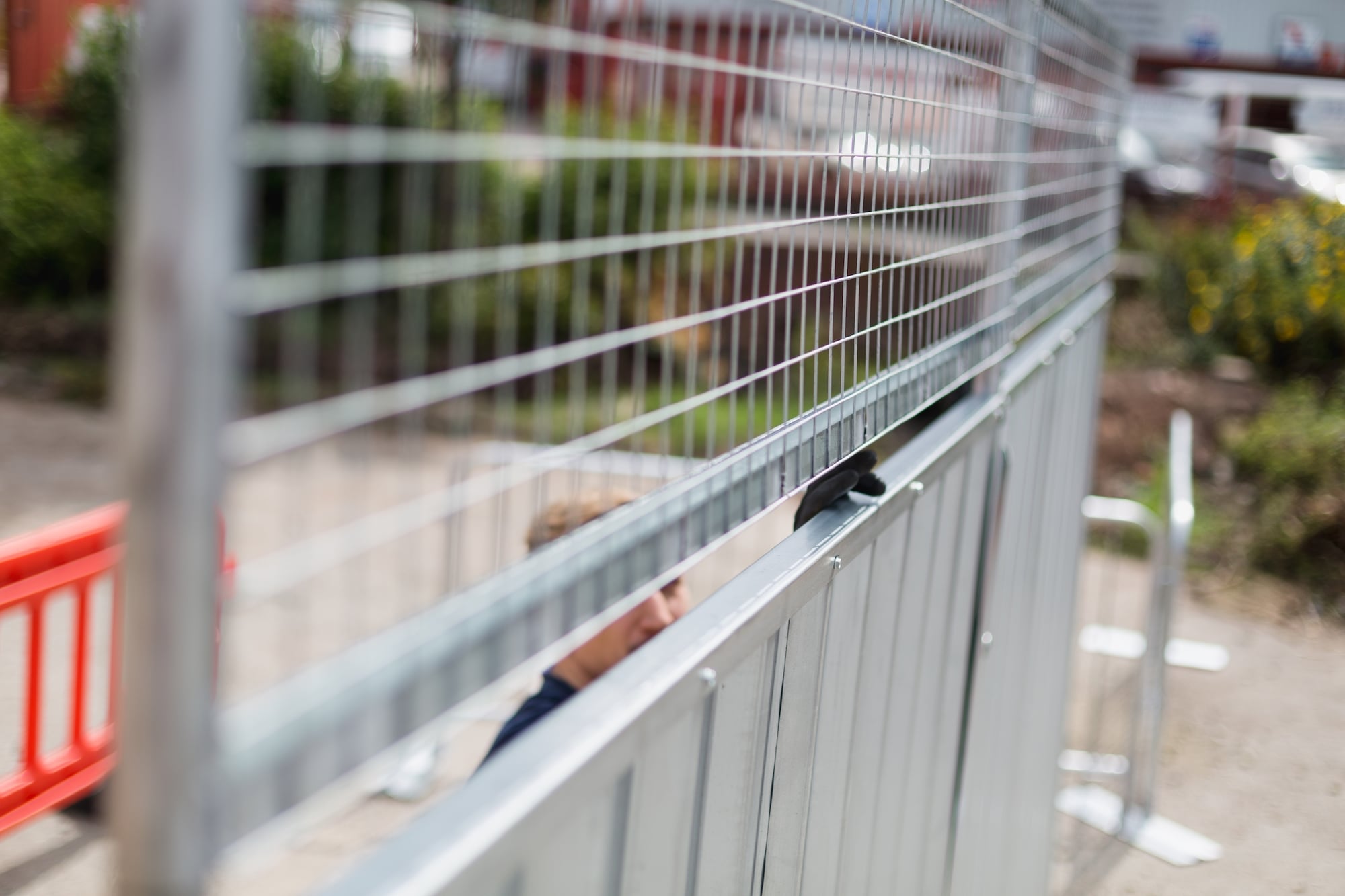
The hybrid steel and mesh hoarding panel has a solid lower infill with mesh above. Choose it where security staff or a client need to see into the site while the lower half still screens materials and stops access at ground level.
Heavy duty on-ground hoarding
Heavy duty on-ground hoarding is for long, exposed or high-profile lines where the ground cannot be broken, such as hard standing over services or a finished car park. It is braced and ballasted for heavier duty than panels in feet, and it can still be lifted and reset when a phase changes.
SteelWall in-ground hoarding
SteelWall in-ground hoarding fixes heavy duty steel panels to posts set in the ground. It is the choice for perimeters that stay put for a long programme, for high security boundaries and for exposed sites where excavation is allowed.
PVC EcoHoard hoarding
The PVC EcoHoard hoarding system joins interlocking PVC boards on a steel tube framework held by concrete ballast. It is built for major projects and phased developments where the line moves between phases, and it carries project graphics and signage.
Concrete barrier hoarding
In these systems, temporary vertical concrete barriers (TVCB) carry the hoarding, so the line screens the site and resists impact from plant and deliveries working close to it. PCH concrete barrier hoarding has a timber plywood face for a solid screen, and the PCM concrete barrier with mesh extension adds height with a mesh top where sight lines matter more than privacy.
Crash tested hoarding for roadside work
Where a vehicle on a live road could strike the line, put the hoarding on a crash tested barrier. CityWall crash tested hoarding is tested to EN 1317-2 at N1 and N2 and combines a slim footprint, noise reducing panels and anti-climb protection up to 5m for inner-city and roadside sites. Construction site pit lanes use the same barriers to form a protected site entrance off a live road. The traffic management around both is planned and laid out under Chapter 8 of the Department of Transport's Traffic Signs Manual.

On-ground or in-ground site hoarding
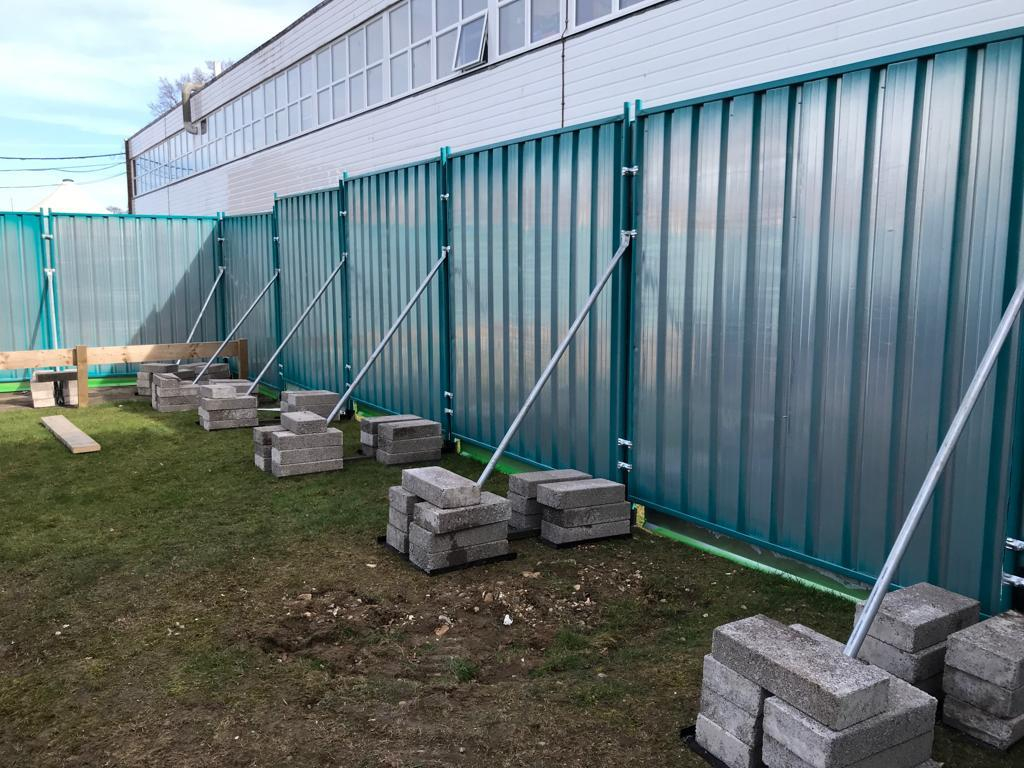
On-ground hoarding stands on the surface on feet, ballast trays or concrete blocks, and it is right for phased sites, hard standing, short programmes and any line that will move. Portable panels, heavy duty on-ground hoarding, PVC EcoHoard and the concrete barrier systems all stand on the surface, so no posts go into the ground.
In-ground hoarding fixes the panels to posts set in concrete, which suits long programmes, high security perimeters and exposed boundaries where excavation is permitted. SteelWall is the in-ground system in the range. Before posts go in, the line needs a services scan and clearance from whoever controls the ground, and the time to dig, set and later remove the posts belongs in the programme.
Hoarding ballast and wind loading
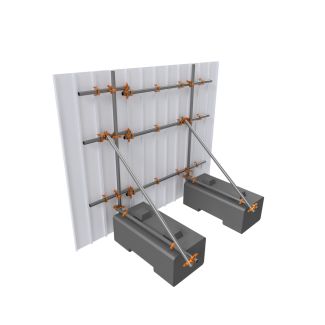
Solid hoarding takes the full force of the wind across its face, where temporary mesh fencing lets air pass through, so a hoarding line needs more ballast for the same length. The ballast steps up with the exposure and the type of hoarding:
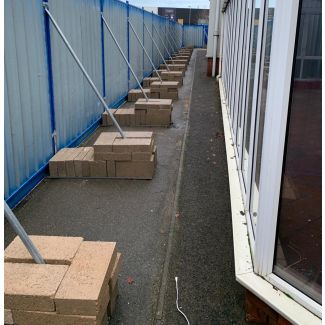
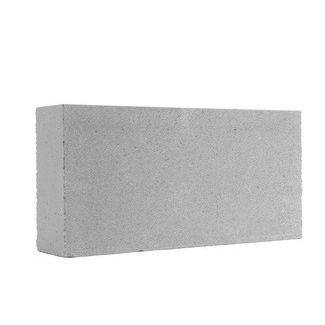
- Short, sheltered runs of portable panels stand in rubber fence feet, with stabilisers and block trays behind the line loaded with concrete ballast blocks.
- Exposed on-ground lines move up to ballast tray systems: the Safe Base wind resistance system with a single or double tray on an anti-trip foot, the heavy duty single tray of the Safe Hoarding ballast system, or the Wates ballast hoarding system, a double tray system that takes varying amounts of ballast.
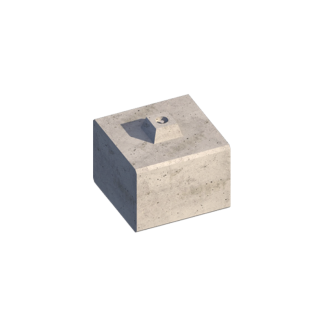
- Heavy duty on-ground hoarding is held by concrete kentledge blocks or counterweight concrete blocks.
- Long-term SteelWall lines rely on posts set in the ground.
On soft ground, ground pins through the stabiliser base plates stop the stabilisers sliding. The amount and spacing of ballast come from a site-specific wind calculation by the temporary works designer, based on location, exposure, height and the finish of the line, and the agreed layout belongs in the construction stage safety and health plan kept by the PSCS.
Hoarding gates and access points
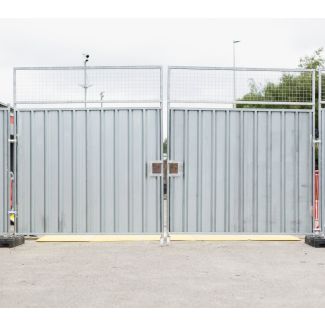
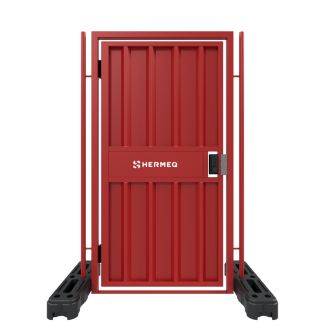
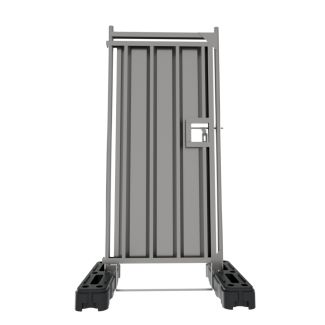
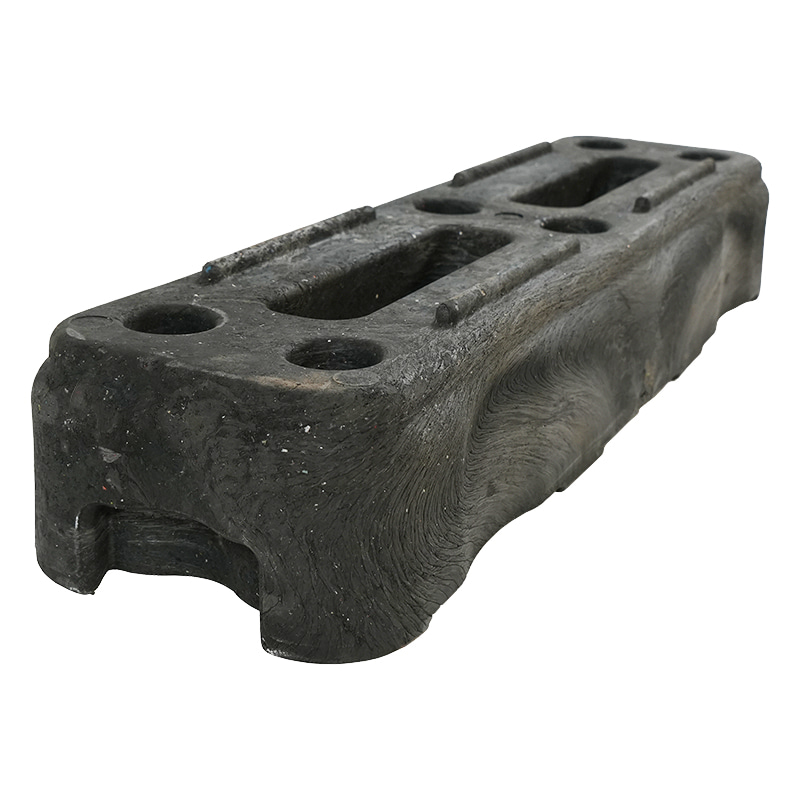
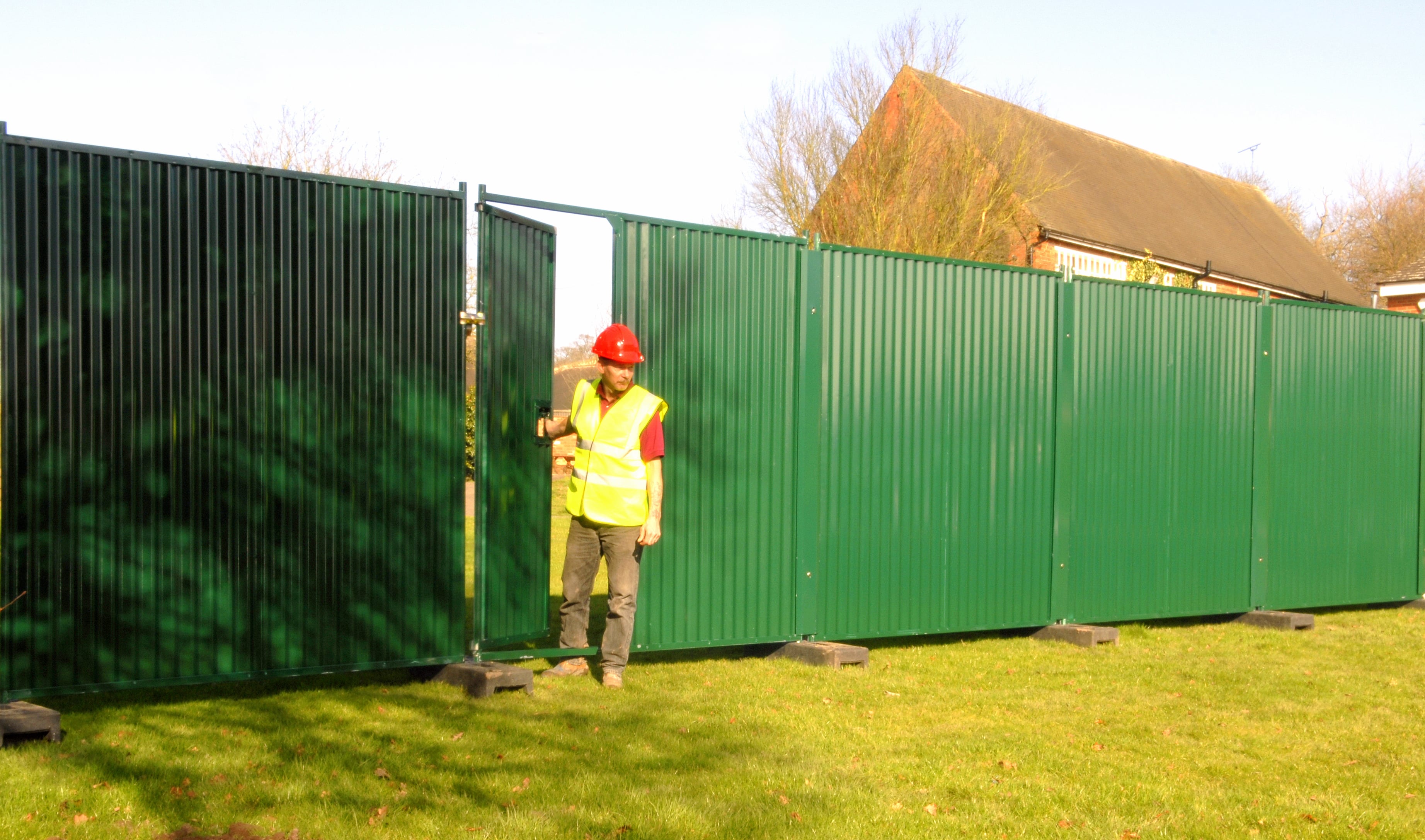
A gate has to match the hoarding system it sits in and the ground under it. On portable panel lines, the built-in hoarding pedestrian gate takes the place of a panel, the standalone hoarding pedestrian gate fits between two panels, and the steel hoarding vehicle gate opens the line for deliveries and plant. Where entry is limited to authorised staff and there is no site power, the DigiNox hoarding pedestrian gate uses a keyless mechanical code lock.
SteelWall lines take the heavy duty in-ground pedestrian gate. For heavy duty vehicle access, the base plated on-ground vehicle gate is for flat, even surfaces, the single plate vehicle gate for uneven ground is the one for rough or falling standing, and the TVCB vehicle gate closes openings in concrete barrier lines.
Steel hoarding heights, finishes and timber alternatives
Hoarding panel heights
Portable panels and their gates come in two heights, 2.0m and 2.4m. The lower height covers most building and demolition perimeters, and the taller panel suits town centre frontages, sites next to homes and boundaries where climbing or overlooking is a concern.
Galvanised or powder coated hoarding
Galvanised steel is the working finish for hoarding that moves from job to job, with corrosion protection across the whole panel. Painted and powder coated panels carry a site or client colour on the public face, and SteelWall takes a bespoke RAL colour. Logos, contact details and project images come from the printed and branded hoarding range.
Steel or timber plywood hoarding
Timber plywood hoarding is the better material where the hoarding must be cut on site around existing walls and levels, painted to a scheme or left as a fixed perimeter for a long programme.
Hoarding panel accessories
Infills and ground skirts
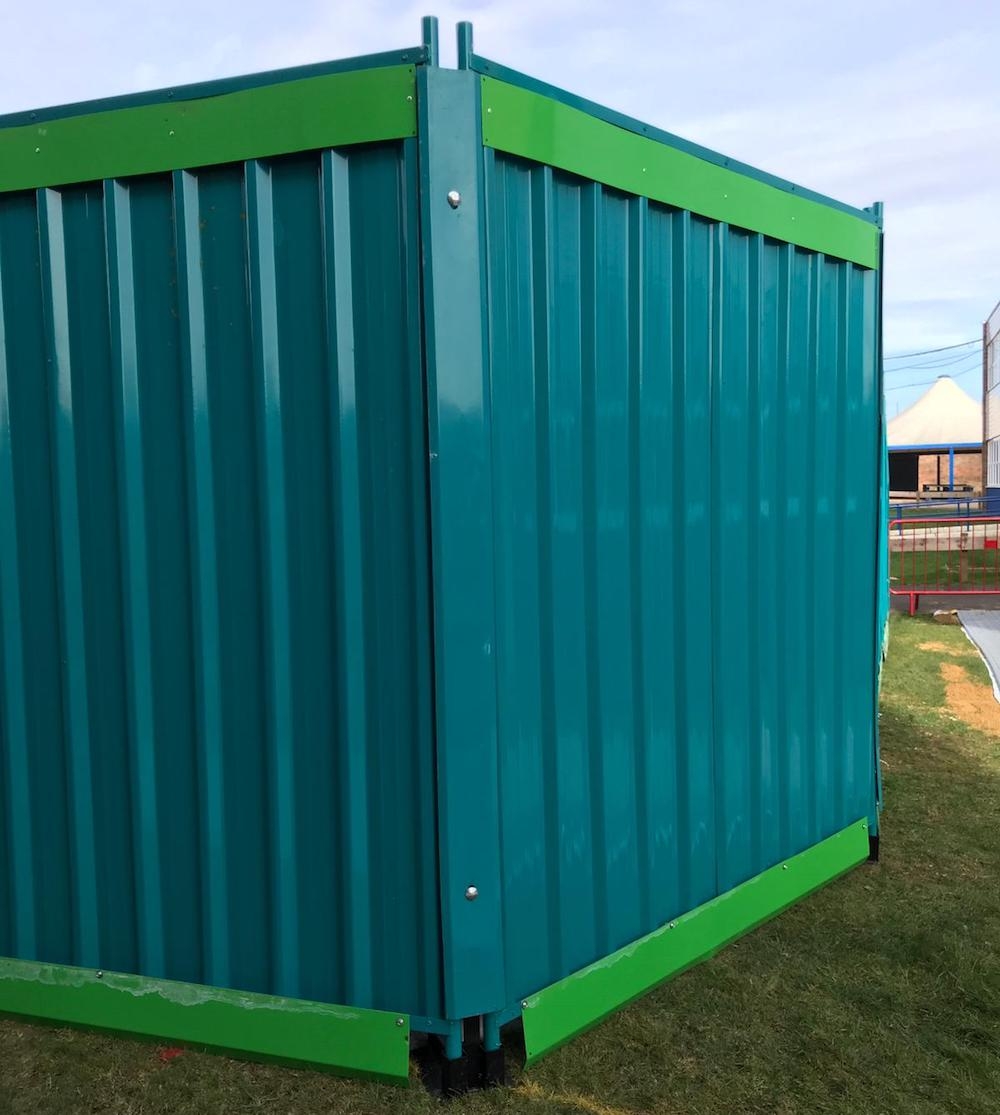
Hoarding infills close the gaps between panels, and hoarding ground skirts close the gap between the bottom rail and the ground. Both come in galvanised, painted and powder coated finishes to match the panels.
Security fittings and extensions
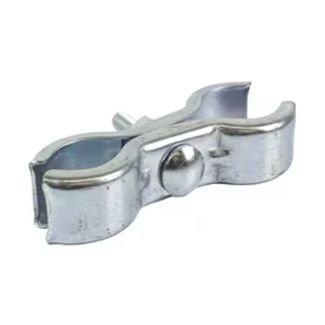
Standard fence couplers join the panels, with two to a joint for a secure line. Anti-tamper fence clips replace them where interference is likely, since they open only with their own spanner, and anti-lift brackets stop panels being lifted out of their feet. A mesh hoarding extension adds height to portable panels without greatly increasing the wind load.
Stillages for storage and transport
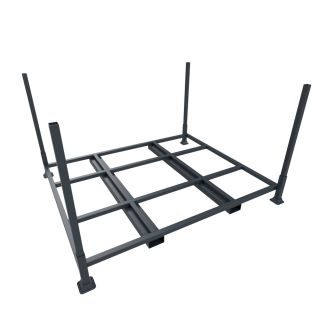
Hoarding panel stillages hold panels of either height for lifting, loading and storage between jobs.
Popular Categories

Heras Fencing
View Products >

Site Gates
View Products >

Acoustic Barriers
View Products >
Frequently Asked Questions
Site hoarding is a solid, fully clad barrier that hides the work and gives the site a clean public face, while mesh site fencing is see-through. Hoarding suits street frontages, demolition and sites next to homes and businesses. Many sites use both, with hoarding on the public side and mesh fencing for segregation inside.
Yes. Hoarding that stands on a public road or footpath needs a licence from the local authority before it goes up. Councils generally ask for a drawing of the line, the dates it will stand and proof of insurance, and they can set conditions on the pedestrian route, lighting and upkeep of the hoarding.
The panels stand in feet without digging, and couplers join each panel to the next as the line goes up in sequence. Stabilisers are fixed to the back at the spacing the wind calculation sets, ballast goes into their trays, and anti-lift brackets lock the panels into the feet.
Measure the line, take off the width of each gate opening, divide the rest by the width of one panel and round up. Allow one foot per joint plus one at each end and two couplers per joint, then add stabilisers and ballast at the spacing the wind calculation gives.
Yes. Steel hoarding screens festival and concert perimeters, back-of-house areas, generators and waste compounds where people should not see in or climb through. On grass and open ground the line needs stabilisers and ballast as it would on a building site.