







Skips for Sale
HERMEQ supplies steel skips to waste collectors and contractors for building, demolition, groundworks, industrial and recycling sites, from the open builders skip that a skip loader lorry collects to the smaller skips that cranes, forklifts and telehandlers move around a job. The range covers chain lift and drop door builders skips, crane lift builders skips, boat skips, drop bottom and automatic bottom empty skips, rotating skip bins, auto dumping containers, concrete washout skips and a crane-lugged mortar skip.
Each skip is chosen by how it will be lifted and emptied on site, and each comes in the sizes and colours that suit the waste it takes.





Skip types for site waste
The range divides by how each skip is lifted and how it is emptied, and that decides where on a site each one works.
Chain lift builders skips
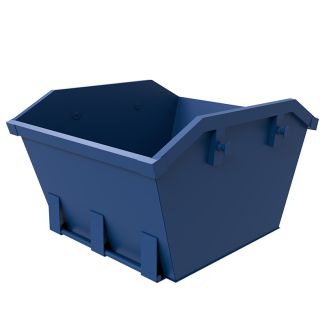
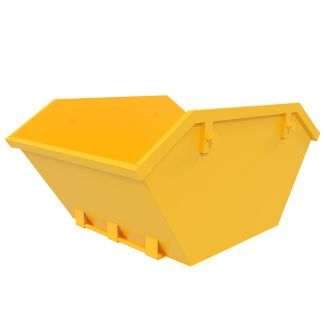
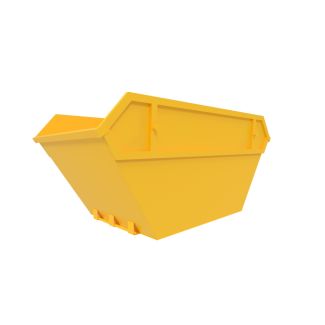
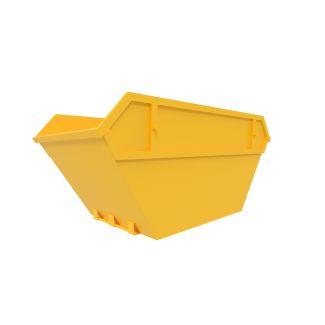
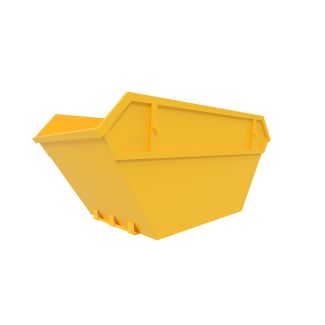
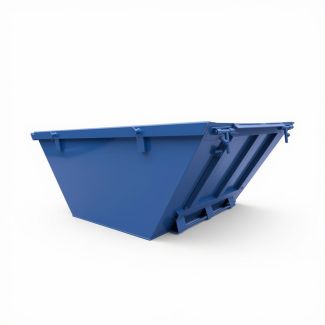
The open chain lift builders skip is set down, lifted and tipped on chains by a skip loader lorry. The 2 yard mini skip and 4 yard mini skip take waste from small refurbishments and clear-outs. The 6 yard builders skip and 8 yard standard skip are the general sizes on building sites, and the 10 yard large skip and 12 yard builders skip take the volume from demolition and strip-out work.
Drop door skips
A drop door skip has an end door that lets down, so waste can be barrowed or walked in at ground level instead of lifted over the side. It is the better choice where most waste leaves the job in wheelbarrows, as on a house refurbishment or a shop fit-out. The 4 yard drop door mini skip suits small jobs, and the 6 yard drop door skip covers most building work. The 8 yard drop door skip and 10 yard drop door skip take a steady flow of bulky strip-out waste.
Crane lift skips
The crane lift builders skip is built for repeated lifting by crane and comes in 4 to 12 yard sizes. It is the choice where waste is produced out of reach of a skip loader lorry and a crane is already working on the job.
Boat skips
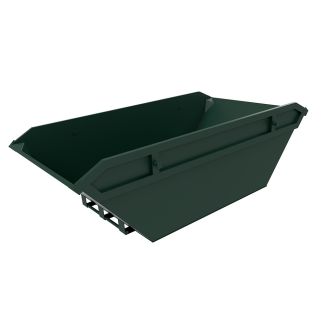
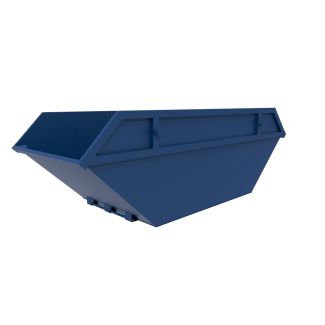
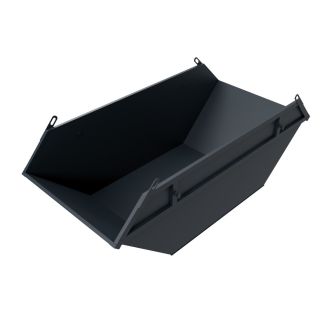
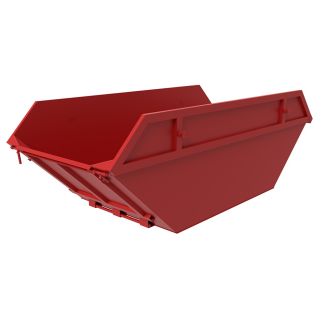
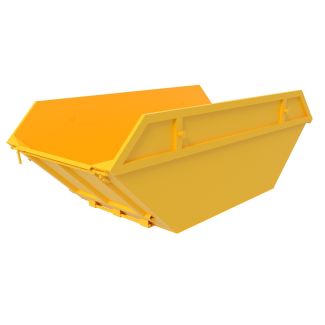
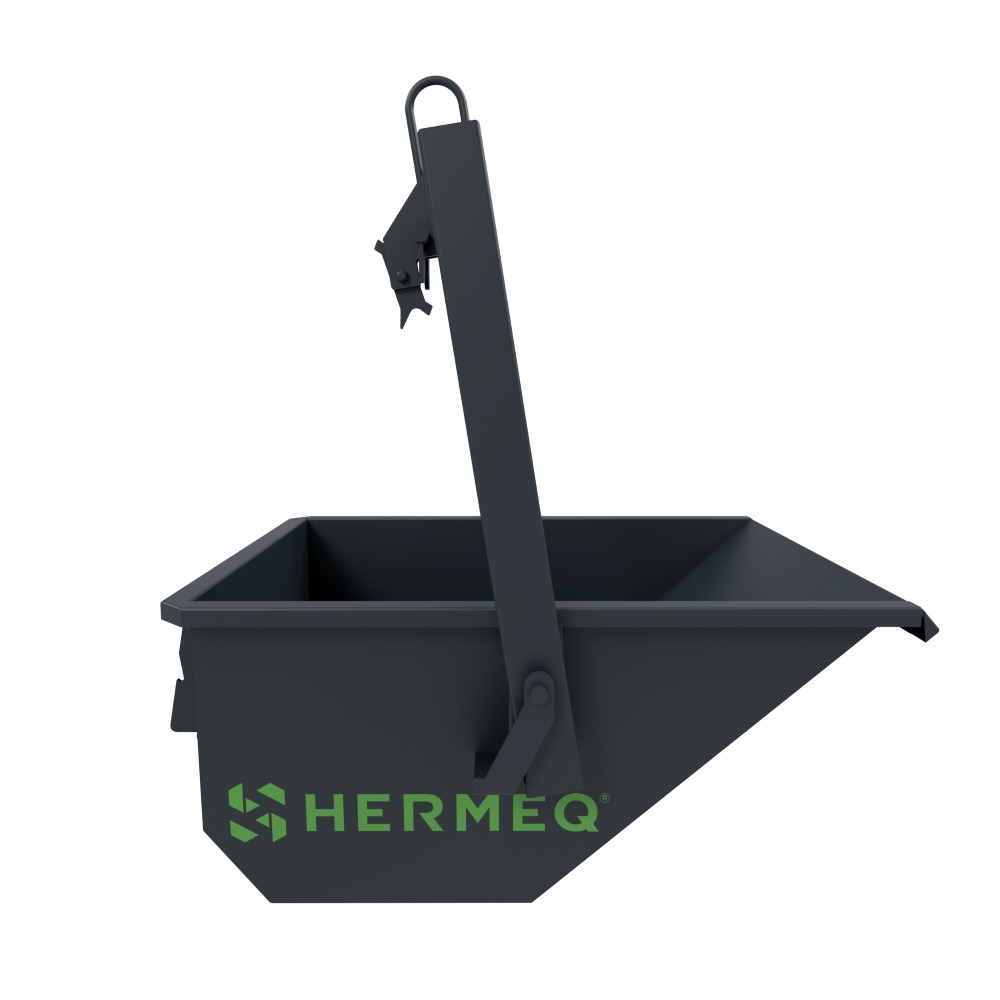
Boat skips have a sloped, boat-shaped body that a digger bucket loads easily, and they are lifted by crane or on chains to move muck, rubble and heavy waste out of excavations, basements and confined areas. The crane lifted boat skip suits general heavy waste, and the self-dumping boat skip, also called a boat tipping skip, empties itself into a lorry or a larger skip.
Drop bottom and bottom empty skips
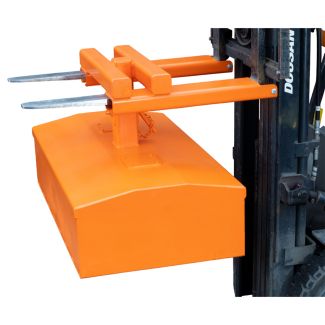
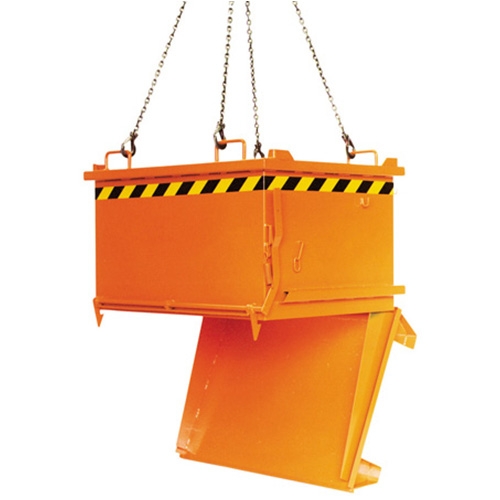
These skips handle waste in two stages: they are filled at the work face, carried to the main builders skip and emptied through the base, so the large skip stays in one place and the waste travels to it. The drop bottom skip releases its load when the floor drops open. The automatic bottom empty skip releases through its base without the driver leaving the cab, which lets one forklift or telehandler operator clear waste from several work areas.
Rotating skip bins and auto dumping containers
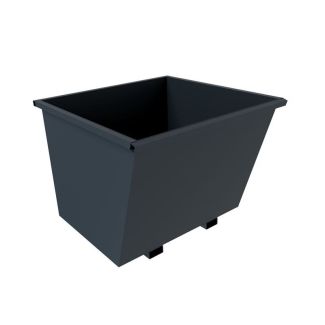
The rotating skip bin has forklift pockets and is emptied by turning it over with a rotator attachment, so confirm the forklift has a rotator before buying one. The auto dumping container is a steel container for workshops and production areas, and it comes on legs that leave room for the forks of a pallet truck or forklift, or on castors as a skip on wheels for moving between workstations, so choose by how it will be moved.
Concrete washout skips
Wash water and slurry from truck mixers, pumps and tools belong in a leak-proof concrete washout skip. An open builders skip is not made to hold liquid, and slurry that escapes reaches the ground and the drains. For a fixed wash station, the concrete washout systems add closed loop recycling, pump trays and washout skip bins.
Mortar skips
The steel mortar skip holds mortar at the work face, sized to supply a bricklaying gang, and has crane lugs so it can be lifted full onto a scaffold or upper floor.

Chain lift, crane lift or forklift skips
The skip follows the lifting equipment on the job. Open and drop door builders skips are lifted on chains by a skip loader lorry, so they suit drives, yards and compounds with firm, level ground. The crane lift builders skip and the boat skips hang from a crane, the right method for sites behind hoarding, on upper floors or set back past a building line, where waste has to be lifted out over the obstruction. The bottom empty, rotating and auto dumping skips are handled by forklift, telehandler or pallet truck, which suits moving waste around a yard, factory floor or site to a main skip or compactor.
Before buying, compare the safe working load of the skip loader, crane or forklift with the weight of the skip when full, which is the skip's own weight plus its load. A skip that is well within the rating empty can exceed it once loaded with dense material. Further forklift tipping skips are listed in the tipper skips range.
Skip sizes and colours
Builders skips run from 2 to 12 yards across the chain lift, drop door and crane lift ranges, while boat skips and drop bottom skips are measured in litres, with boat skips reaching 4,000 litres.
Mini, builders and large skips
The 2 and 4 yard skips are mini skips, and many waste collectors call a 4 yard skip a midi. The 6 and 8 yard skips are the builders skip or standard skip, the usual size on building sites, and the 10 and 12 yard skips are large skips for demolition and strip-out. Heavy waste such as soil, rubble, hardcore and concrete reaches the lifting limit long before it fills a large skip, so it goes in a smaller one, while bulky light waste such as timber, packaging and insulation offcuts goes in a larger one.
Skip colours for waste segregation
Builders skips come in blue, green, red and yellow, and the crane lift builders skip also comes in HERMEQ Grey. A site sets its own colour code for its waste streams, such as one colour for clean timber and another for mixed construction and demolition waste, and shows it on a sign at each skip so every trade loads the right one.
Skip compactors, skip lights and rubbish chutes
Skip compactors
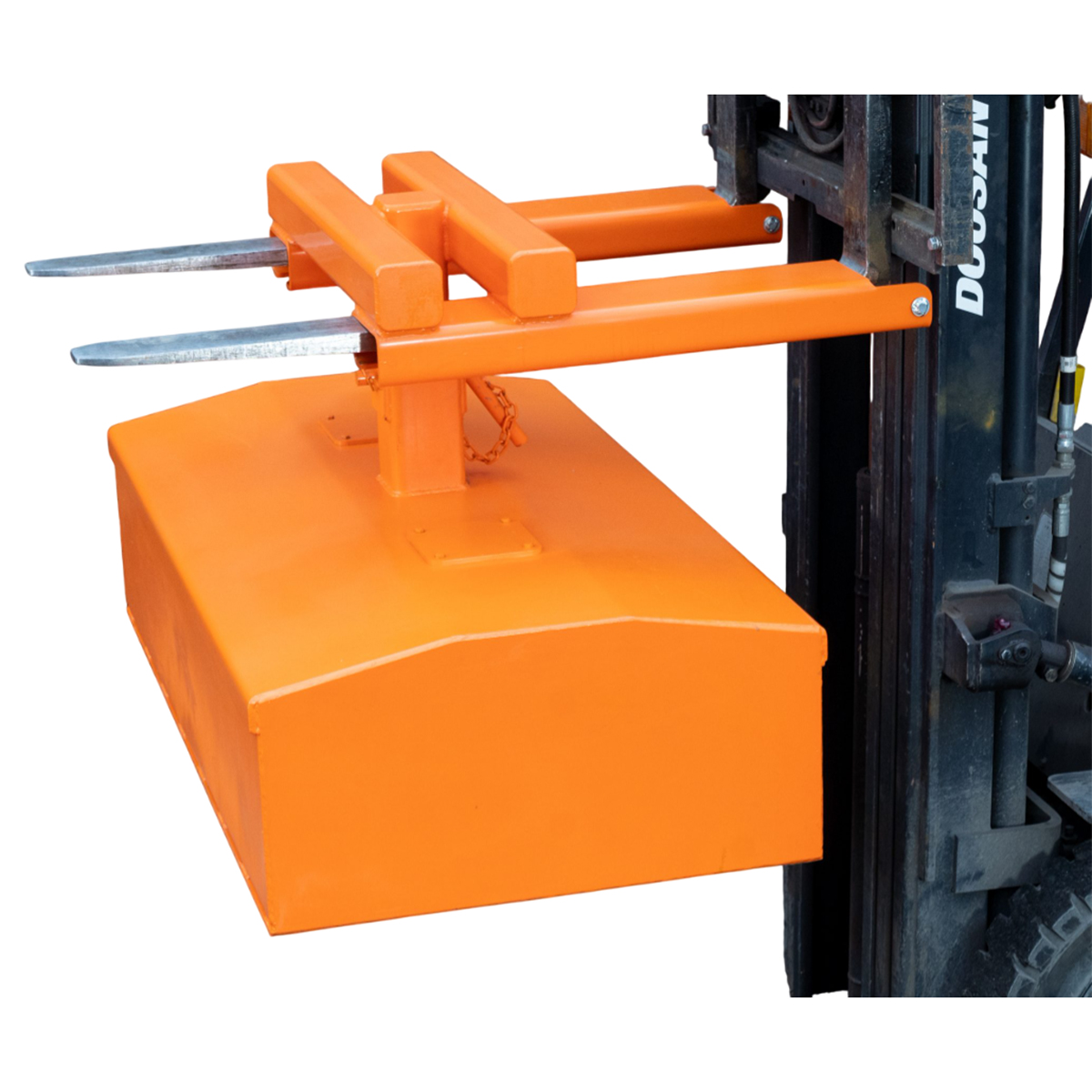
The skip compactor is a fork mounted attachment that presses waste down inside an open skip, so more goes into each skip and fewer collections are needed.
Skip lights
A skip light is a flashing LED lamp that makes a skip standing on a road or footpath visible to drivers and pedestrians at night. Skip permits issued by local authorities commonly require a skip on the road to be lit during darkness.
Rubbish chutes and hoppers
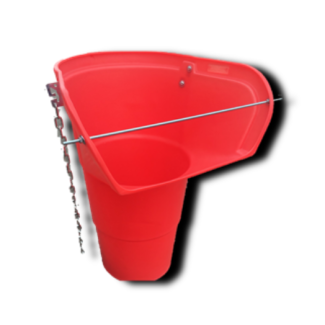
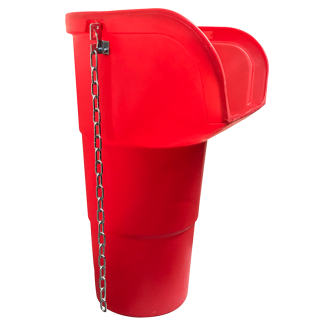
A rubbish chute brings waste down from scaffolding or upper floors into a skip below, so debris is contained on its way down and nothing is dropped over the scaffold. The chute is built from a hopper at the top and chute sections stacked below it, in three sizes. A top hopper sits on top of the run and is loaded from above. A side entry hopper is loaded from the side and hangs on wire and chain, which makes it the choice where waste is fed in from a scaffold lift or window opening alongside the chute.
Popular Categories

Wheelie Bins
View Products >

Forklift Tipping Skips
View Products >

Spill Kits
View Products >
Frequently Asked Questions
Rubble, brick, block, concrete, soil, timber, metal, plastics, packaging and other general construction and demolition waste. Asbestos, liquids, gas cylinders, batteries, tyres, electrical equipment and other hazardous waste are kept out and collected separately. The collector who empties the skip sets the final list under its waste collection permit from the National Waste Collection Permit Office.
Empty, dry paint tins are normally accepted with metal or mixed waste. Tins that still hold liquid paint, along with solvents, thinners and oil-based products, are hazardous waste. They are kept out of the skip and passed to an authorised hazardous waste collector.
A skip is filled no higher than the level load, the line across the top edges of its sides. Waste above that line can fall during lifting and transport, and loads are covered in transit, so a collector will not lift an overfilled skip until it has been levelled.
Yes. A skip placed on a public road or footpath needs a skip permit from the local authority for that area, held for the whole time the skip is there, and the permit sets where the skip can stand. A skip on private ground, such as a driveway or inside a site boundary, does not need one.
Yes. Chains, slings, shackles and hooks used to lift skips are lifting accessories under the Safety, Health and Welfare at Work (General Application) Regulations 2007, which require a competent person to examine them at least every six months and a record of each examination to be kept. The skip loader lorry and the crane are examined under the same regulations.