







Chemical Storage Cabinets & Bunds
HERMEQ supplies chemical storage cabinets and bunded stores for hazardous substances, where a sump or bund holds leaks and spills away from the ground and drains. The range covers lockable chemical storage cabinets in steel and polyethylene, Chemstor steel storage boxes, fire resistant cabinets with deadlocked doors, and bunded storage from sump pallets and cages to walk-in modular stores.
Formats run from lockable shelved cabinets for tins and bottles to cabinets and stores that take drums and IBCs, for construction sites, workshops, facilities and farms.
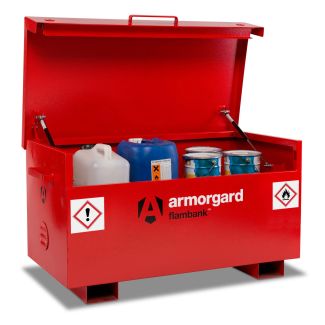
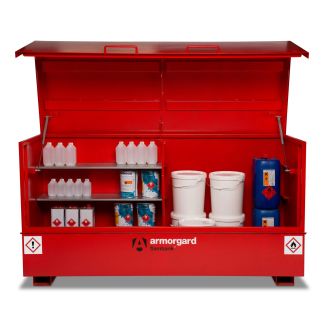
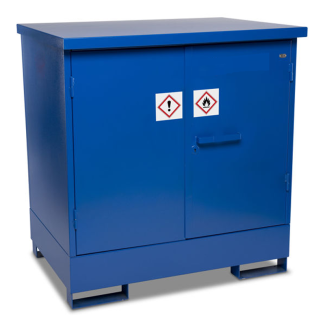
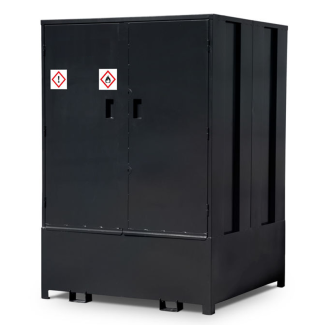
Chemical storage cabinets, chests and bunded stores
The right format follows the size and number of containers on site, from a few tins in a cabin to drums, IBCs and the mixed stock of a whole compound.
Hazardous substance storage boxes
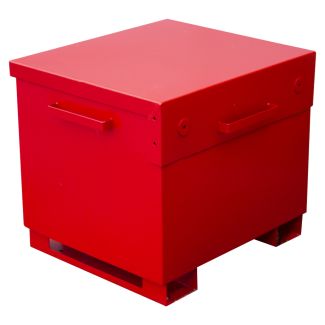
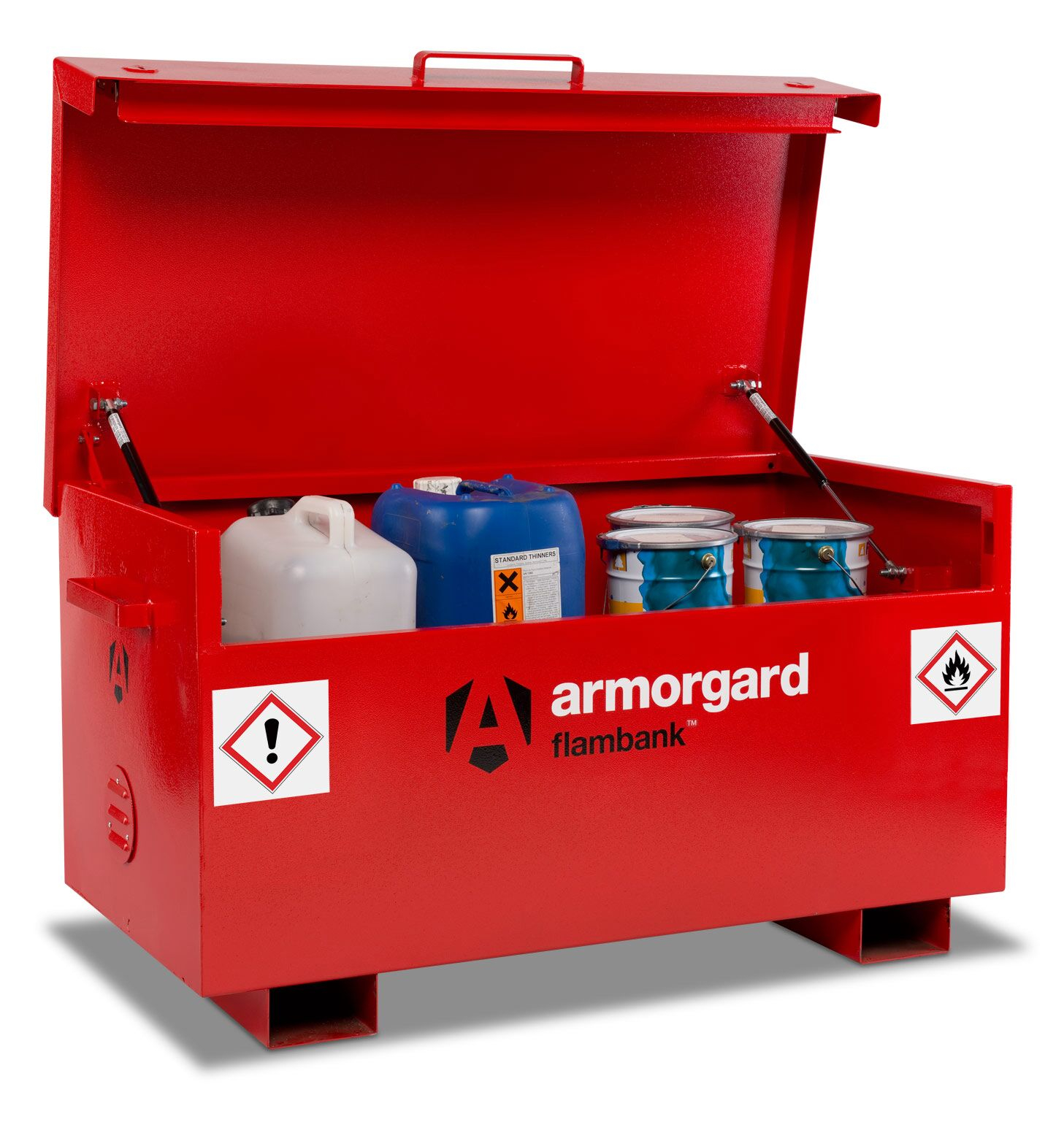
Low steel boxes suit the smallest stores, where a few tins of paint, cans of fuel or bottles of solvent need a locked place in a site cabin, workshop or plant yard. The hazardous substance storage boxes take chemicals and flammables at floor level. For a heavier build, the Chemstor chemical storage containers are made from structural grade steel with a thick-walled sump, and the tallest version has shelves for sorting smaller containers by type.
Chemical storage and security chests
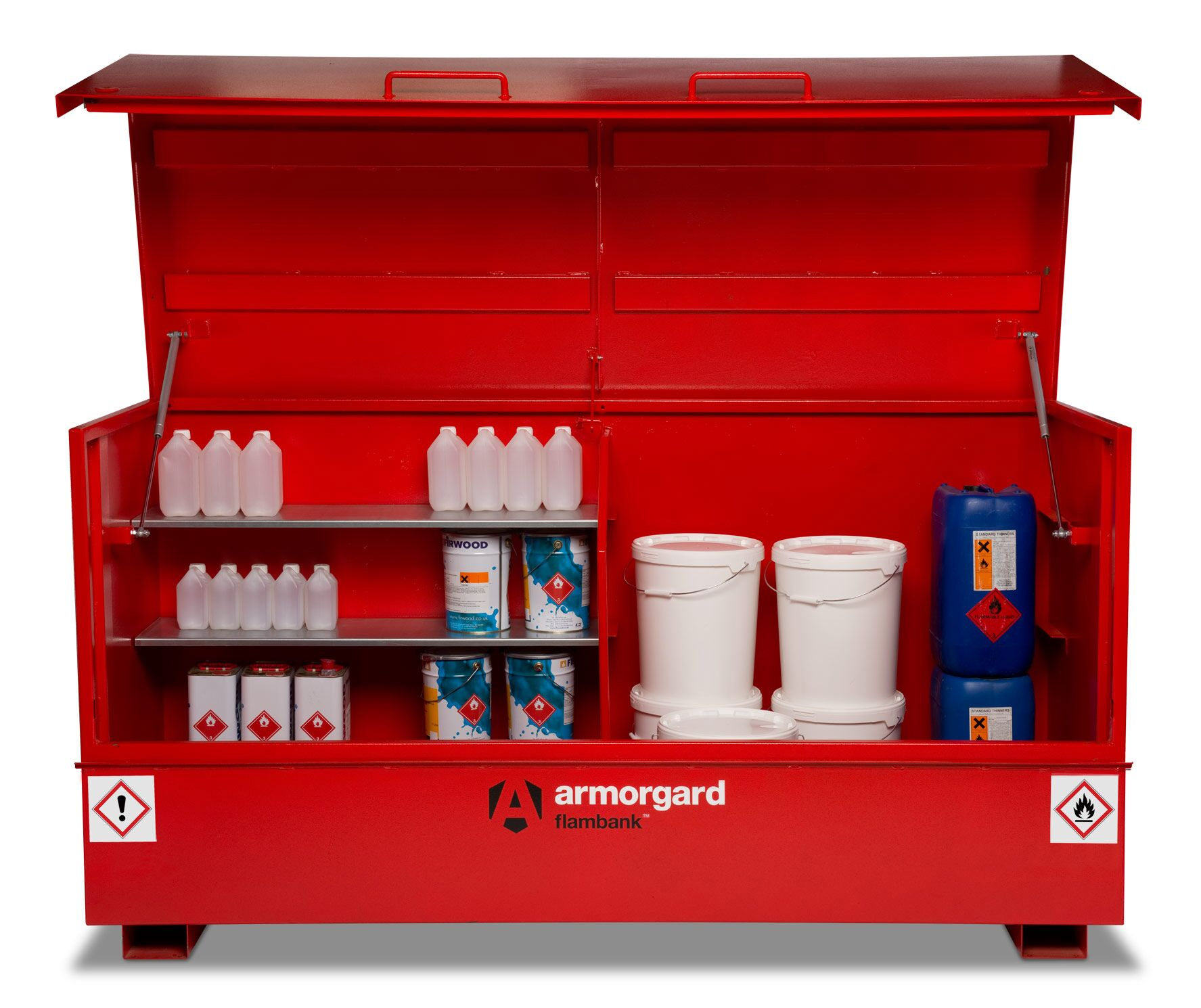
Chests are the next size up, for a maintenance team or a trade gang that works from more stock than a box holds. The chemical storage and security chests run from a compact unit to a long chest that keeps a compound's day-to-day chemicals in one place, so one design covers a small job and a large site.
Steel chemical storage cabinets for drums and IBCs
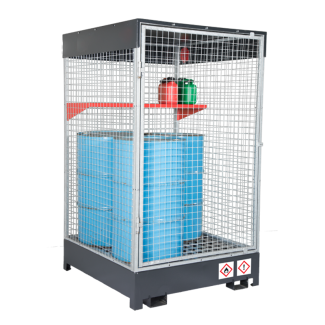
Cabinets with heavy duty doors suit drummed oils, fuels and chemicals that are handled every day. The steel chemical storage cabinets take drums and jerry cans, in two sump sizes, and are fire resistant for up to 30 minutes. Where an IBC has to be locked away, choose the heavy duty chemical cabinet for IBCs, which has wide doors and 1110 litres of storage.
Polyethylene chemical cabinets
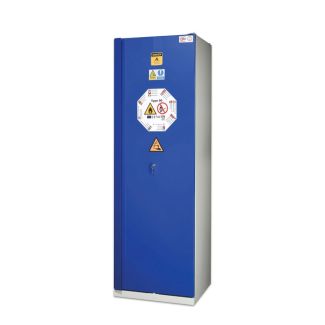
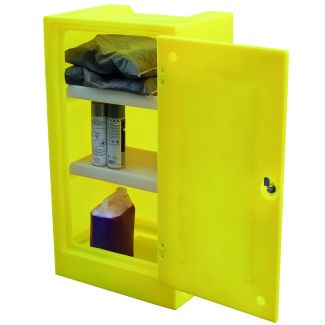
Rotationally moulded polyethylene chemical storage cabinets cover the smaller and lighter end of the range, from a lockable cupboard with shelves for bottles and cans to a cabinet that holds a single drum upright. They suit cleaning chemicals, agrochemicals and corrosives in plant rooms, maintenance stores and farm buildings.
Walk-in modular chemical stores
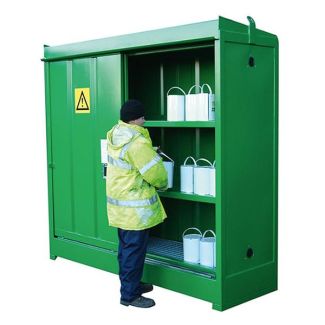
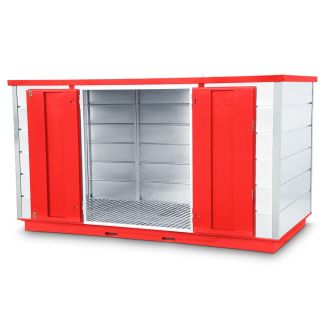
When a compound holds stock for several trades, a walk-in modular chemical store puts it in one room that people can step into to select containers. It suits long projects and depots where the volume has outgrown cabinets, and it comes in several footprints so the store can be sized to the site.
Chemical storage cages
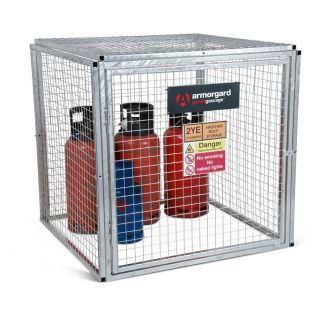
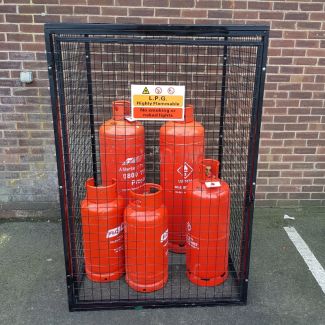
A chemical storage cage is a steel store with galvanised mesh sides over a fully welded sump, for oils, fuels and other hazardous liquids that are better kept with air moving around them. The open sides let a site manager see the contents and their condition without opening the store.
Sump pallets
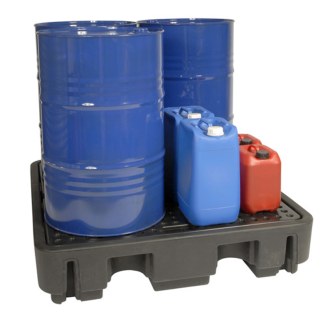
Drum sump pallets are the open format in the range: a bunded PVC pallet that two or four drums stand on while they are in daily use. They suit filling and decanting points, where containers need to be reached from every side.
Bunded chemical storage units
The bunded chemical storage unit holds 20 or 48 containers in one bunded enclosure. It suits a depot or large compound that keeps a standing stock of the same or compatible substances together and needs it in one controlled place.

Chemical bunds and sump capacity
Each cabinet, the Chemstor containers, the cage and the sump pallets stand on a built-in sump: a sealed tray below the containers that holds whatever leaks, drips or spills until it is cleaned out. Sump capacities run up to 485 litres in the larger steel cabinet.
Common practice in chemical bunding is to size the bund to hold 110% of the largest container stored over it, or a quarter of the total stored if that is more, so a split drum is held in full. Larger volumes of fuel or oil held in bulk belong in storage tanks, sized and bunded for that job.
Where drums already sit inside a building or store, a sump pallet adds bunding under them without moving the stock into a cabinet, and it does the job of a drip tray at drum scale. IBCs go on the IBC spill pallets in the drum and IBC spill containment range. The drums and IBCs themselves have their own range.
Open bunds outdoors collect rainwater, which takes up the capacity a spill would need, so they are emptied after rain or kept under cover. The removable grid floors on the heavy duty cabinet and the cage lift out so the sump beneath can be inspected and cleaned.
Steel or polyethylene chemical cabinets
Steel is the choice where theft or fire is the main risk, and polyethylene where the stock is corrosive. The steel cabinets close with lever deadlocks and are fire resistant, and the Chemstor containers are built from structural grade steel, which suits the fuels, oils, paints and flammable solvents kept in site compounds, plant yards and civils depots.
Rotationally moulded polyethylene has broad chemical compatibility, so it suits acids, alkalis and other corrosives, along with agrochemicals and cleaning chemicals. It is also lighter to place, which suits indoor plant rooms, cleaning stores, school and hospital maintenance areas and farm buildings, where the store is set against a wall and stays there.
Many sites hold both kinds of stock. In that case, a steel cabinet for fuels and flammables and a polyethylene cabinet for corrosives keeps each group in the material chosen for it, and keeps substances that react with each other in separate bunds.
Siting hazardous substance storage on site
Separating flammables, corrosives and gases
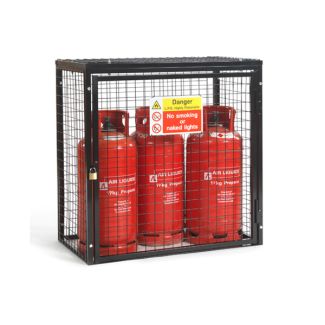
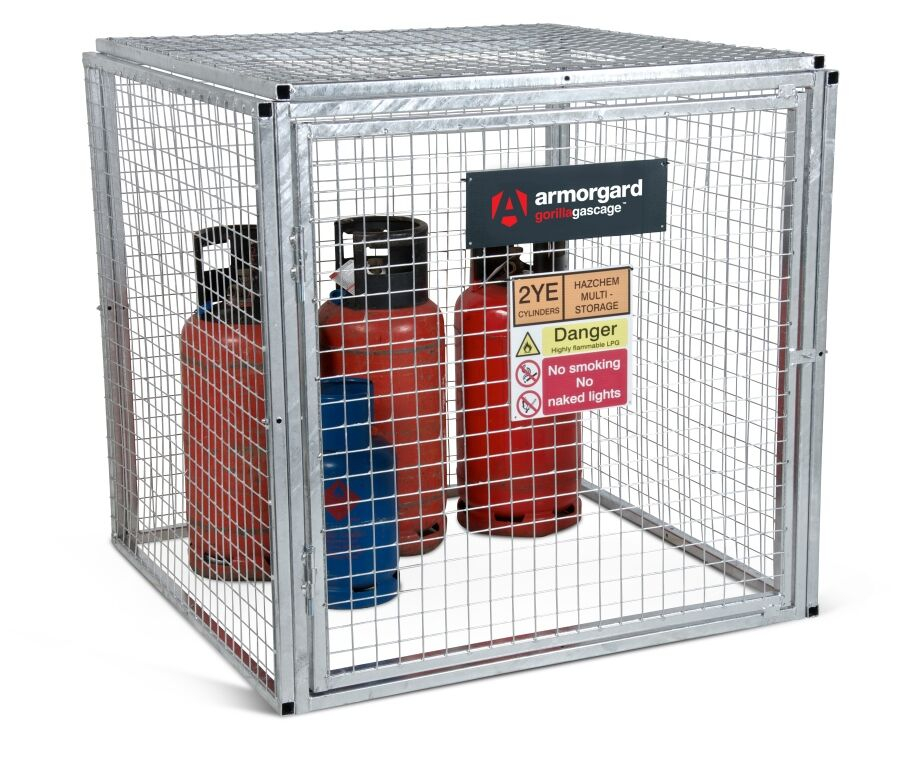
A compound store works best when each hazard has its own unit: flammable liquids in steel, corrosives in polyethylene, and gas cylinders apart from both. Cylinders of propane, acetylene and oxygen are held upright in gas bottle storage cages, with oxygen kept apart from fuel gases. Hot dip galvanised and black powder coated gas cylinder cages suit permanent yards, and a full set of bottles fits the heavy duty gas bottle cage, which can run on castors. Batteries from cordless tools and plant go in lithium-ion battery storage cabinets, with alarms, fire suppression, charging points or a quarantine water tank, and never in a liquids cabinet. Tools, PPE and general stock stay out of the chemical store altogether, in the wider site and workplace storage range.
Ventilation for fumes and gas
Solvents, fuels and gas give off vapour, so a store needs air moving through it. The mesh sides of the cage and the gas cages let vapour disperse in the open. Indoors, closed cabinets go in a ventilated room, away from heat, sparks and the doors used as escape routes.
Moving the store with a forklift
Site stores rarely stay put for a whole job. The mesh storage cage, the heavy duty cabinet and the sump pallets have forklift pockets or skids, so they can be lifted to a new position as the layout changes. The cage also collapses and stacks between jobs, and the modular store arrives flat packed and goes up quickly, which suits a phase that needs a large store for a set period.
Locking stores against theft of fuel and oil
Diesel, oil and tool batteries are high-value targets on an open site. The store goes where it can be seen from the site office, is locked at the end of every shift and has its keys held by named people. The gas bottle storage cages take a padlock.
Popular Categories

Stillages, Bins & Cages
View Products >

IBC Containers & Steel Drums
View Products >

Wire Mesh Pallet Cages
View Products >
Frequently Asked Questions
Paints, oils, fuels, solvents, cleaning chemicals and agrochemicals are the usual contents, kept in their original sealed containers. Substances that react together, such as acids and alkalis or oxidisers and flammables, go in separate cabinets. The safety data sheet for each product gives its storage conditions and what it must be kept away from.
The Safety, Health and Welfare at Work Act 2005 and the Safety, Health and Welfare at Work (Chemical Agents) Regulations 2001 require employers to identify the hazards from chemicals at work, assess the risks and control them, and the Health and Safety Authority (HSA) enforces them. On construction projects, the Safety, Health and Welfare at Work (Construction) Regulations 2013 give the Project Supervisor Construction Stage (PSCS) the duty to coordinate safety on site, which includes how and where hazardous substances are stored. Storage areas are normally marked on the site layout so every contractor knows where they are.
The steel cabinets, chests, boxes and the cage are built for site compounds and yards, with powder coated or galvanised finishes. An outdoor store stands on level, firm hardstanding, away from drains, watercourses and the site boundary. It also needs clear access so containers can be moved in and out without lifting them over other stock.
The store carries hazard warning signs for the substances inside it, and every container stays in its original labelled packaging. Safety data sheets are kept in a holder on or beside the store, so they are at hand during a spill. The sump pallets and the gas bottle storage cages come with hazard signage fitted.
Sumps are checked at every routine site inspection and whenever containers are moved, filled or decanted, looking for liquid, damage to the sump walls and corrosion. Anything found in a sump is treated as the substance it came from. It is pumped out or absorbed with a spill kit and disposed of as hazardous waste, never washed to drain.