







Scaffolding Parts
HERMEQ supplies scaffolding parts for tube and fitting and system scaffolds. Timber and steel scaffold boards come in several lengths to form load bearing platforms for work at height: the timber boards are machine stress graded, and the steel boards are made from pre-galvanised steel. Galvanised steel scaffold tube comes in 4mm and high yield grades, in standard lengths. Couplers join tube to tube at right angles or at any angle, prop bracing couplers clamp scaffold tube to adjustable steel props, and base plates sit under the standards to spread their load. Scaffold towers, for freestanding access, are in their own range.






Galvanised scaffold tube
Order the tube grade the scaffold design specifies, because a design calculated for one grade is built in that grade, and the two grades are not mixed in one scaffold unless the design allows for it.
4mm steel scaffolding tube
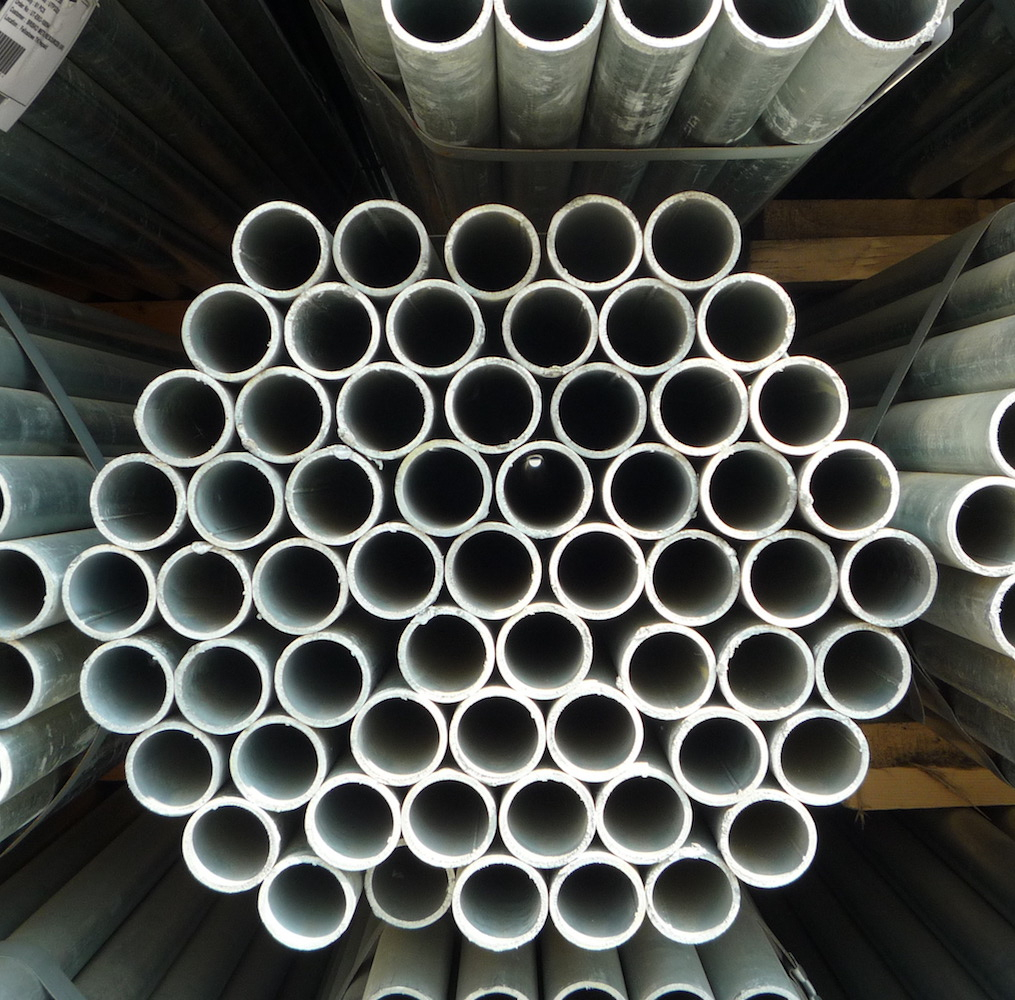
The 4mm galvanised scaffold tube has the heavier wall and is the traditional grade for tube and fitting scaffolding, so most existing designs and yard stock are built around it. Choose it when the design specifies this grade, when it will work alongside tube of the same grade already in the yard, or when tube is wanted for general site work such as prop bracing, temporary handrails and framing.
High yield scaffold tube
High yield scaffold tube is made from a higher strength steel with a thinner wall, so each length is lighter to carry than the same length of 4mm tube. Choose it when the scaffold design is drawn for high yield tube, and on jobs where a lighter tube makes a difference to the gang carrying, loading and lifting it by hand, such as tall facades and long runs. Where a yard holds both grades, separate racks from the scaffolding storage range keep them apart, so the wrong grade does not go out on the lorry.

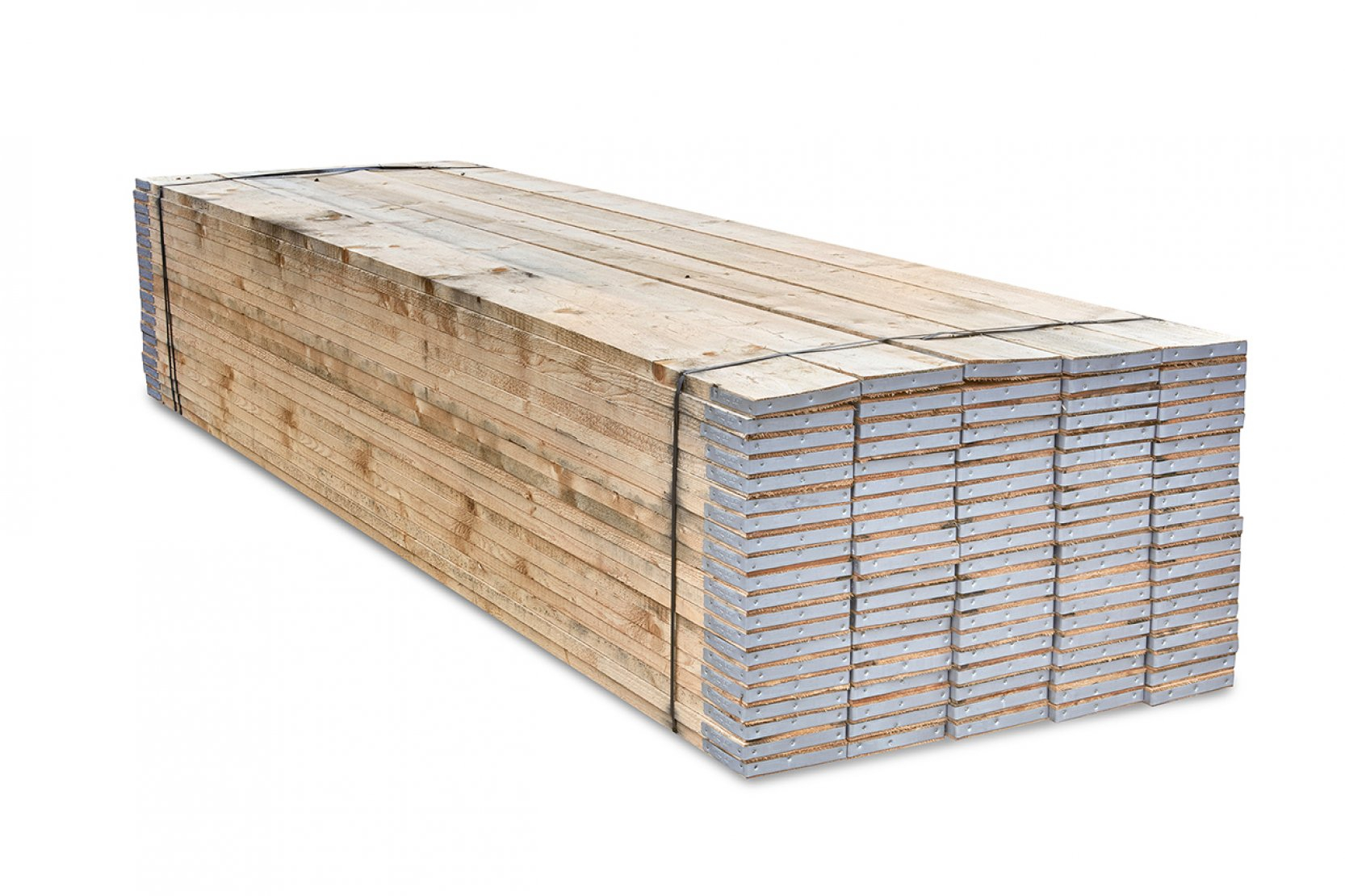
Scaffold boards: timber, steel and system boards
Boards are chosen first by the scaffold they deck: banded timber and steel boards suit tube and fitting scaffolds, and Kwikstage and Omega Cuplok boards fit their own system scaffolds only.
Banded timber scaffold boards
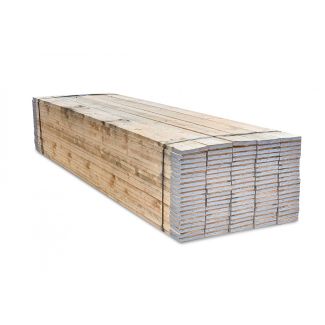
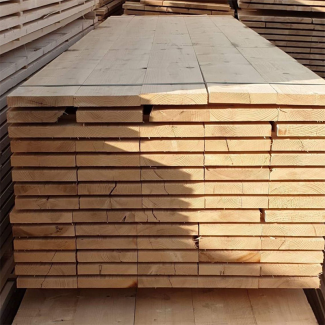
Banded timber scaffold boards, also called scaffold planks, are the general board for tube and fitting platforms, laid across the transoms to form each working lift. Every board is machine stress graded, a process that finds flaws in the timber the eye would miss, and the steel bands at each end hold the board ends together against splitting. Choose them for most building, refurbishment and maintenance scaffolds.
Steel scaffold boards
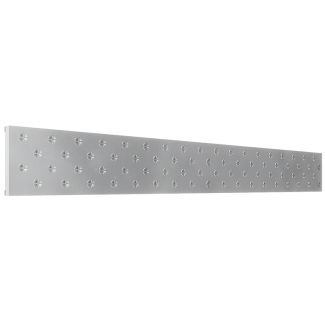
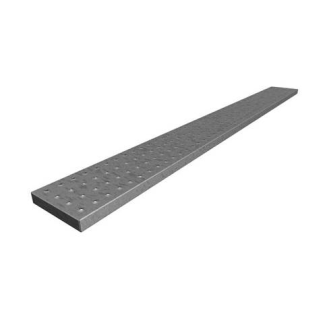
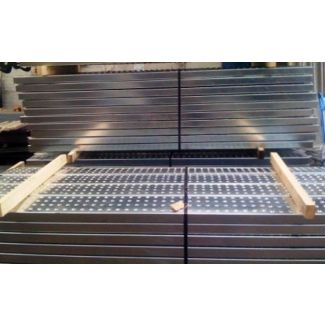
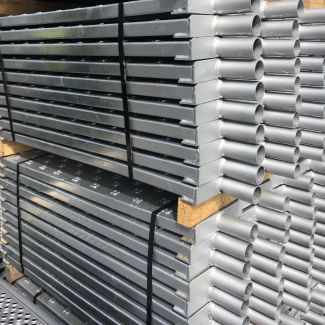
Steel scaffold boards, which buyers also know as metal scaffold boards, are made from pre-galvanised steel with a slip resistant surface and deck a tube and fitting scaffold in the same way as timber. Choose them where boards will stay out in the weather for long spells or move from job to job, and where the deck will carry heavy loading.
System scaffold boards
Kwikstage steel boards and Omega Cuplok boards are made for system scaffolds, where each board is shaped to locate on that system's own components. Each board fits its own system, so a Kwikstage board does not deck a Cuplok scaffold, and neither is made for a tube and fitting frame. Confirm which system is standing on site and order boards from the matching range.
Unbanded timber boards
Unbanded timber boards are scaffold board timber without the end bands, sold for shelving, cladding, DIY and garden projects once treated. They are not for scaffolds or working platforms. For any scaffold lift, choose banded timber boards or steel boards, which are made for platform use.
Scaffolding fittings and couplers
A coupler is chosen by the angle of the joint it makes: fixed square, or free to set at any angle.
Double couplers
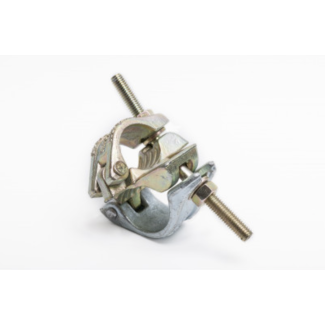
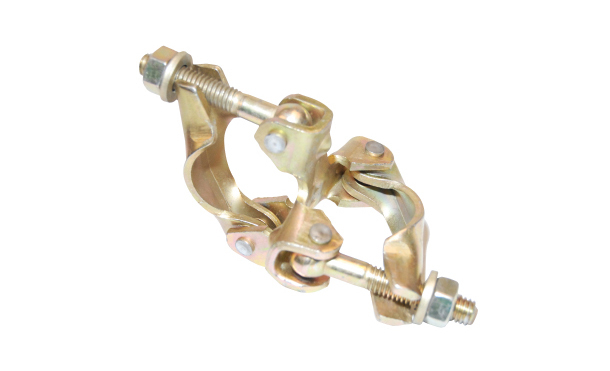
Double couplers, also called right angle or 90 degree couplers, clamp two tubes square to each other and make the load bearing joints that hold a tube and fitting scaffold together. The range carries them in pressed steel, along with scaffold couplers for general tube to tube connections.
Swivel couplers
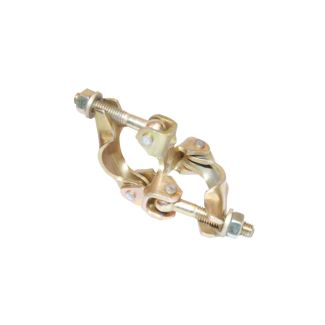
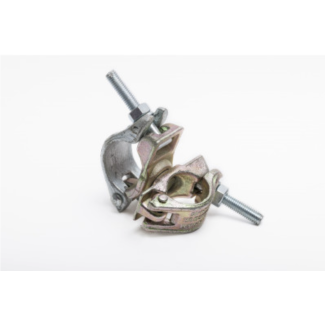
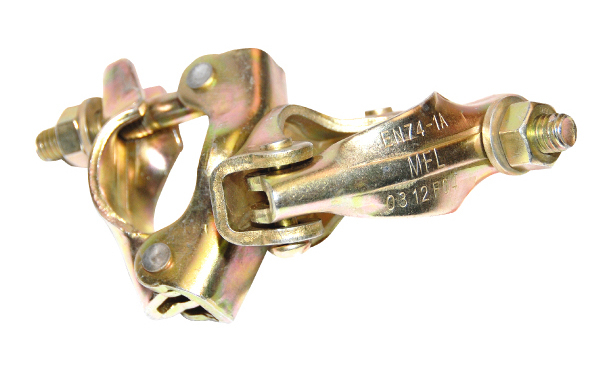
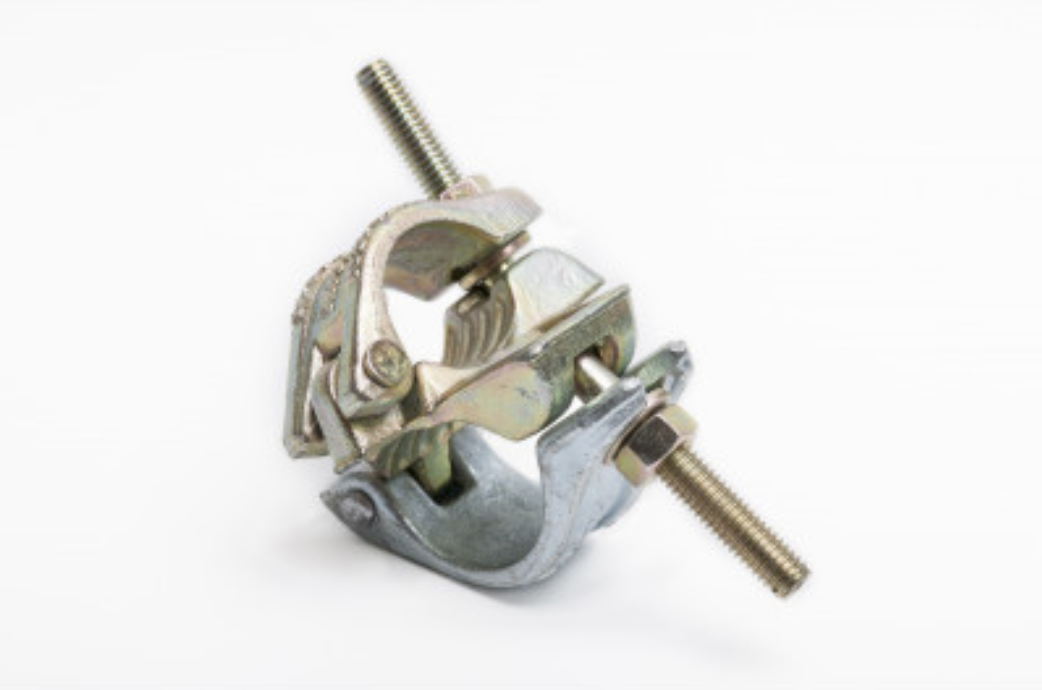
Swivel couplers join two tubes at any angle, because their two halves turn against each other until the bolts are tightened. They are the fitting for any tube that crosses the frame on a slant, and for joints where the structure or a sloping site sets the angle.
Scaffold base plates
Scaffold base plates sit under the foot of each standard to spread its load and give the tube a flat, square seat. On soil, hardcore, tarmac, paving or any surface that could settle or be marked, lay a timber sole board under each base plate so the load spreads over a larger area. A base plate bears directly only on a sound concrete slab or a surface of similar strength.
Tube and fitting scaffolding: which part goes where
A tube and fitting scaffold is built from one tube section throughout, and each length is named for its job in the frame. Standards are the uprights, each one stood on a base plate. Ledgers run horizontally along the face of the scaffold at each lift and are fixed to the standards with double couplers. Transoms span from ledger to ledger across the width of the scaffold and carry the boards that make the working platform. Braces run diagonally, across the face and through the frame, fixed with swivel couplers to stop the scaffold swaying or racking. Guardrails, mid rails and toe boards close the open edges of every boarded lift: the rails are fixed to the standards with double couplers, and tube ties anchor a tube rail where there is no standard to fix to.
Counting each of these from the scaffold drawing, then adding a coupler for every joint and a base plate for every standard, gives the order list for a tube and fitting job. Erection, alteration and inspection come under the work at height provisions of the Safety, Health and Welfare at Work (General Application) Regulations 2007, which the Health and Safety Authority enforces.
Scaffold board sizes and tube lengths
Choosing scaffold board lengths
Timber scaffold boards in the range run from 5 ft (1.5m) to 13 ft (3.9m). Pick a length that suits the bay and the transom spacing, so that each board rests on enough transoms and its ends overhang the last transom by the right amount without trailing into the next bay. Kwikstage and Omega Cuplok board lengths are fixed by the bays of their systems, so they are ordered to match the bay length of the scaffold on site.
Choosing scaffold tube lengths
Across the two grades, scaffold tube runs from 5 ft (1.5m) to 21 ft (6.4m). The short lengths are used for transoms, which span the width of the scaffold, and for short braces and handrail returns. The long lengths make standards, ledgers and diagonal bracing, where fewer joints mean fewer couplers and a quicker erection.
Prop bracing couplers, tube ties and handrail feet
Prop bracing couplers
Prop bracing couplers clamp scaffold tube to adjustable steel props, which a tube to tube coupler is not made to grip. Prop bracing double couplers hold the tube at 90 degrees for square bracing between props, and prop swivel couplers turn through 360 degrees for diagonal bracing. Use them to tie a run of acrow props together under formwork, a beam or an opening, so the props work as one braced set.
Scaffold tube ties
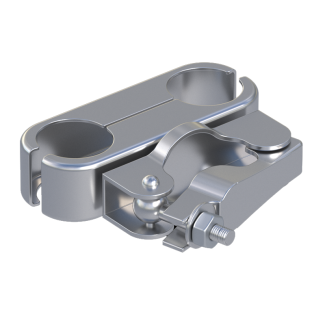
Scaffold tube ties are simple anchor points for handrails built from scaffold tube, used where a rail has to be fixed off something other than a scaffold standard. Single and double ties are available, and they let a run of tube handrail go up with the same tube and couplers as the scaffold itself.
SG4 handrail feet
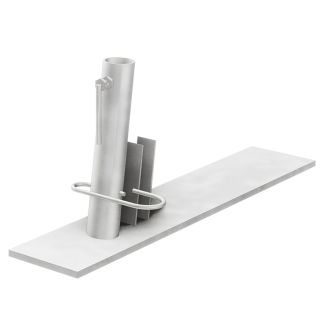
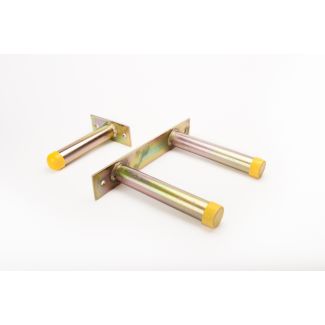
SG4 handrail feet, also known as Shorguard shoes, are the feet for the SG4 guardrail system, a fully galvanised temporary guardrail that leaves the area beneath clear, so work can carry on under it without taking any rail down. They are for sites already running SG4 guardrail. Other guardrail systems for open edges are in the edge protection range.
Popular Categories

Scaffold Ladders & Stairways
View Products >

Scaffolding Stillages
View Products >

Scaffold Sheeting
View Products >
Frequently Asked Questions
Scaffold tube has an outside diameter of 48.3mm, and both grades in the range share it. The 4mm tube has a 4mm wall and the high yield tube a 3.2mm wall, so the grades differ in wall thickness while the outside size stays the same. The common diameter means the same couplers and base plates fit either grade.
Scaffold tube is galvanised steel, with a zinc coating that protects the steel against rust on site. The high yield grade is made from a higher strength steel with a minimum design strength of 355 N/mm2, which allows its thinner wall.
A 21 ft (6.4m) length of 4mm galvanised tube weighs about 28 kg, and a 6 ft length about 8 kg, with the other lengths falling in between. High yield tube comes in under these weights, length for length.
Yes, steel scaffold tube can be cut to a shorter length on site with a disc cutter, a cold saw or a hacksaw. Cut the end square and remove the burr, and wear eye protection and gloves for the work. A cut end has no zinc coating, so treat it with a zinc rich paint if the tube will stay outdoors.
Yes, scaffold tube, scaffold pole and scaffold pipe are all names for the same galvanised steel tube. Scaffolders usually call it tube, and the names 4mm and high yield describe the grade of that tube.
Yes, clamps, clips and couplers are the trade's different names for the fittings that join scaffold tubes. A double coupler is often called a right angle clamp, and a swivel coupler a swivel clamp or swivel clip.
The 4mm steel scaffolding tube meets EN 39, and the high yield scaffold tube is supplied to EN 10219-1. The banded timber scaffold boards are made to BS 2482:2009 from machine stress graded European spruce.
The timber scaffold boards are 225mm wide and 38mm thick, in lengths from 5 ft (1.5m) to 13 ft (3.9m). Steel boards for tube and fitting run from 3 ft to 10 ft, and Kwikstage and Omega Cuplok boards come in the lengths their system bays take.