







Lifting & Lashing Accessories
HERMEQ supplies lifting accessories for raising, moving and securing heavy loads on construction sites and in manufacturing, shipping and transport. The range covers Grade 80 chain slings, chain blocks and lever hoists for the lift, beam clamps and beam trolleys for overhead rigs, loadbinders for tensioning lashing chain on lorries and trailers, and machinery skates for moving plant across a floor. The chain blocks, beam trolleys, heavy duty beam clamps and EN 12195-3 loadbinders each meet the European standard for their type.



Types of lifting accessories
The range splits by what each item does to the load: lifting gear hangs or holds it, lashing gear secures it for transport, and skates move it along the floor.
Grade 80 chain slings
A chain sling connects the hook of a hoist or crane to the load. The Grade 80 chain slings are made in single leg, two leg, three leg and four leg assemblies and are chosen by the number of lifting points on the load. A single leg suits one lifting eye straight below the hook, and two to four legs suit loads that must hang level, such as precast units, steel sections and plant.
Chain blocks
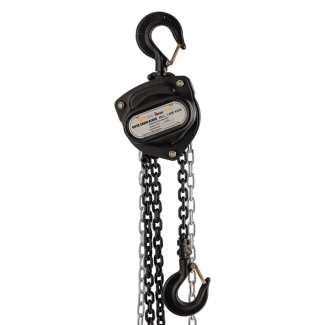
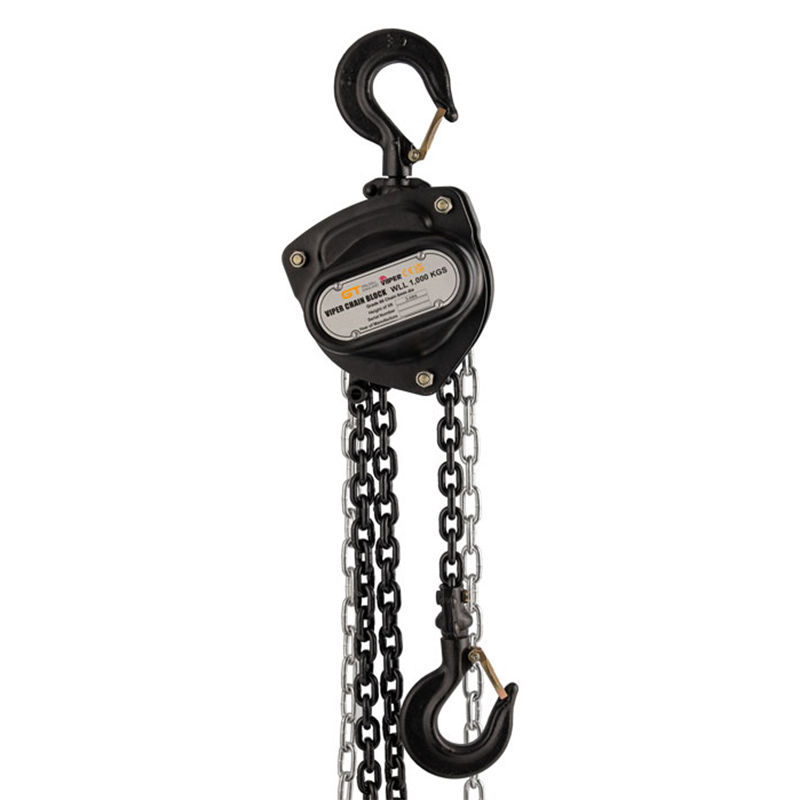
A chain block, also called a chain hoist or hand chain hoist, hangs from a beam, gantry or beam trolley and raises the load as the operator pulls the hand chain. Chain blocks give a slow, controlled lift, and the brake holds the load wherever the lift stops.
Lever hoists
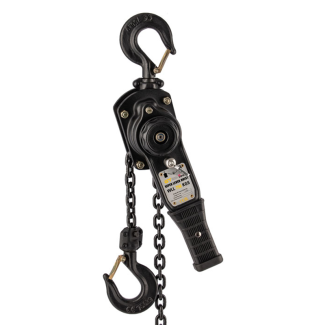
A lever hoist is also sold as a lever chain hoist, ratchet lever hoist or ratchet lever block, and it is worked by a ratchet lever where a chain block uses a hand chain. Lever hoists lift, lower and pull. On site they are the tool for drawing steel into line, tensioning, and making the final adjustments to a load that is already on its way into position.
Beam clamps
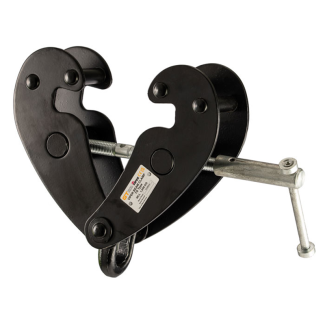
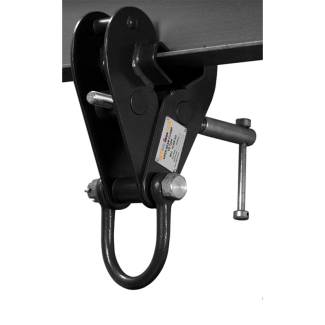
An adjustable beam clamp grips the flange of an I-beam or similar steel section and gives a fixed hanging point for a hoist where the structure has no lifting eye. Adjustable beam clamps fit a range of beam sizes, carry up to 10 tonnes and cover general maintenance and installation lifts. Heavy duty beam clamps, up to 20 tonnes, are the choice for heavy plant and structural work on large sections. Choose a clamp rated at or above the hoist it carries, and tighten the jaws onto the flange before any load comes on.
Push and geared beam trolleys
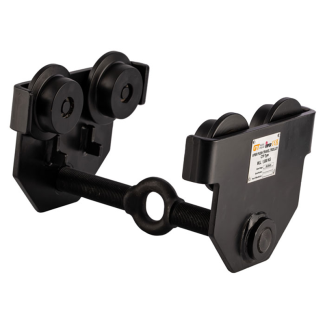
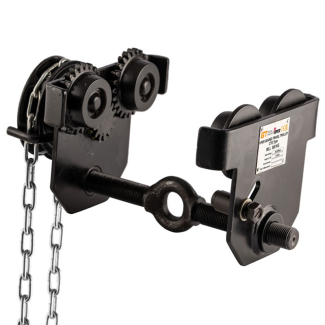
A beam trolley runs on the lower flange of an I-beam and carries the hoist, so a load can be lifted at one point and set down at another. Push travel beam trolleys move when the load is pushed, and they suit lighter loads, low beams and short runs. Geared beam trolleys are driven through their gearing, so the operator controls travel without pushing on the load. They suit heavier loads, high beams and work where a load has to be placed in an exact position.
Loadbinders for lashing chain
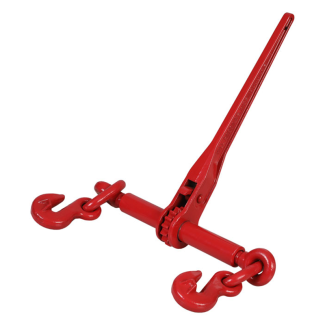
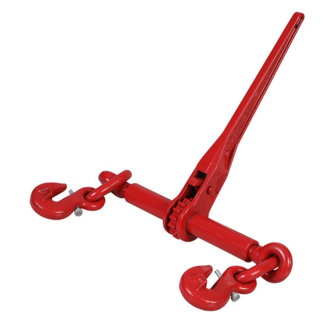
Loadbinders are lashing gear. They tension the tie-down chain that holds a load on a lorry or flatbed trailer for transport, and they have no place in a lifting rig. Each binder is sized to a chain diameter, so it is matched to the lashing chain it will tension. Ratchet loadbinders cover general tie-down work. Loadbinders tested to EN 12195-3 suit operators whose load securing is specified to that standard.
Machinery skates and wire rope winches
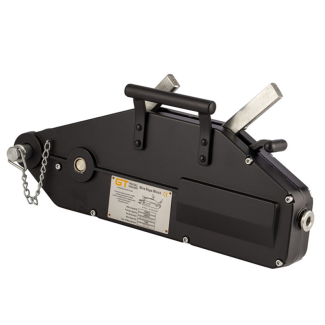
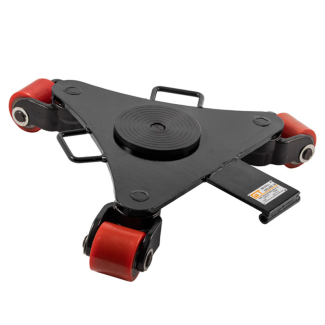
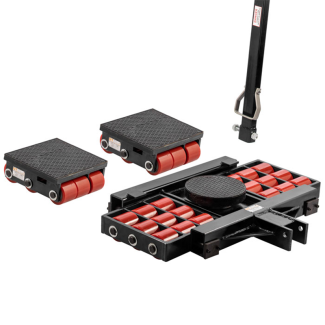
Machinery skates move heavy plant across a floor where there is no beam or crane to lift it. Rotating machinery skates have a top that turns, so the load can be steered around corners and through doorways. Machinery moving skate sets place several skates under one load and take the range up to 48 tonnes. A lever hoist or one of the wire rope winches, anchored to a fixed point, gives a controlled pull in place of a team pushing by hand.

Chain block or lever hoist
A chain block lifts straight up and down beneath a fixed point. A lever hoist pulls, tensions and positions a load at any angle over a short distance. The chain block comes with longer lifting chain for greater lift heights, in capacities up to 3 tonnes. The lever hoist is anchored at both ends and works hanging, horizontal or at an angle. With its shorter chain and capacities up to 6 tonnes, it is sized for pulls and adjustments more than for height.
For machinery pulls along a floor, choose the lever hoist, because a chain block is built to lift vertically.
Working load limits and hooks
Once the type is chosen, the rating of each part and the choice of hook decide whether a rig is right for the lift.
Rating the whole lifting rig
An overhead rig is built from the top down. A beam clamp gives a fixed hanging point, or a beam trolley gives travel along the beam. The chain block or lever hoist hangs below it, and the chain sling runs from the hoist to the load. The rig can lift no more than its lowest rated part, so every part is chosen at or above the weight of the load and checked against the beam flange it fits. Beam clamps in the range reach 20 tonnes and beam trolleys 5 tonnes, so a heavy hoist hung from a trolley is limited to the trolley's rating.
Sling angle and number of legs
The wider the legs of a chain sling spread from the vertical, the greater the tension in each leg. The same sling therefore lifts less as the angle opens. A multi-leg sling's rating applies only within the leg angle marked for it. More legs do not multiply capacity in a straight line, because on a rigid load two legs often carry most of the weight. The ratings for three and four leg slings allow for this. Where the lifting points are far apart, a longer sling keeps the legs closer to vertical.
Self-locking hooks and sling hooks with catch
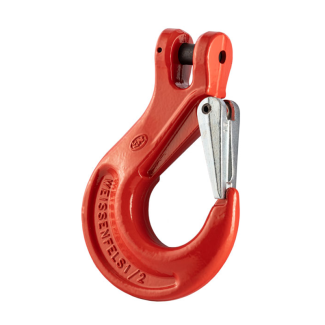
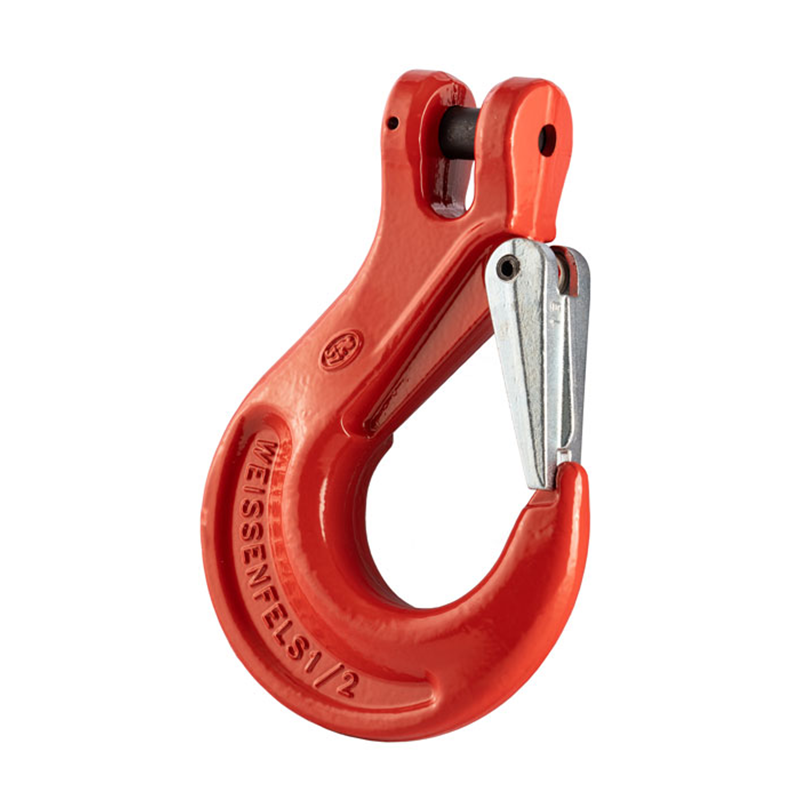
A self-locking hook closes and locks when the load comes on, and it cannot open until the slinger releases it by hand. It is the choice where a hook could be knocked, snagged or pushed upward, and where the lift passes out of the slinger's sight. A sling hook with a catch is quicker to attach and release. It suits workshop and yard lifts where the slinger can watch the hook throughout and loads are hooked on and off often.
Popular Categories

Tipping Skips
View Products >

Forklift Attachments
View Products >

Lifting Equipment
View Products >
Frequently Asked Questions
Under the Safety, Health and Welfare at Work (General Application) Regulations 2007, lifting accessories such as chain slings and beam clamps are thoroughly examined by a competent person at least every six months. Each result is recorded on a GA1 report, which stays with the item's records. An accessory that has been overloaded, damaged or repaired is examined again before it goes back into use.
Lifting equipment is the machine that does the lifting, such as a crane, a chain block or a lever hoist. A lifting accessory is the gear that attaches the load to that machine, or the machine to the structure, such as a chain sling or a beam clamp.
Grade 80, also written Grade 8 or G80, is the strength class of the alloy steel the chain is made from. The grade number rises with strength, so at the same chain diameter a higher grade carries a higher working load limit. Every component in a sling, from master link to hook, is rated to the same grade or higher. Lifting chain is never replaced with lower grade chain or tie-down chain.
The slinger confirms that the identification tag is present and legible, and that the rating suits the load and the leg angle. The chain is checked along its length for stretched, bent, nicked, twisted or corroded links, and the master link and hooks are checked for distortion, an opened throat or wear. The catch on a sling hook must spring closed, and the lock on a self-locking hook must engage. A sling that fails any check is taken out of use and labelled until a competent person has examined it.
No. A knot bends links across each other and loads them in a way they are not rated for, which cuts the chain's capacity and can damage it permanently. Where a shorter working length is needed, use a sling of the right length or one fitted with shortening hooks or clutches made for the purpose.