







Geotextile Membranes
Geotextile membrane is a permeable fabric laid between the subgrade and the stone above it, most often as a general-purpose separator under site access roads and areas of hardstanding. It does three jobs in the ground: it separates aggregate from soil, filters water while holding fine particles back, and protects the layers around it. HERMEQ supplies woven and non-woven geotextiles for this work, from Terram and Lotrak grades to heavy woven polypropylene for roads and platforms, together with fabrics made for drainage, reinforcement and weed control.

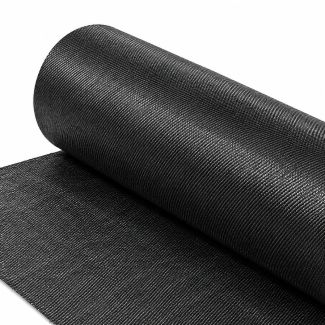
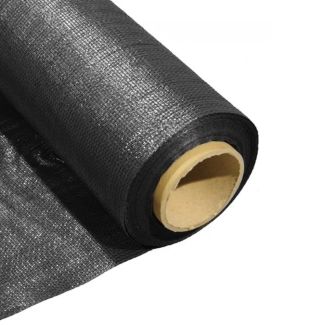
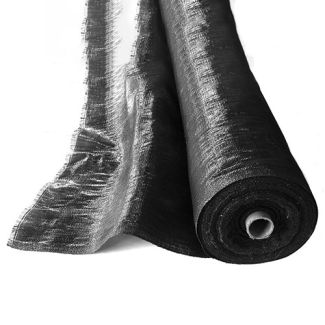


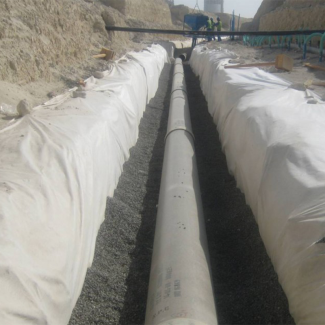


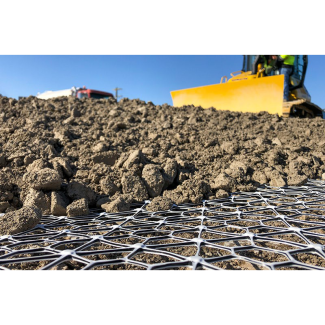
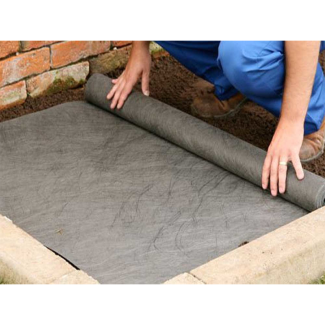
Woven and non-woven geotextile fabric
Woven geotextile is the stronger choice under load, non-woven is the choice where water has to pass through, and both are permeable, so a lining that must hold water back calls for one of the geomembranes instead.
Woven separation geotextiles
Woven geotextile goes under site roads, haul routes, hardstanding and car parks, where stone is tipped, compacted and trafficked on top of the fabric and the layer has to keep its strength. The GP90 woven polypropylene geotextile is the general-purpose site separator. The Lotrak woven separation geotextile runs from the Lotrak Base grade through 1800, 2300 and 2800. The PP60 woven geotextile is made for roads, hardstanding, haul routes and construction platforms, and the woven geotextile membrane is also sold in a short roll for paths, patios and small parking areas.
Woven reinforcement geotextile
The woven geotextile reinforcement fabric is the Lotrak R family, in 25R, 50R and 75R grades, made for weak subgrades where the fabric has to absorb stress from heavy traffic as well as keep the layers apart. Choose it over a plain separator when the formation is soft and the road or platform above it will carry heavy loads.
Non-woven geotextiles
Non-woven geotextile is a felt-like fabric of bonded fibres, chosen where water must pass through the layer and fine soil must stay out of the stone. It lets water through more freely than woven fabric and is easier to cut, which helps when lining trenches and fitting around pipes and chambers. Terram non-woven geotextile is the main family, in grades from Terram 1000 up to Terram 4000, with a Hi-Vis Orange version. For smaller jobs, the non-woven geotextile fabric comes in a short roll.
Non-woven drainage fabric
The non-woven geotextile drainage fabric is the Lotrak non-woven family, from Lotrak 80 to Lotrak 300, graded for filter drains, French drains and soakaways and also used as a separator between subgrade and sub-base. It is the choice where silt getting into the stone would block the drain, because its openings hold the soil back while water keeps flowing.
Weed control geotextile
The Terram weed control fabric is a non-woven geotextile for landscaping, laid under bark, gravel or decorative stone in beds and borders to suppress weeds without chemical sprays. Where roots rather than weeds are the problem, such as tree roots near paths, drives and services, the root and weed barriers range carries purpose-made barriers.

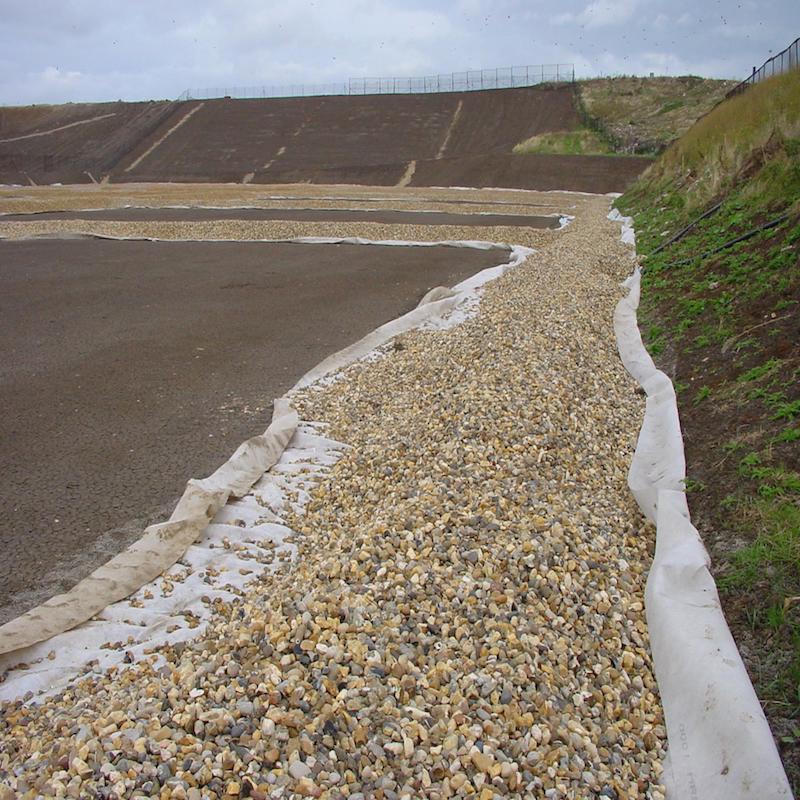
What geotextile membrane is used for
Geotextile is used wherever stone sits on soil and the two must not mix, and the job decides which fabric goes in, where it sits and which way water has to move through it.
Site access roads, haul routes and hardstanding
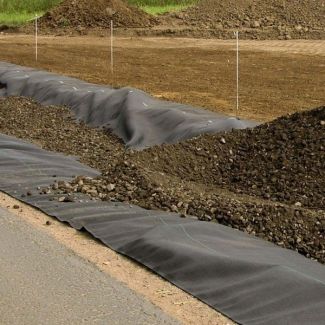
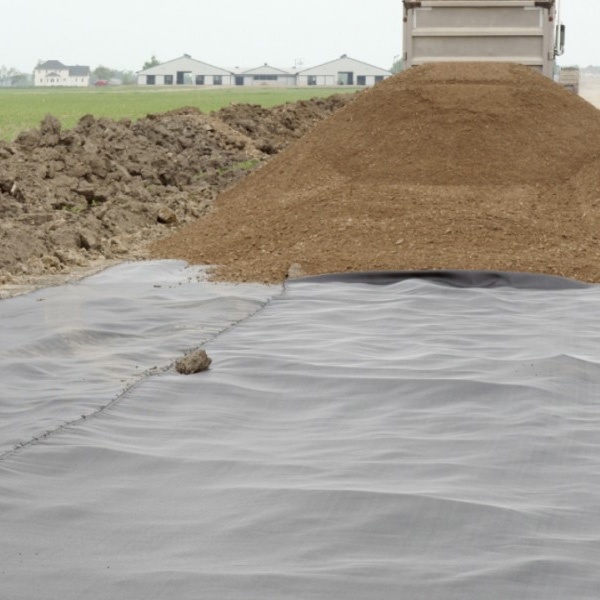
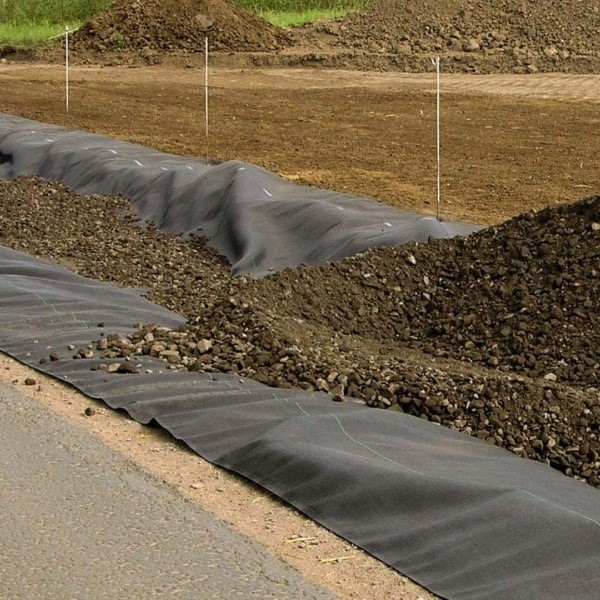
On a site road or haul route, the geotextile goes on the stripped formation directly under the sub-base, and its work is to keep the stone clean of the clay beneath while lorries and plant run over it. The same build-up applies to compounds, piling and crane platforms and laydown areas, where a contaminated base would have to be dug out and replaced.
Driveways, footpaths, patios and car parks
Under a driveway, footpath, patio or car park, the fabric sits between the subsoil and the sub-base, below any bedding layer for paving or block. A woven separator is the usual choice under gravel drives and car parks that take vehicles, while paths and patios that carry only foot traffic can go on a lighter grade or a non-woven fabric.
French drains, soakaways and percolation areas
Drainage work turns the choice towards non-woven fabric, because water has to pass freely through the layer while silt stays out of the stone. In a French drain or filter drain, the fabric lines the trench and wraps over the top of the stone so the pipe and the voids stay clear, and a soakaway is wrapped in the same way around its stone or crates. In a percolation area, the fabric goes over the stone around the distribution pipes, so topsoil backfilled above cannot wash down into it. Where a drainage layer has to carry water sideways, for example behind a retaining wall, geocomposite drainage does the job in a single product.
Riverbanks and coastal erosion works
On riverbanks and coastlines, the geotextile goes between the bank and the rock or stone that protects it, holding the soil in place while water moves through, so fines are not washed out from behind the armour. The woven reinforcement fabric is made for this work. For slopes, silt control and runoff on open sites, the erosion and sediment control range covers the surface measures.
Geotextile and geogrid on soft ground
A separator keeps stone and subgrade apart, and ground too weak to carry the load also needs reinforcement, which comes either from a reinforcing fabric or from a geogrid. With a geogrid, the grid is laid on top of a separator: the stone locks into the grid, the grid holds it from spreading sideways, and the stiffer platform reduces the quantity of fill the job needs.
The biaxial geogrid comes in several Lotrak grades for stabilising sub-bases on haul roads and hardstanding. Where a design specifies Tensar, the Tensar TriAx geogrid comes in more than one grade, and the Tensar InterAx geogrid is used for long-term reinforcement and for temporary stabilisation. The full range is under geogrids.
Geotextile grades and roll sizes
Once the type is settled, the order comes down to the grade within the family and the size of roll the job can use.
Choosing a grade
Terram, the Lotrak drainage fabric and the Lotrak R reinforcement fabric each run from lighter to heavier grades. Within a family, choose a heavier grade for heavier traffic, for coarse or angular fill that could puncture a lighter fabric, and for soft or wet ground where the fabric is stretched as stone is placed. A lighter grade is enough for footpaths, patios and drain wraps, where the load is light and the fill is finer. Where a road or platform has an engineer's design, order the grade it specifies.
Roll widths and lengths
Short trade rolls of woven and non-woven fabric suit paths, patios and drain runs, where a full roll would leave offcuts. For roads, car parks and platforms, full site rolls run up to 100 m long and over 5 m wide, so each roll covers a large area with fewer joints and fewer overlaps to set out.
Popular Categories

Grass Pavers & Gravel Grids
View Products >

Geogrids
View Products >

Geomembranes & Pond Liners
View Products >
Frequently Asked Questions
Geotextiles are synthetic fabrics, generally polypropylene or polyester. In this range, Terram is made from virgin polypropylene fibres bonded both mechanically and thermally, and the GP90 and PP60 are woven from polypropylene. Polypropylene does not rot in the ground, which is why it is the usual material for fabrics buried under roads and drains.
It works in two ways. As a separator, it stops stone being pushed down into soft soil and stops soil being pumped up into the stone under traffic, so the sub-base keeps its depth and drains freely. As a filter, its openings let water through while holding the soil back, and the soil next to the fabric settles into a natural filter layer that keeps water flowing.
Strip the topsoil, dig out soft spots, grade the formation and remove sharp stones and roots, then roll the fabric out flat and free of creases. Overlap adjoining rolls, with wider overlaps on softer ground, and pin or weight the edges so the wind cannot lift them. Tip the stone onto the fabric and push it forward from stone already placed, so plant never tracks directly on the bare fabric.
Weed membrane sold for gardens is often a light fabric made to block light, while a construction geotextile is graded for separating stone from soil under traffic and for filtering water. A light weed fabric under a driveway or hardstanding can tear when stone is compacted on it, so use a woven separator or a heavier non-woven grade there.
Geotextile is made to be covered by stone, soil or paving, and it should be covered soon after it is laid. Terram and the PP60 are UV stabilised, but sunlight degrades polypropylene over time and loose fabric is easily damaged on an open site.
Terram comes in 1000, 1500, 2000, 3000 and 4000 grades, rising from lighter to heavier, plus a Hi-Vis Orange version. Choose a heavier grade for heavier traffic, coarse or angular fill and soft ground, and a lighter grade such as Terram 1000 for paths, patios and drain wraps. Where a road or platform has an engineer's design, order the grade it names.