







Crash Barriers
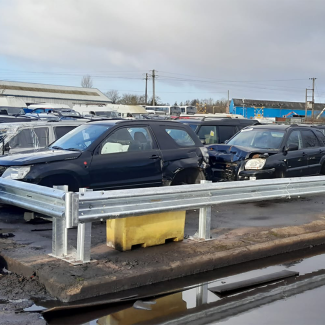
HERMEQ supplies crash barriers in steel and concrete. The range covers permanent Armco barrier systems that protect vehicles, people and buildings on private premises, and crash-tested temporary barriers for roadworks and construction zones. Armco crash barriers are used indoors and outdoors in low-speed areas such as car parks, residential developments and industrial sites, where they keep moving vehicles away from people, equipment and structures.
The Armco barrier calculator takes the length of your run and returns a price and a full component breakdown. The components are straight corrugated beams, curved beams, Z and RSJ posts, safety ends, corners and bolts.
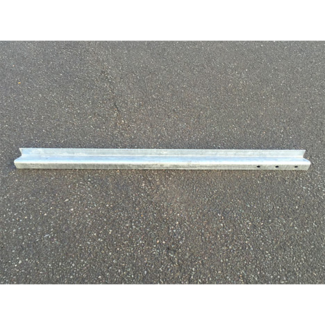
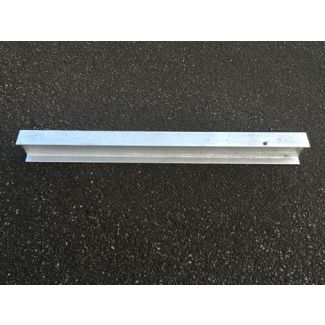
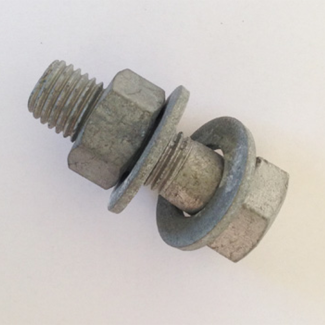
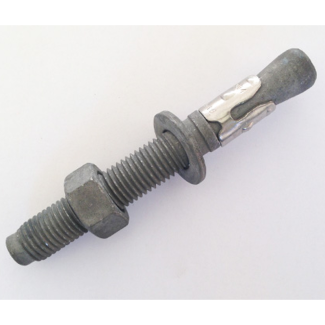
Armco barriers and temporary crash barriers
The range divides by how long the barrier stays in place. Armco steel crash barriers are fixed on private premises for the long term, while the concrete and hoarding systems stand for the life of a road or construction job and then move on.
Straight corrugated Armco beams
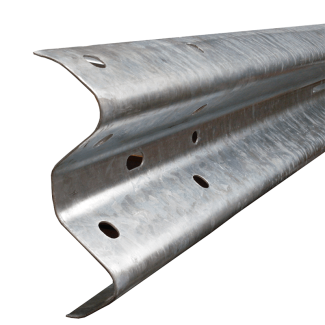
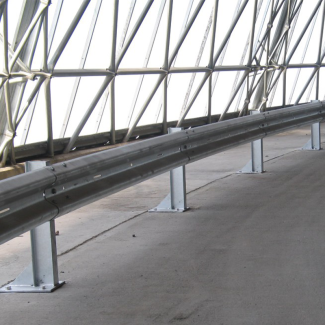
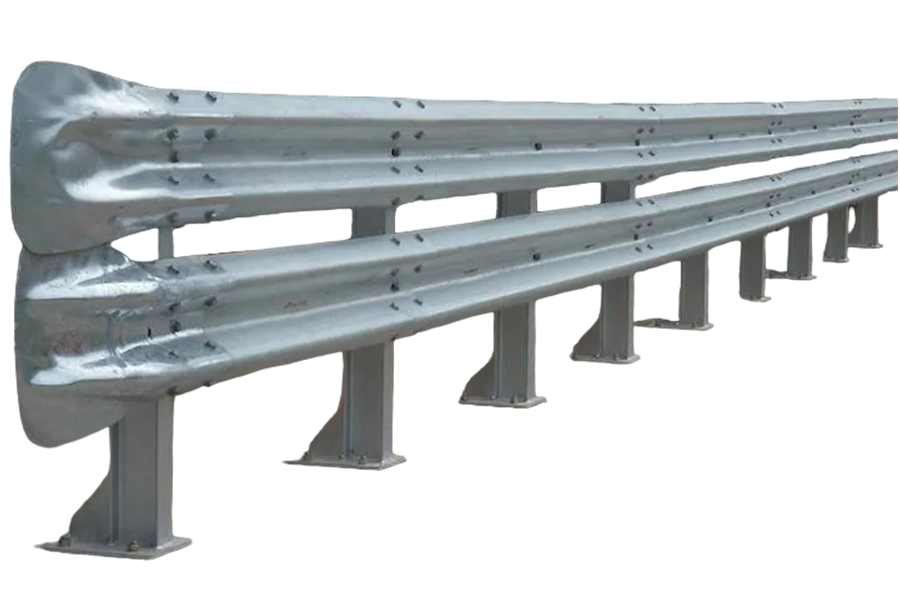
Most of any Armco run is made of straight corrugated Armco beams, bolted to posts and lapped beam to beam along car park edges, yard boundaries, building faces and warehouse aisles. The range has a longer beam for open runs with fewer joints and a shorter one that makes up the length at the end of a run or fits between fixed points such as doorways and columns.
Curved Armco beams, concave and convex
Curved Armco beams carry a run around a bend that corner pieces would turn into a series of angles, such as a roundabout island, a curved kerb line or the approach to a ramp. A concave beam faces inward and a convex beam faces outward, and the radii across the range run from 6m to 16m.
SVEA temporary concrete crash barrier
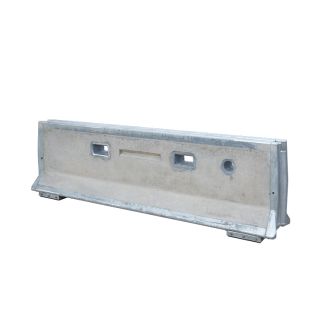
The SVEA temporary concrete crash barrier is for motorway interventions, road upgrades and urban construction zones, where a crash barrier system has to contain traffic beside the work for the length of a job and then move to the next one. It is crash tested to EN 1317 in classes T2, T3, N1 and N2. The modular units suit tight urban sites, and hinge units turn the line through angled or constrained layouts. It is the choice over Armco whenever the barrier stands between live traffic and a workforce for a fixed period.
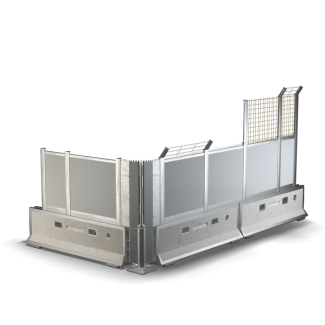
CityWall crash-tested hoarding
Where a site boundary beside a road needs vehicle protection and hoarding in one line, CityWall crash-tested hoarding carries hoarding panels for noise, privacy and anti-climb security on a crash-tested barrier base, for inner-city and roadside sites. A boundary away from passing traffic is usually closed with steel wall hoarding. For a fixed perimeter around a property, the permanent fencing range covers the other options.
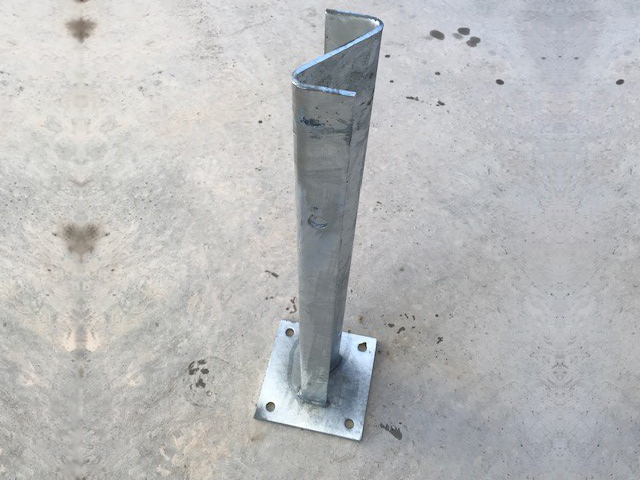
Z post or RSJ post, bolt down or dig-in
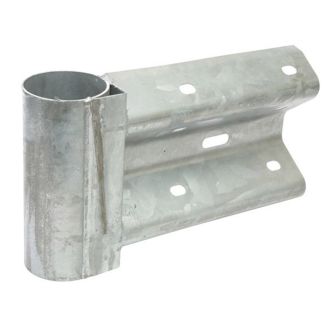
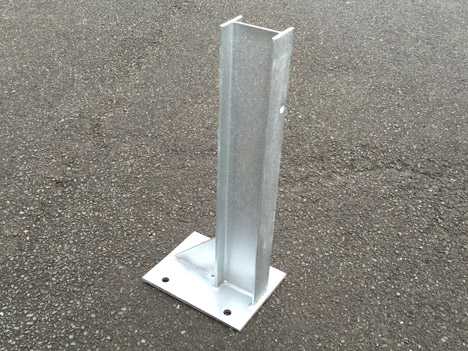
An Armco post is two choices made together: the section, which sets the level of impact the run is built for, and the fixing, which depends on the surface under the run. The two choices give the four posts in the range.
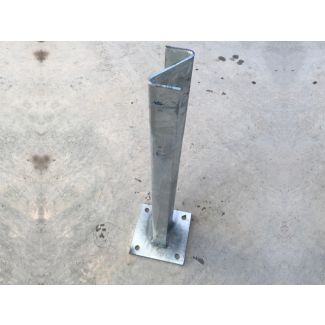
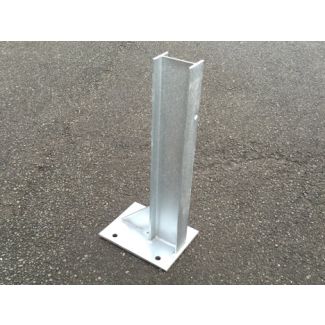
The Z post is the lighter section, designed to take the sting out of a collision in lower risk traffic areas such as staff car parks, residential developments and quiet service roads. The RSJ post is the heavier section and gives greater protection from impact, for routes with high traffic volumes and for runs that stand between vehicles and people, such as a walkway beside a delivery road or the front of a building entrance.
Bolt-down posts are fixed to concrete floors, slabs and hard standing, which suits warehouses, multi-storey car parks and any surface that cannot be dug. Dig-in posts are set into the ground and concreted in, which suits verges, unsurfaced yards and new groundworks where the holes can be excavated before the final surface goes down.
For lower risk areas on a slab, bolt-down Z posts are the usual choice, and on open ground the same section comes as dig-in Z posts. Heavier traffic on hard standing calls for bolt-down RSJ posts. The dig-in RSJ posts do the same job set into the ground.
Crash barriers for car parks, warehouses and roadworks
Car parks
In a car park the barrier keeps cars off walls, pay stations, plant rooms and the edge of a raised deck, and it is where people walk closest to the end of a run. Leave openings at the points where people cross, so the barrier does not push them onto the driving aisle to get around it.
Warehouses and loading bays
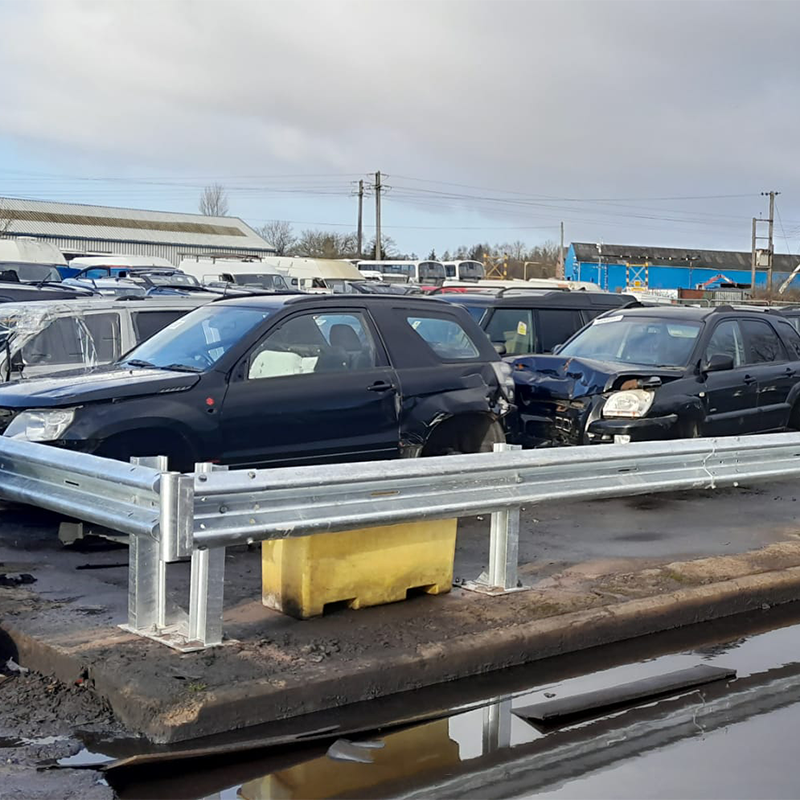
Indoors, Armco runs are bolted down to the slab to guard racking ends, wall faces, columns, doorways and the edges of loading docks against forklift and lorry impact. The line is set back far enough to leave forklifts their turning space, and it is planned around floor drains, slab joints and buried services before any drilling starts. In loading bays, a run along the back of the dock apron keeps reversing lorries off the building.
Industrial sites and service yards
Yards with HGV movements, refuse vehicles and plant carry the heavier traffic that RSJ posts are made for, on runs that protect fuel tanks, transformers, gatehouses and weighbridge controls.
Roadworks and construction zones
Temporary traffic management at roadworks is planned and laid out under Chapter 8 of the Department of Transport's Traffic Signs Manual, so the barrier line, tapers and working space are set out in the traffic management plan before the units arrive on site. On construction sites that border a road, the SVEA barrier can protect the site boundary for the life of the job.
Armco barrier ends, corners and bolts
Every run needs an end at each open end, a corner or curved beam at each change of direction, and bolts at every joint.
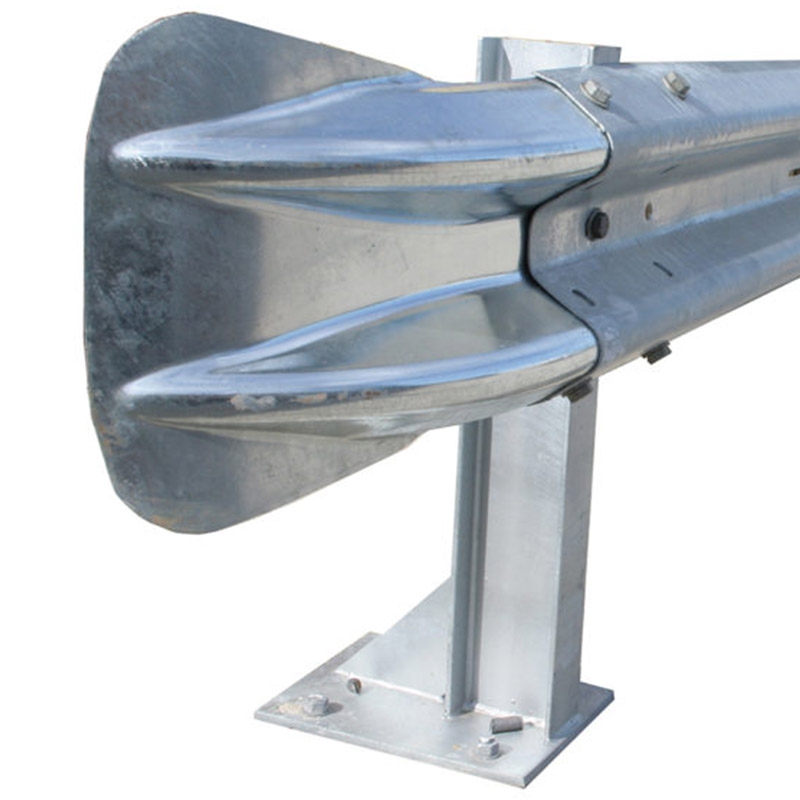
Fish tail ends and pedestrian safety ends
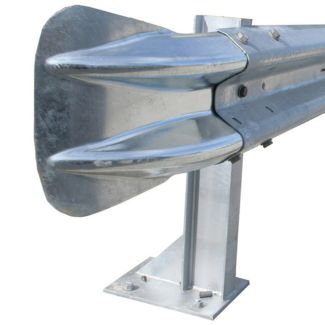
Armco fish tail ends finish a run with a flared end that reduces damage to a vehicle striking the end of the beam and covers the exposed beam edge from people passing it. Pedestrian safety ends are shaped with no sharp edges, for runs that stop beside a walkway, a car park footpath or a doorway.
90 degree and flexible barrier corners
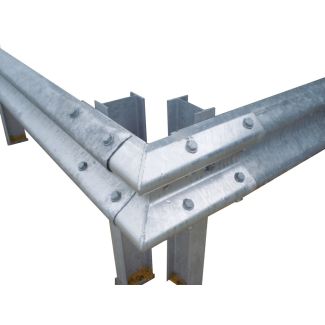
Armco barrier corners take a run around a building, a bay or a plant compound without cutting the beam. The 90 degree corners come in internal and external versions for the inside and the outside of a right angle, and flexible corners are bent to suit any other angle.
Post bolts, lap bolts and floor anchor bolts
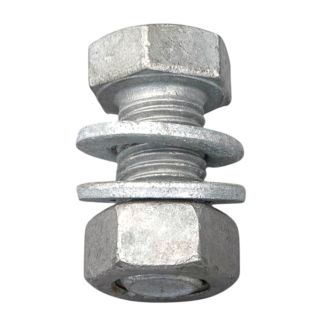
Armco post bolts and Armco lap bolts fix the beams to the posts, and lap bolts also join corner pieces to the beams on either side. Floor anchor bolts fix bolt-down posts to the concrete, while dig-in posts are held by the ground they are set in. The bolts are sold individually: one post bolt per post, four floor anchor bolts per bolt-down post and eight lap bolts per corner.
Planning an Armco barrier run
Once the beams, posts and ends are chosen, the finish, the measurements and the property boundary settle the order.
Galvanised or yellow Armco
Galvanised steel has a zinc coating that protects it from rust outdoors and gives a plain grey finish, which suits long boundary runs and barriers that should sit quietly against a building. Yellow makes the run stand out to drivers and forklift operators in busy yards, loading bays and poorly lit interiors. The two can be mixed, for example with yellow ends on a galvanised run so drivers see where it stops.
Measuring a run with the Armco calculator
Measure the full length of each run and count its open ends, noting at each one whether people pass it, which calls for a pedestrian safety end, or not, which suits a fish tail end. Count the right angles for 90 degree corners and the other angles for flexible corners, and mark any bend with its radius and whether the beam faces into or out of the curve. The Armco barrier calculator then takes the run length and returns the price and the list of beams, posts and fixings.
Crash barriers on public roads
Permanent safety barriers on public roads are designed and specified as part of the road scheme, generally to Transport Infrastructure Ireland standards, and installed under the road authority's control. The Armco range here is an off-highway system for private premises: car parks, yards, warehouses, factories and estates inside the property boundary.
Popular Categories

V Mesh Fencing
View Products >

Palisade Fencing
View Products >

Estate Fencing & Railings
View Products >
Frequently Asked Questions
What is an Armco barrier?
An Armco barrier is a steel crash barrier made from corrugated galvanised steel beams bolted to posts, with ends and corners to finish the run. The name comes from the American Rolling Mill Company, whose corrugated guard rail became the trade's general name for this type of barrier.
What are crash barriers made of?
Permanent crash barriers on private premises are usually steel, with corrugated beams and posts galvanised against rust. Temporary crash barriers for roadworks are commonly precast concrete units joined end to end, such as the SVEA system.
How do crash barriers work?
A steel crash barrier absorbs and spreads the force of an impact. The corrugated beam bends, and the load passes along the beams and into the posts, so the vehicle is slowed over a short distance and turned along the line of the barrier away from what stands behind it.
Can Armco barriers be used indoors?
Yes. Armco barriers are used inside warehouses, factories, multi-storey car parks and loading areas, with bolt-down posts anchored to the concrete floor.
Can an Armco barrier run be extended later?
Yes. A run is built from the same beams and posts along its length, so it is extended by taking off the end, adding beams and posts, and refitting the end at the new finish. Using the same post type and finish keeps the extension matching the existing run.
Does a temporary concrete crash barrier need fixing to the ground?
The SVEA temporary concrete crash barrier does not need anchoring. It stands freestanding on an asphalt base, with the units joined by chamfered, interlocking end connectors and no loose parts, and its crash test results are based on that installation.