







Fall Arrest Equipment
HERMEQ supplies fall arrest equipment for people working at height on scaffolding and towers, formwork decks, steel frames and roofs. The core of the range is full body harnesses, from single point to 4-point, and fall arrest blocks, whose internal brake halts a falling worker and slows the descent. Around them sit shock absorbing, restraint and work positioning lanyards, anchors and connectors for concrete, steel and rebar, horizontal lifelines and portable fall arrest posts. Tripods and davits cover confined space entry and rescue.
-

-

-

-

-

-

-

-

-
 Wire Rope Fall Arrest Block c/w Integrated Recovery System - 15m€715.70 €880.31
Quick 5 Day Delivery
-

-

-
 Gravity Shock Absorbing Kernmantle Rope Lanyard - Thimble EyeAs low as €15.33 €18.86
Quick 5 Day Delivery
-
 Gravity Shock Absorbing Kernmantle Rope Lanyard - Scaffold HookAs low as €23.25 €28.60
Quick 5 Day Delivery
-
 Gravity Y Forked Shock Absorbing Kernmantle Rope LanyardAs low as €49.25 €60.58
Quick 5 Day Delivery
-

-

-

-

-

-

-

-

-

-

-
Safety harnesses: 1, 2, 3 and 4 point
The number of attachment points on a full body harness decides which connections it can take, so the choice starts from how the worker will be tied on.
Single point full body harnesses
One dorsal D-ring at the back takes a single lanyard or fall arrest block, which is all a single connection needs on scaffolding, at door frames and in a cherry picker basket. The range has the single point full body harness, rated for users up to 140 kg, and the 1-point standard body harness.
2-point harnesses
A front (sternal) attachment alongside the dorsal ring gives a second connection at the chest, for work on inclines, horizontal work, scaffolding and lattice steel. The 2-point full body harness, with a chest attachment and a dorsal ring, is the general choice, and the 2-point comfort harness, with both attachments at the front and a sit strap, is built for longer spells in the harness, including in cherry pickers. The rescue harness adds a rescue extension strap and is the one to specify for confined spaces, evacuation and any job where a worker may need to be lifted out.
3-point full body harness
The 3-point full body harness has two independent attachments as well as the dorsal D-ring, so a worker can hold a positioning lanyard and a fall arrest connection at the same time. It is the harness for fixed ladders, door frame work, inclines and lattice steel structures.
4-point harness
Four attachment points spread the forces of a fall more evenly and give the most connection options in the range. The 4-point harness is for holding a worker at a work station, on inclines and on fixed ladders.
Fall arrest, restraint and work positioning lanyards
A fall arrest lanyard stops a fall that has already started, a restraint lanyard keeps the worker from reaching the edge, and a work positioning lanyard holds the worker at the job, so the first question is whether a fall can happen at all.
Shock absorbing lanyards
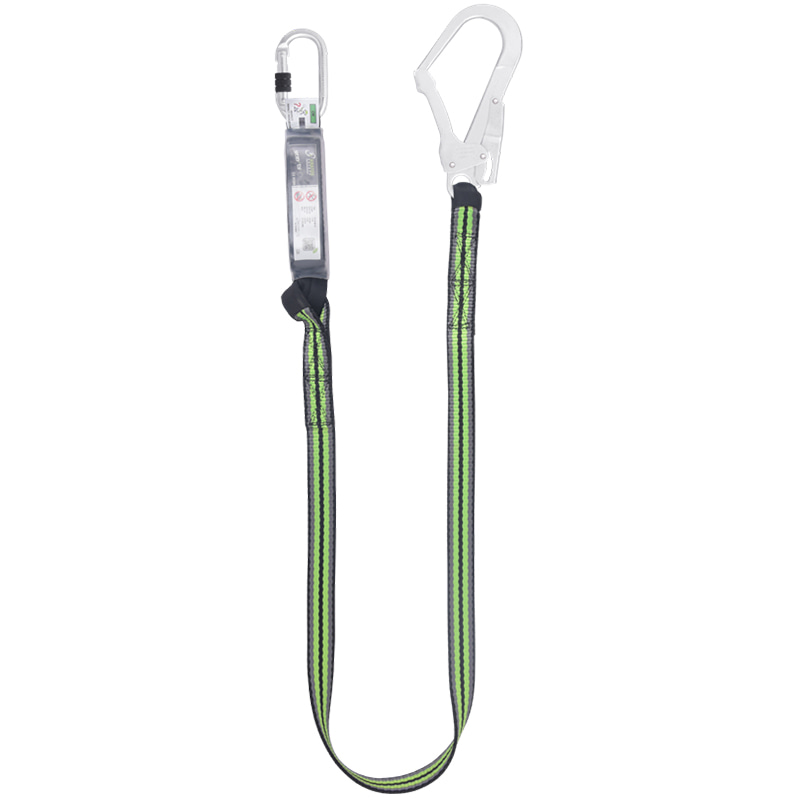
Where the worker can reach an edge, the lanyard needs an energy absorber to reduce the force passed to the body when it stops the fall. The range has a shock absorbing webbing lanyard in flat strap and lanyards in kernmantle rope. The anchor end decides how it connects: a kernmantle rope lanyard with a thimble eye goes onto an anchor through a karabiner, while a lanyard with a scaffold hook clips straight onto scaffold tube and other large members.
Twin tail and Y forked lanyards
A forked lanyard has two legs, so the worker clips one leg beyond an intermediate anchor before unclipping the other and is never disconnected while moving. The Y forked kernmantle lanyard and the twin tail webbing lanyard are for climbing and traversing scaffolding, fixed ladders and lattice steel.
Restraint lanyards
A restraint lanyard is short enough that the worker cannot reach the fall hazard, and its length is chosen from the distance between anchor and edge. The Y forked restraint lanyard connects to two separate anchors.
Work positioning lanyards
The adjustable work positioning lanyard supports the worker in a suspended position with both hands free, adjusted to bring the worker to the job. It is used alone only where there is no risk of falling, and where a fall is possible it is paired with a suitable fall arrest system.
Fall arrest blocks and inertia reels
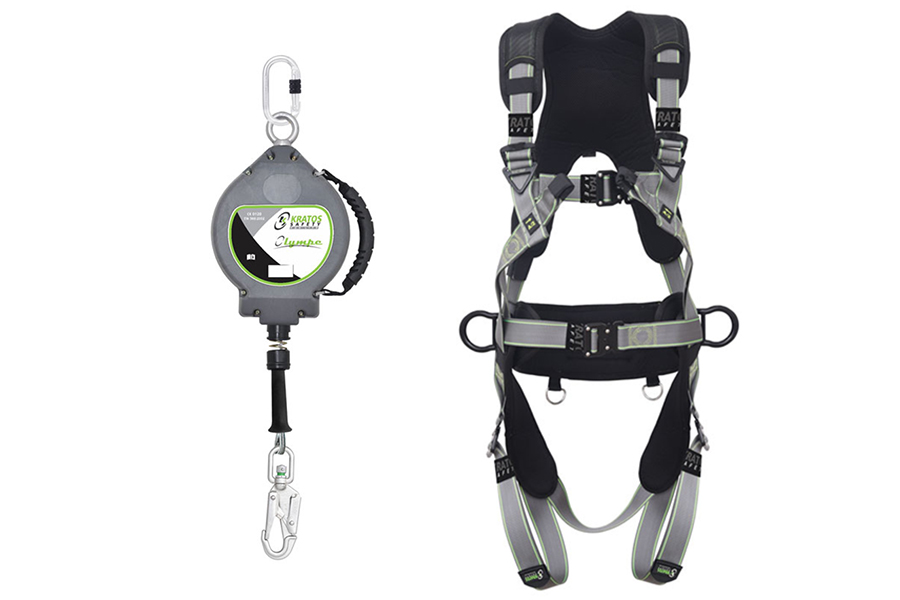
A fall arrest block, also known as an inertia reel, retractable fall arrester or self-retracting lifeline, is the better choice than a lanyard where the worker climbs or descends, needs more freedom of movement or has limited clearance below. Lengths across the range run from 2.5 m to 20 m.
Retractable webbing blocks
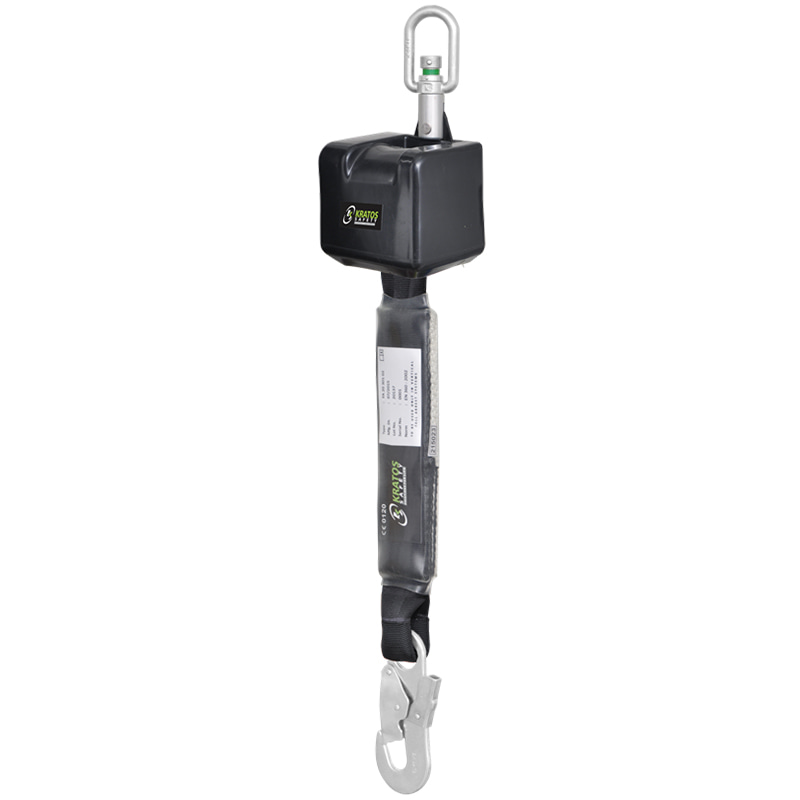
The retractable webbing fall arrest block keeps a short webbing line in a compact, lightweight casing, for jobs close to an overhead anchor.
Wire rope fall arrest blocks
Galvanised steel wire rope gives the longer reach for working well below or away from the anchor. The wire rope fall arrest block covers the longest lengths in the range, and the Helixon-S retractable fall arrester is rated for horizontal as well as vertical use.
Blocks with integrated recovery
The fall arrest block with integrated recovery stops a fall and then lets a rescuer raise or lower the fallen worker. It is the block for confined space entry and for any job where the rescue plan relies on retrieval from above.
Anchor points, lifelines and fall arrest posts
The anchor is chosen from the structure it fixes to, and its rating sets how many workers can connect to it.
Anchors for concrete and steel
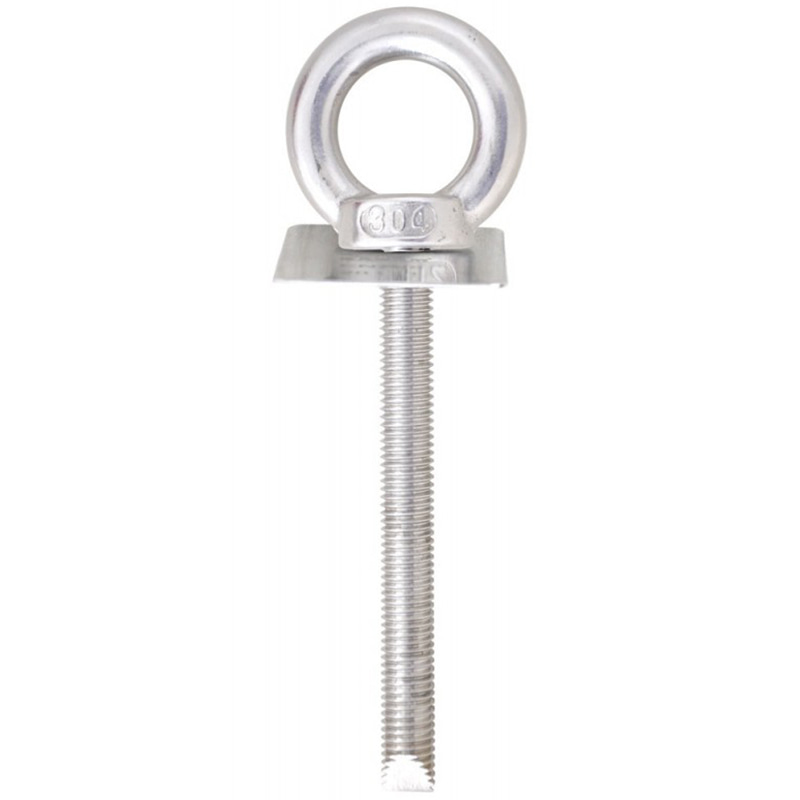
In concrete, the stainless steel anchor point is fixed in place with a chemical anchor, while the In Lock concrete anchor wedges into the concrete with a pressure button where a point must go in quickly. On steel, the toggle anchor fits a horizontal steel surface and opens or locks with a pressure button, and the beam anchor trolley adjusts to the width of a beam flange and slides along it. The stainless steel anchor point and the beam anchor trolley are each for one person.
Slings, karabiners and hooks
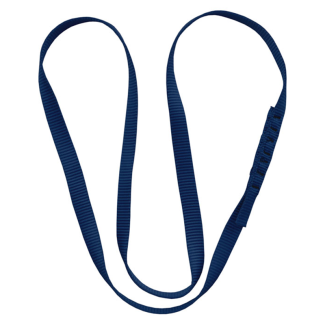
An anchorage sling goes around a beam, column or other structural member to make an anchor where nothing is fixed. Karabiners join the parts of the system: the steel screw gate karabiner is the general connector, and the aluminium karabiner is lighter, for rescue kits and work where weight counts. The aluminium rebar hook has a wide gate with double-action locking for connecting to rebar structures.
Horizontal temporary lifelines
A horizontal temporary lifeline is tensioned between two anchors and adjusts in length, so the worker stays connected along a beam, roof or deck edge. It is tested for use by two people.
Post and column fall arrest systems
Where there is no overhead structure to anchor to, a post or column system carries the anchor. The portable fall arrest system comes as a complete set with its own harness and block, and the lightweight aluminium fall arrest post is installed by one person without a crane. The heavy duty fall arrest system for formwork decking lets workers move all the way round a column while decking horizontal formwork.
Confined space tripods and davits
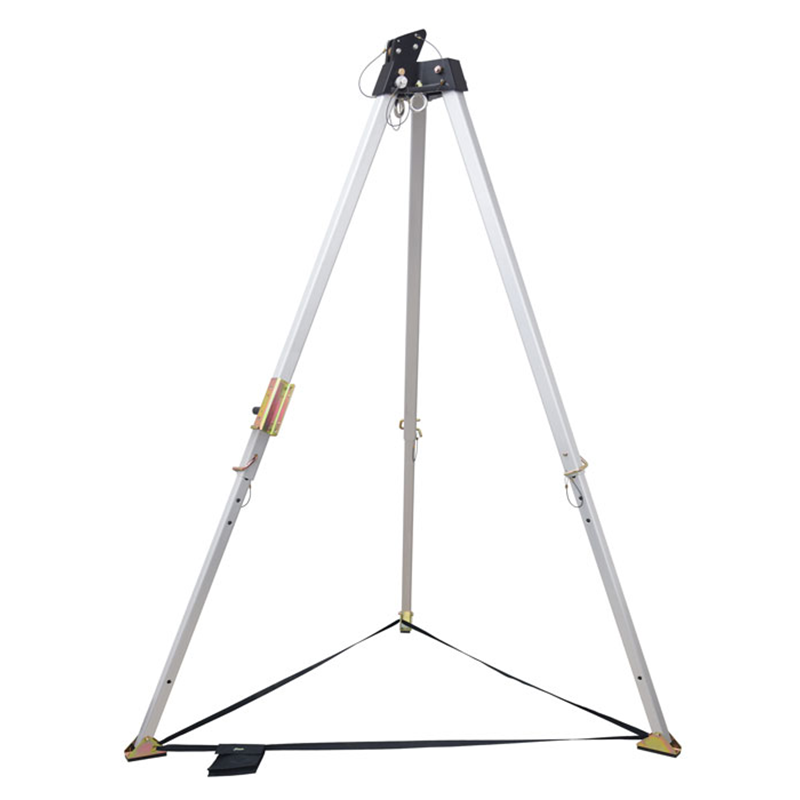
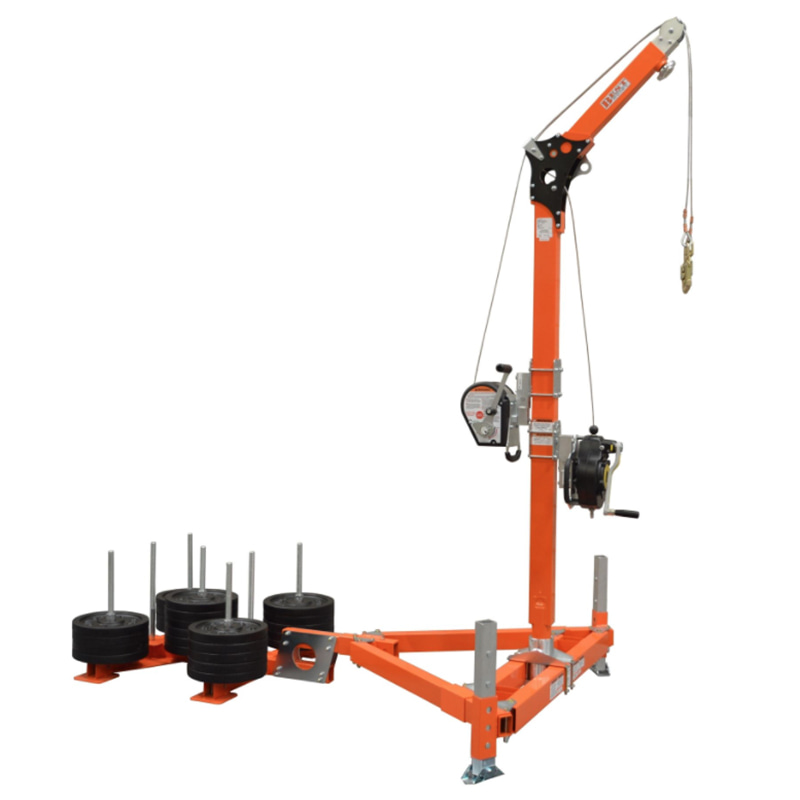
A tripod is portable and stands over one opening, while a davit is the choice for several entry points or where no permanent base plate can be fixed.
Confined space tripod
The aluminium confined space tripod gives a stable anchor for personnel and equipment over a manhole, chamber or tank opening, for entry, work and rescue, and rubber soles on its steel feet grip the surface around the opening.
Counterbalance davit system
The counterbalance davit system is held in place by counterweight and is used for raising and lowering at confined space entry points. It is certified to EN 795 Class B, EN 360 and EN 1496, which cover portable anchor devices, retractable type fall arresters and rescue lifting devices.
Height safety equipment for scaffolding, cherry pickers and roofs
Scaffolding and towers
On scaffolding, the worker ties off to tube at a point the scaffold design allows, using a scaffold hook lanyard for a single connection or a forked lanyard to stay connected while passing standards and ledgers.
Cherry pickers and MEWPs
In a cherry picker or other MEWP, the worker clips a short restraint lanyard to the basket's designated anchor point, following the machine maker's instructions on the lanyard to use. The aim is to keep the worker inside the basket if the boom is jolted or struck.
Roofs and open edges
Edge protection is the first measure at an open roof edge, and personal equipment covers what it cannot. A restraint lanyard from an anchor set back from the edge keeps the worker out of reach of it, and a horizontal lifeline lets the worker travel along the roof while connected.
Popular Categories

Scaffolding Parts
View Products >

Scaffold Ladders & Stairways
View Products >

Scaffolding Stillages
View Products >
Frequently Asked Questions
The wearer checks the harness, lanyard and connectors before every use, looking at webbing, stitching, buckles and metal parts for cuts, wear, corrosion or damage. A competent person also carries out a detailed periodic examination at least every 12 months, as EN 365 requires, and more often where use is heavy or the site risk assessment calls for it.
No. Once a shock absorbing lanyard has arrested a fall, its fall indicator label reads NOT OK and the lanyard is withdrawn from use and replaced. The harness, connectors and anchor involved in the fall are examined by a competent person before anyone uses them again.
Yes. Under the Safety, Health and Welfare at Work Act 2005, employers must give workers the information, instruction and training they need to work safely. For harness work that covers fitting the harness, the pre-use check, connecting to an anchor and rescue.
Only where the anchor or lifeline is rated for two users, which is stated in its instructions. Each worker still has their own harness and their own lanyard or block. A single-person anchor never takes a second worker, and on a shared lifeline the clearance below is worked out for both users.
No. A waist belt is never used for fall arrest, because it cannot hold the body safely in a fall. A full body harness spreads the arrest force across the thighs, pelvis, chest and shoulders. Every harness in this range is a full body harness.
A fall arrest set needs a full body harness, a shock absorbing lanyard or a fall arrest block, and an anchor rated for the user, with a karabiner wherever the lanyard end does not clip straight on. Choose a scaffold hook lanyard for scaffold tube, and a thimble eye lanyard with a karabiner for a fixed anchor point. Where the worker climbs or has little clearance below, use a fall arrest block in place of the lanyard.