







Concrete Skips
HERMEQ supplies concrete skips for placing concrete by crane, forklift, telehandler and excavator, from the professional column skip with its discharge hose to twinflow and coneflow concrete pouring skips. The range also includes a forklift skip and an excavator concrete pouring bucket, with capacities from 500 to 2000 litres across the range. Each type suits a different lifting machine and a different pour, from mass concrete in foundations and slabs to controlled placing into wall and column shuttering.
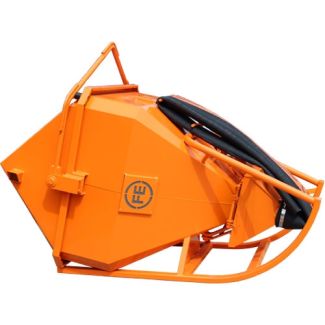
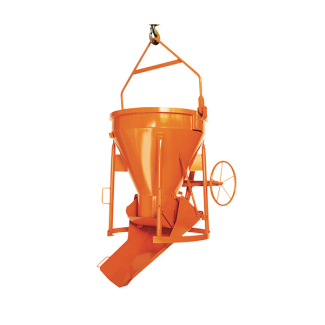
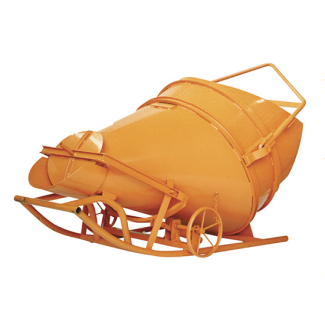
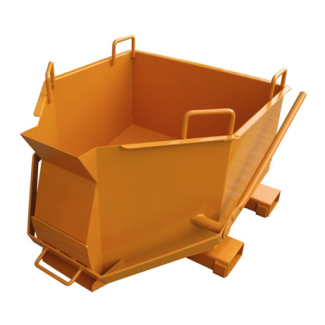
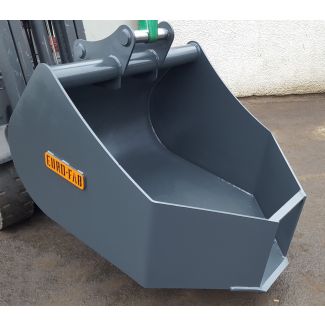
Column, twinflow, coneflow and forklift concrete skips
Each type in the range is built around how it is lifted and how it lets the concrete out.
Concrete pouring skip
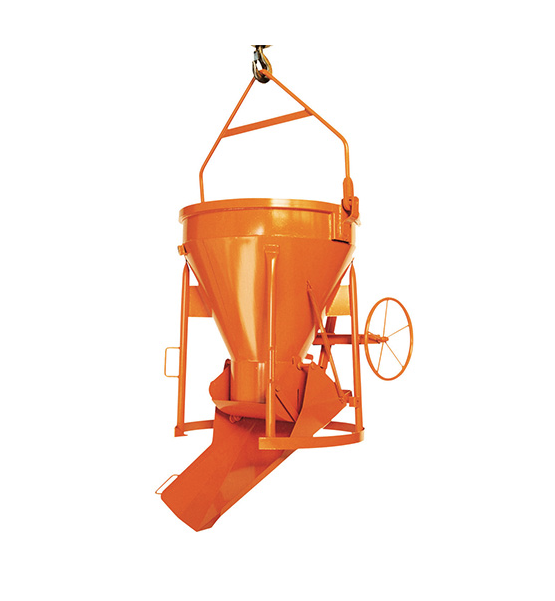
The professional concrete pouring skip is the one the trade calls a column skip or an upright skip. It hangs vertically from the crane hook and discharges through a hose at its base. The operative guides the hose down into the top of a column or wall shutter, so the concrete arrives where it is needed with little spilt on the formwork or the deck. Choose the professional concrete pouring skip for frame work, where most pours are tall, narrow and placed at height.
Twinflow concrete skip
The twinflow skip is the dual discharge skip: its gate drops concrete straight out of the base for mass pours, or its side chute is lowered to place concrete into shuttering. One skip therefore covers both kinds of pour, which suits a job where foundations, slabs and walls follow one another over the programme. The twinflow concrete skip is the general purpose choice when the pours on site are mixed.
Coneflow skip (banana or laydown skip)
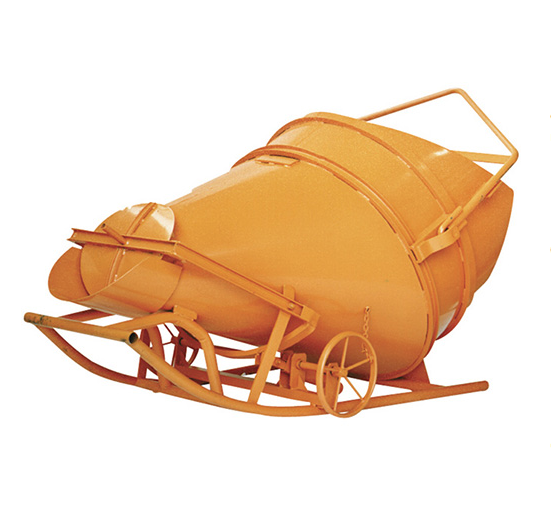
The coneflow skip is the one the trade also sells as a banana skip or a laydown skip. Its round body lies horizontally while it is filled, which keeps the opening low under the truck mixer chute, and it is lifted by its lifting beam and pours through a side outlet. The coneflow concrete skip runs to the top of the range's capacities and is the usual choice for high-volume crane work, where a low filling height saves time at the mixer on every load.
Forklift concrete skip
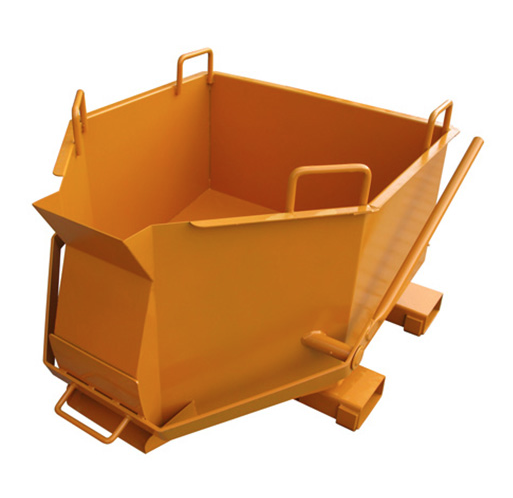
The forklift skip is low and square, with stacker shoes that take the forks of a forklift or telehandler and a lever-operated gate that discharges through a side outlet. It moves concrete from the mixer to the pour with no crane on site. Choose the forklift concrete skip for smaller pours on housing and yard work, where a telehandler is already moving materials around the site.
Excavator concrete pouring bucket
The excavator concrete bucket, also known as a concrete pouring bucket, mounts on a mid-size excavator in place of its digging bucket. It puts the machine already working on a groundworks job onto the pour, reaching over trenches and into bases that a truck mixer chute cannot reach. Choose the excavator concrete bucket where there is no crane and the excavator has the reach the pour needs.
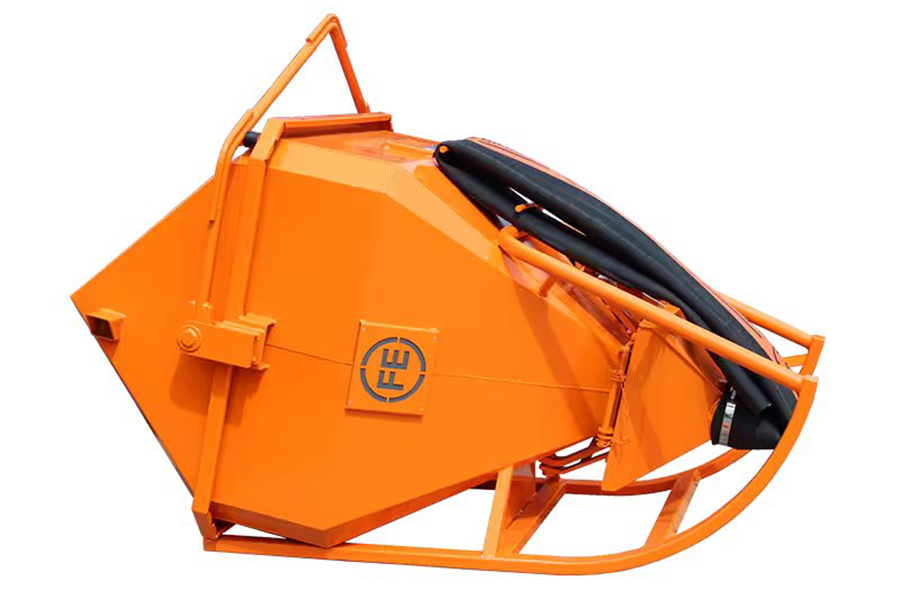
Concrete skips for crane, excavator and telehandler work
The machine that will lift the skip decides which skip to buy, so the first question for any pour is what is on site to carry the concrete.
A tower crane or mobile crane on a frame or commercial job points to a crane-lifted skip, because the crane can place concrete anywhere within its radius, including column heads and wall tops well above ground level. On a housing site, where a telehandler moves blocks and materials all day and the pours are smaller, a forklift skip lets the same machine carry concrete from the mixer to footings, ramps and small slabs. On groundworks and civils, where the excavator is digging the trenches and bases, the excavator bucket keeps the pour with the machine that is already there and avoids bringing a crane to site for a short pour.
Where more than one machine is available, the choice comes down to the pour itself. A crane gives height and distance across a deck, a telehandler travels across firm ground between scattered pours, and an excavator reaches over an open excavation from the side.
Pouring foundations, slabs, walls and columns
Each kind of pour asks something different of the skip: speed of discharge, control at the point of placing, or reach to the work.
Mass pours for foundations and slabs
Strip foundations, rafts and ground-bearing slabs take large volumes in a short time, so discharge speed and a wide gate opening count for more than precise placing. A twinflow skip discharging through its base, or a large coneflow skip, empties quickly over the area, and the gang spreads and compacts the concrete behind it. Keeping the skip low over the pour as it discharges stops the falling concrete from displacing the reinforcing bar mats and spacers fixed in the base.
Walls, columns and shuttered pours
Concrete placed into a wall or column shutter has to go in at a controlled rate and fall as short a distance as possible, which limits segregation of the mix and the pressure on the formwork. The column skip's hose goes down into the shutter opening, while the twinflow side chute places concrete along the top of a wall form. The pour then rises in layers at the pace of the operative compacting it with the poker, and the crane driver holds the skip steady at the shutter head between layers.
Kerbs, bases and pours beyond crane reach
Kerb haunching, fence and lighting column bases, footpath pours and the edges of a road or car park slab are spread out along the job and often well away from any crane. The forklift skip and the excavator bucket carry concrete along the line of the work, so the truck mixer can stand in one place while the machine shuttles between it and each base or each run of road forms.
Concrete skip sizes and discharge gates
The lifting machine sets the largest skip a site can use, and the truck mixer and the gang decide the size within that limit.
Matching capacity to the lift
The rated loads across the range follow the weight of wet concrete, so the rating rises with capacity, and a 1000 litre skip is rated to 2400 kg. The crane, telehandler or excavator has to take that load plus the weight of the skip and its lifting gear at the radius or reach of the furthest placing point, which is usually well beyond the spot where the skip is filled. Check the machine's load chart at that point before settling on a size. Within the limit, a larger skip means fewer lifts for each truck mixer load on a slab, and a smaller skip suits narrow shutters and a gang placing at a slower rate.
Levered or geared discharge
A levered gate opens with a direct pull on the handle, which is quick and simple and suits pours where the gate goes from shut to fully open. A geared gate opens through a gear mechanism, so the operative can open it a little at a time and hold it there against the weight of a full skip. Geared is the better choice for heavier loads and shuttered work where the flow has to be metered, and levered suits simpler pours and lighter skips. The twinflow skip comes in both versions, and the coneflow skip is geared across all its sizes.
Popular Categories

Road Forms
View Products >

Trench Covers & Road Plates
View Products >

Bog Mats
View Products >
Frequently Asked Questions
On site the names overlap, and concrete skip, concrete bucket, concrete hopper and kibble are all used for a container that is filled with concrete and lifted to the pour. Bucket is most often used for an excavator or crane attachment, and hopper or kibble for a funnel-shaped skip with an outlet at the bottom. What matters when buying is how the container is lifted and how it discharges, not the name on the order.
The skip is set on firm, level ground beside the truck mixer with its gate closed and secured, and the driver discharges down the mixer chute into the opening. The skip is filled only to its rated capacity, because an overfilled skip is heavier than the lift was planned for and spills on the way to the pour. A short wait with the skip on the ground lets any concrete on the rim be scraped back in before the lift.
A crane-lifted skip hangs from the hook by a chain sling and shackle connected to its lifting beam or lifting eye. The sling and shackle are rated for the full skip with its load of concrete and are checked for damage before each lift. A tag line lets the signaller steady the skip near the pour without anyone standing beneath the load.
The Safety, Health and Welfare at Work (General Application) Regulations 2007 cover the examination of lifting equipment and lifting accessories. In practice, a crane-lifted skip and the chains and shackles that hang it are thoroughly examined by a competent person before first use and at regular intervals after that, and the report is kept with the site's lifting records. The PSCS on a construction project will normally ask to see the current report before the skip goes on the hook.
The skip is washed out as soon as the last load is placed, before concrete starts to set inside the body, around the gate and in the hose or chute. A hose and stiff brush with the gate open clears most of it, and the washings go into a designated washout area, such as a concrete washout skip, so that slurry stays out of drains and watercourses. Concrete left to harden builds up in layers, adds weight to every later lift and can stop the gate from closing fully.