







Road Barriers
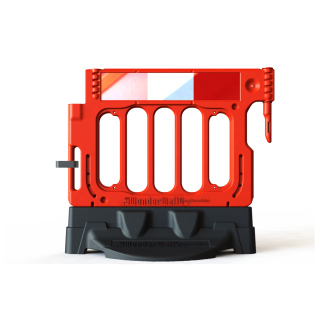
Road barriers direct traffic and keep pedestrians apart from roadworks and construction sites, and the plastic panels come in orange, blue, green, yellow and white so that a site can tell one set of works from another. For a heavier option, the WonderWall traffic barrier stays in place in high winds without any added ballast. Beyond the plastic panels, the range runs up to water filled barriers and crash tested steel and concrete systems for work beside live traffic.



Types of road and traffic barriers
The range runs from light plastic panels that mark out a work area to crash tested steel and concrete barriers for work beside live traffic.
Chapter 8 plastic road barriers
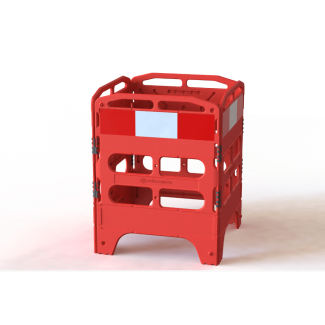
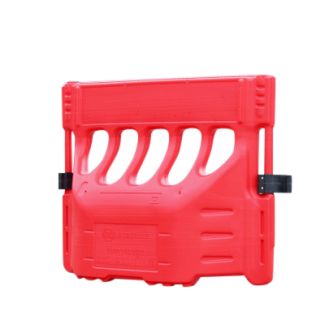
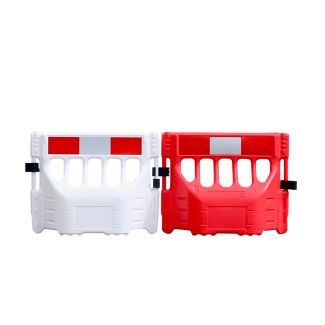
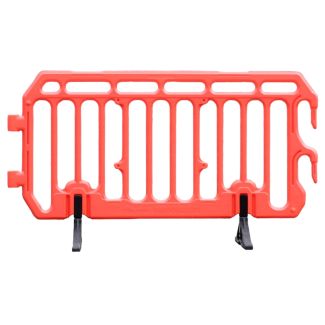
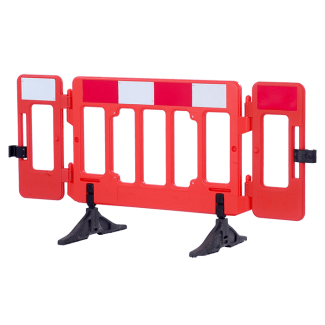
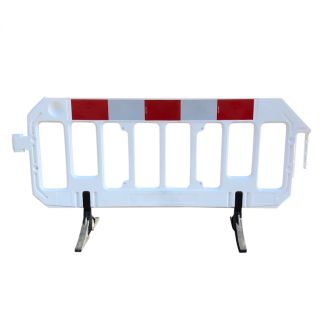
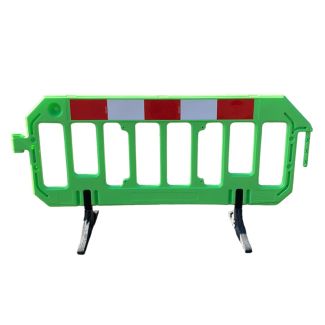
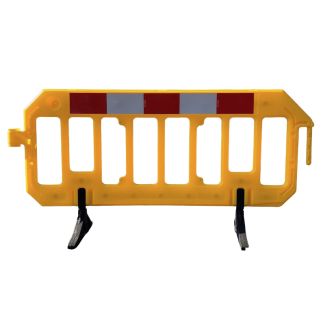
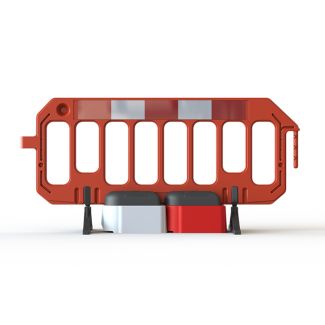
Plastic panels are the everyday barrier for marking out roadworks, footpath works and site perimeters, and most jobs use them in quantity. The Chapter 8 road barriers link panel to panel and stack flat for transport. The European traffic barrier joins to a weighted footplate for runs that have to stay standing when knocked, and the Centurion traffic barrier is a lighter panel that packs densely on a pallet for large fleets. The Avalon barrier suits indoor and outdoor works, road openings and events, and the same panel format comes as branded road barriers for contractors who run their own fleet.
Utility and excavation barriers
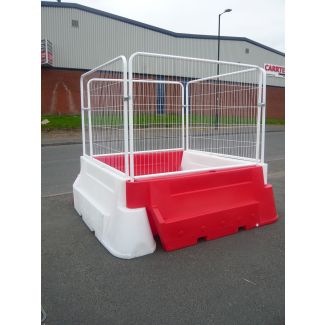
Utility barriers enclose a manhole, trench or footpath excavation on every side. The plastic utility barrier comes as a three or four sided enclosure for a single chamber or small opening. The Olympic barrier has hinged side wings that turn and lock at every 90 degrees, so one set can follow a square, an L shape or a straight edge along a kerb. The heavy duty plank barrier system builds from bases, posts and planks to the length of a longer trench, and temporary lights fit into the tops of its posts.
Self-weighted barriers and separators
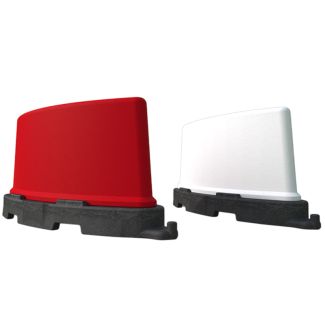
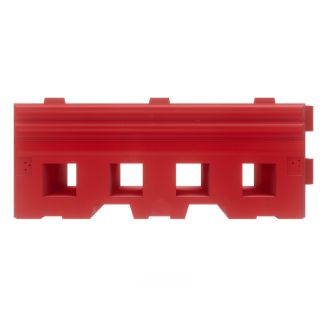
Self-weighted barriers take their stability from their own moulding and need no water, sand or added ballast, so they go up and come down quickly on short works. The WonderWall heavy duty traffic barrier is the full height option for roadside work. The Road Runner self-weighted barriers have wheels and a tail for rolling into place and coupling, and they suit light vehicle traffic and pedestrian routes, while the Oaklog barrier is a one piece interlocking block for temporary or semi-permanent closures.
Water filled road barriers
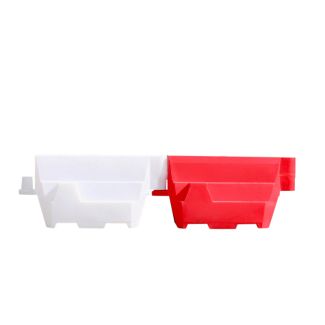
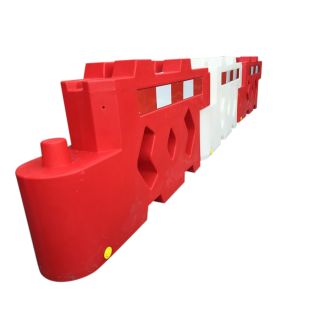
Water filled barriers are filled on site and reach up to 600 kg a unit at the heavy end of the range. Low separators such as the Buddha barrier divide traffic from pedestrians and mark out lanes, while the larger units have fork channels for handling and take fence extensions for site perimeters. The full range of water filled barriers has its own page.
Steel road barriers
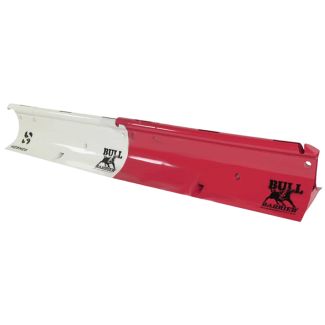
The Bull steel road barrier is a crash tested steel unit for temporary roadworks where the workforce stands close to moving vehicles.
Concrete crash barriers
The SVEA temporary crash barrier is a precast concrete system for motorway interventions, road upgrades and urban construction zones, and it stands freestanding on asphalt without anchors. Units are placed with lifting plant, joined by interlocking end connectors and turned through corners with hinge units. Precast blocks for closing off sites and roads are in the concrete barriers range.

Temporary crash barriers or pedestrian road barriers
The choice turns on whether the barrier only has to mark out the works or has to stop a vehicle. Plastic panels, utility barriers and low water filled separators delineate: they show drivers and pedestrians where the work area is, keep the public out of it and guide people around it, and they are the right choice for footpath works, utility openings, site perimeters and most road closures.
Where a workforce operates beside moving traffic, as on a lane closure with live lanes alongside, the barrier between them needs to be crash tested. The Bull steel road barrier and the RB22 crash tested water filled barrier are both crash tested at 80 km/h. Where the public pass on the far side, the Bull barrier is paired with anti-climb pedestrian fencing, so the same line holds back vehicles and keeps people out. The SVEA concrete system is tested to EN 1317 at containment classes N1, N2, T2 and T3, and it is the range's choice where the works need a continuous concrete line.
Road work barriers for footpaths, sites and road closures
Footpaths and road openings
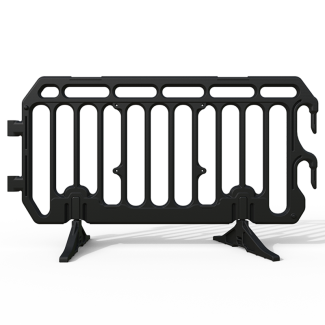
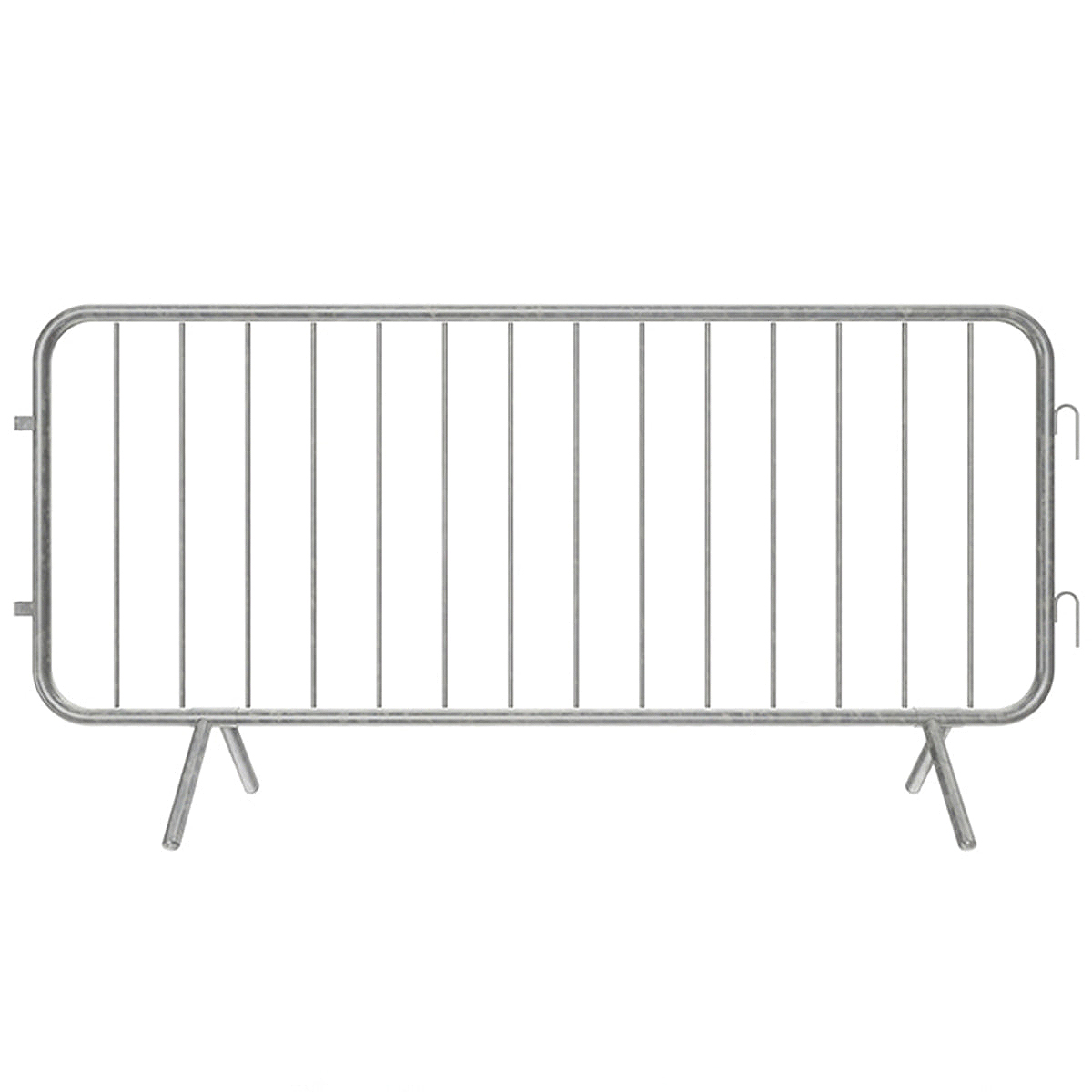
When works take over part of a footpath, the barrier line has to leave pedestrians a continuous protected route past them, wide enough for buggies and wheelchairs, without sending anyone onto the road unguarded. Where that route crosses a trench or a run of hose, trench covers and foot ramps carry it over. Where a diversion or event route needs a metal line, galvanised crowd control barriers hook together and stack on their fixed legs.
Segregating pedestrians and plant on site
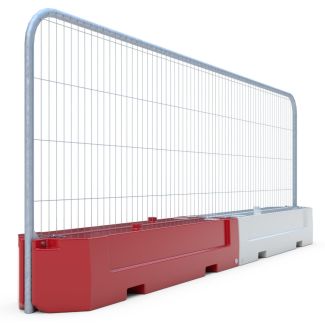
On construction sites, a line of water filled barriers separates walkways from haul roads and plant routes, and a mesh extension on top raises it to a height people cannot easily climb or reach over.
Road closures and diversions
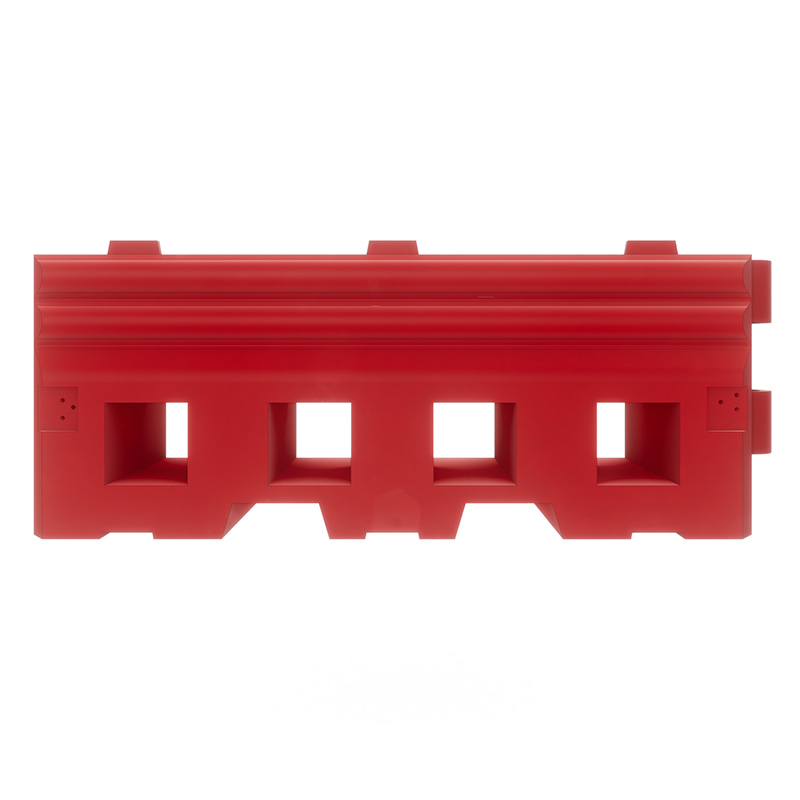
Red and white separators suit closures and diversions because they travel empty, stack on a lorry, fill once in position and drain to move, and their colours read clearly to drivers approaching a closed road. Advance roadworks signs warn drivers and traffic cones taper traffic towards the barrier line.
Plastic road barriers: feet, ballast and colour
Standard or anti-trip feet
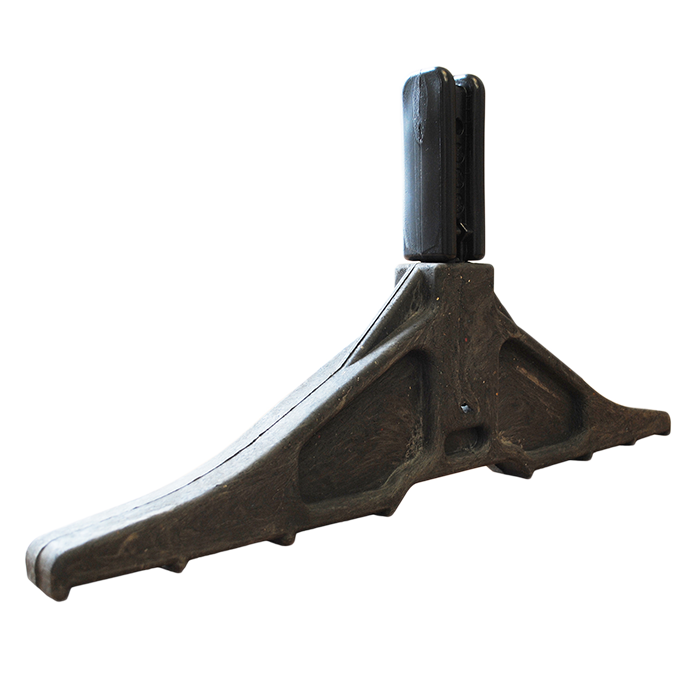
Standard feet suit general runs on the road and around site perimeters. Anti-trip feet are shaped to reduce the trip hazard at ground level, and they are the choice wherever pedestrians walk alongside the barrier, as on a narrowed footpath. The feet fit across the plastic panels, so replacement road barrier feet keep a fleet in service when one cracks or goes missing.
Ballast and wind
A plastic panel is light enough to place by hand, which also means wind can push it over on open roads, bridges and exposed coastal sites. A road barrier stabiliser adds weight at the base and raises the wind loading a panel can take, and on the most exposed runs a self-weighted barrier is used instead.
Colour coding on site
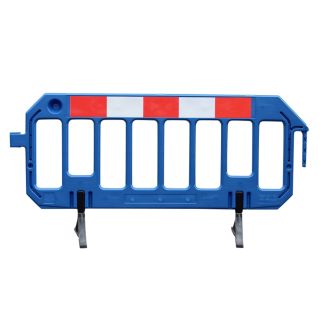
Colour on a run of barriers is a site convention, set by the main contractor or the utility, and it lets anyone on site see whose works a run belongs to. Orange is the standard panel colour, blue road barriers are often used to mark groundworks and excavations, and green, yellow and white can be given to different contractors, trades or phases.
Road barrier accessories
Barrier lights
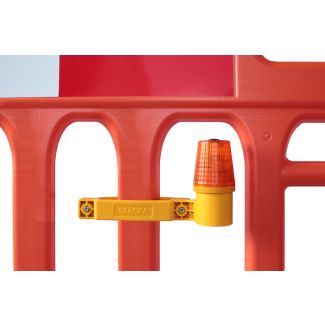
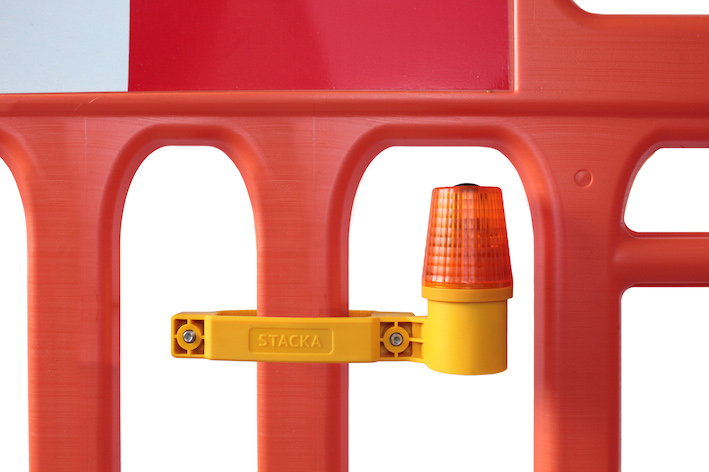
Barrier lights clip onto the plastic road barriers for works left in place after dark. They stay fitted when the panels are stacked, so a run comes down and goes back on the lorry without the lights being stripped off first.
Fence extensions and gates for water filled barriers
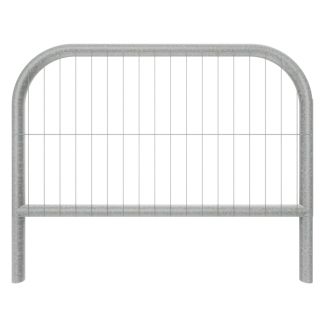
A mesh fence extension fixes to the top of a water filled barrier and turns a low line into an anti-climb perimeter. The RB22 pedestrian gate fits into an RB22 line as a defined walkthrough point. The water filled fence base holds an anti-climb fence panel in a water ballasted slot for a taller perimeter on a small footprint.
Stillages for storage and transport
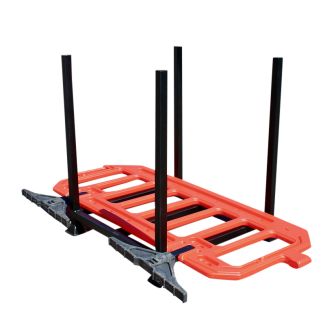
Road barrier stillages hold 20, 30 or 40 plastic panels upright in a steel frame with a central bar for forklift handling.
Popular Categories

Water Filled Barriers
View Products >

Traffic Cones and Road Cones
View Products >

Roadworks Signs
View Products >
Frequently Asked Questions
Road barriers go by several names in the trade. Plastic panels are called Chapter 8 barriers, barrier boards, traffic barriers or pedestrian barriers, and water filled units are called water barriers or traffic separators. Steel and concrete units built to stop a vehicle are called temporary crash barriers or temporary vehicle restraint systems.
Divide the length of the run by the panel width, which is about 2 metres for most plastic road barriers, and round up. Add a panel for each corner, each return back to a wall or kerb and each end that has to be closed off. For an enclosure around an opening, count every side, including the side against the kerb.
Chapter 8 of the Department of Transport's Traffic Signs Manual sets out how temporary traffic management at roadworks is planned and laid out, including where barriers, cones and signs go. The traffic management plan for each job, drawn up to the manual, sets which barriers are used and where.
Yes. Plastic road barriers join with hook and eye connections that let each panel sit at its own level, and their feet rotate, so a run can follow a camber, a kerb line or a broken surface with secure joints. Water filled barriers also take a change of angle at each joint.
Yes. The Brand Barrier carries a plate printed with a company logo, and the Centurion traffic barrier takes a custom centre plate with a logo or a message such as Stop or Caution. Both are made to order, with a minimum order of 40 barriers.
Much of the plastic range is moulded from HDPE, including the utility barriers, the plank barrier system and the water filled separators. The Thor European barrier, the Buddha water filled separator and the Centurion traffic barrier are all listed as fully recyclable.