







Timber Sleepers
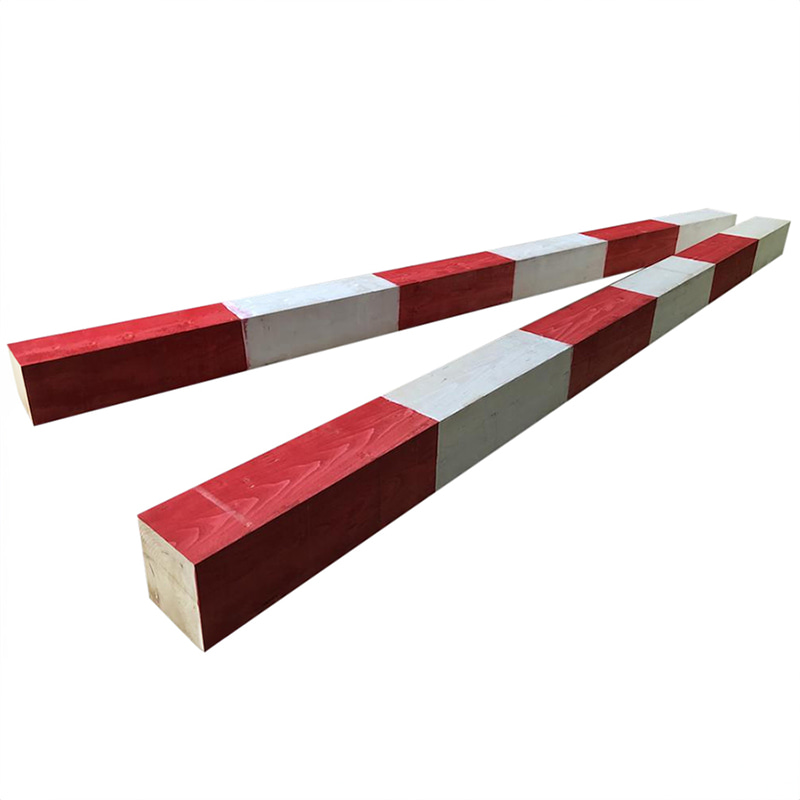
HERMEQ supplies timber sleepers for two kinds of work: protecting the edges of roads and sites, and building gardens and landscapes for domestic and commercial clients. Baulk timbers, the heavy wooden sleepers used on site, are laid alongside roads to stop traffic from injuring pedestrians or striking temporary works such as scaffolding. They are cut from solid timber, painted red and white so that drivers see them, and come in several lengths.
For landscaping, untreated green oak sleepers build raised beds, borders, steps and retaining walls. Oak is a dense, heavy hardwood, and it is supplied untreated for use beside soil and planting.
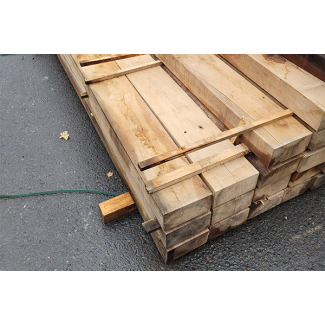

Green oak sleepers and baulk timbers
The range divides by job: green oak sleepers are for garden and landscaping work, and baulk timbers protect the edges of roads and construction sites from vehicles.
Green oak sleepers
Known in the trade as oak sleepers or hardwood sleepers, green oak sleepers build raised beds, lawn edges, borders, steps and low retaining walls in private gardens, parks, schools and commercial landscapes. They are untreated hardwood in a standard 2.4m length, which suits most beds and borders with little cutting. Choose them where the timber will be on show for years, or where soil, plants and people sit right against it.
Baulk timbers
Also called wooden sleepers or safety timbers, baulk timbers are heavy square sections laid along an edge that vehicles approach, such as the side of a road, a site access or the base of a scaffold, to keep wheels back from pedestrians and temporary works. They come in lengths from 1.5m to 6.0m, and the longer lengths cover a road-edge run with fewer joints. Choose them for groundworks and civils sites, depots, car parks and roadworks.

Railway sleepers, treated softwood or green oak
Most sleepers sold for gardens under the name railway sleepers are one of three timbers, and the right one depends on what the sleeper will sit against. Reclaimed railway sleepers are hardwood or softwood taken up from old track, and their weight and worn character suit rustic borders, banks and structural landscaping away from planting. Many were treated with tar or creosote in their working life, and that residue can bleed out in warm weather and transfer to soil, hands and clothes. EU REACH rules bar reused creosote-treated timber from playgrounds, garden furniture, containers for growing plants and garden areas where people touch it often.
New pressure treated softwood sleepers are the lighter option. The preservative is forced into the timber under pressure, and they suit edging and borders where ease of handling comes first.
Untreated green oak is the dense hardwood of the three, with the longest life outdoors and no preservative in the timber to reach the soil. It is the sleeper to choose wherever food is grown or children play, and for any bed where the timber will be in contact with soil for many years.
Sleepers for raised beds, borders and site edges
Raised beds and vegetable beds
Raised and vegetable beds are built in untreated timber, with the sleepers laid flat in courses until the bed reaches the depth the planting needs. The joints are staggered from one course to the next, as in brickwork, so that no vertical joint runs the full height of the bed and the corners lock together.
Garden edging and borders
Sleepers edging a lawn are usually set flush with the turf so that a mower runs over the edge, while those edging gravel, bark or a raised border sit proud to hold the material back.
Steps and retaining walls
Steps are built with each sleeper as a tread or a riser, set level from side to side with a slight fall to the front to shed water. Stacked sleepers retain small changes in level on their own, but taller walls, walls holding back wet ground and walls near a path or driveway need posts set in concrete behind the face, with each course fixed back to them. Timber posts and rails are listed in the same timber range. A wall that holds back a slope above a building or a public footpath is a structure and is designed as one.
Roadside and scaffold protection
Baulk timbers are laid along the line that vehicles must not cross: the edge of a footpath diversion, the side of a site haul road, or the foot of a scaffold beside a road or car park. Their red and white finish makes that line readable to an approaching driver, so they are laid with the painted faces showing and kept clear of mud. On roadworks, the temporary traffic management layout is planned under Chapter 8 of the Department of Transport's Traffic Signs Manual, which sets out the signs, cones, barriers and safety zones for the job, and the baulks mark the protected edge within that plan.
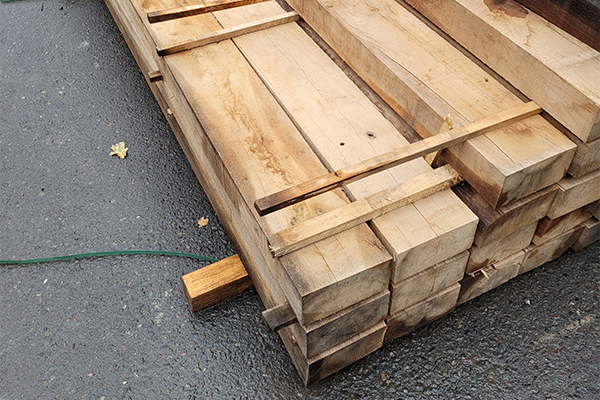
How to lay and fix wooden sleepers
Preparing the base
Sleepers rock and settle on soft or uneven ground, so the base is prepared before the first one goes down. The turf and topsoil are stripped along the line, the trench is taken down to firm ground, and a compacted bed of hardcore or sharp sand is laid and checked with a spirit level along and across.
Fixing, joining and cutting
Green oak courses are fixed with timber lock screws driven down through one sleeper into the one below, with joints staggered between courses and corners overlapped so that each course ties into the last. Pilot holes near the ends of a sleeper reduce the chance of splitting as the screw goes in. Green oak is dense, so it is cut with a sharp, coarse saw or a chainsaw, and all cuts are made before the sleepers are fixed.
Popular Categories

Timber Fence Posts & Rails
View Products >

Timber Fence Panels
View Products >
Frequently Asked Questions
Life depends on the timber and on how wet the sleeper stays. Untreated green oak hardwood is expected to last up to 30 years, and softwood lasts longest when pressure treated and laid on a free-draining base. Any sleeper left in standing water or buried in wet soil rots sooner, so drainage under and behind the timber matters as much as the choice of wood.
No. Oak is a durable hardwood and is used untreated. An exterior wood oil can be applied to slow the change in colour, and it has to be renewed every year or two. On vegetable beds, any finish is best kept to the outer faces of the timber.
Green oak is sold unseasoned, so it still holds moisture when it is laid. As it dries it shrinks and opens splits, called checks, along the grain, and over a season or two its brown colour weathers to a silver grey. Neither change affects how the sleeper is used. Seasoned oak checks less at first but weathers to the same colour.
Scrub the timber with a stiff brush and warm water, or with a cleaner made for exterior wood, then rinse it down. Algae returns where timber stays damp and shaded, so cutting back overhanging plants and keeping soil off the top face slows it down.
Yes. The 3.0m length in the range is a baulk timber, the red and white sleeper used for site and roadside protection. Garden oak sleepers come in a single standard length, so a bed or border longer than one sleeper is made by butting lengths end to end and staggering the joints in the course above.