







Wire & Chain Link Fencing
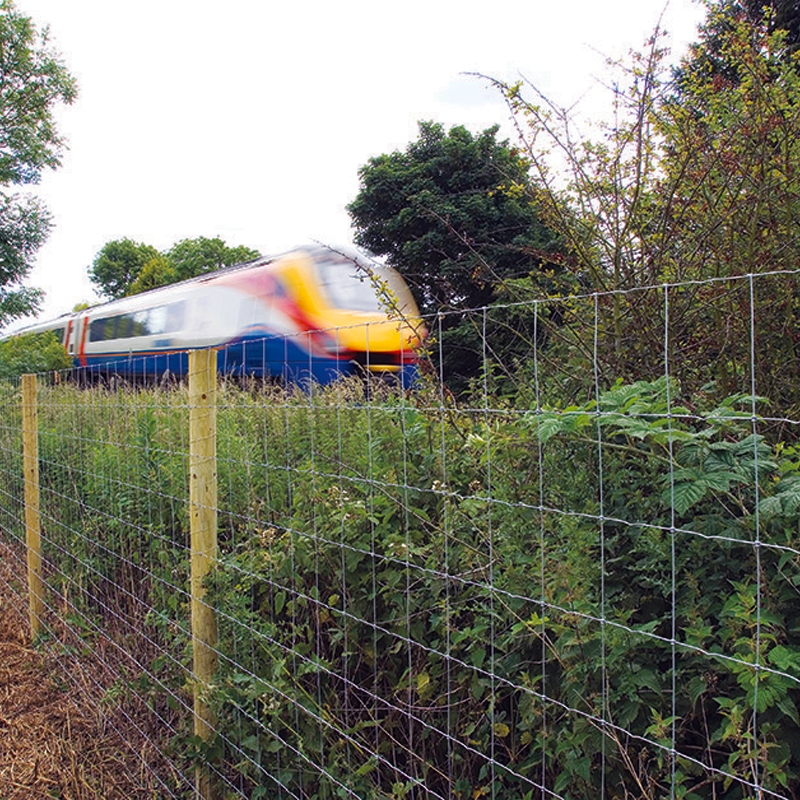
HERMEQ's wire and chain link fencing range is made mainly for agricultural land. Its high tensile farm fencing keeps sheep, lambs, horses and cattle safely inside their fields, and its deer, badger and rabbit meshes keep wildlife in or out of plantations, crops and enclosures. The range also covers roadside and security wire fencing for road and land boundaries, and barbed wire for stock and security work. For yards, farm safety and secure perimeters, it includes galvanised and PVC coated chain link fencing and rigid anti climb mesh panels.
Stock fencing, sheep wire and horse wire
The livestock meshes are chosen by the animal in the field: stock and lamb fencing and Torus for sheep and mixed stock, Titan for cattle, deer and taller boundaries, and Horse and Foal fencing for horses.
Stock and lamb fencing
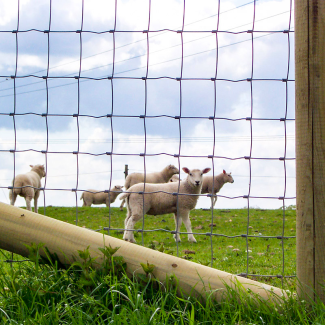
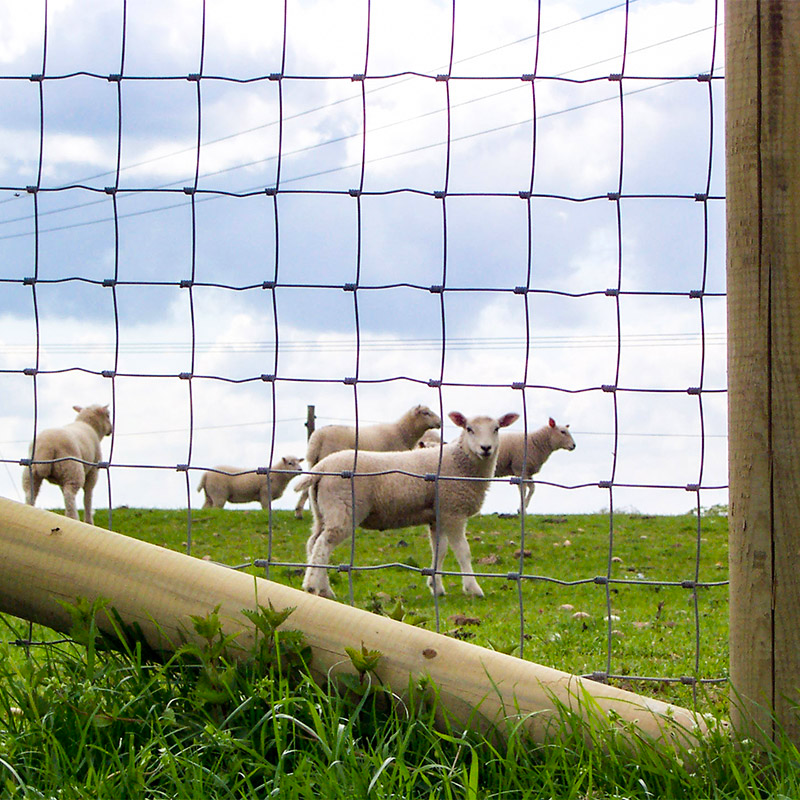
Stock and lamb fencing is sheep wire made with lambs in mind, with the line wires closest together near the ground, where young stock press against the fence and try to push through. It is the usual choice for sheep paddocks, lambing fields and field boundaries grazed by sheep, and it takes a line of plain or barbed wire above it where cattle share the ground.
Torus wire fencing
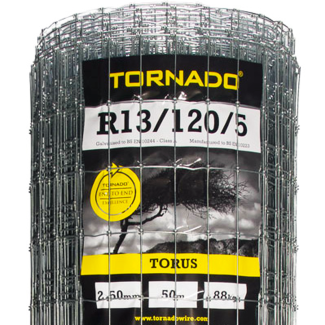
Torus wire fencing is high tensile stock mesh joined with the Torus knot, which gives a stiffer fence with a smooth knot that is kind to livestock.
Titan wire fencing
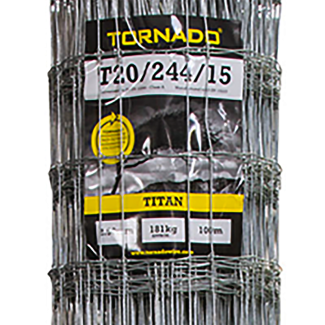
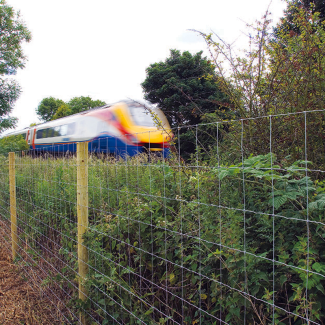
Titan wire fencing is the heavier and taller end of the stock mesh range, with grades that climb from field height to full deer fence height. Choose it for cattle, for deer fencing around forestry, orchards and crops, and for high boundaries on estates and commercial land where a taller, stiffer mesh is wanted.
Horse and foal fencing
Horse and Foal fencing is made to hold horses and foals safely, and it is the horse wire fencing to choose for paddocks, studs and gallops. Choose it over sheep wire for horses, because a hoof that goes through a wider sheep wire square can injure the horse as it pulls free.
Rabbit, badger and roadside wire mesh fencing
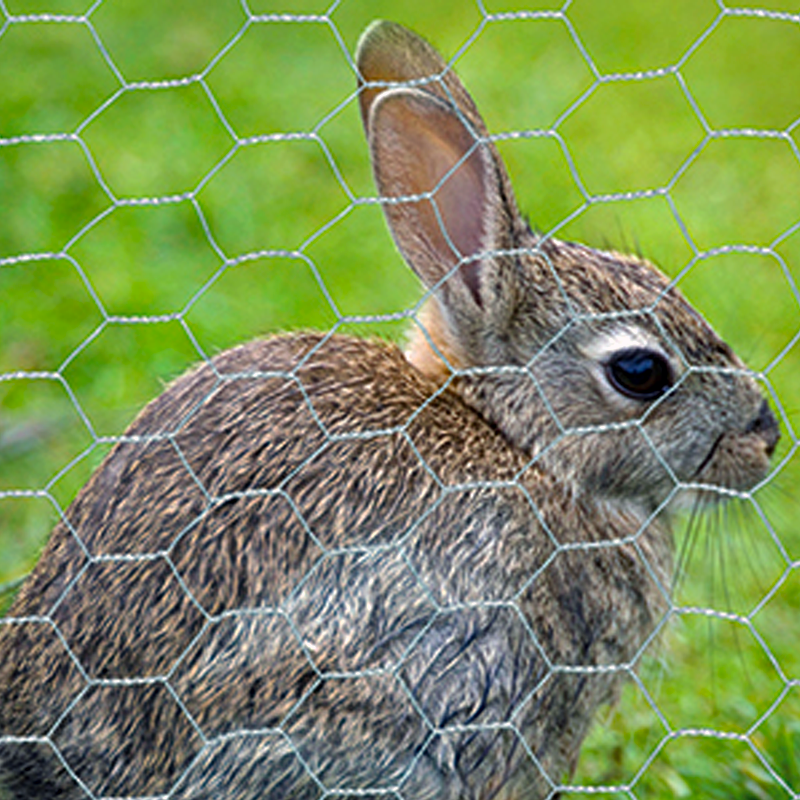
Hexagonal rabbit fencing
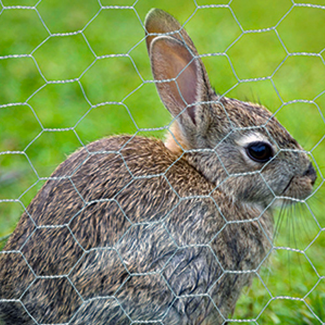
Hexagonal rabbit netting, which buyers also call rabbit wire or chicken wire, is a light twisted mesh for keeping rabbits out of forestry plantings, young hedges, gardens and vegetable ground, and for holding hens and other poultry in a run. Against rabbits, the bottom edge is turned outwards along the ground or buried so they cannot dig underneath. Solid and decorative garden boundaries are covered by garden fencing.
Badger fencing
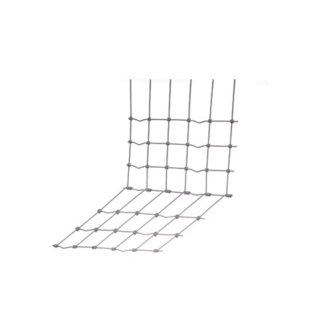
Badger fencing is a heavy mesh built to stop badgers both above ground and below it, so part of the fence is set into the ground where a badger would dig. It is used to keep badgers out of crops, gardens and sports grounds, and along road and development works where animals are kept away from the site.
Roadside and security wire fencing
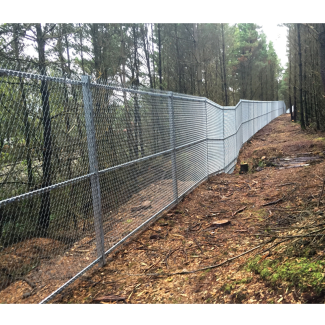
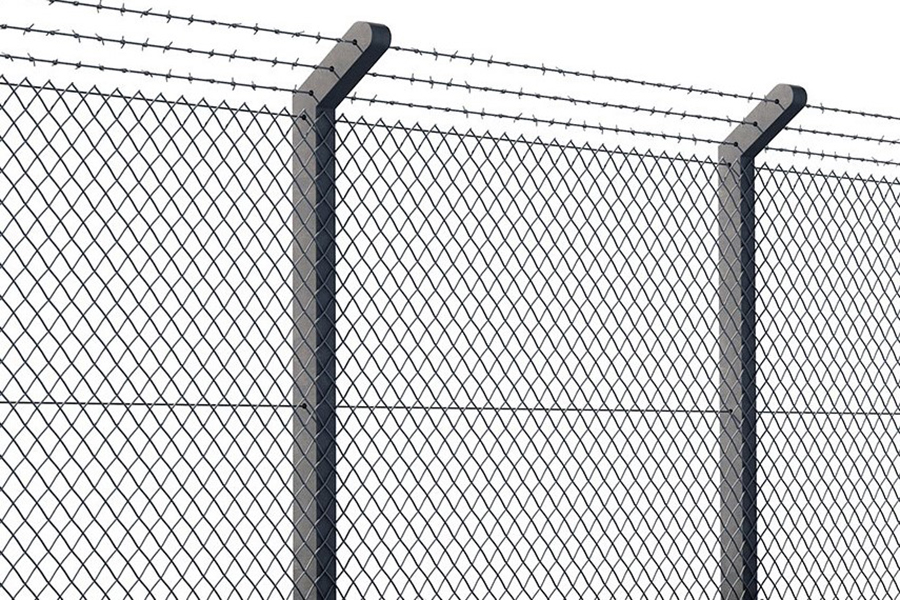
Roadside wire fencing is a tall, heavy steel mesh for boundaries along roads and around commercial or industrial land, where the fence has to stop both people and animals crossing. It is the wire mesh to choose when the boundary needs more height than a stock fence gives.
Chain link fencing, barbed wire and anti climb mesh
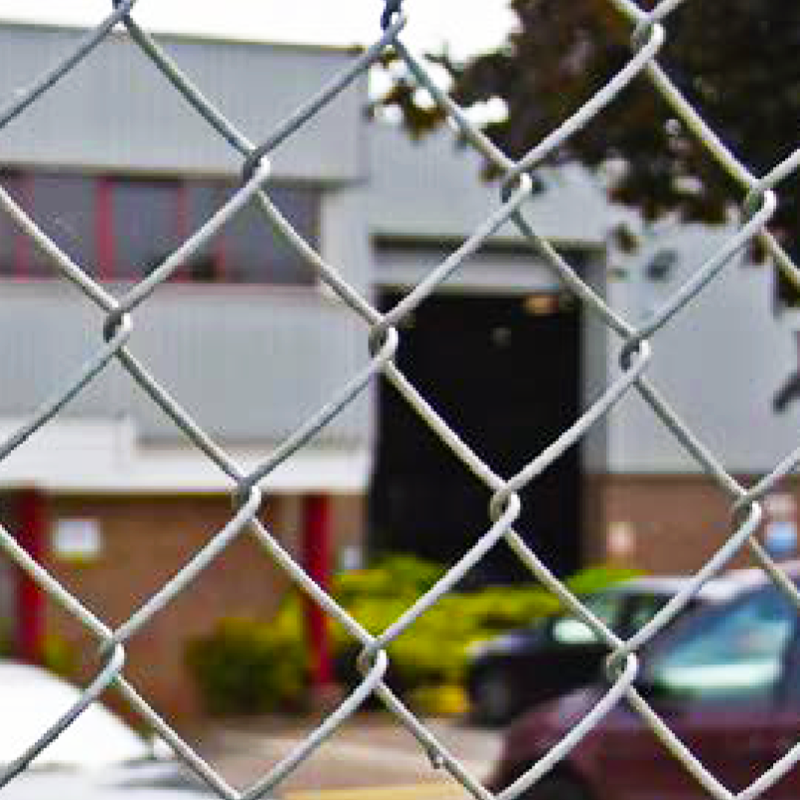
Galvanised chain link fencing
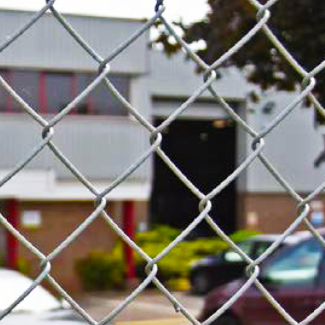
Galvanised chain link fencing is the woven diamond mesh used for yards, compounds, sports pitches, tennis courts and farm safety, such as fencing off open slurry pits, lagoons and drops in the farmyard. Heights run from 900 mm to 2.75 m, so the same mesh fences a low boundary or a ball stop.
PVC coated chain link fencing
PVC coated chain link fencing has a black coating over the steel and comes 3.6 m high, the tallest chain link in the range. Choose it for ball stops, sports enclosures and tall boundaries on show at schools, parks, retail sites and commercial frontages.
Barbed wire and Titan barbed wire
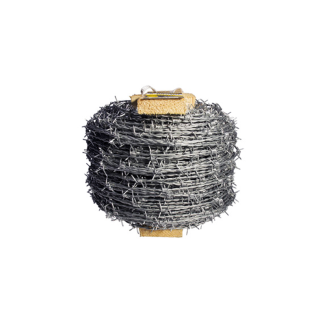
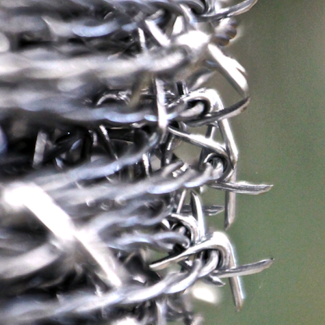
Barbed wire runs as a top line above stock mesh to stop cattle leaning on the fence, as several strands on its own for a cattle boundary, and along the top of chain link or walls as a security deterrent. HERMEQ supplies barbed wire in mild steel and high tensile grades, and Titan high tensile barbed wire in long rolls, including a green version.
Anti climb mesh panels
For a security boundary, anti climb mesh fencing replaces a chain link roll with rigid mesh panels designed to deter climbing. The 2089 mesh is the high security choice, and the 4095 mesh suits lower risk boundaries. For other rigid perimeters, compare V mesh perimeter fencing and palisade fencing in the permanent fencing range.
Stock proof fencing specifications: reading 8/80/15
Stock fence codes read the same way across sheep wire, Torus and Titan, so grades from different lines can be compared on one scale. In a code such as 8/80/15, the first number is the count of horizontal line wires, the second is the height of the mesh in centimetres and the third is the spacing of the vertical stay wires in centimetres. The R in front of a Torus code and the T in front of a Titan code name the product line and leave the numbers unchanged. More line wires and closer stays make a stiffer, more stock proof fence that holds its shape when animals lean or push against it, while wider stays use less wire where stock respect the fence. Heights across the range run from 80 cm to 2.44 m. Rabbit netting codes read differently: the roll height in millimetres, then the hexagon size in millimetres, then the wire gauge.
High tensile or mild steel wire
High tensile steel is the grade for long runs, because it holds its tension, sags less when stock lean on it and lets a fence run further between straining posts. The Torus and Titan stock meshes are high tensile, as is Titan barbed wire, and the standard barbed wire comes in both high tensile and mild steel grades. Mild steel is softer and bends, twists and ties off by hand more easily, so it suits short runs, repairs, tight corners and fences round yards and buildings, where the wire is handled at every post. For a field boundary or a long stretch of roadside, choose high tensile and plan the run around straining posts.
Wire fence finishes and posts
Galvanised, PVC coated or green
Galvanised wire is the standard finish for farm, forestry and general boundary work, where the fence is judged on how it lasts outdoors. Choose black PVC coated chain link for a tall ball stop or enclosure on show, powder coated anti climb panels where a security boundary faces the public or a building, and green barbed wire where a boundary runs through hedgerow or landscaped ground and should blend in.
Posts, strainers and fixings
Every run starts and ends on a straining post, with further strainers at corners, gateways and sharp changes of direction or level, each braced with a strut in the line of pull. Chain link does not stand on its own: it hangs from line wires strained between the posts at the top, middle and bottom, and it is tied to each line wire with tying wire along its length. On timber fence posts, stock mesh and barbed wire are fixed with fencing staples, and barbed staples resist pulling out of softwood posts as they dry and move. On concrete or steel posts, the wire is held with the clips, ties or eyes those posts are made for.
Popular Categories

V Mesh Fencing
View Products >

Palisade Fencing
View Products >

Estate Fencing & Railings
View Products >
Frequently Asked Questions
Roll lengths depend on the product. Chain link comes in 12.5 m and 25 m rolls, with the taller heights on the shorter roll, stock mesh comes on rolls from 50 m to 500 m, and barbed wire is sold on reels from 200 m up to 2,000 m. Each product page lists the lengths it comes in.
Stock mesh and barbed wire are fixed to wooden posts with fencing staples, driven at a slight angle across the grain so they do not split the post. On straining posts the wire is wrapped round the post and tied off or stapled home, while on intermediate posts the staples are left slightly proud so the wire can still slide as it is tensioned. Hang the mesh on the stock side of the posts, so animals push it against the posts and not off them.
Wire fencing is tightened from a straining post. One end is tied off at the first strainer, then the mesh is run out and pulled with a stretcher bar or wire strainer clamped across its full height, so every line wire takes an even load, and it is tied off at the far strainer. Line wires and barbed wire are tensioned with ratchet strainers or in-line tensioners, which can be taken up again if the fence slackens.
Two rolls of stock mesh are joined by overlapping the ends and wrapping each line wire back around its partner, or by joining each line wire with a mechanical wire joiner. Single wires such as line wire and barbed wire are joined with a joiner or a figure of eight knot. Joins are best made close to a post and before the final tensioning.
For dogs, the mesh needs to be close enough that the dog cannot push its head through and tall enough that it cannot jump the fence. Chain link is a common choice for dog runs and yards, and hexagonal netting suits small dogs and puppies. Bury or peg down the bottom edge for dogs that dig.
Divide the roll price by the roll length to get the mesh cost per metre, and do the same for any line wire or barbed wire that runs with it. Then add posts, strainers, struts, staples or tying wire and the labour for the run. Corners and gateways each add strainers, so a long straight field run costs less per metre than a short boundary with several changes of direction.
A 6 ft (1.8 m) chain link fence is the usual height for yards, compounds and dog runs, and 900 mm to 1.2 m suits a low boundary or a farmyard safety fence. Ball stops and sports enclosures take the taller rolls, up to 2.75 m in galvanised chain link and 3.6 m in black PVC coated chain link.