







Scaffold Sheeting
HERMEQ supplies scaffold sheeting for enclosing scaffolds on construction, refurbishment and maintenance work, in grades matched to the weather a site sees and the work carried out behind the sheet. The standard Monarflex Scaffband and clear sheets are weather resistant polythene, made for low rise jobs in built up urban areas with normal weather. Flame retardant sheeting is fire retardant LDPE with a maximum life of three months on site. Acoustic scaffold sheeting is fitted to scaffolding to cut noise from the works, and printed marketing sheeting carries a company's branding to a bespoke design across a street facing scaffold. Scaffold debris netting, catchfans and corrugated galvanised sheets for temporary scaffold roofs complete the range.
-

-

-

-
-
-
-
-

-
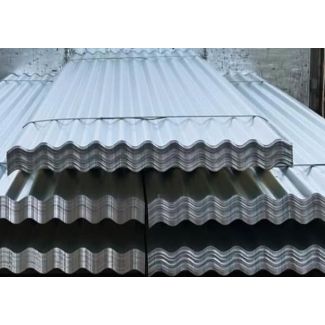 Scaffolding Galvanised Steel Roofing Sheet – CorrugatedAs low as €18.32 €22.53
Quick 5 Day Delivery
Clear, flame retardant and acoustic scaffold sheeting
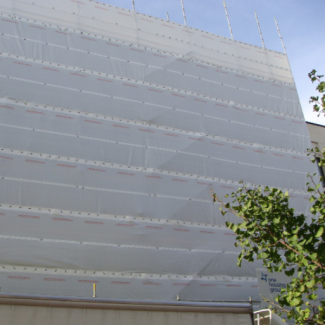
Polythene sheeting covers the faces of a scaffold against weather and dust, acoustic sheeting goes up where noise limits the work, printed sheeting turns a street elevation into signage, and steel sheets form a roof over the top.
Monarflex Scaffband scaffold sheeting
Monarflex Scaffband scaffold sheeting is the economy grade in the range, made for low rise, short term projects that are not exposed to adverse weather or high winds. It suits a house refurbishment, a gable repair or a shopfront on a sheltered street, where the scaffold is up for weeks rather than months.
Clear weather resistant scaffold sheeting
Clear scaffold sheeting is a weather resistant, short term sheet for low rise work in built up areas under normal weather. Because it lets daylight through to the working platform and the windows behind it, it is the usual choice on occupied houses, offices and schools, where people carry on inside while the facade is repaired.
Flame retardant scaffold sheeting
Flame retardant scaffold sheeting is fire retardant, weather resistant LDPE for low rise urban projects. Choose it where the client, the insurer or the site fire plan asks for retardant materials on the scaffold, on occupied buildings with escape routes running past the scaffold, and wherever hot works such as roofing torches, welding or disc cutting take place near the sheeted face.
Acoustic scaffold sheeting
Acoustic scaffold sheeting reduces noise transmission from scaffolded works and temporary site structures, in a 16 dB and a 19 dB grade. It is the sheet for demolition, breaking out, cutting and drilling next to homes, schools and hospitals, and the grade is chosen against the noise reduction the project specification sets.
Printed scaffold sheeting for site marketing
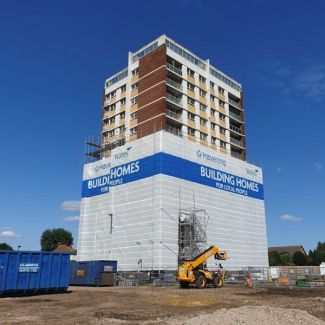
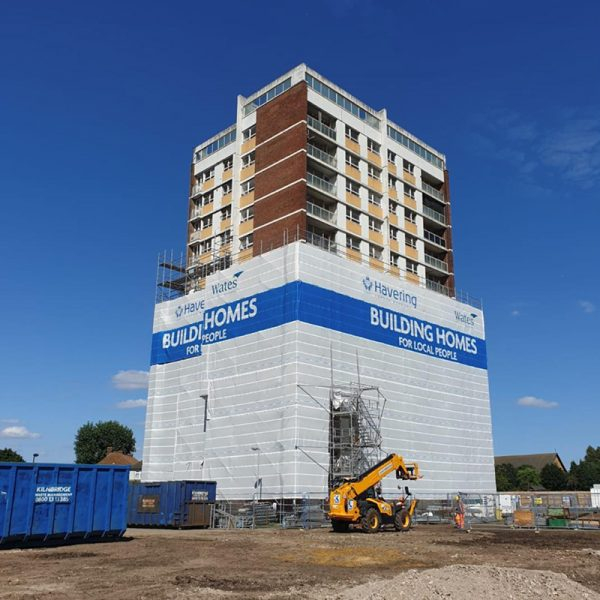
Printed scaffold sheeting is made to order with the developer's or contractor's branding, project details or hoarding graphics, and it covers the scaffold face in the same way as any other sheet. It earns its place on city centre and retail developments, where the scaffold faces a busy street or footpath for months and the elevation would otherwise show plain polythene.
Corrugated galvanised sheets for scaffold roofs
Corrugated galvanised roof sheets in 2.4m and 3m lengths form a rigid temporary roof over a scaffold, and they also clad site stores, cover walkways and patch sheds. Choose steel where the roof has to stay rigid through a long programme or a winter, or where a polythene cover would need constant re-tensioning, and plan to take the sheets down and use them again on the next job.

Scaffold sheeting or scaffold netting
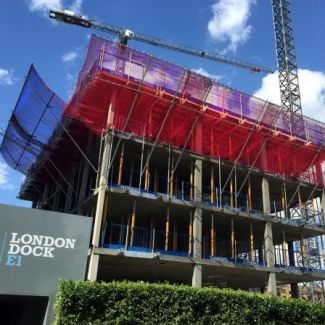
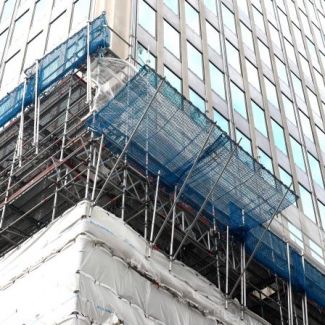
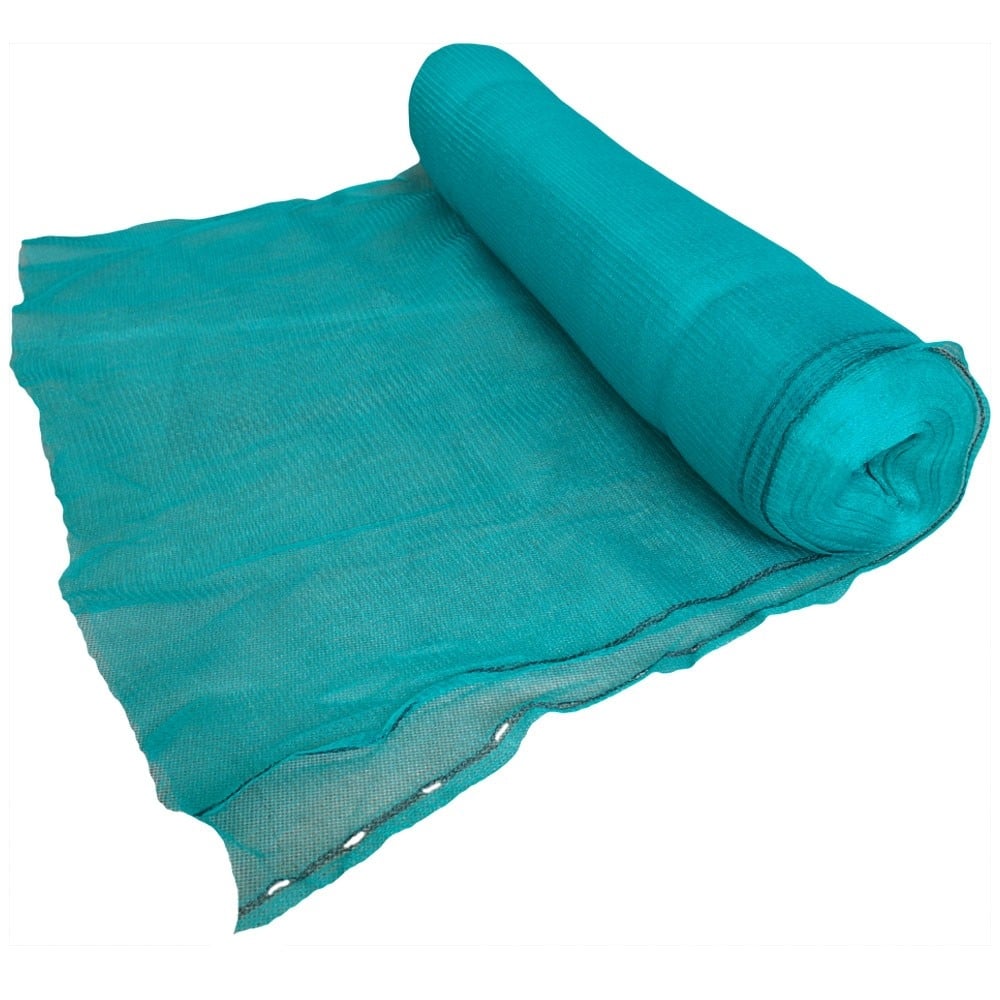
Each product on a covered scaffold stops something different. Scaffold sheeting keeps weather out and holds dust in, so it goes on roofing, refurbishment and facade jobs where the work needs shelter or the neighbours need protecting from dust. Debris netting is an open knitted polyethylene mesh that holds back loose debris while letting the wind through, which puts far less wind load on the scaffold and suits bricklaying and general works where weather protection is not the aim.
Neither sheeting nor netting is built to stop a dropped tool, a block or a length of tube falling from height. Where objects can fall onto people below, such as over a footpath, an entrance or an open road, fit catchfans, which project out from the scaffold, slab or wall to catch them. The mini catchfan for scaffolding has the guardrail clip built into its body for fixing straight to the scaffold. A person falling from an open edge is a separate risk, answered by edge protection.
Scaffold sheeting for weather, wind and project length
Exposure and programme length decide the grade, and the scaffold's lifts and design decide how the sheeting is ordered and fixed.
Sheltered streets and exposed sites
The economy and clear grades are made for low rise work in built up areas, where surrounding buildings break the wind and the weather is normal for the area. High rise scaffolds and open rural or coastal sites see stronger gusts and driven rain, so on those jobs the sheeting and the scaffold's ties are agreed with the scaffold designer before any rolls are ordered, and debris netting takes the place of sheeting on any face that needs containment rather than weather protection.
How long the sheeting stays up
The Monarflex, clear and flame retardant sheets are short term sheets, so the programme matters as much as the site. On a job that runs past the flame retardant grade's three month maximum life, build a re-sheeting stage into the programme while the scaffold and its access are still in place.
Roll widths and the scaffold's lifts
The polythene rolls in the range come in widths from 2 m to 3 m. Choose the width against the lift height so that every horizontal lap falls on a ledger or guardrail, where the ties have a tube to fix to and the joint is held along its length. A lap that falls between tubes is free to flap, and it is the first place a sheet tears.
Wind load on a sheeted scaffold
A fully sheeted scaffold catches far more wind than an open or netted one, so the scaffold design and its tie pattern have to allow for sheeting from the outset. That usually means more ties into the building and extra bracing from scaffold tube and fittings, and a scaffold put up for open working is not sheeted until its designer has checked it for the added load.
Fitting and fixing scaffold sheeting
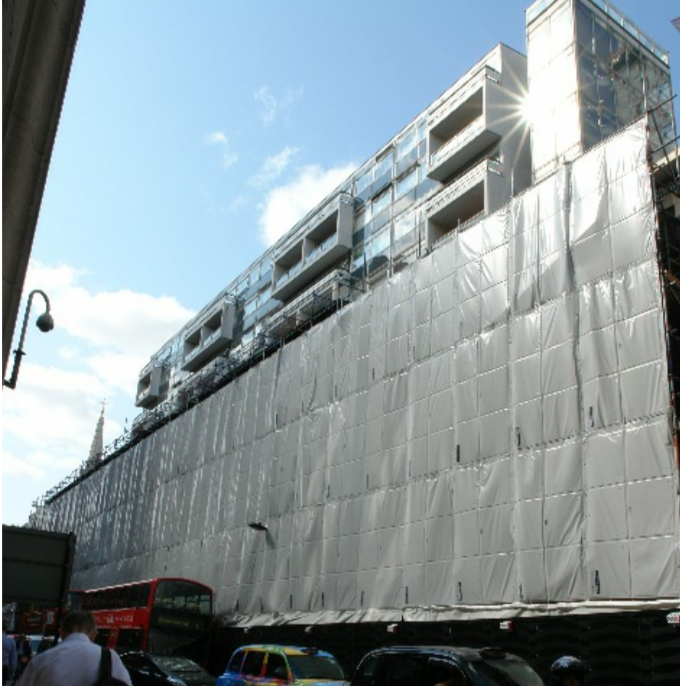
Sheeting is fixed to the outside face of the standards, starting at the bottom lift and working up, so that each higher sheet laps over the one below and sheds water down the outside face. Vertical joints are lapped and turned away from the prevailing wind. Ties pass through the eyelets or reinforced bands at regular centres and fix to the ledgers, standards or guardrails, with the sheet secured at every lift and tied down firmly at the top and bottom so wind cannot get behind it. Check the sheeting at every scaffold inspection and after high winds, and replace any tie that has worked loose or cut into the sheet, because one open lap lets the wind in behind the whole face.
Popular Categories

Scaffolding Parts
View Products >

Scaffold Ladders & Stairways
View Products >

Scaffolding Stillages
View Products >
Frequently Asked Questions
Polythene scaffold sheeting sheds rain and keeps most weather off the working platforms. A sheeted scaffold is not a sealed enclosure, though, and water can still get in at badly lapped joints, fixing points and an open top. Where the work below needs to stay dry, such as a roof strip-out, the scaffold needs a temporary roof as well as sheeted faces.
No. Only sheeting made and sold as flame retardant has that property, and in the HERMEQ range that is the flame retardant grade, while the Monarflex Scaffband and clear sheets are general weather sheets. Where a fire plan or client specification calls for retardant sheeting, order that grade for every face so the scaffold is not covered in mixed materials.
Measure the length and height of each elevation to be sheeted, including returns and any sheeting over the top, and add an allowance for the laps at every joint. Divide that total area by the coverage of one roll, which is its width multiplied by its length, and round up. Ordering a spare roll covers repairs after high winds.
Polythene sheeting is generally treated as a single job material, because it is cut, tied and weathered on site. A roll that comes down clean and untorn from a short job can go up again on a similar scaffold. Corrugated galvanised steel sheets are made to be taken down and refitted from one job to the next.
Scaffold sheeting is fixed with ties through eyelets or reinforced bands, so it can be adjusted, opened and refixed as the work moves. Shrink wrap is heated onto the scaffold with a gas heat gun to form a tight, sealed enclosure, and it is used for encapsulation work such as asbestos removal, blasting and bridge repairs. It needs specialist fitters and equipment, and the HERMEQ range is tie fixed sheeting.
Polythene scaffold sheeting can be recycled through waste contractors that accept clean plastic film. Corrugated galvanised steel sheets go for scrap metal at the end of their working life.