







Trench Bridges & Stairs
HERMEQ trench bridges and stairs give workers and pedestrians a safe way across trenches, ditches, pipelines and uneven ground, for industrial and commercial use on construction sites, utility works, public footpaths and event areas. The trench bridges have anti-slip floors and side rails. The temporary pedestrian bridge is a modular, folding bridge for longer gaps on construction sites, and the railed trench bridge gives pedestrians passage over a trench, canal or ditch. Modular steel, aluminium and spiral stairways complete the route where the ground changes level.


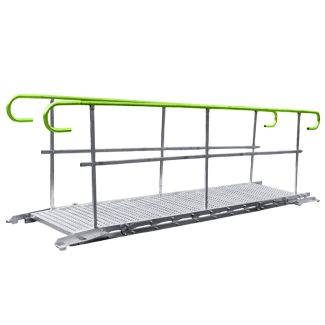
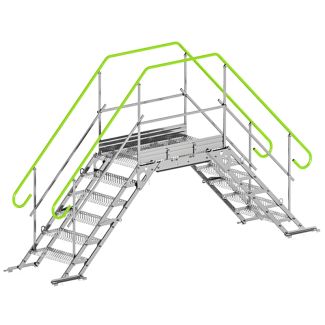
Trench bridges and temporary pedestrian bridges
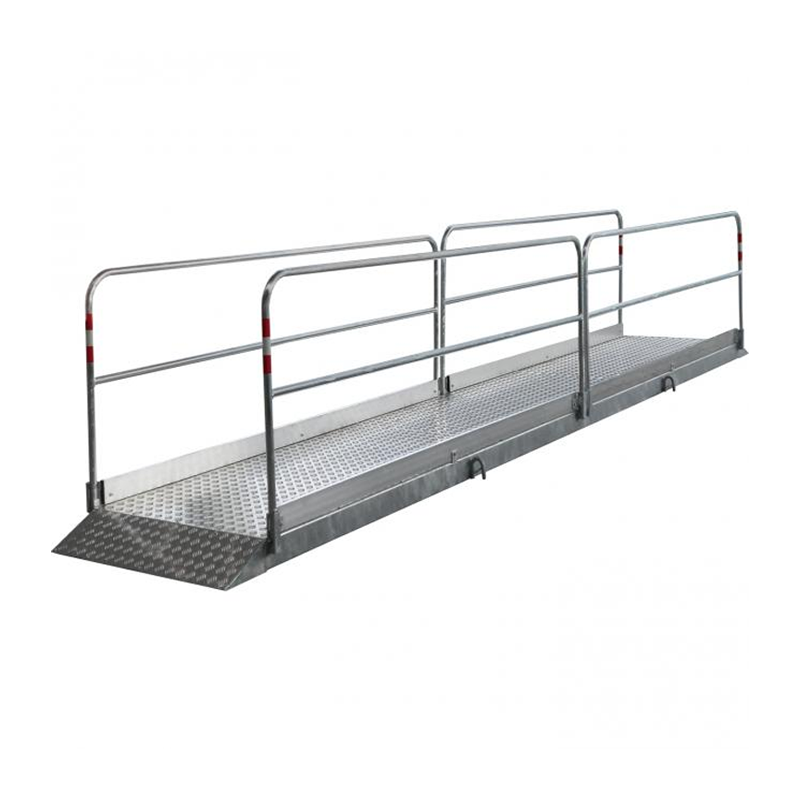
Railed trench bridge
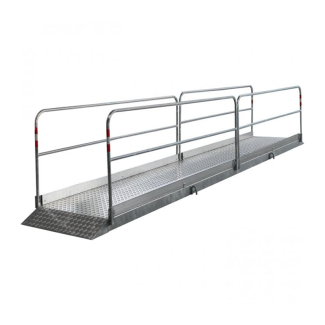
The railed trench bridge is the ditch bridge for a footpath, yard or site walkway cut by a trench, canal or ditch. An aluminium safety handrail and an anti-slip floor make it suitable for public routes as well as site traffic, and its lengths cover the narrow trenches dug for services, drainage and cabling.
Aluminium trench bridge
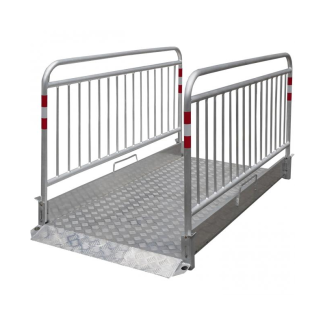
The aluminium trench bridge is the trench crossing bridge with the most widths and lengths in the range, so it is the one to choose when a crossing needs a wider walkway or a longer span than the railed bridge gives.
Temporary pedestrian bridge
The temporary pedestrian bridge is a modular steel bridge built up in sections to suit the gap, in sizes up to 8.4 m, and is the temporary access bridge for wide excavations, open drainage channels and other gaps beyond the reach of the trench bridges.
Up and over bridge
The up and over bridge, also called a step-over bridge, takes people up a short flight of steps and down the other side of an obstacle without touching it. Its folding frame and adjustable height let one bridge be set to the obstacle beneath it and moved on as work progresses along a pipeline or service corridor.

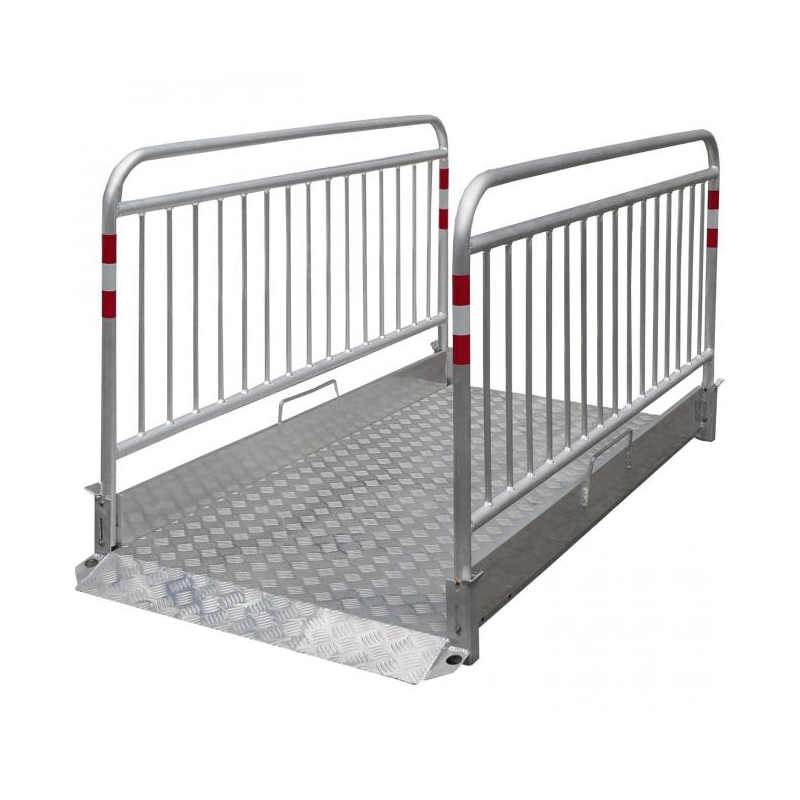
Flat trench bridge or up and over bridge
The obstacle settles the choice. A flat trench bridge with an access ramp keeps the crossing at ground level, which is what a route needs when wheelchairs, buggies or wheelbarrows must get across a trench, canal or ditch. A stepped up and over bridge lifts people clear of something that must not be walked on or driven over, such as an overpumping pipeline, a line of hoses or a bank of cables, and leaves that obstacle undisturbed beneath it.
Every bridge in the range is for people on foot. Plant and vehicles cross open trenches on road plates, and a narrow opening at ground level, such as a cable slot across a footpath, is closed flush with foot ramps and trench covers in place of a bridge.
Temporary stairs for embankments and excavations
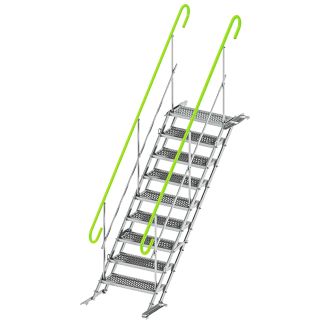
Stairs complete a route wherever a crossing meets a change in level, and the choice of material follows how the stair is handled: aluminium where it is carried by hand and moved often, steel where it stays in place for longer or is lifted in by crane.
Modular steel stairway
The modular steel stairway is assembled from units that connect to suit the rise, from a short step up a bank to heights of up to 7.7 m, and is secured to scaffolding or a concrete slab.
Temporary aluminium stairway
The temporary aluminium stairway is light enough to carry by hand and goes up in minutes. It is the stair for work zones that keep moving and for positions that are awkward to reach with lifting equipment.
Temporary stairway
The temporary stairway is a folding steel stair with non-slip steps, built to be lifted into place by crane for access to raised areas and excavations.
Spiral tower staircase
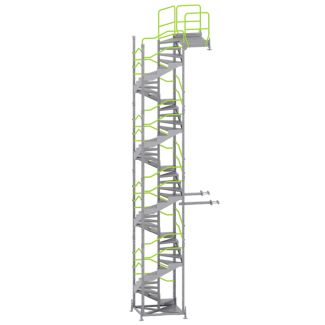
The spiral tower staircase is a modular spiral staircase for deep excavations, shafts and shored trenches, compliant with EN 12811, the European standard for temporary works equipment. Its spiral flights fit the tight footprint of a shored dig and give operatives a stair for carrying tools and materials up and down in place of a ladder.
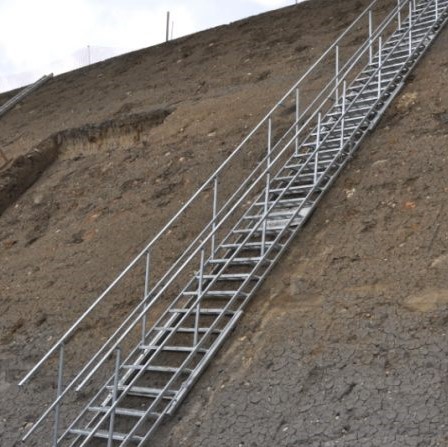
Trench bridge span, width and bearing
Span and bearing on each side
The length of a bridge and the width of trench it crosses are two different measurements. Each end has to rest on firm, undisturbed ground set back from the edge, where the side of the excavation will not crumble or slip under load, so measure the trench at its widest point and allow bearing at both ends before choosing a length. Where the approaches are soft or churned up, ground protection mats keep the ground under each end and the path leading to it firm.
Walkway width and wheelchair access
Width matters most where a route is shared. A wheelchair or buggy needs room to roll between the rails without catching them, and routes with people passing in both directions, or crews carrying materials across, need a wider walkway than a single-file crossing used only by operatives.
Popular Categories

Vehicle Access Mats & Track Mats
View Products >

Road Plates
View Products >

Timber Mats
View Products >
Frequently Asked Questions
What is a trench bridge?
A trench bridge is a portable footbridge laid across an open trench, ditch or excavation so that workers and the public can keep crossing while the work is open. It has a non-slip walking surface and side rails, and it is moved along the trench or lifted out once the trench is backfilled.
Can a temporary stairway be used as a bridge over a trench?
Yes. The 6 to 12 step flights of the temporary stairway work as a gangway on their own, and the 15 and 18 step flights do so with a truss, covering trenches from about 1.2 m to 4.4 m wide. One product can then give access down a level on one job and a crossing on the next.
Who plans pedestrian crossings over excavations on site?
Under the Safety, Health and Welfare at Work (Construction) Regulations 2013, the project supervisor for the construction stage (PSCS) coordinates safety on site, and pedestrian routes around and across excavations are normally set out in the construction stage safety and health plan. Where a dig affects a public road or footpath, the crossing is planned with the temporary traffic management under Chapter 8 of the Department of Transport's Traffic Signs Manual.
Can temporary pedestrian bridges be used at events?
Yes, the temporary pedestrian bridge is made for event areas as well as construction sites. At outdoor venues it carries visitors across gaps in the ground in the same way as it does on site.
What should be checked before a trench bridge is opened to pedestrians?
Check that the rails are fitted and secure, any locks or handles are set for use, and the floor is clear of mud, ice and loose stone. The approach at each end should meet the bridge without a lip, and the open trench either side of the crossing should be fenced off so people use the bridge and do not cross elsewhere.