







Telehandler Attachments
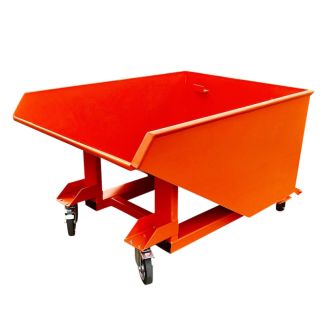
HERMEQ supplies telehandler attachments that let one machine load, lift, carry and clear waste across a site. Telehandler tipping skips, in auto lock and castor versions, lock onto and release from the forks automatically, and the waste is tipped while the skip is still on the forks.
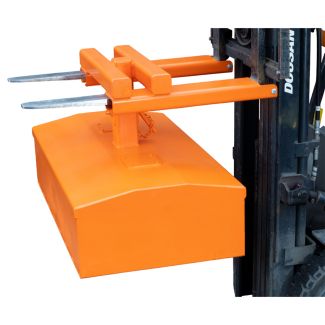
Fork extensions fit over the existing forks to carry longer and more awkward loads, in sizes for forks from 100 x 50 up to 150 x 60 and in a heavy duty version. Telehandler buckets and muck grabs pick up and move loose material, and the range also covers jibs, bag carriers, drum and bin lifters and other fork mounted lifting attachments.

Buckets, grabs, jibs and other telehandler attachments
Telehandler buckets
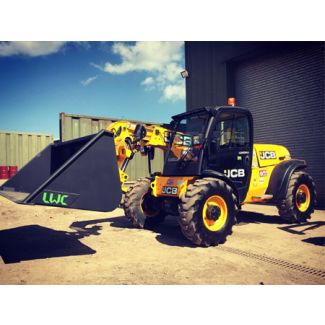
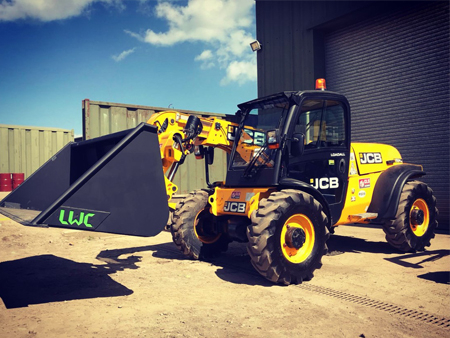
A bucket gives the telehandler the work of a loading shovel with extra reach and height: stockpiling, loading lorries and skips, backfilling and moving soil, stone, sand and rubble around site. Telehandler buckets come in widths from 1.52 m to 2.46 m, with a choice of capacities at each width. A narrower, smaller bucket suits heavy material such as wet clay and tight loading areas, and a wider, larger one suits lighter material where each pass can carry more.
Muck grabs
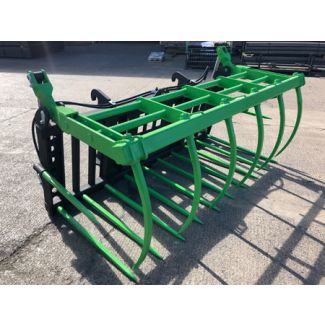
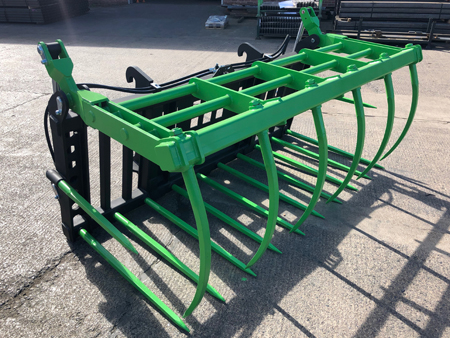
A muck grab holds material that tangles, bridges or falls out of an open bucket, such as muck, green waste, brash and bulky mixed debris from site clearance. Choose telehandler muck grabs over a bucket when the load has to be pulled from a heap and carried to the skip or trailer without spilling on the way.
Telehandler tipping skips
A telehandler tipping skip is filled at the workface, carried to a larger skip or container and emptied there while it stays on the forks. The auto lock telehandler tipping skip locks onto and releases from the forks automatically, so the driver picks it up, tips it and sets it down again without leaving the cab, and the telehandler skip on castors uses the same lock. Capacities run from 500 to 1750 litres, and the right size is the one that matches the waste a gang produces between emptyings and what the telehandler can lift at the height of the receiving skip. For forklifts, forklift tipping skips are the range to choose.
Fork extensions
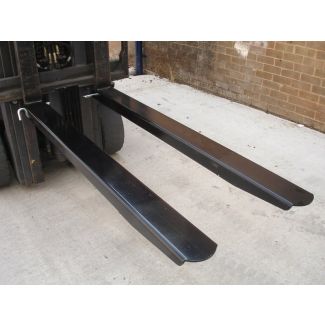
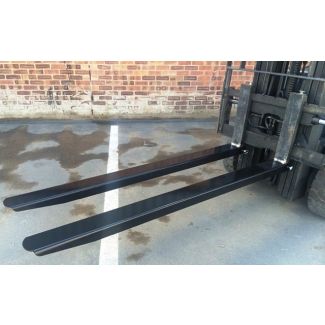
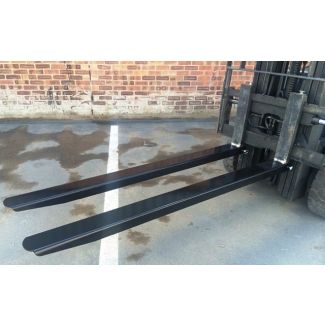
Fork extensions slide over the existing tines to carry long loads that would overhang bare forks, such as timber, pipe, steel sections and packs of board. Standard extensions come as fork extensions for 100 x 50 forks and as fork extensions for 150 x 60 forks, in lengths from 1220 to 2438 mm. Forks of 150 x 60 section can also take heavy duty fork extensions.
Jibs and lifting hooks
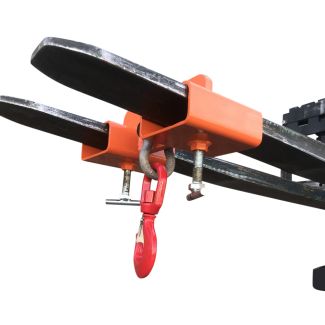
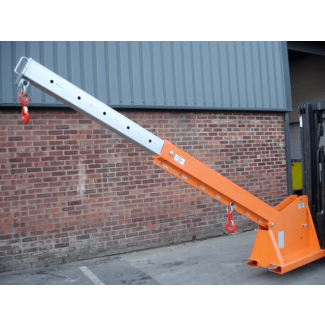
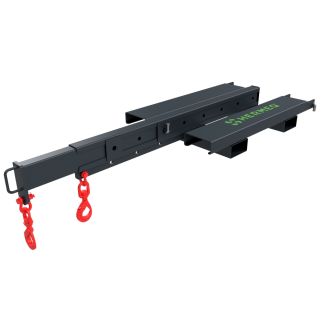
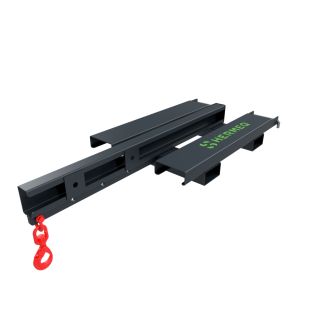
A jib, which the trade also calls a crane jib or fly jib, turns the telehandler into a small crane for lifts under the hook: setting precast units, lowering pipe into a trench, placing steel or lifting plant parts. The articulated extendable jib adjusts in angle and length for tall and awkward loads. The low profile extending jib gives a choice of hook positions where headroom and working space are tight, and the low profile jib is the same low build without the extending section. For unpalletised loads that forks cannot pick up and that need no reach, the fork mounted lifting hook is the simplest option.
Bulk bag and sand bag carriers
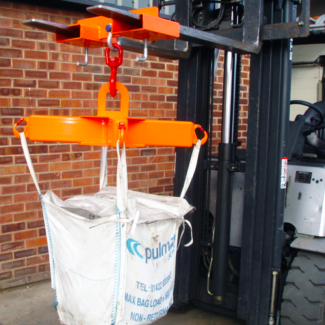
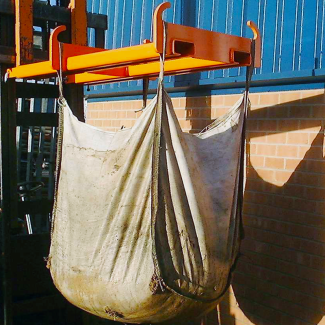
Bulk bags are often lifted by hooking their loops over bare tines, where the loops bear on the fork edges and the bag can slide as the boom moves. A bulk bag carrier takes full or part-filled bulk bags, and sandbags, by their loops on a frame made for the purpose. The sand bag carrier is built around sandbags, and both carriers are made in capacities up to 2 tonnes.
Drum lifters, tilters and rim grips
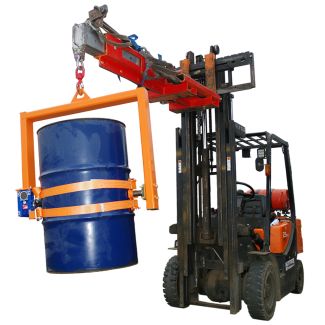
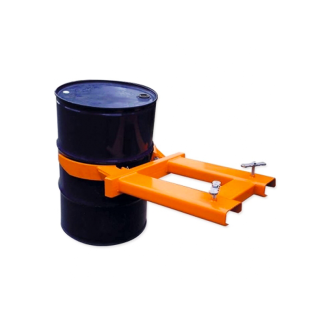
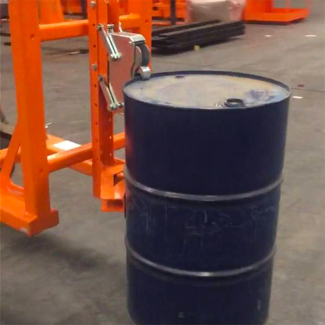
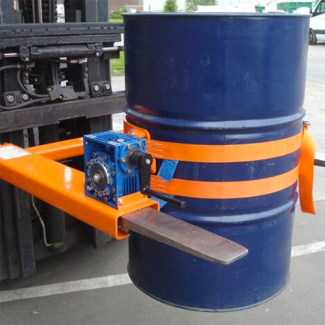
Drums roll and shift on bare forks, so they travel on an attachment that holds them. The rim grip drum lifter takes open and closed top plastic and steel drums by the rim, one or two at a time, and the fork mounted drum lifter lifts drums singly or in pairs. Where the contents have to be poured, the fork lift drum tilter tilts the drum on the forks, even in a confined space, and the crane drum tilter does the same while hanging from a hook or jib.
Materials lifting cages
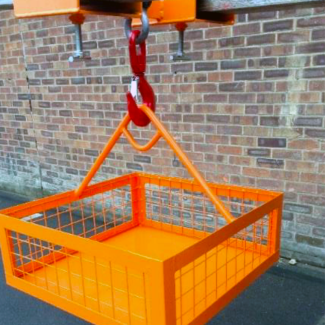
Small, loose and mixed items, such as blocks broken out of a pack, fittings, tools and offcuts, are carried in a cage instead of balanced on the forks. The materials lifting cage carries them on the forks, and the forklift and telehandler cage is an enclosed cage with lashing points, which can also be lifted by crane. Both are for materials only, and people are never lifted in them.
Well ring lifter
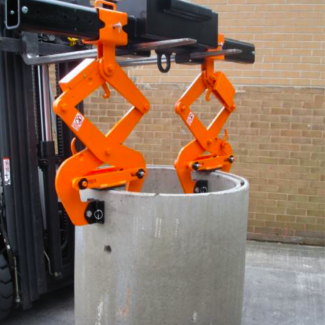
Concrete well rings and chamber rings have no flat underside for forks, and slinging each ring by hand puts people next to a heavy and unstable load. The well ring lifter is a mechanical lifter that picks up and sets down rings from the forks, for drainage, soakaway and manhole work.
Skip compactor, sweeper collector and fork magnet
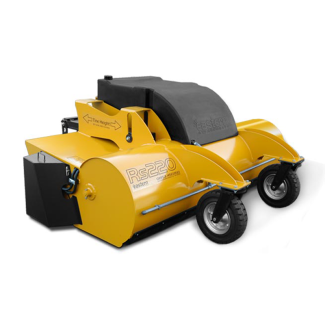
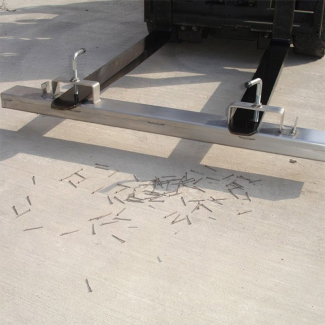
The fork mounted skip compactor presses waste down in a skip so that each one holds more before it is collected. The sweeper collector attachment sweeps, collects and dumps debris from yards, car parks and haul roads, and the fork mounted magnet picks up nails, screws and metal offcuts from the ground before they reach tyres.
Wheelie bin lifters and stackers
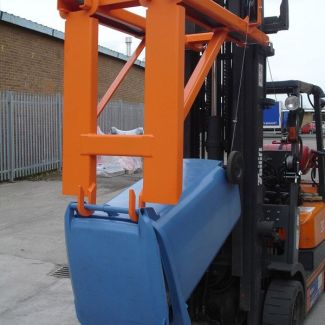
Facilities teams, depots and local authorities that handle bins in numbers use two attachments for the lifting. The wheelie bin lifter lifts, moves and empties 90 to 240 litre wheelie bins into a larger container, and the wheelie bin stacker moves stacks of empty two wheeled and four wheeled bins around a depot or yard.

Fork mounted or headstock mounted attachments
Buckets and muck grabs are the headstock mounted part of the range. The forks come off and the attachment fits the carriage on brackets made for the coupling on that make of telehandler, so the brackets have to match the machine. This is the right setup for digging into a heap, loading and carrying loose material, where the attachment uses the full tilt of the carriage to fill and to dump.
Every other attachment on this page is fork mounted: it slides onto the tines and is held there by a pin or thumbscrew, and the tipping skips lock on by themselves. Fork mounted tools are the choice for lifting, carrying and site housekeeping. Because the forks stay on the carriage, one telehandler can go from unloading pallets to tipping waste, lifting under a jib or sweeping a yard without a change of carriage.
The same fork mounted tools are also listed among HERMEQ's forklift attachments.
Matching attachments to the telehandler
Fork section and length
Measure the width and thickness of the fork section and the length of the tines before ordering any fork mounted attachment. Fork extensions are sold by the largest fork section they take, from 100 x 50 up to 150 x 60. Retention also depends on the forks: a heel pin locks behind the fork heel on shorter forks, while longer forks and some fork designs take a thumbscrew instead.
Capacity once the attachment is fitted
An attachment adds its own weight and moves the load further from the carriage, so the telehandler carries less than it would on bare forks. Jib capacity is rated at set hook positions and drops as the hook moves out: the jibs in the range run to 5 tonnes at the closest position, and the rating at the outer positions is much lower. Boom extension and angle reduce capacity again, so the telehandler's load chart for the attachment fitted, read at the actual reach and height of the lift, decides what can be lifted.
Popular Categories

Tipping Skips
View Products >

Forklift Attachments
View Products >

Lifting Equipment
View Products >
Frequently Asked Questions
Fork mounted forklift attachments go onto telehandler forks in the same way, provided the fork section and length suit them. On a telehandler the load moves out and up with the boom, so the telehandler's own load chart sets the limit.
Yes, with a jib or lifting hook fitted and the machine set up for lifting under the hook. Many telehandlers have a separate load chart or operating mode for suspended loads, and the machine manufacturer's instructions say how it applies.
Yes. Under the Safety, Health and Welfare at Work (General Application) Regulations 2007, lifting equipment, which takes in attachments used to lift loads such as jibs, hooks and carriers, is thoroughly examined by a competent person at least every 12 months, or every six months for lifting accessories and anything that lifts people, and again after anything that could affect its safety, such as damage or modification. The results are recorded and kept, and the attachment is checked by the operator before each use.
Teleskip, tele skip and telehandler skip are the trade's names for a telehandler tipping skip. It is a fork mounted skip that the telehandler fills, lifts and empties, using the boom's reach and height to clear the side of a larger skip or a lorry body.
Yes, every HERMEQ telehandler bucket is supplied with its brackets. The make and model of the telehandler decide which brackets are supplied.