







On-Ground Security Fencing
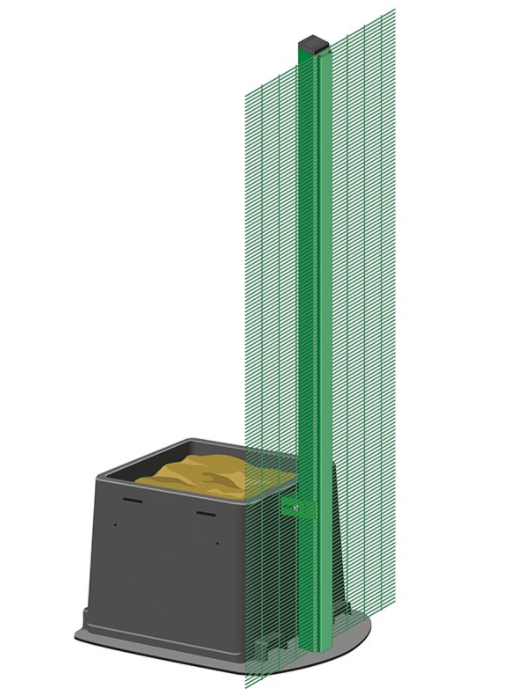
HERMEQ on-ground security fencing is semi-permanent mesh fencing that stands on bases or blocks with no digging, for construction sites, events, schools and sports grounds. The systems have the strength of permanent fencing for long-term deployment and go up with the speed of temporary fencing, so one perimeter can stay for months or move with the job.
Rapid deployment fencing secures construction sites and is wind load tested to EN 1991. Mesh pulse fencing arrives as pre-assembled modular units for fast installation of a monitored perimeter. The systems pair with temporary swing and sliding gates for site access.
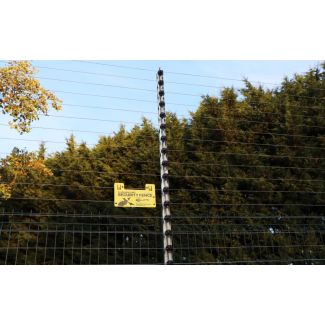
Types of on-ground security fencing
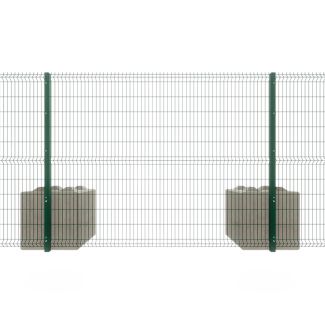
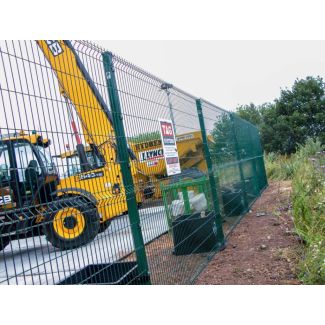
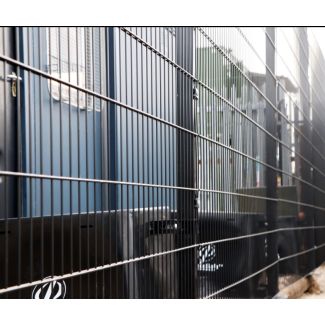
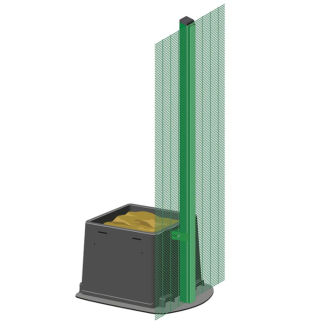
The five systems step up in security from rigid mesh for general site perimeters, through a security rated anti-climb fence for high-risk sites, to a monitored pulse fence where an intrusion has to be detected, with V mesh on concrete blocks for a fixed boundary that cannot be dug in.
Rapid deployment fencing
Rapid deployment fencing, also called rapid deploy or portable permanent fencing, puts rigid mesh panels on freestanding bases, so a construction site gets a fence close to permanent strength without a single post hole. It is the choice for site perimeters, compounds and depots where the line may move with the next phase of work, and it covers the widest spread of heights in the range.
Double wire mesh fencing
Double wire mesh fencing, known in the trade as twin wire mesh, pairs horizontal wires either side of the verticals to make a stiff, flat panel that holds its line along a long run. Choose it for site perimeters, sports grounds, schools and airports, where a super-rigid panel keeps a long boundary straight and tidy.
Security rated anti-climb fencing
The security rated anti-climb fencing system carries an LPS 1175 rating and uses galvanised anti-climb mesh panels designed to prevent scaling. Specify it for high-risk sites: compounds holding high-value plant or materials, sites that have already suffered break-ins, and projects where an insurer or a client security brief names a rated fence. On an ordinary site perimeter, rigid or double wire mesh meets the risk and is the better buy.
Monitored mesh pulse fencing
Mesh pulse fencing runs a monitored pulse through a mesh perimeter, so an attempt to cut or interfere with the fence is picked up by the monitoring system while it is under way. Choose it where intrusion has to be detected: unmanned sites overnight, remote compounds and perimeters watched by a monitoring centre.
V mesh fencing on concrete blocks
The Safe Mesh on-ground defence system is V mesh fencing on concrete blocks: the panels bolt to the blocks, giving a V mesh perimeter where in-ground fencing is not feasible. It suits commercial, industrial and residential boundaries that stay in place for the long term on a surface that cannot be broken.
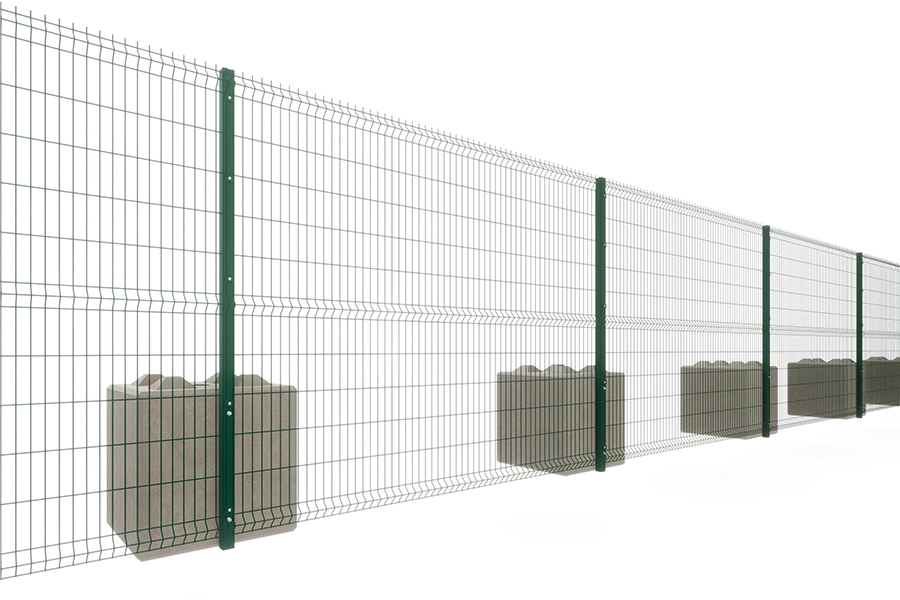
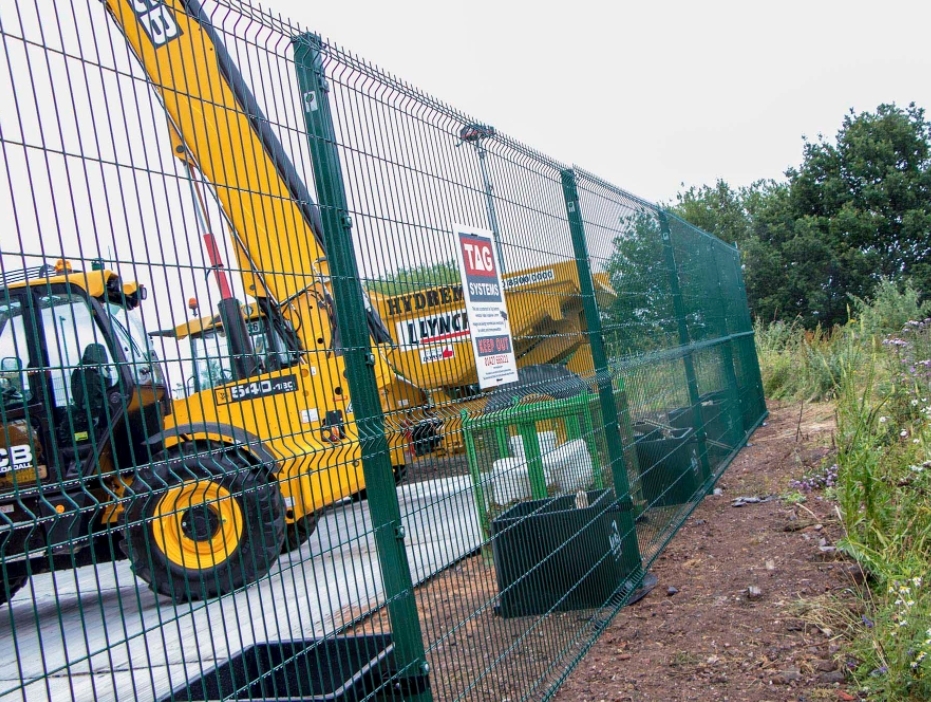
On-ground or in-ground security fencing
A freestanding fence on bases is right wherever the ground cannot or should not be dug, and a fence set into the ground is right when the boundary is permanent and the land is yours to excavate.
On-ground fencing suits hardstanding such as concrete yards, tarmac and car parks, where post holes mean coring and reinstatement. It suits ground with buried cables, pipes or drainage, where excavating along a fence line adds a hazard and a permit to the job. It also suits leased land, which has to be handed back as found, and any site that will be cleared at the end of the contract or whose boundary moves as the work progresses.
A dug-in fence is the better choice for a boundary that will stand for decades on land you own. V mesh perimeter fencing set in concrete footings gives an open, see-through boundary, and palisade security fencing gives a heavier deterrent for industrial sites. Both sit within the wider range of permanent fencing. Where a V mesh boundary is wanted but the surface cannot be broken, the V mesh system on concrete blocks gives that boundary without excavation.
Security fencing for building sites, events and schools
Each setting judges the same fence line by different things: its access points, its height and its contact with the public.
Construction and groundworks sites
The perimeter on a building site changes with every phase, so plan panel runs and bases that can be moved without opening the whole site. Put access points where lorries and plant can turn in without crossing the fence line, and fit vehicle access gates on a long-term boundary. Along a public footpath, keep bases and stays out of the walking line and leave the full footpath width clear.
Events and sports grounds
Event perimeters go up and come down within days, so installation speed matters as much as strength. Mesh pulse fencing arrives as pre-assembled modular units that put up over 30 m of monitored fence in 90 minutes, and rapid deployment fencing gives a rigid line around compounds, car parks and back-of-house areas. Where a line must hold back a crowd, choose crowd control barriers, and plan openings for emergency exits and stewards in every run.
Schools
Fencing for summer works or a new build on school grounds separates the work area from pupils and staff, and double wire mesh fencing is the system built for schools and sports grounds. Keep the base line free of gaps a child could crawl through, choose a height that discourages climbing, and keep gates locked whenever the site is unattended.
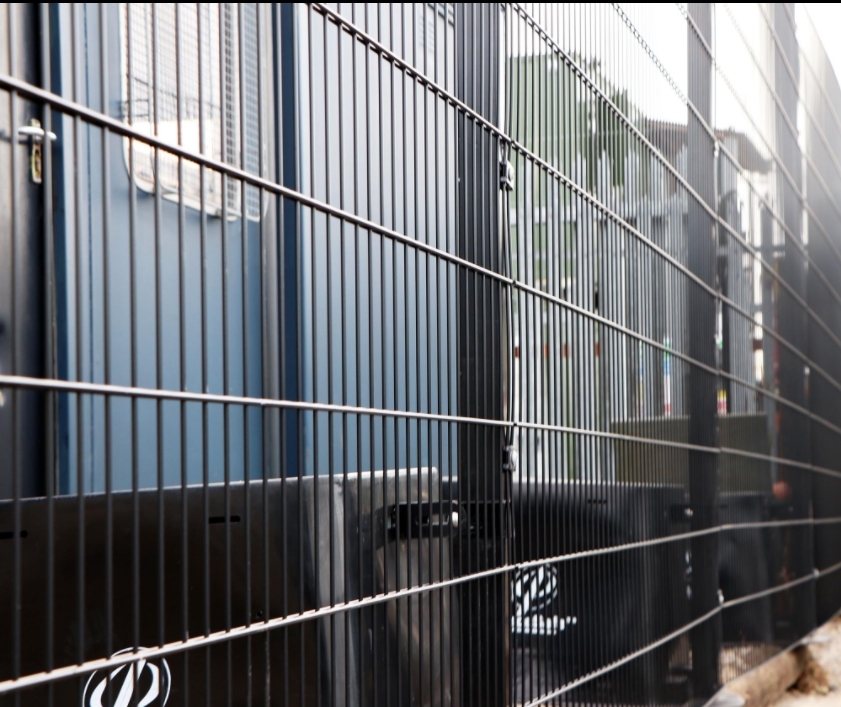
Mesh security fencing heights, bases and wind loading
Once the type is settled, height, footing and wind load decide how the fence performs on a particular site.
Fence height
Panel heights across the range run from about 1.2 m to 3 m. Low panels suit demarcation inside a site and around pitches, where the fence guides people and does not need to stop them, mid heights suit a general site perimeter, and full-height panels belong where climbing is a known risk or a client specifies security height. A taller panel puts more load on its bases in wind, so height and footing are chosen together.
Bases and ground conditions
Bases need firm, level ground under their full footprint, so clear loose stone and soft spots before the line goes in, and step the panels down a slope instead of tilting them. Keep bases off manhole covers, gullies and kerb edges, which leave a base rocking or leaning. The concrete blocks of the V mesh system are heavy and need lifting plant to place and move.
Wind loading, sheeting and banners
The rapid deployment, double wire and security rated systems are tested to EN 1991 for wind loading in winds above 160 km/h, and the pulse fencing is tested to the same standard. Sheeting, banners and debris netting close the mesh and turn each panel into a sail, so the load reaching the bases rises sharply. Before cladding a run, plan extra bases, bracing or stays at closer centres, take banners down ahead of forecast storms, and use steel hoarding where a solid screen is the requirement.
Popular Categories

V Mesh Fencing
View Products >

Palisade Fencing
View Products >

Estate Fencing & Railings
View Products >
Frequently Asked Questions
Security fencing is fencing built to keep people out of an area and to resist climbing, cutting and forcing, which separates it from fencing that only marks a boundary. Most security fencing is steel mesh or palisade. On-ground security fencing stands on bases or blocks, so it goes up without excavation and comes down without leaving holes in the ground.
The cost of a run depends on the system, the panel height, the length of the run, the number of corners and ends, the gates, and the bases or blocks it stands on. The V mesh system on concrete blocks is priced on its product page, and the rapid deployment, double wire, security rated and pulse systems are quoted for each run, so have the length, height and number of gates ready.
Yes. With nothing set in the ground, panels and bases can be taken down, stacked and re-erected on the next site, so one stock of fencing can serve a series of jobs.
LPS 1175 is a security standard published by the Loss Prevention Certification Board that grades physical security products by the tools an attacker carries and the time the product holds out against them. A product with an LPS 1175 rating has been attack tested to that standard, so an insurer or security specifier can ask for a rating by name.
Under the Safety, Health and Welfare at Work (Construction) Regulations 2013, the Project Supervisor for the Construction Stage (PSCS) develops the construction stage safety and health plan, and in practice that plan sets out the site boundary, its fencing and its access points. The Project Supervisor for the Design Process (PSDP) prepares the preliminary safety and health plan at design stage. The contractor who erects the fence keeps it in good order for the life of the job.
Yes. Swing gates suit openings with clear space for the leaves to open, and sliding gates suit entrances beside a footpath or on a slope where a leaf cannot swing. Match the gate height to the fence, set the gate back far enough for a vehicle to pull fully off the road before it stops, and add a separate pedestrian gate where people and plant share an entrance.