







Timber Hoarding
Timber hoarding is a temporary fencing system used to secure and screen construction and demolition sites, with plywood or OSB sheets fixed to a timber frame to give a solid face. The sheets are normally used for a single project, so timber hoarding is a cost-effective choice for short-term work of around six to twelve months. The range runs from economical OSB chipboard hoarding through standard plywood hoarding to the premium Advanced grade, with PCH concrete barrier hoarding and ballast blocks for lines that cannot be dug in.
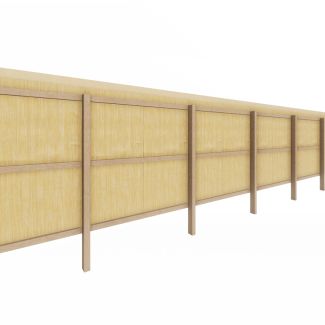
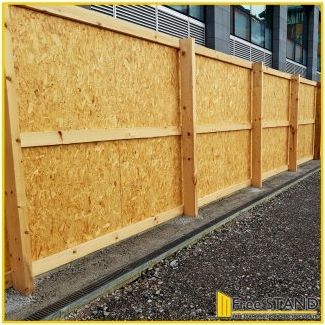
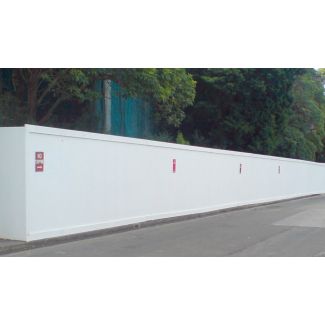


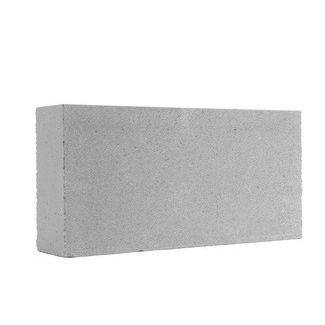



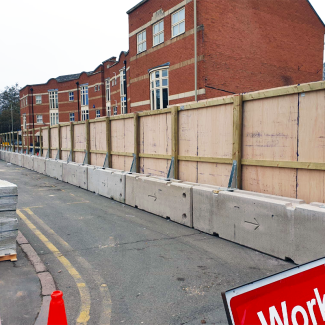
Plywood, OSB and concrete barrier hoarding
The choice between the types of timber hoarding turns on how long the project runs, the finish the public side needs and whether the line can be dug in.
Plywood hoarding
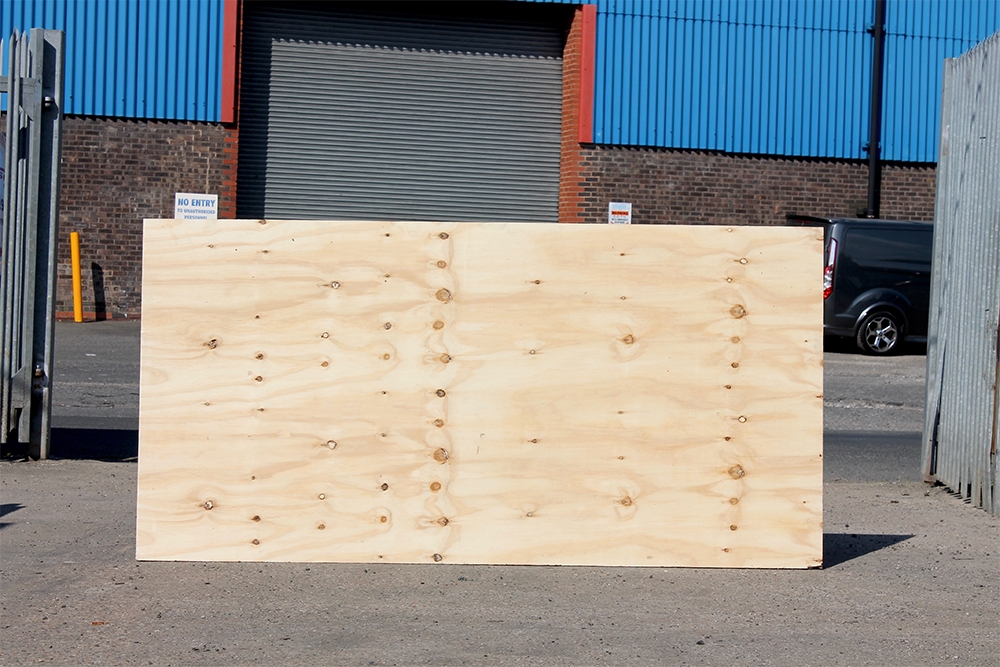
Standard plywood hoarding is the default specification for building and demolition sites. Plywood is built from cross-laid veneers, so the sheets resist splitting at the fixings and keep a flat, even face through a full programme. It is the right choice for most perimeter runs that need to be solid, secure and presentable without a premium finish.
Advanced plywood hoarding
Advanced plywood hoarding is the premium grade in the range, built for a professional appearance where the hoarding is the public face of a project. Town-centre frontages, retail and commercial schemes, and sites where the client wants corporate colours or printed branding along the street are where it belongs.
OSB chipboard hoarding
OSB chipboard hoarding is the economical grade, faced with oriented strand board, often called sterling board, made from compressed wood strands. Its textured face suits short programmes, internal compound lines and back-of-site boundaries where cost matters more than a smooth finish. For frontages that will be painted or printed, plywood gives the better surface.
PCH concrete barrier hoarding
PCH concrete barrier hoarding combines precast temporary vertical concrete barriers with timber plywood hoarding fitted to them, so the line stands on a concrete base instead of posts in the ground. It suits hardstanding where a concrete barrier line and a solid screen are wanted in one run, and the units can be lifted and moved when the boundary changes.
Structural plywood sheets
18mm structural plywood sheets are supplied loose for repairs, extensions and semi-permanent timber fencing or hoarding. They are the right order when an existing run needs damaged boards replaced or a few extra bays added, or when a site team is building a bespoke screen on a frame already in place.
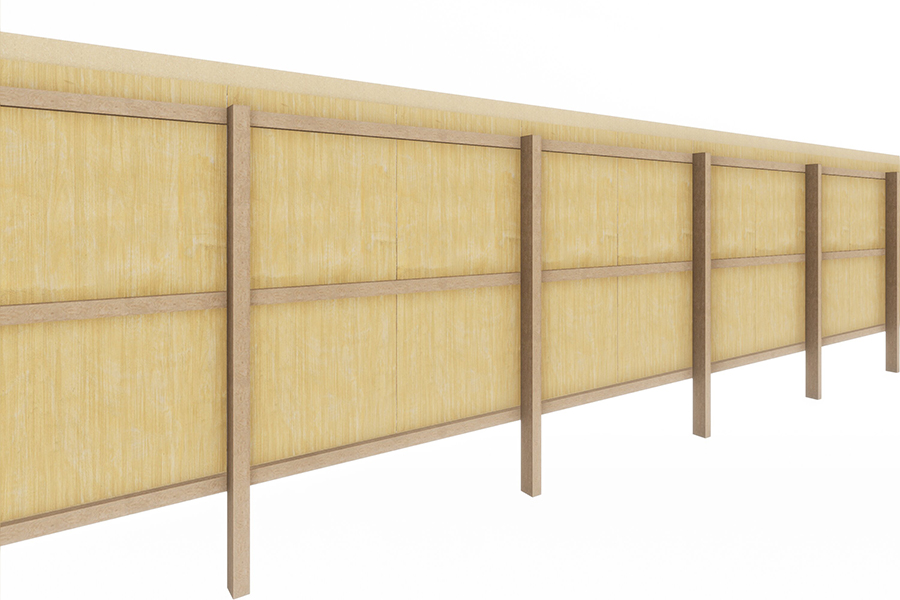

Dug-in or free-standing timber hoarding
Ground conditions decide the foundation. Where the ground can be broken and the line will stand for the length of the build, posts are dug in and set with rapid-setting Postcrete, which goes into the hole dry and needs no mixing on site.
Where buried services, concrete slabs, car parks or public footpaths rule out digging, the hoarding stands free on concrete hoarding ballast blocks, which run from 700kg to 1500kg across the range. Ballast increases the wind loading the hoarding system can withstand, and the temporary works design sets the block weight and spacing for each line. Other weighted bases sit in the wider range of concrete fencing and ballast, and where the line needs a concrete barrier base along its whole length, PCH barrier hoarding replaces both posts and blocks.
Hoarding for construction and demolition sites
Building and construction sites
On a building site the hoarding is the fixed boundary for the whole build, so it is planned around the site layout from the start: delivery access, the welfare and compound area, and the points where the line meets existing walls or neighbouring property. Areas inside the site that move as phases change, such as material stores and work zones, are usually fenced with harris fencing, leaving the timber line as the permanent perimeter.
Demolition sites
A solid timber face contains dust and small debris during strip-out and demolition, and it screens the work from the street. Where the site sits close to homes, schools or offices, acoustic barriers along the stretches nearest the neighbours deal with noise from breakers and crushers.
Street frontages and footpaths
On a street frontage the public side matters as much as the site side. The face should be flush and free of protruding fixings, the footpath left beside it has to stay usable for pedestrians, buggies and wheelchairs, and hoarding on or over a public footpath or road needs a hoarding licence from the local authority.
Pricing and specifying a hoarding run
Measuring the run
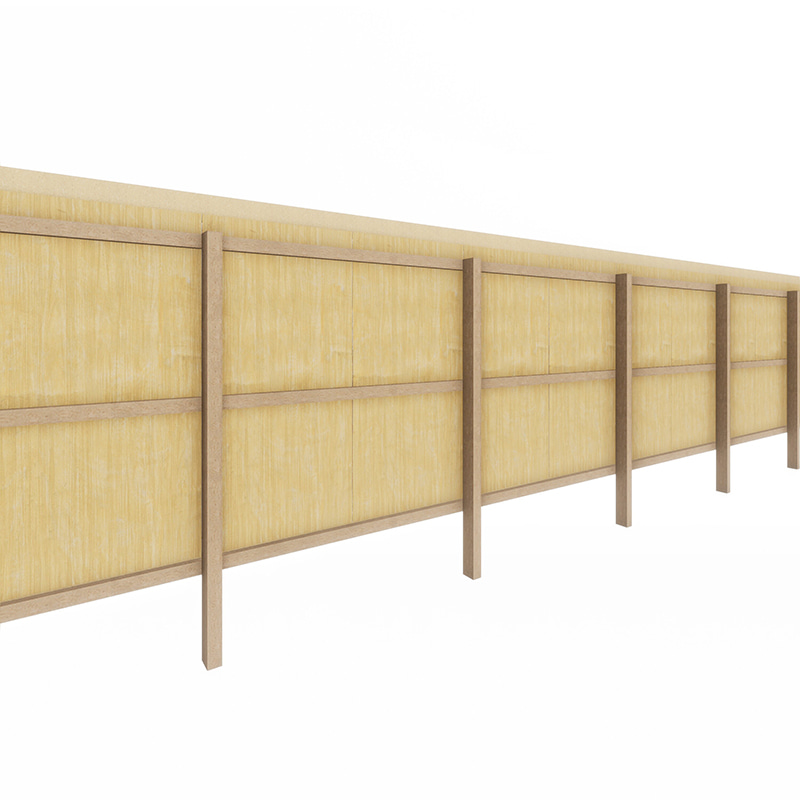
Timber hoarding is priced by the length of the run, measured along the line on site with corners, returns and gate openings marked. The timber hoarding calculator takes that length, works in bays on 2.4m centres and builds a basket of materials in the Standard or Advanced grade, so a complete new run is priced in one step. Repairs and short extensions to an existing line are simpler to order as loose sheets.
Gates and access points
Every opening in the line is planned before the hoarding goes up: a vehicle gate wide enough for the largest lorry or item of plant delivering to site, and a separate pedestrian gate so people on foot do not share the vehicle entrance. The heavy duty in-ground pedestrian gate is made to work with timber hoarding, and the vehicle and pedestrian gates range covers the vehicle entrance. Frame each opening to carry the gate hung in it.
Height and wind exposure
A solid hoarding takes the full force of the wind across its face, and the load climbs with height and exposure. Open and elevated sites, coastal locations and gaps between tall buildings, where wind is funnelled and gusts are stronger, call for a temporary works design that sets post size and depth, or ballast weight and spacing, for that line.
Paint, graphics and site signage
Plywood takes paint well once the cut edges are sealed, and an exterior-grade paint applied before the first winter keeps the sheets presentable for longer. For branding, development images and contact details, printed hoarding graphics are fixed to the face of the run, while safety signage, permit notices and the contractor's details go at the entrances where visitors and deliveries arrive.
Popular Categories

Site Hoarding
View Products >

Heras Fencing
View Products >

Site Gates
View Products >
Frequently Asked Questions
Hoarding is a solid temporary boundary built around a construction or demolition site, usually from timber or steel. It keeps the public out, screens the work from view and gives the site a face for signage and branding.
Timber hoarding is usually built 2.4m high, which matches a standard plywood sheet stood on end and is the usual height for a construction site perimeter. A line of that height is difficult to climb and screens most site activity from the footpath. Taller hoarding is built to a specific temporary works design for that site.
Timber hoarding suits a fixed perimeter that stays in place for the build, since it can be cut to fit any boundary line, level change or existing wall and gives a solid, paintable face. Steel site hoarding is a panel system that can be moved and reused, which suits phased sites and shorter jobs. Where a see-through boundary is enough, Heras fencing is the quickest to erect and relocate.
The line is set out and checked for buried services first, then posts are set in the ground or the frame is placed on ballast at the design centres. Horizontal rails are fixed between the posts, the plywood or OSB sheets are screwed or nailed to the rails, and gates are hung at the planned openings. The finished face is then painted or dressed with graphics and signage.
Under the Safety, Health and Welfare at Work (Construction) Regulations 2013, the Project Supervisor Construction Stage (PSCS) manages the site during construction, including the measures that keep unauthorised people out, so the hoarding falls under the PSCS. The Project Supervisor Design Process (PSDP) takes the boundary into account at design stage. In practice the PSCS arranges regular inspection of the hoarding and checks after storms, vehicle strikes or changes to the line.