







Scaffold Towers
Mobile scaffold towers give a guarded platform for working at height, and for any task longer than a few minutes they are a better choice than a ladder. The deck gives room to move, space to set down tools and materials, and both hands free for the work.
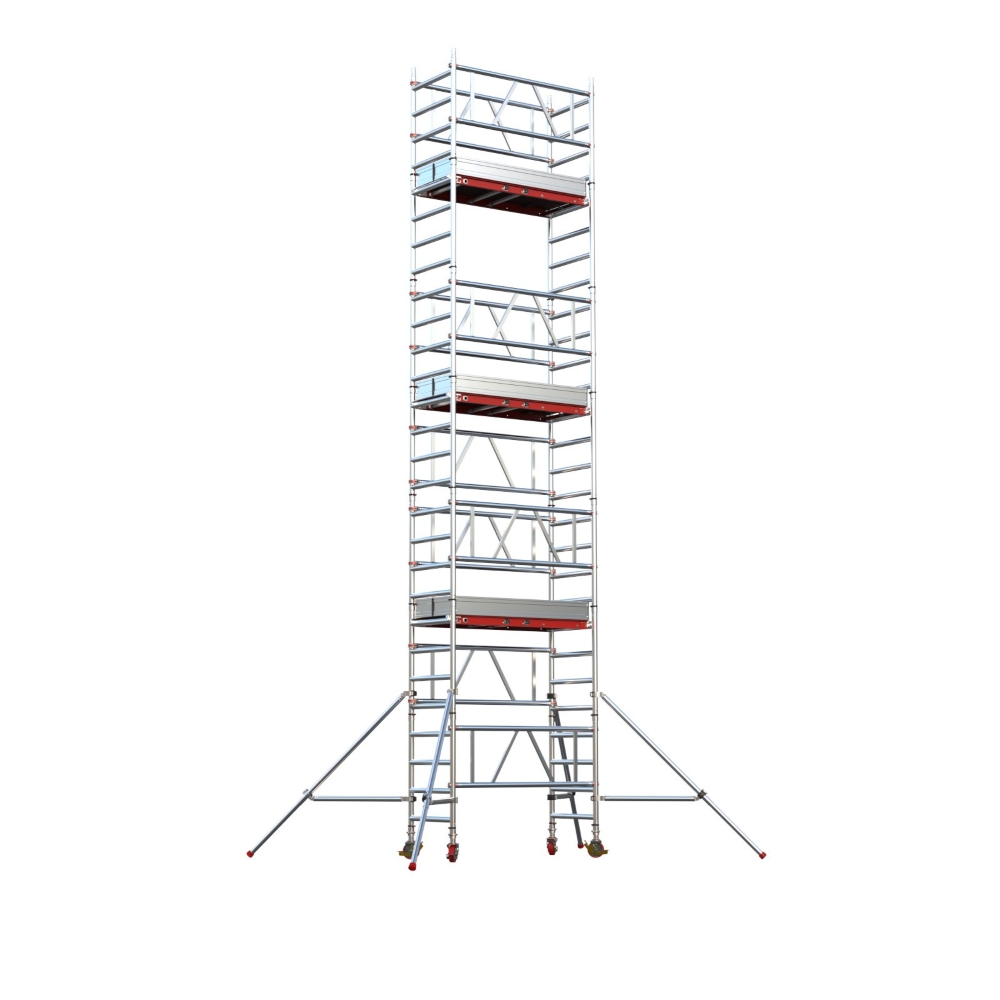
The core of the range is the single width and double width aluminium towers. They are built to carry people, tools and materials and to stand level on uneven ground, where adjustable legs and tower stabilisers steady the base. The range also covers the one-person MiTower access towers, a tower for stairwell work and a modular steel stair tower.



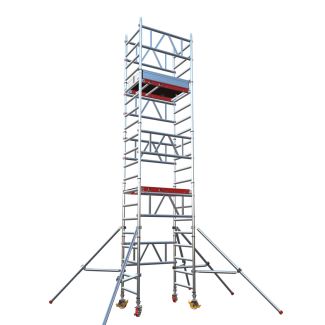
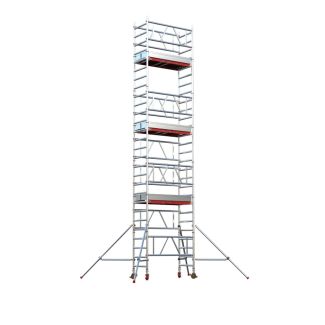

Single width or double width scaffold tower
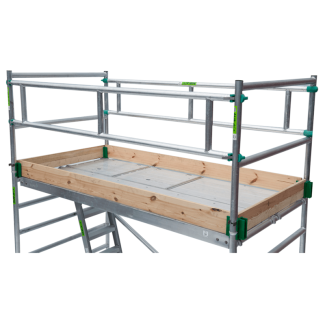
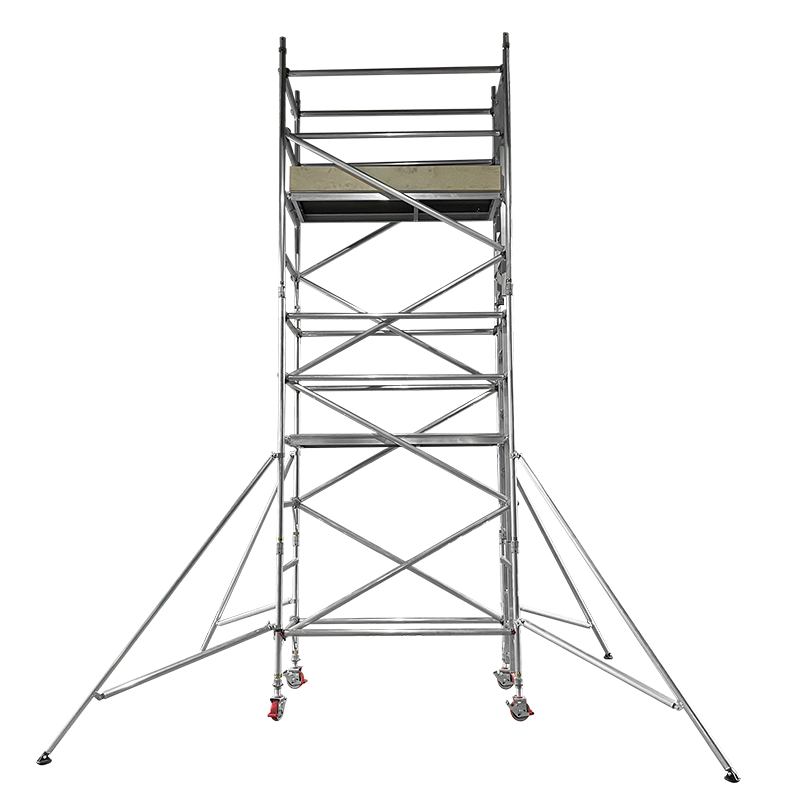
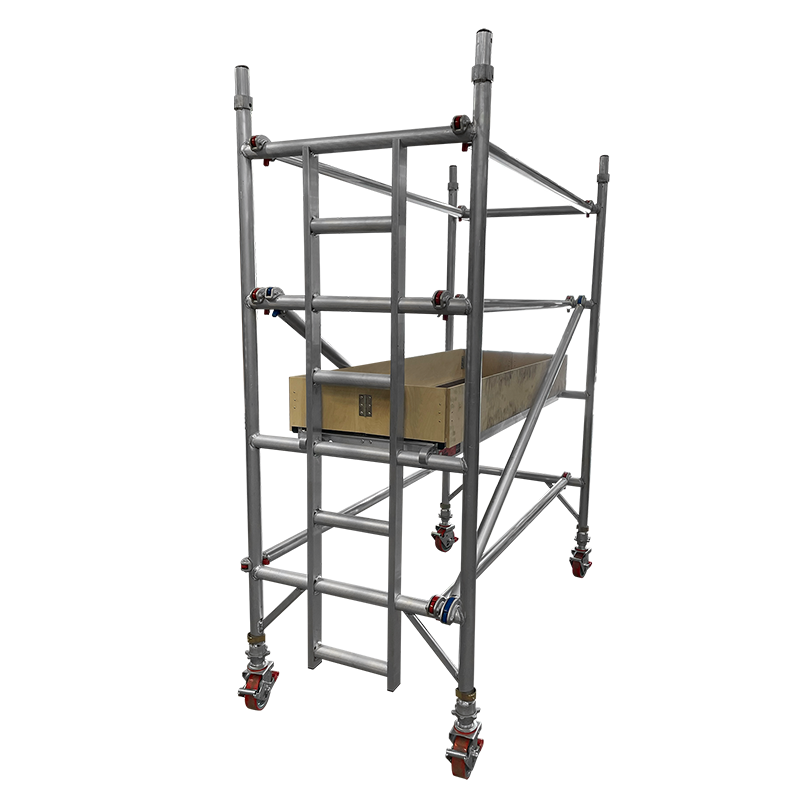
The frame width decides where a tower fits and how much it carries. The single width scaffold tower, on frames 0.85m wide, is the narrower of the two. Choose it for corridors, stairwell landings, shopfronts and runs of work along a wall, where a narrow base passes through doorways and leaves the floor beside it clear for other trades. The double width scaffold tower is the wider of the two, and its deck takes a crew with their tools and a working stock of materials, which suits plastering, services and finishing work to ceilings, soffits and facades, where the job spreads across the platform.
Both are aluminium frame towers. Each builds to platform heights up to 12.2m in a shorter or a longer deck length, and the single width tower is certified to EN 1004. The shorter deck turns more easily in tight rooms and lifts more easily from a van. The longer deck covers more wall from one position, so the tower is moved less often along a run.
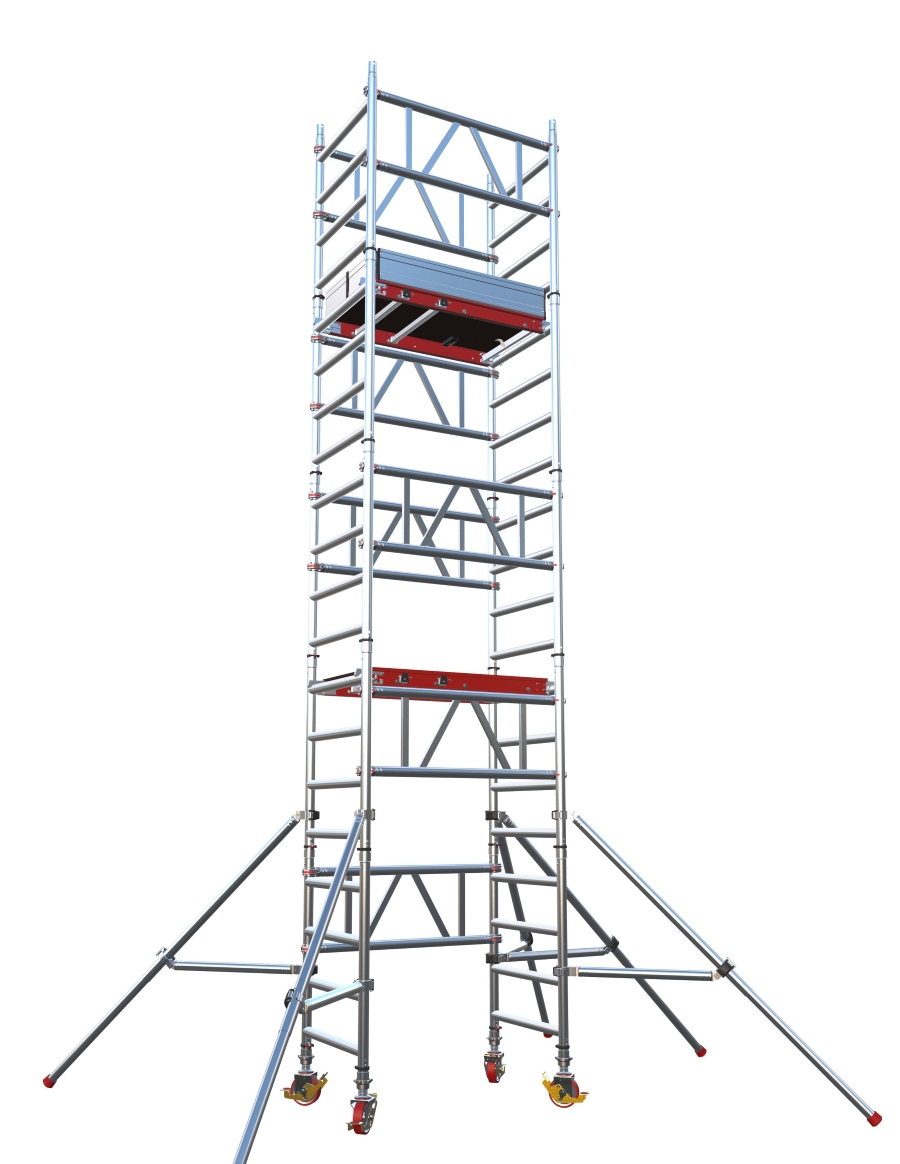
One-person MiTower and scaffold towers for stairs
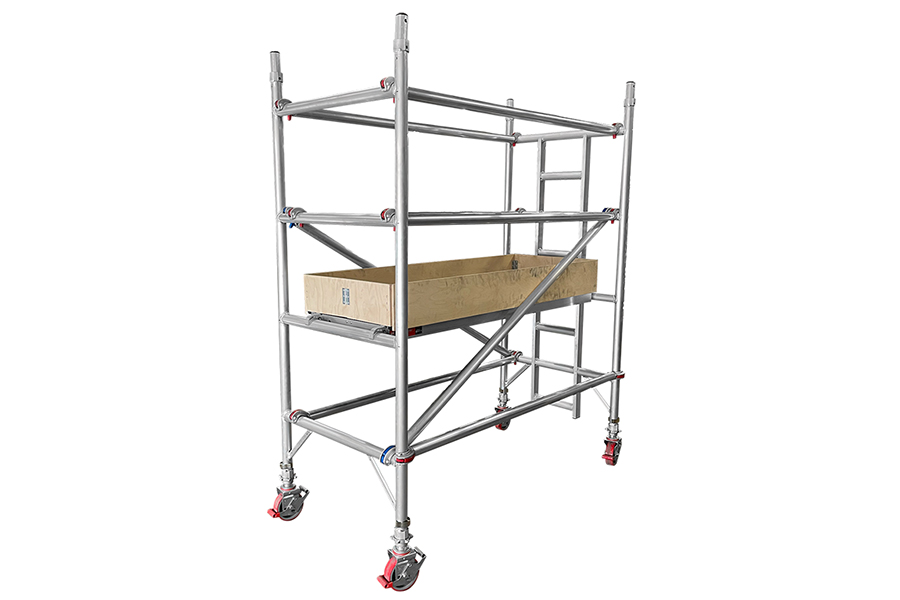
The quick-assembly MiTower towers suit trades who move from job to job and build alone. The stair towers are for work above a staircase or for access between levels.
MiTower one-person access tower
The MiTower one-person access tower is a small, portable scaffold tower that one operative builds and one user works from. It suits an electrician, painter or maintenance technician working alone on short tasks across a building. Because it is compact, it fits occupied offices, schools and retail units, where a larger frame tower would block the space around it.
MiTower+ for two operatives
The MiTower+ scaffold tower keeps the one-person build but carries two operatives with their tools, with working heights to 8m. Choose it when a job needs a second pair of hands at height, such as fixing a long run of trunking or lifting panels into a ceiling grid.
MiTower Stairs for stairwell work
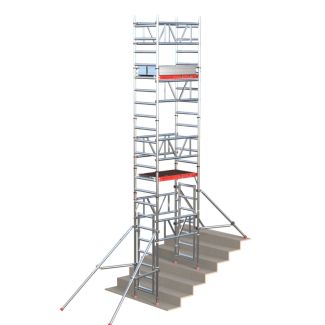
Work above a flight of stairs needs a level deck over a stepped floor, and this scaffold tower for stairs is built to give one. It is used for painting, electrical and mechanical work in the stairwells of commercial buildings and industrial facilities. It is assembled by two people.
Escalib Mills MDS modular site stair tower
The Escalib Mills MDS answers a different stair search. It is a modular site stair tower that people climb to get from one working level to another. Made in galvanised steel, it is the only steel tower in the range. It is positioned by crane in stacked modules, from a single module up to about 20.1m, and its side exits can be turned to meet slabs and working platforms at different heights. Choose it where a multi-storey frame, excavation or temporary works needs a stair. Choose the MiTower Stairs when the work is above a staircase.
Scaffold tower heights: platform height and working height
Platform height is the height of the deck the user stands on. Working height is the reach of a person standing on that deck, roughly two metres more. The frame towers in this range are sold by platform height and the MiTower models by working height. Two towers both described as 5m therefore put the user at very different heights, because a MiTower deck sits that much below its listed figure.
To size a tower, measure from the floor to the highest point of the job and take off the reach of the person on the deck. Then choose the nearest platform height at or just below that figure. A platform set too high leaves the user stooping under a ceiling. One set too low tempts them to stretch or to stand on something placed on the deck.
The manufacturer's instruction manual for each tower sets its maximum build height and the heights at which stabilisers must be fitted. For many systems the outdoor limit is lower than the indoor one because of wind. Work above that height, or along a whole elevation for weeks, belongs on a tied scaffold built from scaffold boards, tube and fittings.
Internal scaffold towers and outdoor work
What matters on a tower changes with the floor it stands on and how often it moves.
Internal and fit-out work
Indoors, the tower has to pass through the building before it can be used. Measure doorways, corridors and lift cars against the width of the tower before choosing a model.
Outdoor work on uneven ground
Outside, the ground under the tower decides how stable it is. Every castor or leg needs firm ground beneath it. On soil, gravel or a soft verge, set the base on sole boards so that no leg can sink while people work above. On a slope or broken surface, level the tower with adjustable legs before the first frame goes up. Fit stabilisers at the heights and in the positions the manual sets.
Moving the tower between jobs
Aluminium construction keeps every tower in the range, apart from the steel stair tower, light enough to move and build by hand. Trades who work on several sites a week get most from the one-person MiTower towers. The MiTower has an integrated trolley base for moving it, loading it into a van and storing it between jobs. The frame towers take longer to build and strip. That time pays back on longer jobs, where the tower stays on one site and is rolled along the work.
Scaffold tower parts and spares
Frames and toe boards for the frame towers are sold in single or double width, and decks and horizontal braces in 1.8m or 2.5m lengths, so the width and deck length of the existing tower decide every part.
Span frames, ladder frames and braces
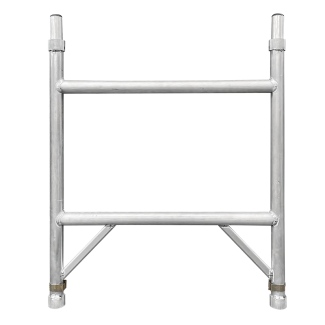
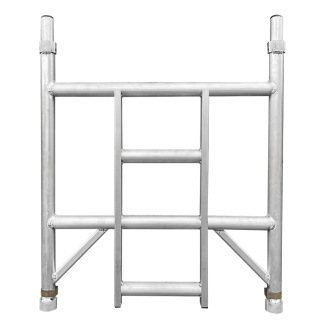
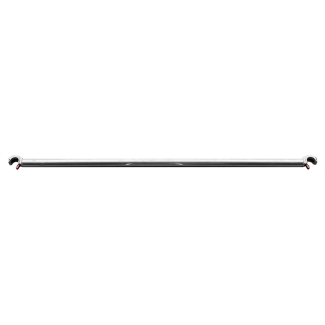
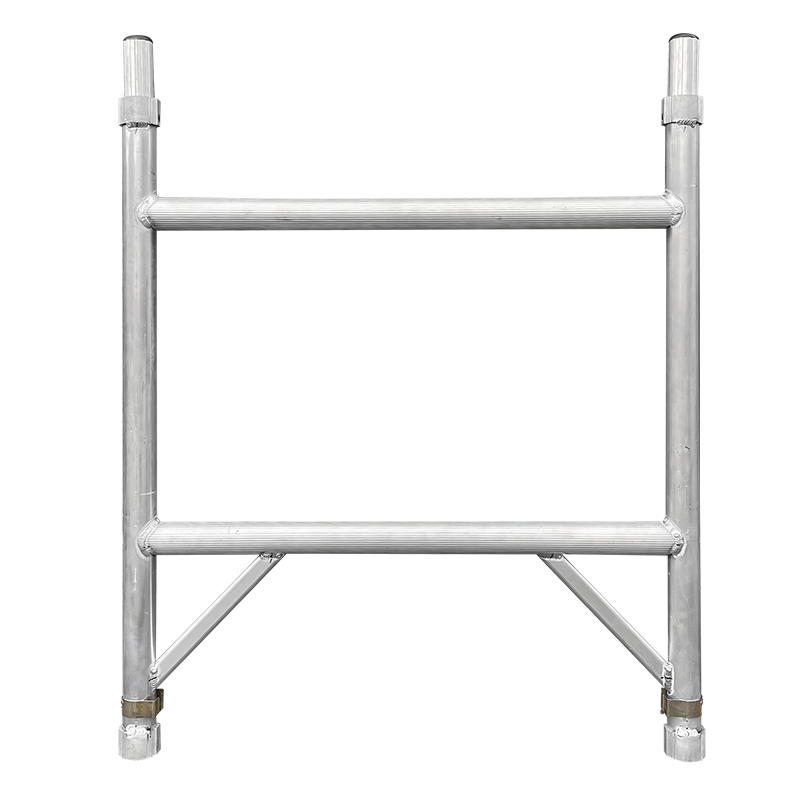
Span frames and ladder frames build up the height of the tower. The ladder frames go on the side the user climbs inside the tower. Horizontal and diagonal braces lock the frames together and hold the tower square.
Platform decks and toe boards
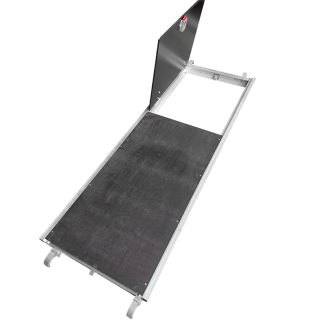
The hatch and standard platform decks form the working platform and any rest platforms in the build. A hatch deck has a trapdoor for climbing through and goes at every level used for access. Standard decks make up the rest of a platform. Toe board sets fit around the edge of the working platform to stop tools and materials falling from it.
Castors, adjustable legs and stabilisers
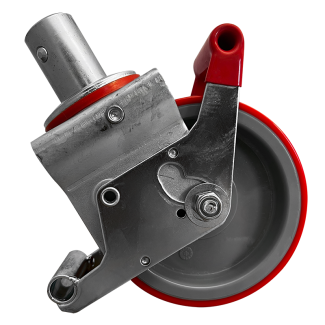
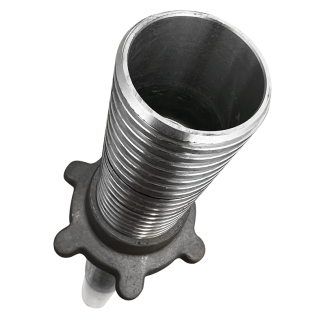
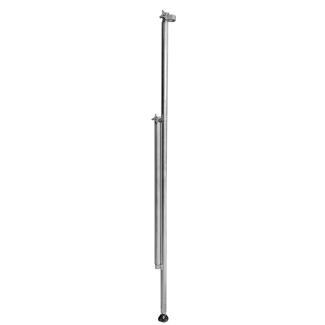
The base parts carry the tower and hold it in place. Dual locking castors let the tower roll along the work and then hold it in one spot once it is positioned. Adjustable legs fit to the base of the frames to take up a slope or uneven floor. Tower stabilisers come in standard and large sizes. They extend an arm out from the tower to widen its base, and the manual states which size each build height needs.
Working safely on a mobile scaffold tower
Work from a tower falls under the Safety, Health and Welfare at Work (General Application) Regulations 2007. These set the duties for work at height under the Safety, Health and Welfare at Work Act 2005, and the Health and Safety Authority (HSA) is the regulator. On a construction site, the Safety, Health and Welfare at Work (Construction) Regulations 2013 also apply. Under them, the Project Supervisor Construction Stage (PSCS) coordinates how towers and other access equipment are used across the contractors on site.
A tower is built to its manufacturer's instructions, with guardrails and toe boards fitted on every working platform. The castors are locked before anyone climbs. The base is kept clear of vehicles and plant, with barriers around it where traffic passes. The tower is not used in winds above the limit the manual gives, or on ground the manual does not allow. A competent person inspects it before use, after any alteration, and after any event that could have affected it, such as a storm. Where work moves from the platform onto a slab or roof edge, edge protection from the wider scaffolding range guards that edge.
Popular Categories

Scaffolding Parts
View Products >

Scaffold Ladders & Stairways
View Products >

Scaffolding Stillages
View Products >
Frequently Asked Questions
Class 3 is a load class set out in EN 1004, the European standard for mobile access towers. It is the class used for towers that carry people with tools and light working materials, and the MiTower is listed to it. Whatever the class, the safe working load on the product page is the limit for everything on the platform together: people, tools and materials.
Climb inside the tower on the rungs of the ladder frames, and pass through the hatch deck at each platform level. Close the hatch once you are on the deck. Never climb the outside of the tower or its bracing, which can pull it over, and never step onto a tower from a ladder, a roof or another structure.
The General Application Regulations 2007 require a tower to be erected, altered and dismantled under the supervision of a competent person, by workers trained for the task. Each system has its own build sequence. Competence on one tower therefore does not cover another, and the build always follows that tower's own instruction manual.
Only the tower's own components should be used. Frames, braces and decks from different manufacturers often differ in tube diameter and fixings, even when they look alike, and a mixed tower is no longer the system that was tested. Spares for a single or double width tower must also match its width and deck length.
A tower is never moved with anyone on it. Everyone climbs down and all tools and materials come off the platform before the tower moves. It is pushed by hand at the base over firm, level ground, clear of overhead cables and obstructions. In its new position, the tower is checked for level and the castors are relocked before work starts again.