







Septic Tanks
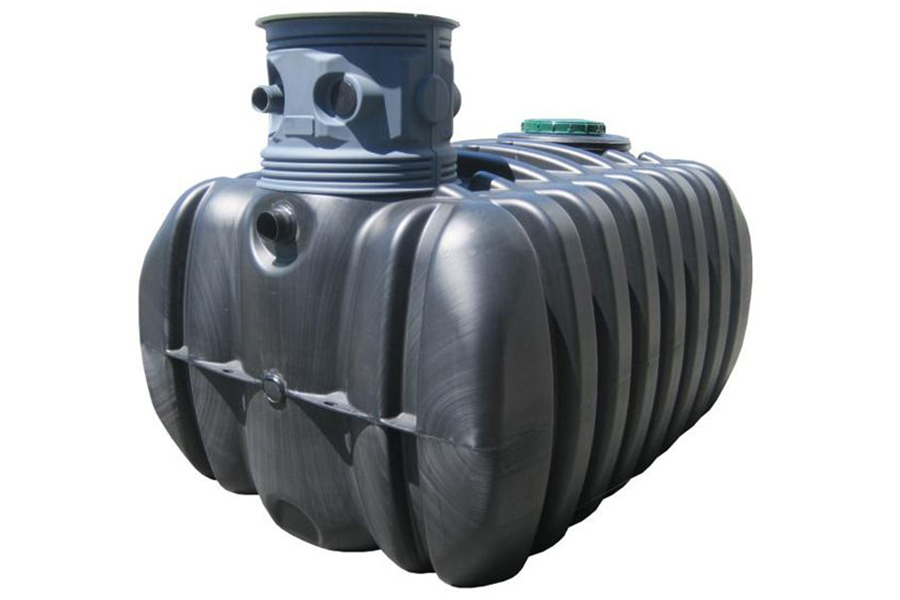
Septic tanks give primary treatment to the wastewater from homes that are not connected to mains drainage, and the plastic septic tanks in the range are light enough to be moved on site and lowered into the excavation without heavy lifting plant. They do not corrode in the soil, and their rounded shape is straightforward to bed on a prepared base and backfill. The range is moulded from high-density polyethylene and centres on the Tricel Vento super low profile septic tank, made in Ireland in three sizes, for new builds and for the replacement of old or failed tanks.

How a septic tank works
A septic tank holds household wastewater long enough for it to separate by gravity. Solids sink to form a sludge layer on the floor of the tank, fats and lighter matter rise to form a scum layer on the surface, and the clarified liquid between them, the effluent, flows out through the outlet each time new wastewater comes in.
The tank is primary treatment only. Its effluent still carries bacteria and dissolved matter, so every septic tank is followed either by a percolation area, where the soil and subsoil complete the treatment, or by a secondary treatment system before the effluent reaches the ground.
Septic tank or sewage treatment plant
A septic tank is the right purchase when the site assessment shows soil and subsoil that can treat the effluent through a percolation area. On those sites the tank and the percolation area together make a complete system, and the tank itself has no pumps, blowers or electrical parts to power or service.
Where the assessment finds poor percolation, high groundwater, shallow bedrock or a sensitive location close to a well or watercourse, the effluent needs more treatment than the ground can give it. The design then specifies a septic tank followed by a secondary treatment system, such as a packaged media filter or an intermittent sand or soil filter, followed by a polishing filter, or a sewage treatment plant in place of the tank. Units described as aerated septic tanks are treatment plants: an air blower or pump drives biological treatment inside the tank, so they need a power supply and regular servicing. The HERMEQ range covers septic tanks for primary treatment.
Plastic or concrete septic tanks
Precast concrete and high-density polyethylene tanks do the same job, and the choice between them comes down mainly to site access and ground conditions. Concrete tanks are heavy and arrive on a lorry with a mounted crane that lifts them straight into the excavation, so they suit open sites where a large rigid lorry can park close to the hole.
A polyethylene tank is light enough to be lifted and lowered by a small excavator, which makes it the practical choice for retrofits behind existing houses, back gardens reached through a side entrance and other restricted sites where a crane lorry cannot get close. With any plastic tank, bedding, backfill and anchoring follow the manufacturer's installation guide, which matters most on sites with high groundwater.
Septic tank sizes and population equivalent
Septic tanks are sized by population equivalent (PE), the design occupancy of the house the system serves. The figure comes from the site assessment and the planning drawings and usually follows the number of bedrooms, so a house is sized for the occupancy it could hold, whoever lives there today. The Tricel Vento comes in Ireland6, Ireland12 and Ireland20 sizes, and the size ordered is the one that matches the PE on the site characterisation. A tank that is too small for the house holds the wastewater for too short a time, so solids carry over into the percolation area and clog the soil. A tank sized to the design PE also runs longer between desludging visits.
Septic tanks for new builds and upgrades
A new system is chosen to fit a design drawn up for planning, while a replacement has to fit the house, the drains and the ground that are already there.
New builds and planning
On a one-off house, the type of septic tank, its size and its position are fixed by the site characterisation submitted with the planning application, and the tank bought matches that specification. The groundworks contractor sets the tank's level from the house drain and the falls to the percolation area, so the inlet depth of the chosen tank is checked against the drawings before ordering.
Replacing an old or failed septic tank
Many older tanks were built before the current code of practice and fail because they leak, were undersized or discharge to ground that cannot treat the effluent. A replacement has to work with the existing outlet pipe, which often sits high, and with the old falls to the percolation area, so a super low profile tank is often the one that fits without relaying the drains. Its shallower excavation also suits ground where rock or groundwater lies close to the surface. Confirming that an excavator can reach the hole is part of the survey before ordering the low profile plastic septic tank. The old tank is desludged and removed or filled before the new one goes in.
Septic tank regulations and grants
Every owner of a septic tank or other domestic wastewater treatment system must register it with the local authority under the Water Services (Amendment) Act 2012, and registration is made through the Protect Our Water website. Local authorities inspect systems under the National Inspection Plan set by the Environmental Protection Agency (EPA), and a system found to pose a risk to human health or the environment has to be repaired, upgraded or replaced. Local authorities also run a grant scheme towards the repair, upgrade or replacement of a domestic wastewater treatment system, including one that fails an inspection, and the local authority confirms eligibility and the current grant amount.
New systems are designed to the EPA Code of Practice for domestic waste water treatment systems, starting with a site characterisation by a trained site assessor, who examines the soil and subsoil through trial holes and percolation tests.
Popular Categories

Wheelie Bins
View Products >

Skips for Sale
View Products >

Forklift Tipping Skips
View Products >
Frequently Asked Questions
The interval depends on the tank's capacity and the number of people using it. Sludge and scum levels are checked regularly, and the tank is desludged before solids carry over into the percolation area, where they clog the soil. The manufacturer's guidance for the tank sets the recommended interval for that model.
Septic tanks are emptied by desludging contractors using a vacuum tanker. The contractor needs a waste collection permit to carry the sludge and takes it to an authorised wastewater treatment facility.
The EPA Code of Practice sets minimum separation distances, including at least seven metres between the septic tank and the house, with further distances from the tank and the percolation area to site boundaries, roads, wells and watercourses. The site assessor applies them on the site characterisation, and the planning drawings show where the tank goes.
No. A septic tank settles the solids and passes the liquid effluent on to a percolation area or secondary treatment, so only the sludge is pumped out. A cesspit or holding tank is sealed with no outlet and stores all of the wastewater until it is emptied, which means far more frequent tanker visits, and it is used only where the approved design calls for one.
Nappies, wipes, sanitary products, cotton buds and other solids that do not break down block the tank and pipework, so they go in the bin. Cooking fat and oil, paint, solvents, varnish, motor oil and large amounts of bleach or disinfectant upset the bacteria in the tank and carry pollutants into the ground. Normal use of household detergents and toilet paper does no harm.