







Water Filled Plastic Road Barriers
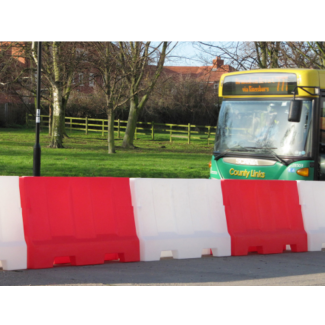
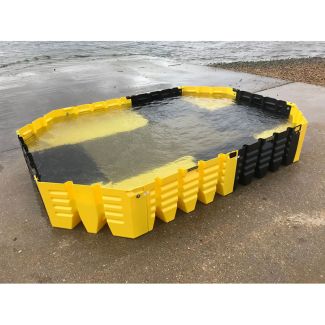
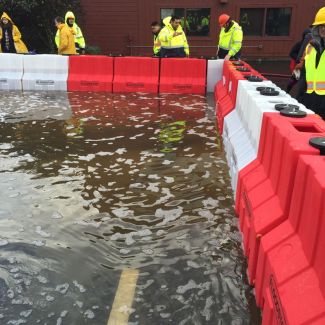
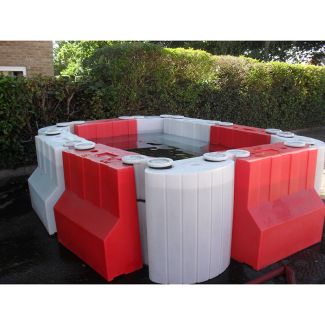
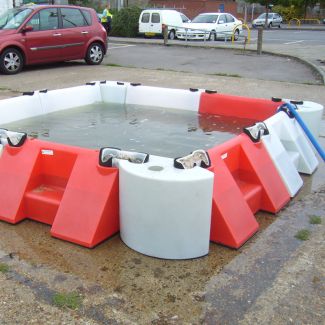
HERMEQ supplies water filled plastic road barriers in HDPE and UV stabilised polyethylene. They are light to handle empty and stack for storage and transport. On site they are filled with water, or with sand on some models, to form a heavy, interlocking line for roadworks, construction sites and events.
The range includes the Buddha Barrier, an anti-trip water filled road separator for routes where people walk close to the line. For heavier duty work, the RB2000, RB22 and GB2 water filled road barriers contain work areas on roads and sites, and the RB22 is crash tested for lines beside moving traffic. For lightweight plastic road barriers that need no water, see the traffic barriers range.

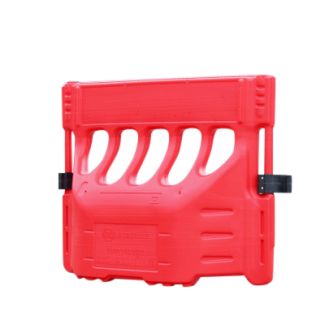

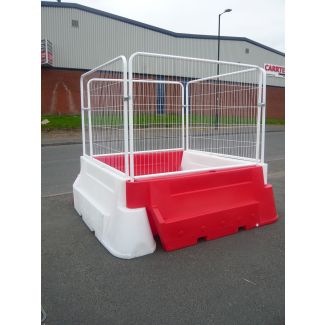
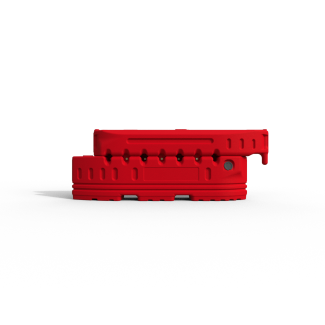
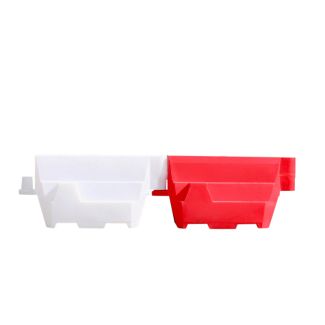
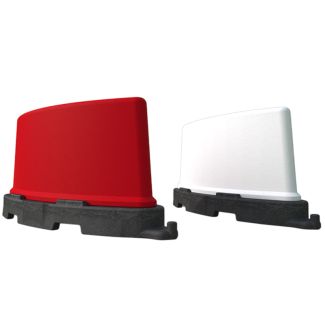
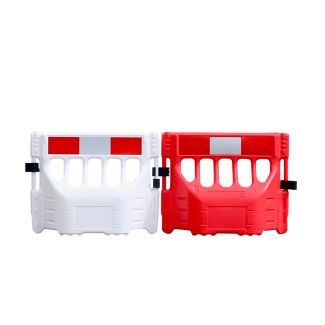
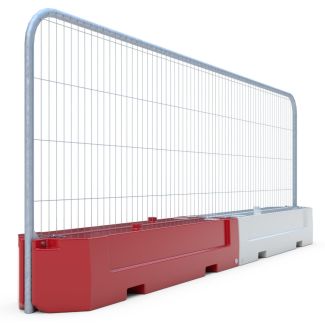
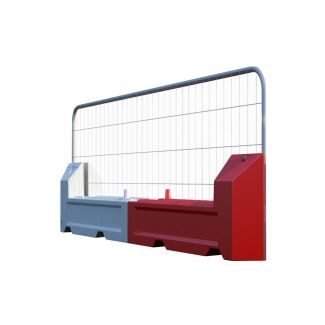
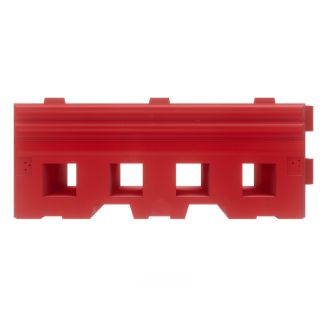
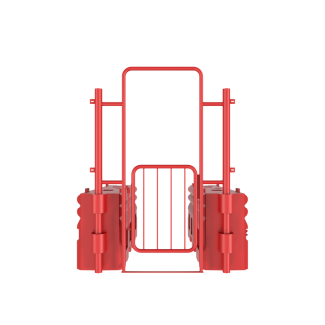

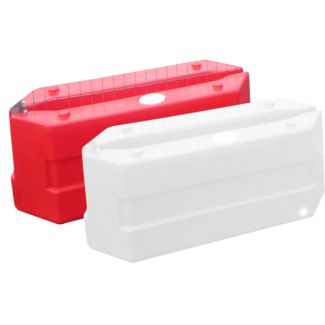
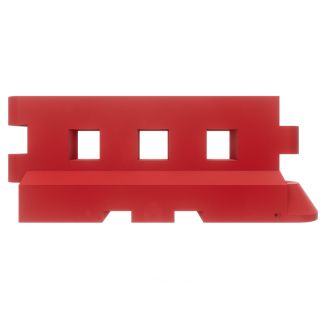
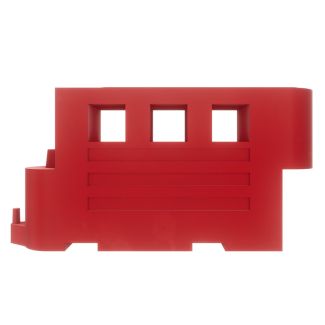
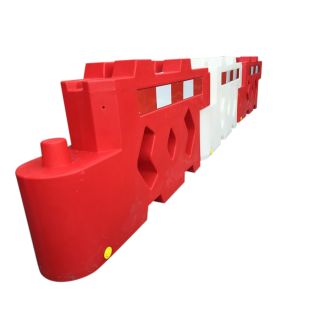
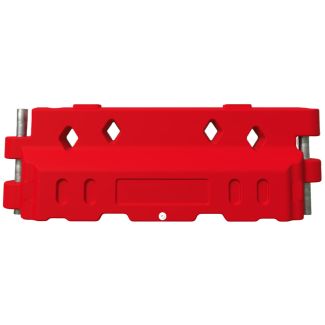
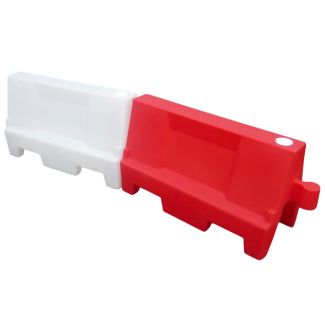
Water filled road barriers, separators and crash barriers
Each type in the range is built for one of three jobs: guiding people and traffic, containing a work area, or holding a vehicle that strikes the line.
Pedestrian barriers and 1m road separators
One metre separators mark footpath diversions and guide traffic and pedestrians past a work area, and one person can place them. The Buddha Barrier anti-trip road separator has a tall anti-trip profile and reflective strips on both faces, for routes where people walk close to the line. The 800mm water filled barrier shares that profile without the strips. The water fill traffic barrier sits lower and holds more water, and so does the heavy duty water filled road barrier, which is made to separate traffic from pedestrians. The Evo 1 barrier interlocks with the Evo 1.5 barrier, and the Evo 80 barrier joins the same system, so one Evo run can mix units.
2m water filled traffic barriers
Longer units halve the number of joints in a run and carry more weight per metre, for longer lines around a work area and lines that take fencing. The 2 metre water filled traffic barrier is built to take anti-climb mesh on top. The 2m Euro Barrier is a taller, wider and more heavily ballasted step up from the Evo system, for perimeters and crowd lines. For urban roadworks the City Wall crash tested barrier adds an impact rating, and the Bison water barrier gives a wind tested, high visibility demarcation line.
Heavy duty water filled barriers
Heavy duty barriers contain work areas on roads, construction sites and demolition jobs. Once filled they weigh up to 400 kg a unit. The GB2 water filled barrier and the RB2000 water filled barrier take steel fence extensions to hoarding height. The Bison heavy duty water filled barrier gives the same containment and does not slide when stacked for storage.
Crash tested water filled barriers
Choose a crash tested barrier wherever a vehicle could hit the run, such as a work zone beside a live lane. The RB22 crash tested barrier is the heaviest unit in the range. The Defender50 water filled crash barrier was tested with top fence panels fitted, so it gives a fenced line that is also impact tested.
Self-weighted road barriers
The Road Runner 500 self-weighted barrier relies on its own weight and shape for stability. It suits light vehicle traffic, pedestrian routes and safe zones at events, roadworks and construction sites.
Track barriers for motorsport and karting
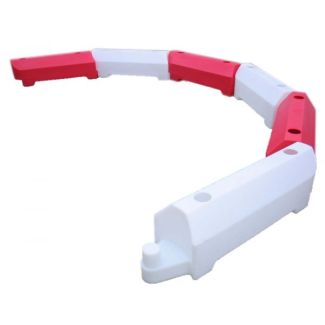
RB track barriers line indoor and outdoor racetracks, motorsport circuits and site roads. They connect in series, so a line follows the curve of a track without gaps. The RB500 low track barrier is the lowest in the family, the RB1000 track barrier is an S-shaped unit, and the RB1300 track barrier is built for high impact. For a taller line at a motorsport venue, the RB1500 motorsport track barrier is the medium height option.

Plastic road barriers for live traffic lanes
Beside a live traffic lane, a plastic road barrier has to hold a vehicle that strikes it as well as mark the edge of the work area. Where vehicles pass at speed beside the works, the RB22 or the Defender50 does the restraining job. Both are crash tested at 80 km/h, and the Defender50 is tested to EN 1317 N1. The City Wall is crash tested at 40 km/h, for urban streets where traffic moves more slowly. Match the tested speed to the speed traffic actually travels past the work area, as the traffic management plan sets out. For a permanent restraint line beside a road, Armco crash barriers and concrete barriers are the usual choice.
Sand or water fill, connections and corners
Water, sand or self-weighted
Water suits runs that move, because the ballast goes in on site and comes out again before the next move. Sand suits long-term runs, and the Evo barriers and the RB500 track barrier take it as well as water. Self-weighted barriers take no fill at all, which suits sites with no water supply and jobs that last a few hours.
Connection systems
The range uses four connection systems: S-Clips on the Buddha Barrier family, hook and eye joints on the water fill traffic barrier and the GB2, the Evo interlock, and pin locking on the Defender50. Plan a run, its corner units and its gates within one system, which is why the RB22 and the RB2000 each have their own gate. The Buddha Barrier's S-Clip also joins it to other plastic road barriers.
Corners and curves
How far one joint can turn ranges from about 25 degrees on some heavy duty units to a full 90 degrees on the Bison, and on the RB22 with angle sections. The RB1000 track barrier sets to any angle. A barrier with a narrow joint angle needs several units to turn a right-angled corner, so the angle given on each product page decides how many extra units a corner takes.
Fence extensions, gates and fence bases
Mesh fence extensions
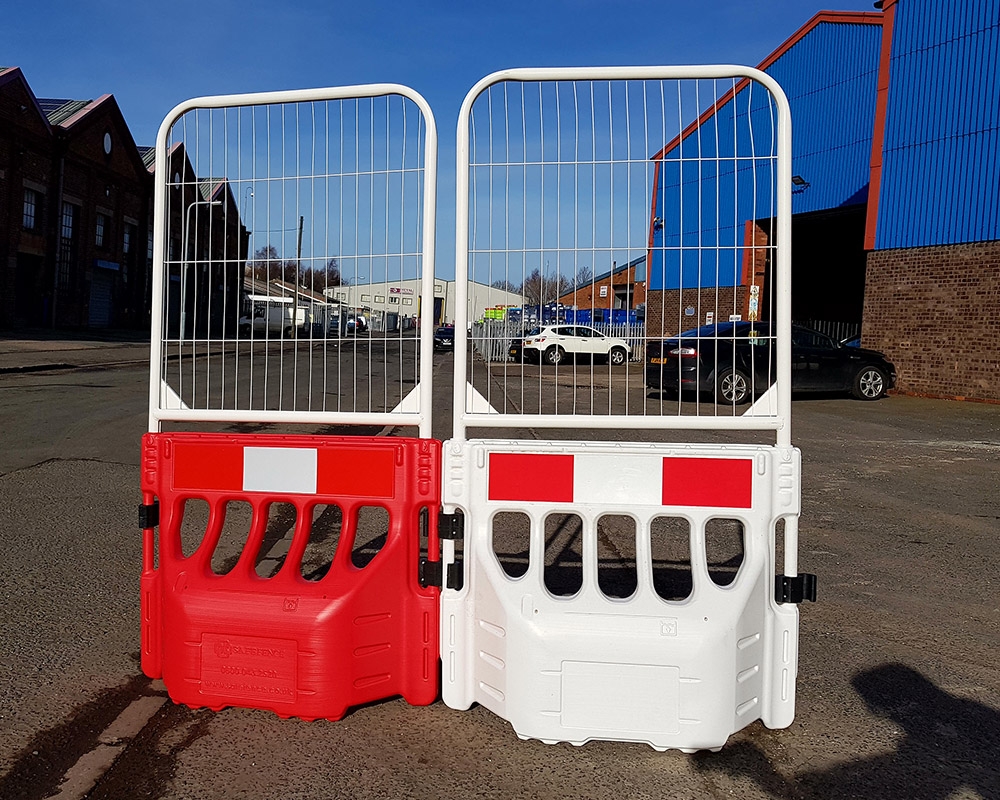
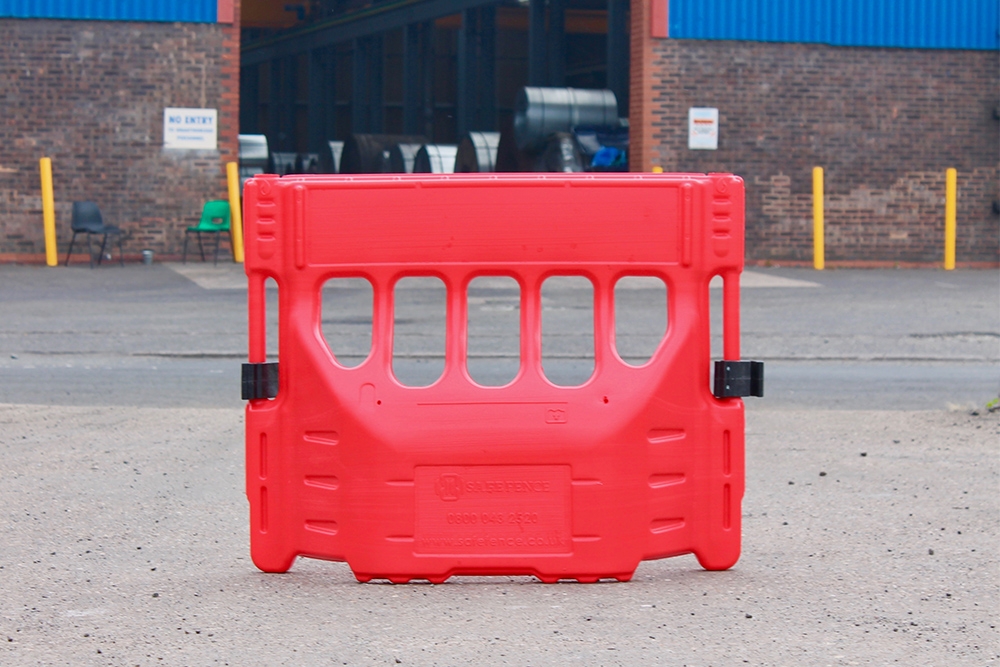
Mesh panels fit onto the top of a barrier line to raise it, and with the right extension a line reaches about 2 m, high enough to form a hoarding line around a site. The anti-climb mesh fence extension adds height to water filled barriers. The Evo 1 mini mesh extension is made for the Evo 1. Mesh catches wind that a bare barrier does not, so a fenced run is best built on the heavier units in the range.
Pedestrian and vehicle gates
Gates open a barrier line for people and plant at the points the site plan sets. The pedestrian gate for water filled barriers connects to barrier extensions with flags, and the RB22 walkthrough pedestrian gate matches the RB22 system. The 5m RB2000 vehicle gate opens an RB2000 run to lorries and plant.
Water filled fence bases and rota blocks
Water filled bases ballast mesh or hoarding panels on their own, which turns a fence line into a heavy perimeter with no barrier run underneath. The water filled mesh fence stabiliser and the Aqua Base fencing stabiliser sit along the foot of a panel line. The slot block fence base holds the panel in a slot. The water filled rota block is a single heavy block that holds down mesh and hoarding panels.
Popular Categories

Crowd Control and Pedestrian Barriers
View Products >

Traffic Barriers
View Products >

Expandable Barriers
View Products >
Frequently Asked Questions
How much water does a water filled road barrier hold?
Capacity runs from about 22 litres in the smallest 1 m separators to about 540 litres in the largest crash tested barrier. Each product page gives the capacity and filled weight for that model.
How are water filled barriers filled, emptied and moved?
Each unit has a fill point on top and a drain point at its base. A run is usually filled from a hose, bowser or water tanker once the units are in line. The GB2, RB2000 and RB22 have fork channels for moving with a forklift or telehandler. Drain a unit before lifting or moving it, because a filled heavy duty barrier weighs several hundred kilograms.
Are water filled barriers better than concrete barriers?
The two suit different jobs. Water filled barriers are light when empty, so they travel and store in stacks, go into place by hand or with light plant and drain for each move, and their red and white colours stand out at roadworks. Concrete barriers have their full weight from the moment they are set down, which suits long-term security lines and permanent works where the line will not move.
Which rules apply to road barriers at roadworks?
Temporary traffic management at roadworks is planned and laid out to Chapter 8 of the Department of Transport's Traffic Signs Manual. The traffic management plan for the job sets where barriers go, which type is used and how the line is signed. On construction projects, the Project Supervisor for the Construction Stage (PSCS), appointed under the Safety, Health and Welfare at Work (Construction) Regulations 2013, coordinates safety on site, including how traffic and pedestrians are kept apart.
Are water filled barriers wind tested?
Many of the heavy duty barriers and water filled fence bases are wind tested, with confirmed wind speeds of up to about 125 km/h on the heaviest units. Each product page gives the tested speed for that model.
What are plastic road barriers made of, and what colours are they?
The barriers are moulded from HDPE or UV stabilised polyethylene, and several models are fully recyclable. Most come in all red, all white, or half red and half white, and a few models come in fewer colours.