







Concrete Ballast Blocks
Concrete ballast blocks add dead weight to timber and steel hoarding, so a run resists a higher wind load than its frame and stays could take alone. Smaller blocks load the ballast trays and base plates of mesh fencing on ground that cannot be staked. The range runs from blocks one person can lift to heavy precast kentledge placed by plant. Heavy duty precast concrete barriers are also available, carrying plywood hoarding or temporary mesh fencing panels for a high security perimeter that needs no separate ballast.
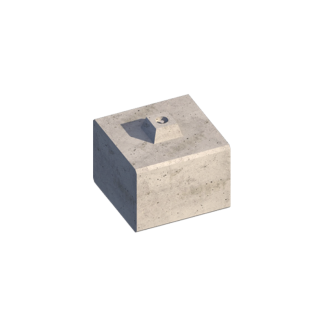

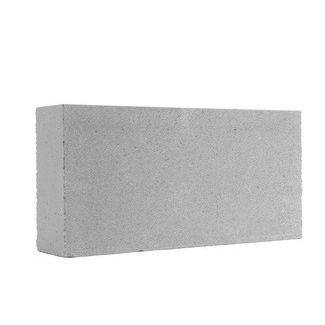

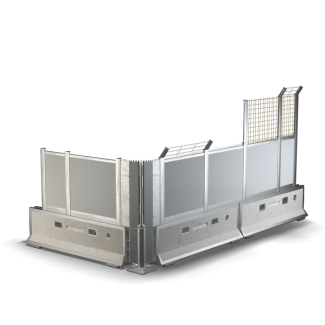
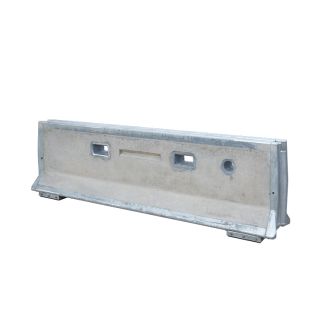
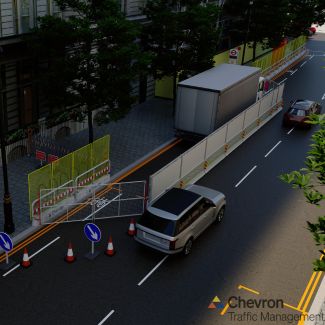
Kentledge, counterweight and fence ballast blocks
The system being weighted decides the block: mesh fence panels stand in trays or on base plates loaded with small blocks placed by hand, while solid hoarding stands on stays held down by blocks that need plant to lift.
Counterweight blocks for hoarding stays
The counterweight concrete blocks are the lightest of the hoarding blocks and sit on the foot of each raking stay behind timber or steel hoarding. They suit lower runs in sheltered positions, and sites where every block has to be placed by a small forklift or telehandler.
Hoarding ballast blocks
The 750kg hoarding ballast block is made for traditional timber hoarding and steel hoarding panels, and is the usual step up from the counterweight block when a run is longer, higher or more exposed.
Kentledge blocks for taller or exposed runs
The kentledge blocks run from 700kg to 1.5 tonnes, cast in high strength precast concrete for hoarding at greater heights, on exposed sites and on temporary works where the design calls for a large dead weight. Choose kentledge when the load per stay or per frame is more than a single hoarding block carries.
Ballast blocks for fence trays and base plates
The concrete ballast blocks for fence trays are standard sized blocks that load the ballast trays and base plates of temporary fencing, including semi-permanent runs. They are the usual way to hold mesh panels on hard standing such as concrete, tarmac or a finished car park, where the feet cannot be staked. The trays and plates themselves sit with the ballast trays and fencing accessories.

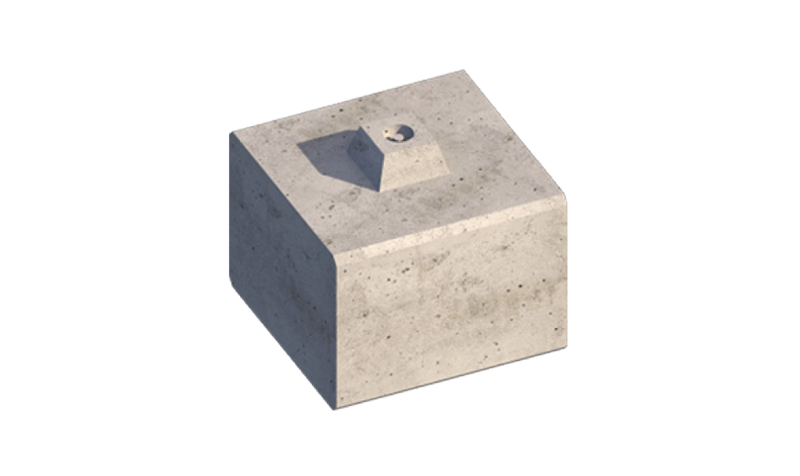
Concrete ballast blocks for timber and steel hoarding
Solid cladding takes the full force of the wind across its face, where the open weave of mesh fencing lets most of it pass, so the weight a run needs follows its cladding first and then its height and exposure. Timber plywood hoarding and steel site hoarding both present a solid face and carry their ballast on the feet of raking stays or on ballast frames, while heras fencing normally needs only the small blocks in its trays. Once mesh is screened with banners, debris netting or printed wraps, it behaves like a solid face and is ballasted as one.
Height raises the load on every stay, and so does exposure: corner plots, open ground, waterfronts and gaps between tall buildings where the wind is funnelled all add to it. The weight per stay, the stay spacing and the block to use come from the hoarding's temporary works design, prepared for that site's height, exposure and ground, and the blocks are ordered to that figure in place of a general rule of thumb.
Kentledge block sizes and weights
Fewer heavy blocks or more light ones
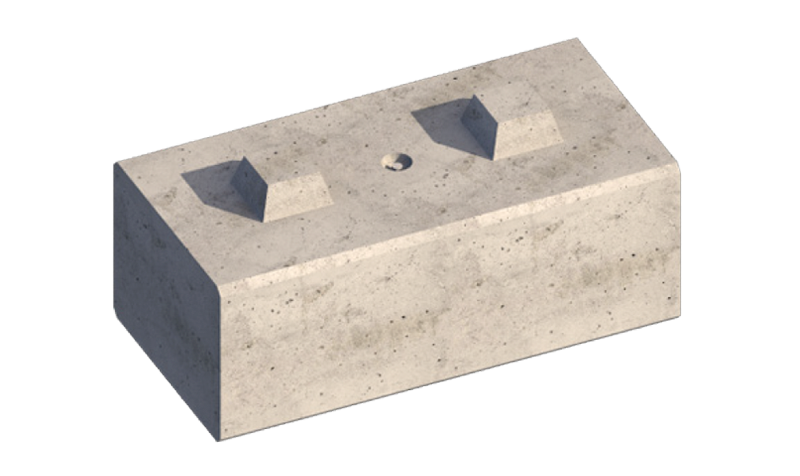
The kentledge range is cast to one cross section in four lengths, up to 1.5 tonnes, so the blocks differ only in length and weight. The same design load can be met with a few long blocks, which means fewer lifts, or with more short ones, which spread the weight along the run and fit between stays at closer spacing.
Footprint behind the hoarding line
Long blocks laid along the line keep the depth behind the hoarding to a single block width, while shorter blocks set across the stays suit open sites where depth is not a constraint.
Lifting and placing on site
Kentledge is placed by a lorry-mounted crane, a telehandler or a forklift with the capacity for the heaviest block at the reach needed. Match the block length to the plant that will be on site when the hoarding goes up and when it comes down, and use lifting accessories examined as the Safety, Health and Welfare at Work (General Application) Regulations 2007 require.
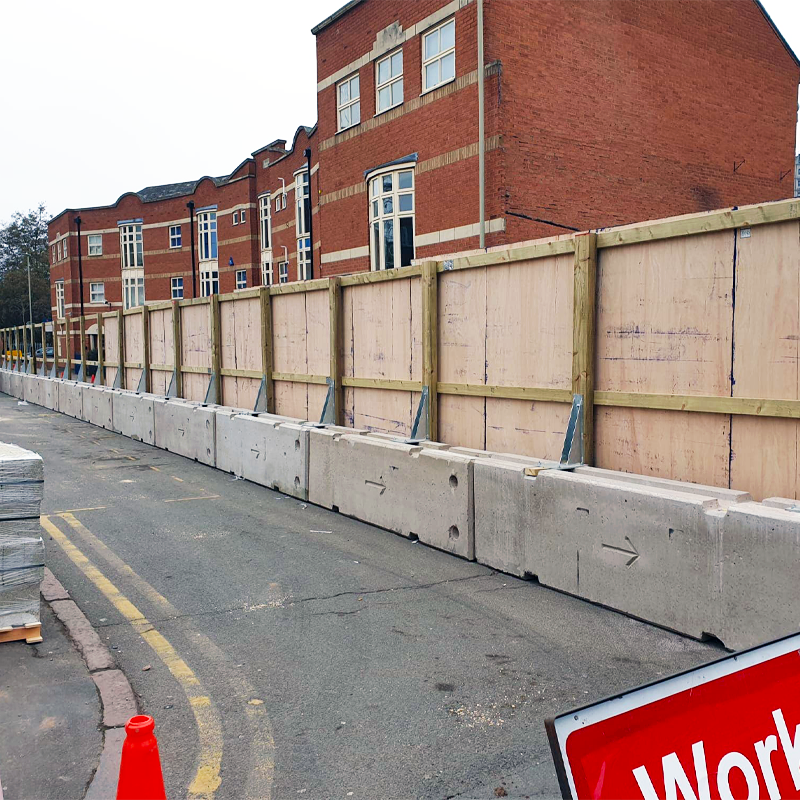
Concrete barriers with hoarding and mesh fencing
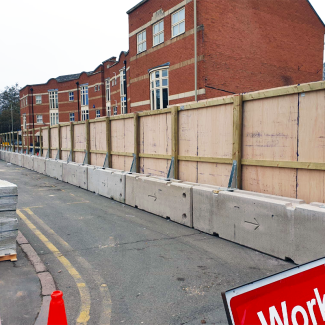
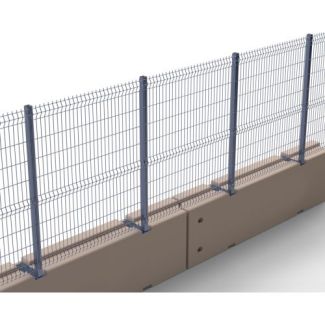
Where a run sits beside live traffic or needs a high security base, the hoarding or fence goes on a precast concrete barrier that is its own base and its own weight, in place of stays and ballast blocks. Where it must also contain a vehicle, choose crash tested CityWall hoarding.
PCH barrier with plywood hoarding
The concrete barrier with plywood hoarding pairs temporary vertical concrete barriers with a timber plywood face. It suits roadside compounds and city sites where the space behind the line is too tight for stays and kentledge.
PCM barrier with mesh extension
The concrete barrier with mesh fencing carries a Safe Mesh 100 extension on the same barriers. It gives a high security perimeter with an open face for plant yards, storage compounds and other areas that need to be seen into.
CityWall crash tested hoarding
For inner city and roadside work where the hoarding must also contain a vehicle, crash tested CityWall hoarding is tested to EN 1317-2 at containment levels N1 and N2.
Popular Categories

Site Hoarding
View Products >

Heras Fencing
View Products >

Site Gates
View Products >
Frequently Asked Questions
Are kentledge blocks and ballast blocks the same thing?
Both terms describe precast concrete that holds something in place by its mass alone. Kentledge is the older civils term and usually means the larger blocks used on temporary works. Ballast block is the broader name and covers everything from small fence tray blocks to heavy hoarding blocks.
Do ballast blocks replace ground anchors or dug-in posts?
They are the alternative where the ground cannot be dug or drilled, such as over a slab, on a footpath with services below or on a finished surface the client wants left intact. Where posts can be dug in or anchors driven, the temporary works design decides which method the hoarding uses.
Which side of the hoarding do ballast blocks go?
Ballast blocks go on the site side, on the stay feet or ballast frames behind the hoarding line. That keeps the blocks and stays out of the footpath or road and out of reach of the public.
Can concrete ballast blocks be reused from job to job?
Yes. Precast blocks carry no fixings into the ground, so they are lifted out when the hoarding comes down and moved to the next site. Inspect each block before reuse for cracks, broken corners or damage around any lifting fixings, and set aside any block that is damaged.
Can ballast blocks be used on permanent hoarding?
Yes. The counterweight concrete blocks are made for permanent as well as temporary steel and timber hoarding. On a hoarding that stands for years, the blocks and stays are checked after storms as part of routine site inspection.
Can concrete Lego blocks be used as ballast?
Yes. Interlocking concrete blocks, known in the trade as Lego blocks, lock together and are made for counterweights as well as storage bays and block walls. For weighting hoarding and fence stays, choose the counterweight or hoarding ballast blocks in this range.