







Bog Mats
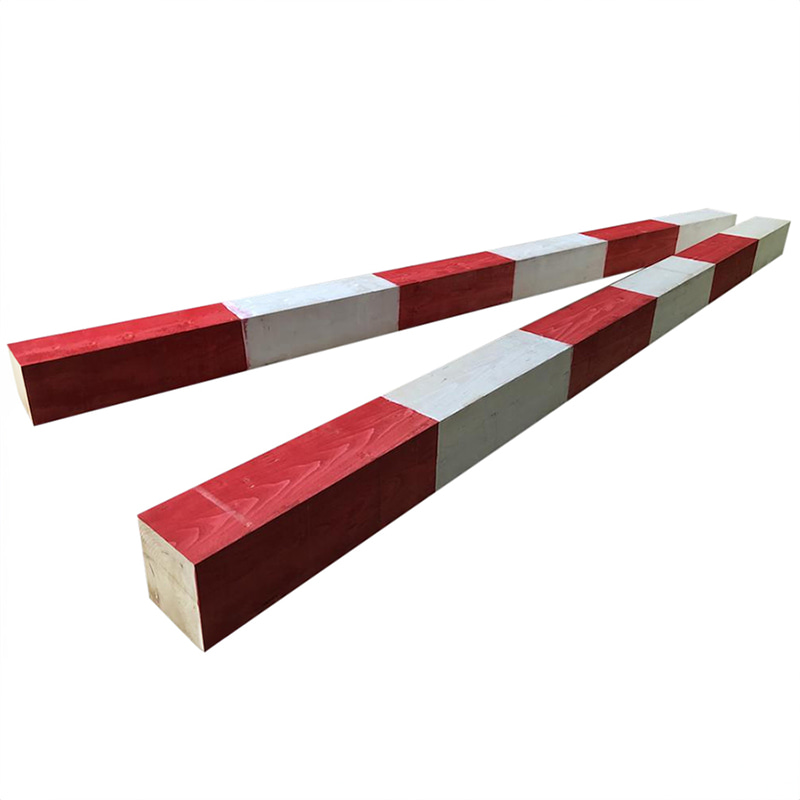
Bog mats are heavy hardwood mats laid on soft, wet or fragile ground to form long-term temporary access roads and working platforms on construction sites. They spread the weight of heavy machinery over a wide area, which limits lasting damage to the ground and the surrounding environment and keeps site traffic moving.
Dense hardwood carries high loads and stands up to repeated passes. Ekki timber bog mats are the heaviest duty, with high electrical resistance and the acid and weather resistance for wet, windy conditions. Tropical hardwood bog mats from West Africa and South America suit any ground or location, and European oak and beech mats are the most cost effective of the three.


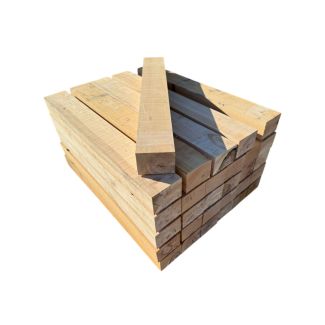

Timber bog mats in Ekki, tropical hardwood and European oak
Species is the first choice in the range: it decides how a mat copes with acidic ground, constant wet and long service, and what a full run costs to buy.
Ekki bog mats
Ekki bog mats are the heaviest duty mats in the range, cut from the most acid-resistant commercial timber available and with high electrical resistance. They are the mat to choose for peat, bog and other acidic ground, for exposed sites that see wet and windy weather for months at a time, and for utility work where electrical resistance is part of the specification. For a road that stays down through a long contract, or a stock of mats that moves from job to job for years, Ekki is the long-term buy.
Tropical hardwood bog mats
Tropical hardwood bog mats are made from dense marine timbers sourced from West Africa and South America, with an interlocked grain and high bending strength that suit them to any ground condition or location. They are the choice for contractors who need one mat for varied work, such as clay on one job and waterlogged pasture or a lake edge on the next, without changing species for each site.
European oak and beech bog mats
European oak and beech bog mats are made from sustainably sourced European hardwood and are the most cost effective of the three species. They are hardwearing and cause minimal ground disturbance on temporary roadways, which is why oak and beech are among the most widely used timbers for mats. This species also has the widest choice of thickness and length in the range, so it is the usual pick for long access roads, event and construction access, and any job that needs a large number of mats at a sensible cost.

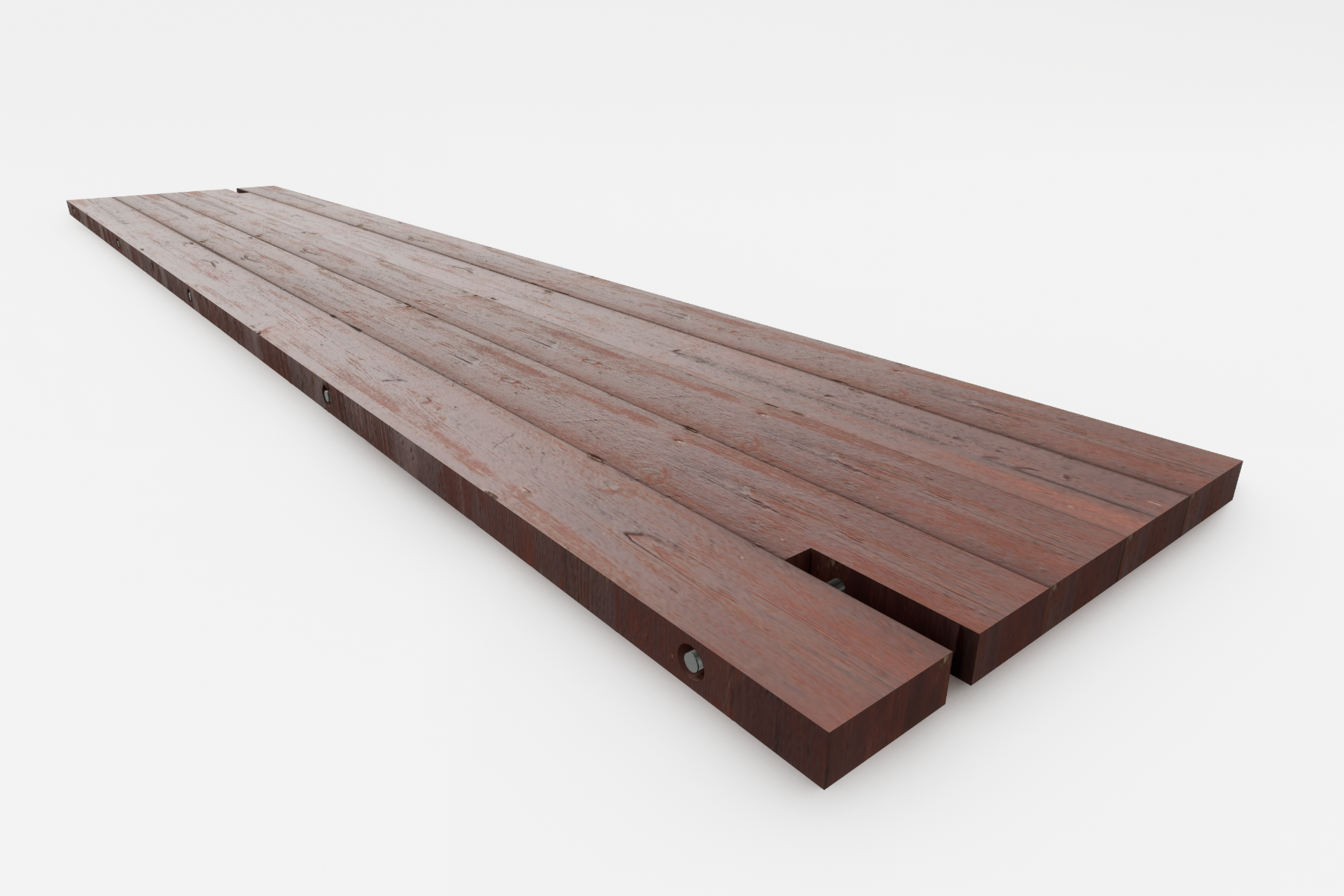
Bog mat sizes and thicknesses
After species, thickness and length decide what a mat carries and what kind of road it builds. The range runs from 100mm to 300mm thick in a choice of lengths, and every mat is the same width.
Thickness follows the plant and the ground. A thicker mat spreads the load of heavier plant over more ground and bends less over soft spots, so it is the choice for cranes, piling rigs, loaded dumpers and busy haul roads on very soft or waterlogged ground. Thinner mats suit firmer ground and lighter tracked plant, and they are easier to lift and lay with a smaller machine.
Laid across the line of travel, a mat's length becomes the width of the road. The shortest mats make a single lane for tracked plant and vans, and the longest leave room for wide loads and passing. A longer mat also means fewer joints across the road and spans soft patches that a shorter mat would settle into, although it needs a bigger machine to handle it.
Mat numbers follow from the common width. Laid across the road, one mat covers each metre of run, and turning areas and passing places are counted on top.
Bog mats for access roads, crane pads and pipelines
Temporary access roads and haul roads
Most bog mats go into temporary roads that carry delivery lorries, concrete trucks, dumpers and tracked plant from the public road to the work face. The road has to be wide enough for the widest vehicle using it, laid along the full route before heavy traffic starts, and thick enough for the loaded weight of the heaviest vehicle at the wettest time of year. Where the road crosses buried pipes or cables, the mats spread the load over the service, and underground service protection marks and guards it below ground.
Crane mats and piling rig platforms
Timber crane mats give a crawler crane or piling rig a level, stable surface to track over and stand on, and they form crane pads that spread outrigger loads over soft ground. Mats placed under an outrigger are chosen from the lift plan and the temporary works design for that lift, which set the size, thickness and number of mats against the outrigger load and the bearing capacity of the ground. A mat run laid for tracking only goes under the outriggers when the design for the lift includes it.
Pipeline, utility and wind farm access
Pipeline, cable and wind farm routes cross farmland, bog and upland peat for long distances, so the mat road usually moves with the work: mats are lifted from behind the spread and relaid ahead of it. That makes handling weight as much a part of the choice as load, since the same mats are lifted many times over one contract. Pipeline timber skids sit on or beside the mat road to stage, rack and support lengths of pipe before they are lowered into the trench.
Tree work and forestry
Arborists and forestry crews lay bog mats under tracked chippers, stump grinders, tracked access platforms and timber lorries working on lawns, parkland and soft forest tracks. The mats spread the load over tree roots and prevent the ruts that turn a short job into a costly reinstatement. On tight garden and estate access, shorter mats that a compact machine can lift are often the practical choice.
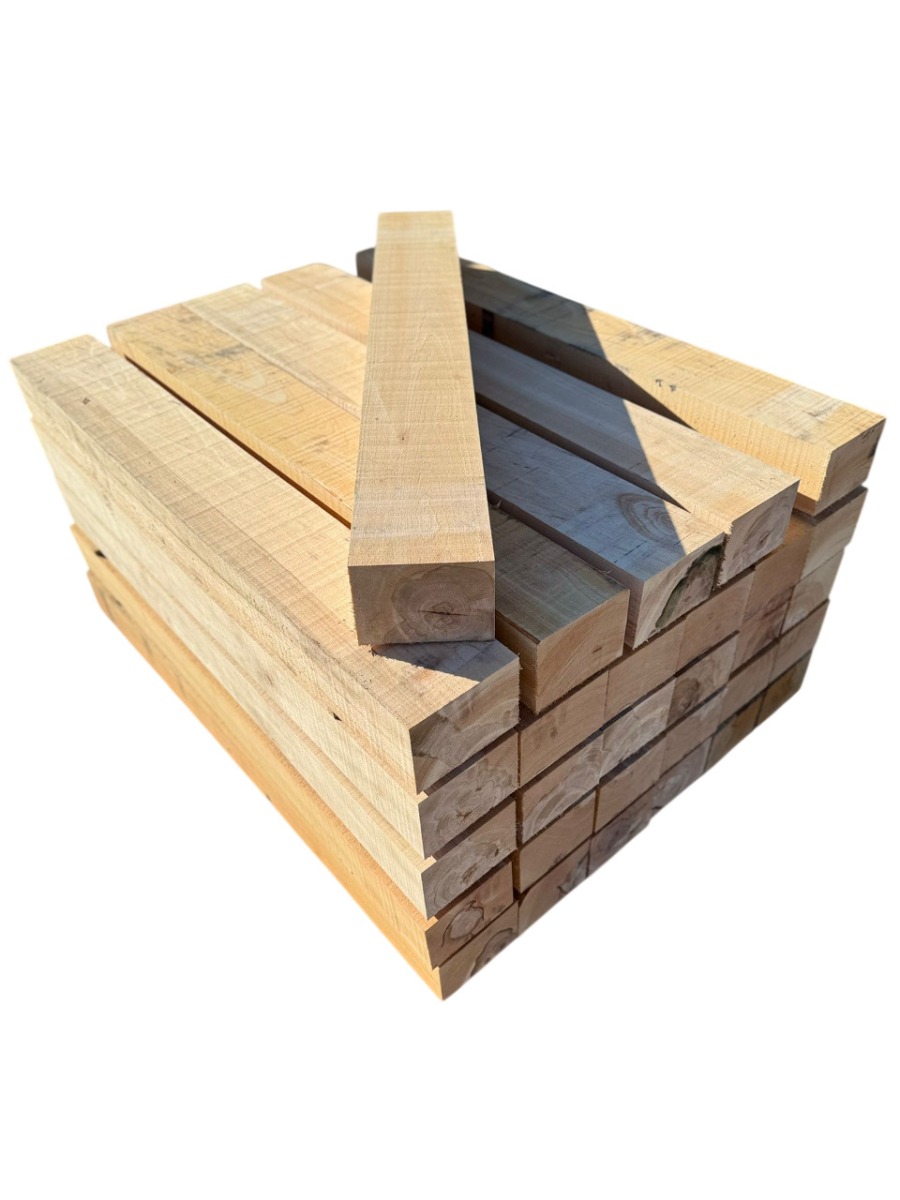
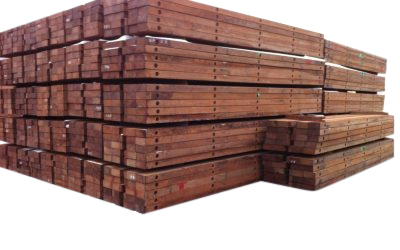
Bog mats, road plates or ground protection mats
Bog mats are the right product for heavy plant and loaded vehicles on soft, wet or waterlogged ground, where the load has to be spread over a large area of the ground surface. A timber mat is made to bear on the ground along its whole length, so it is laid on ground and not across an open hole.
To cross an open trench or excavation, use steel road plates, which span the opening and carry traffic over it on a road, footpath or site haul route while the excavation stays open beneath.
For lighter vehicles, pedestrians and turf, such as vans, ride-on mowers, event crowds, temporary car parks and access across lawns and sports pitches, plastic ground protection mats are the lighter product, laid and lifted by hand without a machine. Road plates and ground protection mats sit alongside bog mats in the groundworks and shoring equipment range.
Laying a bog mat roadway
A mat roadway starts with walking the route. Soft spots, standing water, ditches, gradients, buried services and overhead lines are found and marked before the first mat arrives, and the route is set wide enough for the largest vehicle that will use it. Mats are delivered by lorry and set down at the start of the run.
Each mat goes down across the line of travel, butted tight against the last, so that wheels and tracks cross the joints squarely and no gaps open between mats. The laying machine works forward off the mats already down, placing the next mat ahead of it, and does not track onto ground that has not been matted.
Turning areas at the end of the road and passing places along it are laid as wider pads of mats, sized for the turning circle of the longest vehicle. Where the road runs beside footpaths, site cabins, welfare units or scaffolding, a line of baulk timbers along the edge of the mats keeps wheels on the road and away from people and structures. Once traffic starts, the run is walked daily, and any mat that has shifted, tilted or sunk is lifted and relaid.
Popular Categories

Road Forms
View Products >

Trench Covers & Road Plates
View Products >

Rebar & Steel Plate
View Products >
Frequently Asked Questions
A bog mat is a heavy panel of hardwood timbers fixed side by side and laid on soft or wet ground so that plant can travel or stand on it without sinking. The trade also calls them bog boards, timber mats, access mats and, when they go under cranes, crane mats. Laid end to end, they form a temporary road or working platform that is lifted again when the job finishes.
Timber bog mats are normally laid loose, with no connectors between them. The weight of each mat holds the run in place under traffic. Mats that creep on a slope or at a turning area are lifted and relaid in position rather than fixed.
Bog mats are too heavy to move by hand, so they are handled by machine, using chains or slings on an excavator or forks on a telehandler or forklift. Chains, slings and lifting attachments are lifting accessories and are examined at the intervals the Safety, Health and Welfare at Work (General Application) Regulations 2007 require. Nobody stands on or beside a mat while it is being lifted or set down.
Mats are scraped or washed clean of mud, then stacked flat and level on timber bearers off the ground, with the bearers lined up between each layer. A stack on firm, drained ground lets air move through the timber and keeps the mats straight. Stacks are kept to a height that a machine can load and unload safely.
A mat's working life is set by its species, the plant that runs over it, the ground it lies on and how it is lifted and stored. Mats laid on a prepared route, kept clean and stacked properly between jobs go back into service many times. Most damage comes from dragging mats, dropping them from height and tracking plant across their edges.