







Armco Crash Barriers
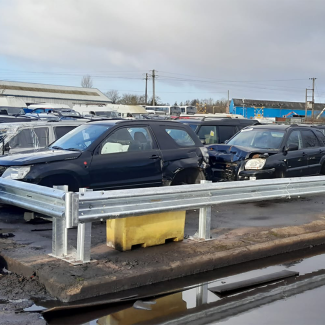
HERMEQ supplies every part of the Armco barrier, the steel crash barrier of corrugated beams on posts that protects car parks, vehicles and property. Armco crash barriers are used in low-speed, low-impact settings such as car parks, residential areas and industrial sites, where they protect people, machinery and buildings, indoors and outside.
The Armco barrier calculator takes the length of run a project needs and returns a price and a component breakdown in seconds. Every component is also sold on its own: straight corrugated beams, curved beams, corners, Z and RSJ posts, safety ends and the bolts that join them.
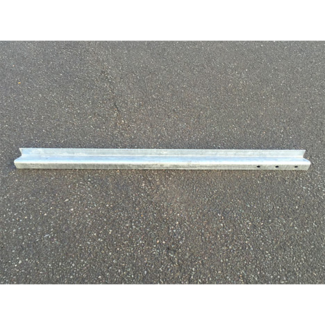
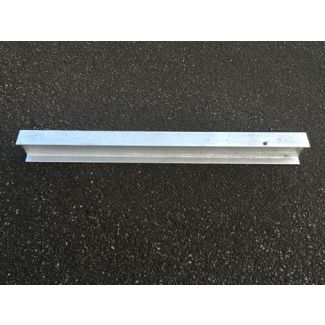
Armco beams, curves and corners
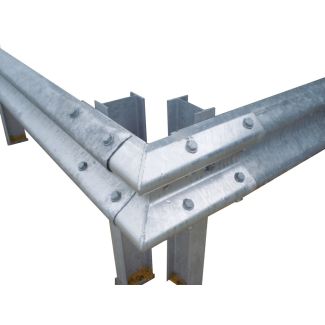
Most runs combine straight beams with a corner wherever the route turns sharply and a curved beam wherever it bends gradually.
Straight corrugated beams
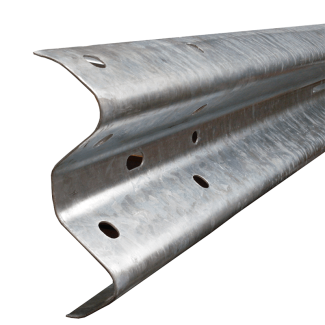
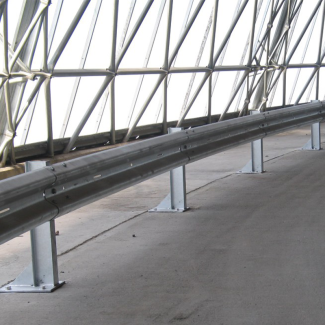
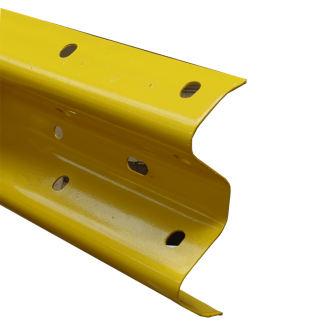
Straight beams make up the length of almost every run. The straight corrugated Armco beams come in 1.6m and 3.2m effective lengths, in galvanised or yellow, where the effective length is what each beam adds to the run once it overlaps the next. The longer beam covers long, straight stretches with fewer joints, while the shorter beam fills the short sections between corners, doorways and gate openings and brings a run to the exact length of the space.
Curved beams
Where a route bends instead of turning a sharp corner, curved Armco beams carry the barrier round it in one continuous line. A concave beam curves inward on its traffic face, for a barrier on the outside of a bend, and a convex beam curves outward, for a barrier that wraps round an island, a tank or a column. The radius is matched to the bend, from 6m to 16m, so the curve is measured on site before the beam is ordered.
Armco barrier corners
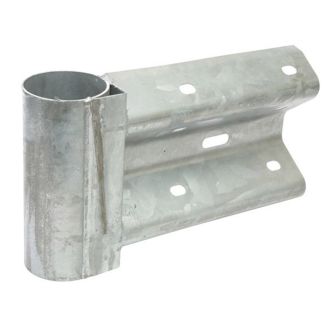
Corners take the barrier through a change of direction without cutting or bending beams on site. Fixed 90 degree Armco barrier corners suit right angles such as the corner of a building, and flexible corners are bent to whatever angle the site needs, which covers splayed kerb lines and irregular plots. Each comes as an internal corner, for a barrier on the inside of the angle, or an external corner, for a barrier that wraps round the outside of it.

Z post or RSJ post, dig-in or bolt-down
Two decisions settle the post for any run: the profile, which follows the traffic the barrier faces, and the fixing, which follows the ground it stands on.
Z posts or RSJ posts
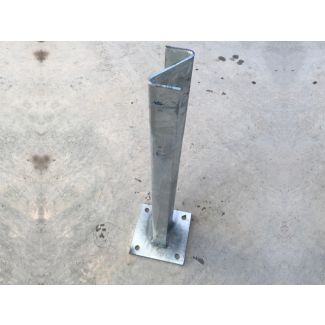
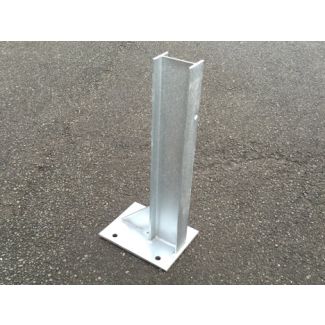
Z posts are the lighter profile, designed to take the sting out of a collision, and they suit lower-risk areas where vehicles move slowly and infrequently, such as staff car parks and service roads. RSJ posts are the heavier section and give greater protection, so they are the choice for high traffic volume, for runs that face vans and lorries, and wherever people walk on the far side of the barrier.
Dig-in or bolt-down posts
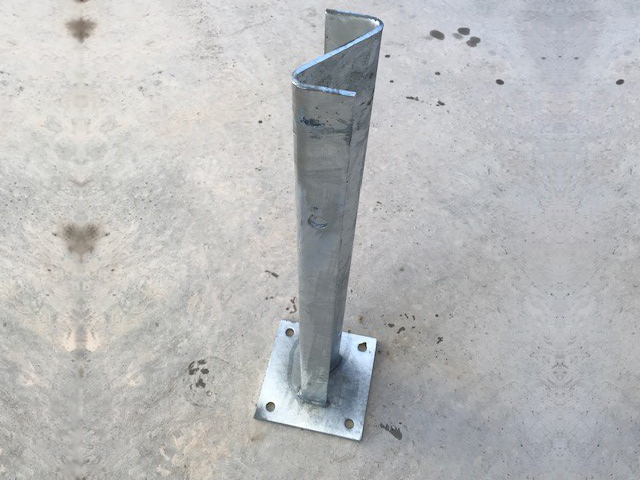
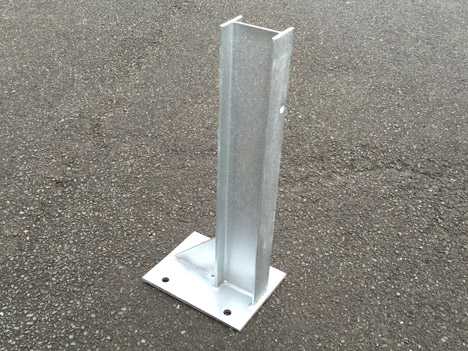
Bolt-down posts have a base plate that fixes to an existing concrete slab, which makes them the choice for warehouse floors, loading docks and concrete hardstanding. The bolt-down Z posts and the bolt-down RSJ posts need a slab that is sound, deep enough to hold an anchor and clear of cracked edges and movement joints. Dig-in posts are longer, so that part of each post sits below ground in a concreted hole, and they suit grass verges, gravel, compacted stone and tarmac with no concrete base beneath it. Both the dig-in Z posts and the dig-in RSJ posts come in more than one length.
Armco barrier ends and fixings
Every run needs an end terminal at each open end and a set of fixings counted from its posts, beam joints and corners.
Fish tail ends
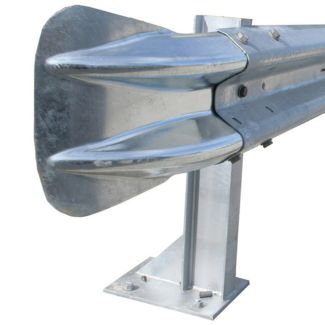
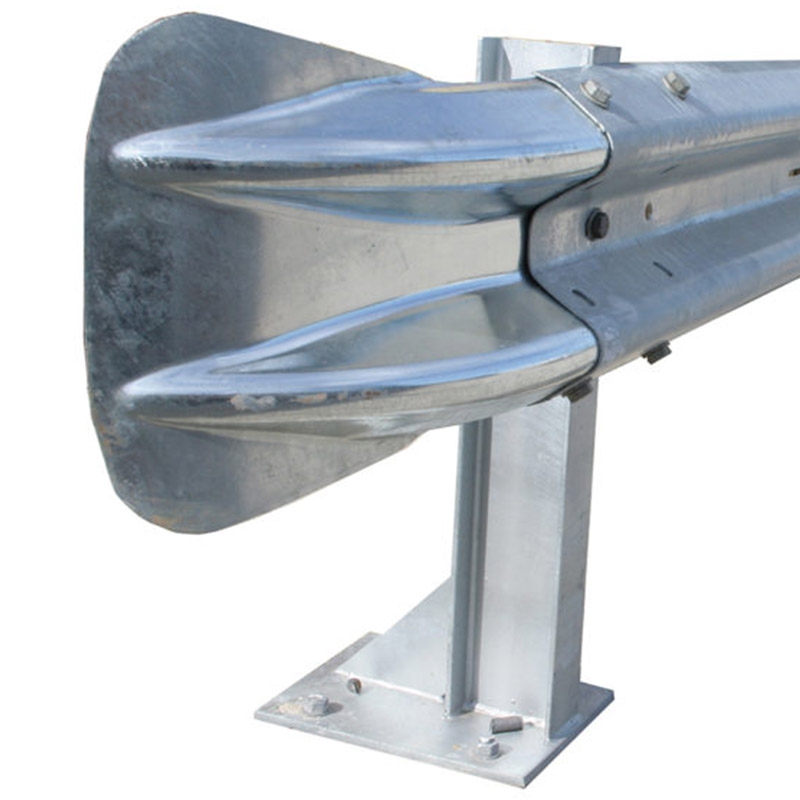
Armco fish tail ends belong where vehicles could strike or clip the end of the run, such as the entrance to a car park aisle, the mouth of a loading bay or the end of a run beside a service road. The flared end reduces damage to a vehicle that meets it and covers the exposed edge of the beam.
Pedestrian safety ends
Armco pedestrian safety ends are shaped with no sharp edges, for runs that stop beside walkways, building entrances, doorways and car park pay stations, where people pass the end at close range. Both end types come in galvanised or yellow to match the beams.
Post bolts and lap bolts
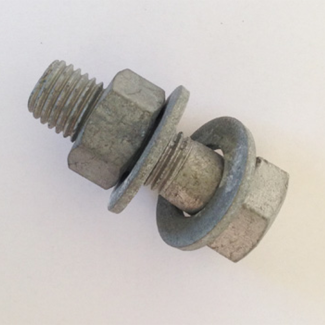
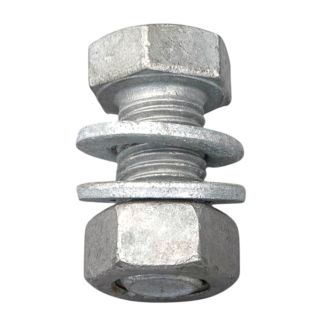
Armco post bolts fix the beam to each post, at one bolt per post, and each is supplied with two washers. Armco lap bolts join beam to beam where they overlap, and every corner needs eight extra lap bolts to connect it to the beams on either side, so corners are counted separately from the straight run.
Floor anchor bolts
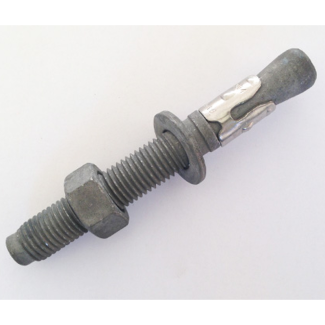
Bolt-down posts are held to the slab by galvanised floor anchor bolts, four to each post. All the bolts are sold individually, so the totals are worked out from the number of posts, joints and corners before ordering.
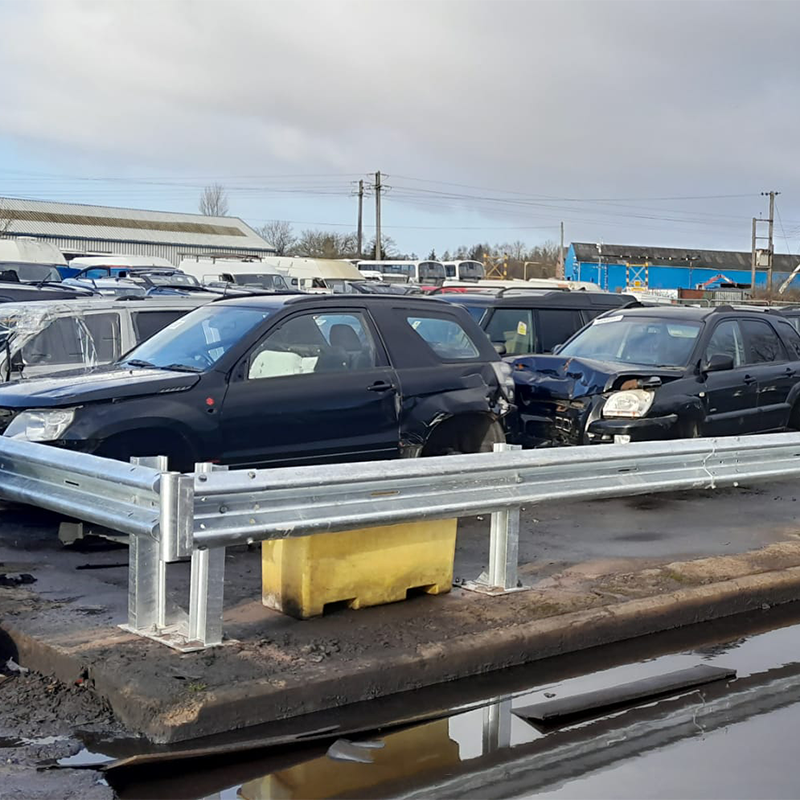
Armco crash barriers for car parks, warehouses and loading bays
Most Armco runs protect buildings, plant and people from slow-moving vehicles, and each setting changes the post, finish and end that suit it.
Car parks and residential areas
In car parks, the barrier keeps cars off footpaths and away from walls, columns and shop fronts, and the traffic is slow and light, so Z posts suit most runs. To control who enters a car park, choose parking and security barriers.
Warehouses and factories
Inside, Armco runs along racking ends, walls, plant and the edges of pedestrian routes, with the posts bolted to the floor slab. RSJ posts are the choice wherever a walkway runs behind the barrier or vehicles turn close to it.
Loading bays and industrial perimeters
Loading bays see high traffic volume and reversing lorries, so they call for RSJ posts and fish tail ends at every exposed run end. Industrial perimeters are long, straight runs on open ground, where dig-in posts and long beams keep the line simple.
Planning an Armco barrier run
Once the beams, posts and ends are chosen, the run comes down to accurate measurements, the finish and confirming that a permanent barrier is the right system for the job.
Measuring the run and using the Armco calculator
Measure along the exact line the barrier will follow, and mark each corner with its angle and whether it is internal or external, each bend with its radius, every open end and any point where the ground changes from slab to open ground. Enter the measured length into the Armco barrier calculator, then check its list against the plan for corners, curves and any switch between bolt-down and dig-in posts.
Galvanised or yellow finish
Galvanised steel suits outdoor perimeters, residential settings and long runs where the barrier does not need to stand out. The yellow Armco beam is galvanised to EN ISO 1461 beneath its yellow finish, and it earns its place where drivers need to see the barrier early: indoors, in poor light, and in busy car parks and yards where vehicles manoeuvre close to it.
Permanent Armco or temporary crash barriers
Armco is a permanent, off-highway system, bolted to a slab or set in concrete, and it stays where it is installed. For a temporary crash barrier at roadworks, events or a phased construction site, water filled road barriers are filled on site and emptied to move, and concrete barriers are placed by lorry loader or crane and lifted out when the work ends.
Popular Categories

Crowd Control and Pedestrian Barriers
View Products >

Traffic Barriers
View Products >

Expandable Barriers
View Products >
Frequently Asked Questions
An Armco barrier is a permanent crash barrier made of corrugated steel beams bolted to steel posts, used to protect people, buildings and plant from vehicles. The name comes from the Armco steel company, whose corrugated guard rail became the trade's name for this type of barrier.
Crash barrier is the general term for any barrier built to stop or redirect a vehicle, and it covers concrete, water filled and steel systems. An Armco barrier is one kind of crash barrier: the corrugated steel beam on posts. In everyday use the two names overlap, but a concrete or water filled crash barrier is a different product for a different job.
The corrugated profile stiffens the steel along its length, so a strike is spread along the beam and carried into several posts instead of one point. The beam and posts give a little as they take the load, which slows and redirects a slow-moving vehicle and limits damage to the vehicle and to whatever stands behind the barrier.
Safety barriers on motorways and national roads are specified and installed to Transport Infrastructure Ireland (TII) standards, through the road authority and its contractors. The Armco range from HERMEQ is an off-highway system for private land such as car parks, yards and industrial sites.
Yes. An Armco run is assembled from standard beams and posts bolted together, so it is extended by removing the end terminal, adding beams and posts, and refitting the end at the new end of the run. The new joints need their own lap bolts and post bolts.