







Safety Harnesses and Lanyards
The HERMEQ safety harness and lanyard range covers the personal fall protection worn for working at height: the full body harness, the lanyard that connects it to an anchor, and the karabiners and hooks at the anchor end. It includes single point, 2-point, 3-point and 4-point harnesses, a rescue harness, shock absorbing fall arrest lanyards, restraint lanyards and a work positioning lanyard.
The equipment is used on scaffolding, roofs and inclines, fixed ladders, lattice steelwork, cherry pickers and in confined spaces. The lanyards come in webbing or kernmantle rope, in single and Y forked versions, and harness and lanyard kits are in the fall arrest systems range.
-

-

-

-

-

-

-
 Gravity Shock Absorbing Kernmantle Rope Lanyard - Thimble EyeAs low as €15.33 €18.86
Quick 5 Day Delivery
-
 Gravity Shock Absorbing Kernmantle Rope Lanyard - Scaffold HookAs low as €23.25 €28.60
Quick 5 Day Delivery
-
 Gravity Y Forked Shock Absorbing Kernmantle Rope LanyardAs low as €49.25 €60.58
Quick 5 Day Delivery
-

-

-

-

-

-

-

-

Full body harness types
The number and position of attachment points decide what a full body harness can do, from simple fall arrest on one point to positioning, ladder and rescue work on harnesses with several.
Single point harness
The single point full body harness is the choice for straightforward fall arrest or restraint, where the wearer only ever connects one lanyard. It suits scaffolding, door frame work and cherry picker baskets.
2-point full body harness
The 2-point full body harness has a chest attachment as well as the dorsal D-ring, so one harness covers scaffolding, incline work and horizontal work on lattice steel.
2-point comfort harness
The 2-point comfort harness carries both attachment points on the front and adds a sit strap placed to take the wearer's weight. It suits long shifts on scaffolding, door frames and cherry pickers.
3-point harness
The 3-point full body harness adds two independent attachments to the dorsal D-ring used for fall arrest. Choose it for fixed ladders, inclines, door frame work and lattice metal structures, where the wearer needs a fall arrest connection and a second connection for climbing or positioning on the same harness.
4-point harness
The 4-point harness spreads the forces of a fall more evenly across the body and gives the wearer the widest choice of connection. It is the harness for work station holding, where the wearer leans back into the harness to work with both hands, and for incline and fixed ladder work where the fall risk is more complex.
Rescue harness
The rescue harness has attachment points front and back, a sit strap and a rescue extension strap that brings the connection within reach of a rescuer or a retrieval line. Choose it for confined spaces, evacuation and cherry picker work, where getting a person out quickly is part of the plan from the start.
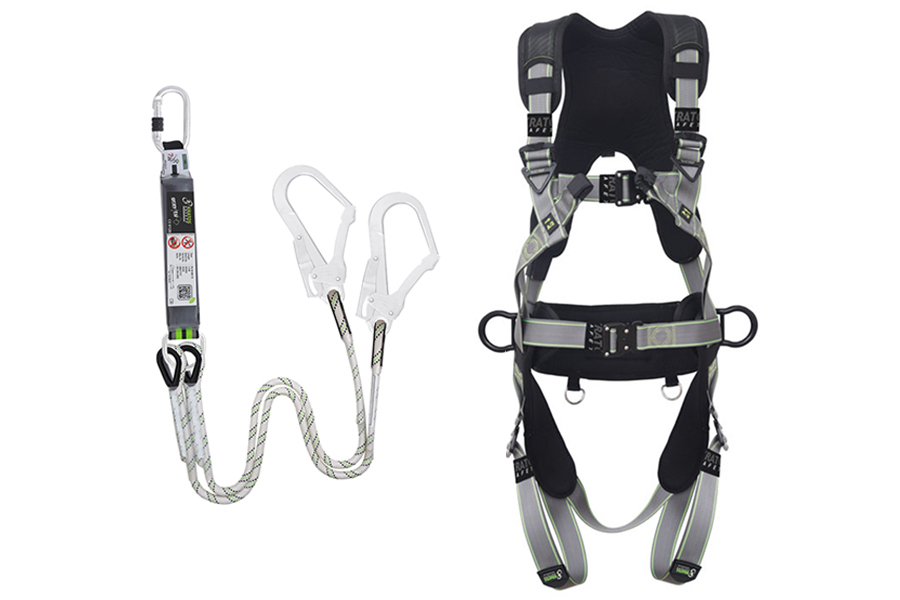
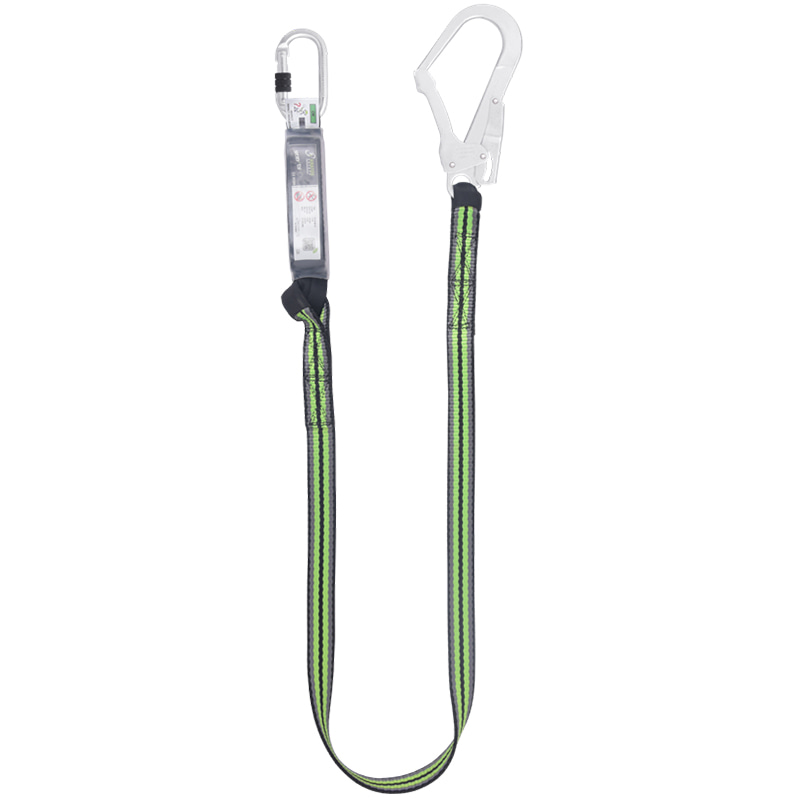
Fall arrest, restraint and work positioning lanyards
A fall arrest lanyard stops a fall that has already started, a restraint lanyard stops the user reaching the edge at all, and a work positioning lanyard holds the user in place with both hands free and needs a separate fall arrest backup wherever a fall is possible.
Shock absorbing lanyards
A shock absorbing lanyard is the fall arrest connection between harness and anchor, with an energy absorber that extends in a fall to cut the force reaching the body. HERMEQ supplies the shock absorbing webbing lanyard and kernmantle rope versions, each with a fall indicator label that reads NOT OK once the lanyard has arrested a fall. The label is part of the check before every use, and a lanyard showing NOT OK is taken out of service.
Y forked lanyards
A Y forked lanyard, also called a double or twin leg lanyard, lets the user clip the second leg to the next anchor before unclipping the first. On scaffolding, lattice steel and fixed ladders this keeps the user connected at all times while passing intermediate anchors, where a single lanyard leaves a moment with no connection. For fall arrest, the choice is between the Y forked kernmantle lanyard and the forked shock absorbing webbing lanyard. For restraint along a run of anchors, the Y forked restraint lanyard gives the same continuous connection.
Restraint lanyards
A restraint lanyard is a fixed length of kernmantle rope, chosen so that from its anchor the user cannot reach the edge or a fragile surface. It suits flat roofs, loading edges and MEWP baskets.
Work positioning lanyard
The adjustable work positioning lanyard is shortened or lengthened to hold the user against the structure, leaning into the harness with both hands free. It suits station holding on steelwork, poles and ladders, and wherever a fall is possible it is worn together with a fall arrest lanyard on a separate anchor.
Safety harnesses for scaffolding, roofs and cherry pickers
Scaffolding
Scaffolders and other trades on a scaffold clip to tubes as they move along and up the lifts. A lanyard with scaffold hook closes straight over a tube. Anchoring at or above the dorsal D-ring where the scaffold allows shortens any fall.
Roofs and sloped work
On a roof, collective protection comes before anything worn, such as temporary edge protection at the eaves and verges. On flat roofs and around plant, handrail systems do the same job. Where a harness is still needed, restraint is the usual choice, set to keep the user back from the edge and away from roof lights.
Cherry pickers and MEWPs
In a cherry picker or boom lift basket, the harness connects by a short restraint lanyard to the anchor point provided by the machine's manufacturer, so the user stays inside the basket if the boom is jolted or struck.
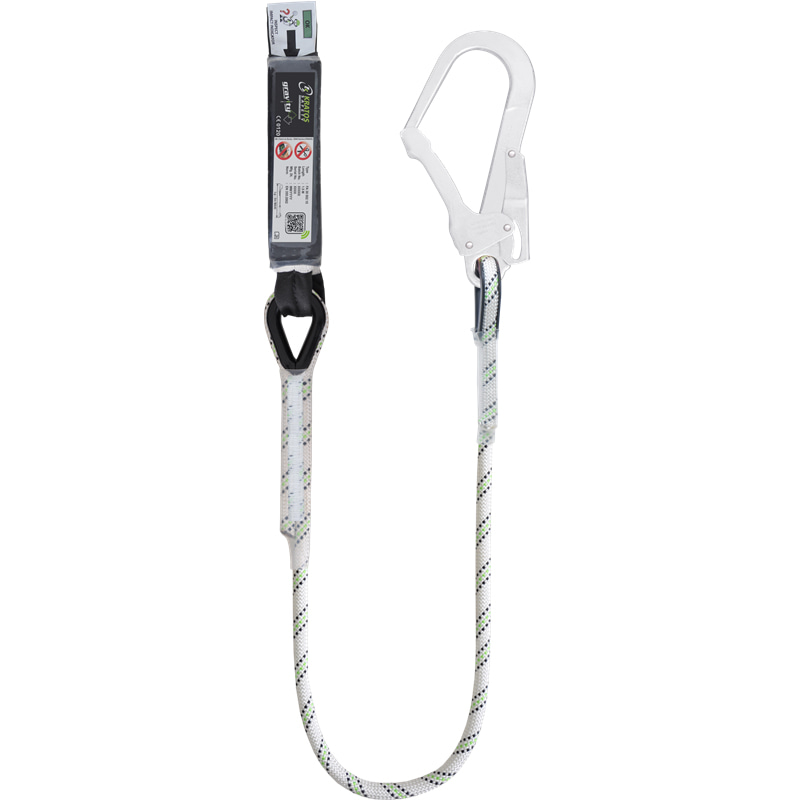
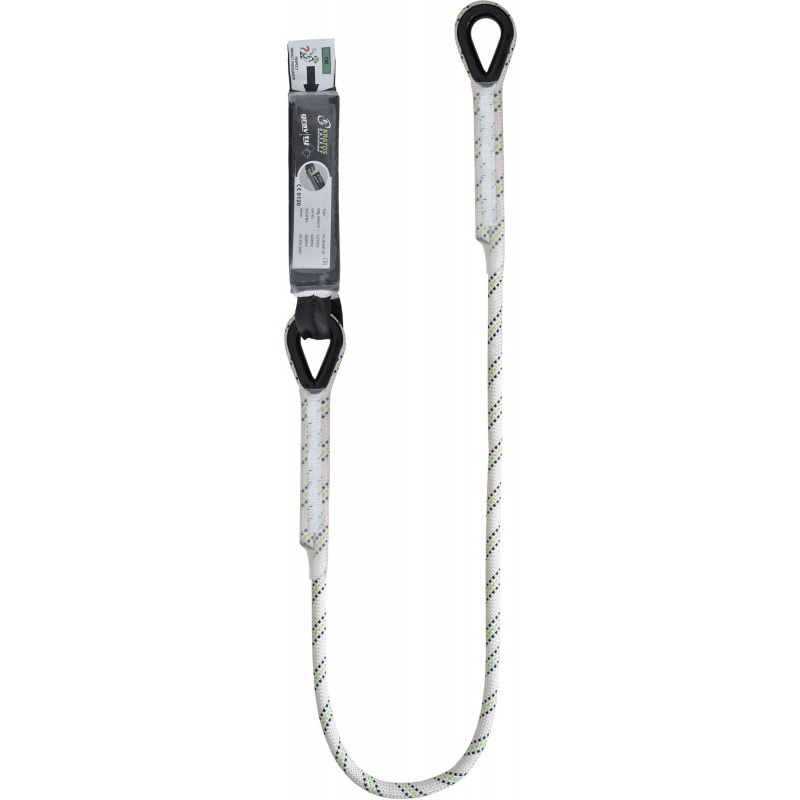
Matching the harness, lanyard and anchor point
Attachment points
Fall arrest lanyards connect to the dorsal D-ring between the shoulder blades, or to front points marked for fall arrest. Sternal points at the chest are the connection for fixed ladders and inclines, where the user faces the structure and a front connection keeps the lanyard in view. Side D-rings and other points marked for work positioning take a work positioning lanyard only, never a fall arrest lanyard.
Webbing or kernmantle rope
Webbing lanyards are flat, light and pack small in a kit bag. Kernmantle rope has a load-bearing core (the kern) inside a woven sheath (the mantle) that protects the core from abrasion, and it suits scaffolding and steelwork where the lanyard rubs against tube and steel all day.
Fall clearance below the user
A shock absorbing lanyard needs clear height below the user, because the user drops the length of the lanyard plus the extension of the energy absorber before coming to rest. Before choosing one, compare the free height below the anchor with the clearance given in the manufacturer's instructions. Where there is little height below, as in a MEWP basket or at low level, a restraint lanyard that cannot reach the edge is the right choice, in single or Y forked form.
Karabiners and rebar hooks
The connector at the anchor end decides what a lanyard can clip to. The kernmantle rope lanyard with thimble eye needs a karabiner at the anchor, and the steel screw locking karabiner is the everyday choice for that connection. The aluminium karabiner does the same job at a lower weight for rescue kits. For reinforcing bar and large structural members, the rebar hook has a wide gate and is tested to EN 362 Class T. Anchors and the other components that complete the system are in fall arrest systems.
Popular Categories

Temporary Edge Protection
View Products >

Crane Lifting Equipment
View Products >

Temporary Stairs & Bridges
View Products >
Frequently Asked Questions
The law sets no minimum height. The Safety, Health and Welfare at Work (General Application) Regulations 2007 treat any place from which a person could fall a distance liable to cause injury as work at height, and the work has to be planned and risk assessed. Collective measures such as guardrails and edge protection come first, and a harness is used where they cannot remove the risk.
The wearer checks the harness and lanyard before every use, looking at webbing, stitching, buckles, connectors and labels for cuts, wear, heat or chemical damage. A competent person also carries out a periodic detailed examination at least once a year, as EN 365 requires, or more often where the manufacturer's instructions say so, and records the result. Anything that fails either check is withdrawn from use.
The manufacturer sets the service life of each harness and lanyard, counted from the date of manufacture on the label. Within that life, sunlight, chemicals, heat, grit and hard use all wear textile equipment, so a harness that fails inspection is retired early.
Only a short time. Hanging still in a harness restricts blood flow in the legs and can lead to suspension trauma, which becomes dangerous quickly, so a person who has fallen needs to be brought down as fast as possible.
Yes. The Safety, Health and Welfare at Work Act 2005 requires employers to give employees the instruction, training and supervision they need to work safely, and that includes everyone who wears a harness. Training covers fitting, pre-use inspection, choosing and connecting the lanyard, selecting an anchor and what to do in a rescue.