







Trench Covers & Ramps
Trench covers, road plates and ramps keep footpaths, driveways and roads in use while excavation and service work goes on. Covers and ramps can be permanent, semi-permanent or portable. Permanent ramps are bolted in place, semi-permanent ones rest on the ground or a concrete pad for shorter periods, and portable ones move on with the work. The range runs from footway boards and kerb ramps for pedestrians to steel and composite road plates for heavy vehicles, with cable and hose ramps for lines crossing on the surface.
A ramp is only usable when its width and gradient suit the wheelchairs, buggies and vehicles crossing it, and for permanent access Part M of the Building Regulations sets limits on both.
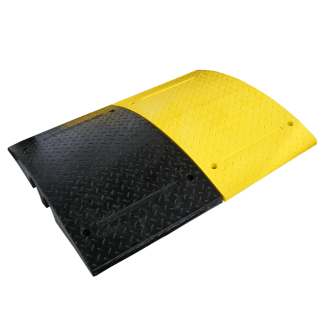
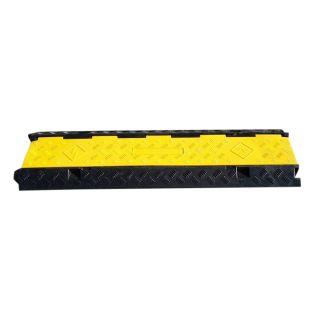
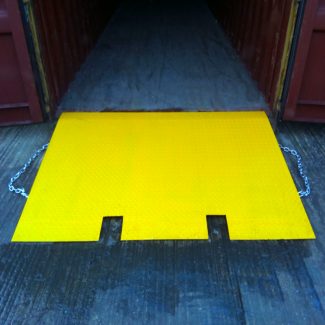

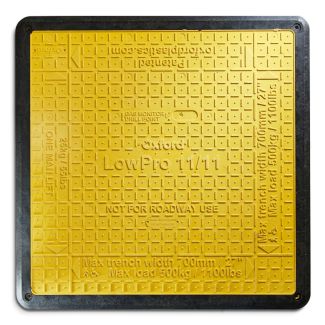
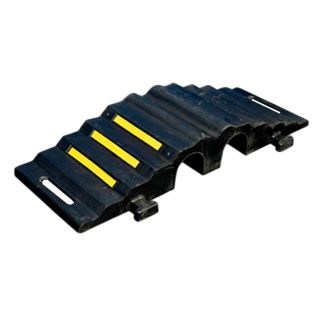
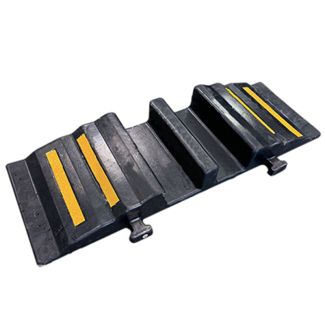
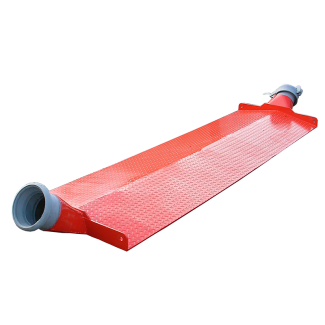

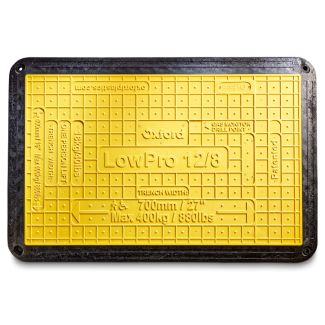




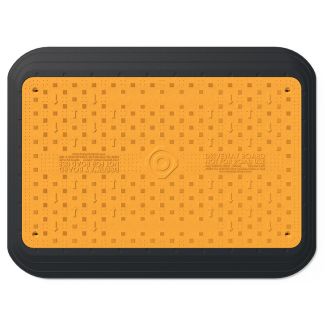
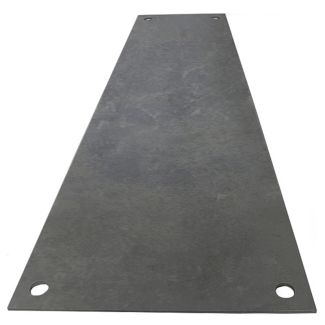
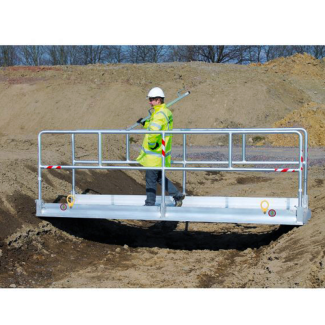
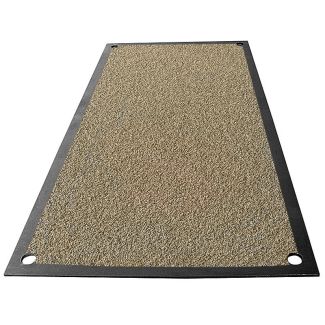
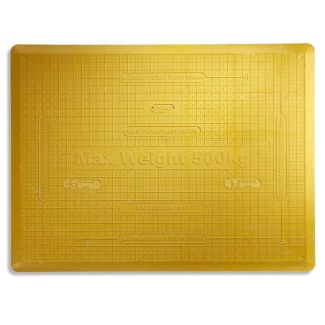
Trench covers, road plates and access ramps
The range divides by what has to be crossed: covers and plates bridge an open excavation, and ramps take people and wheels over a kerb step or over a cable or hose lying on the surface.
Steel road plates and trench plates
Steel is the choice where lorries, dumpers and plant cross an excavation many times a day, or where a cover stays down in a live road for the length of a job. Square and rectangular plain steel road plates cover most crossings, and long, narrow steel trench cover plates follow the line of a service trench. Where surface grip matters, the range adds anti-skid road plates and a coarse grip finish on anti-slip steel road plates. Plates for live roads also come as road plates with chamfered edges.
Composite road plates
Composite road plates are lightweight modular sections that join together into a vehicle crossing over a trench. They suit road crossings, site entrances and utility work along a street, where a crossing is needed for a few days before it moves on with the trench.
Pedestrian trench covers and footway boards
Footway boards are light covers that carry pedestrians, buggies and wheelchairs across a narrow trench on a footpath or site walkway. The LowPro 11/11 pedestrian trench cover is a square board for foot traffic. For a route that may also take a light vehicle, the LowPro 12/8 trench cover is rated for both. The Tuff Tread footway board has a skirt made from recycled PVC that is itself recyclable.
Driveway boards
Driveway boards are vehicle-rated covers laid across a trench at a property entrance, so cars and vans keep their access while a service connection is made. The LowPro 15/10 driveway trench cover spans a wider trench than the standard footway boards, and the driveway boards have a PVC skirt that grips the surface under turning wheels.
Cable protectors and cable ramps
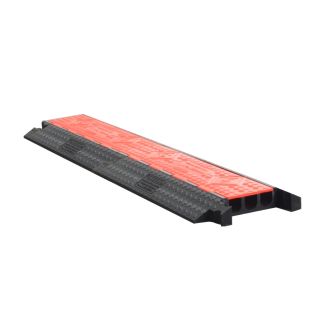
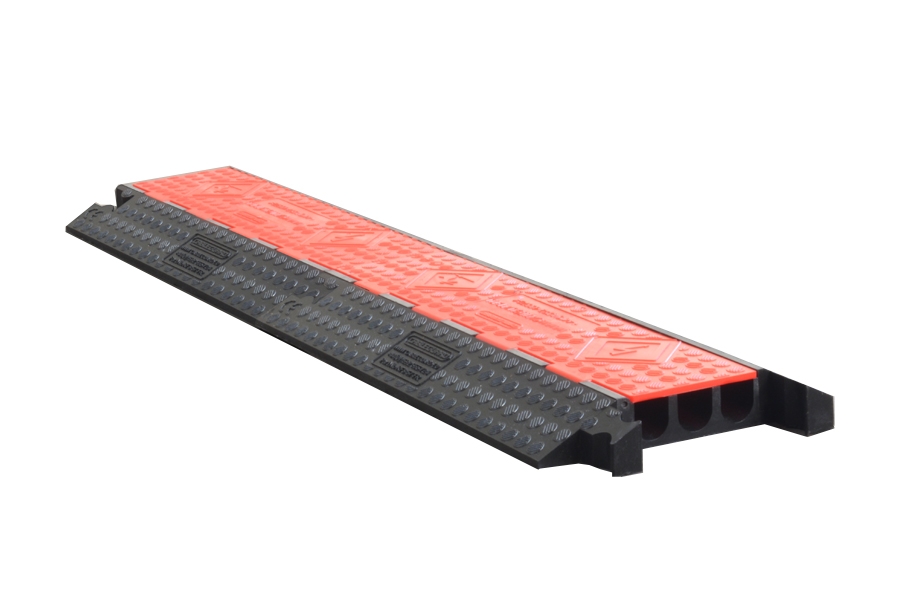
A plate or board bridges a hole, and a cable or hose lying across a route needs a ramp that carries traffic over it. Heavy duty cable protectors hold several cables in separate channels under pedestrians and low volumes of vehicles. Cable guard ramps take cables across private roads and walkways without leaving a trip hazard, and cable and hose cover ramps carry larger cables and pipes under heavier loads.
Hose ramps and water pipe road ramps
Rubber hose ramps protect pump, air and water hoses where people and plant cross them on industrial and commercial sites. The range has both open hose ramps and closed hose and cable ramps. For over-pumping, the water and sewage pipe road ramp carries a pumped water or sewage line inside the ramp across a road or footpath, with a choice of connector types at each side, and vehicles drive over it as normal.
Kerb ramps and wheelchair ramps
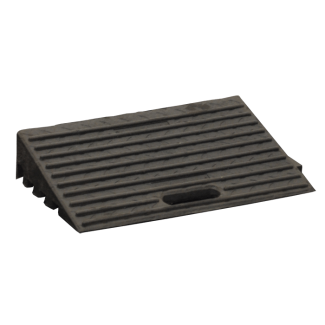
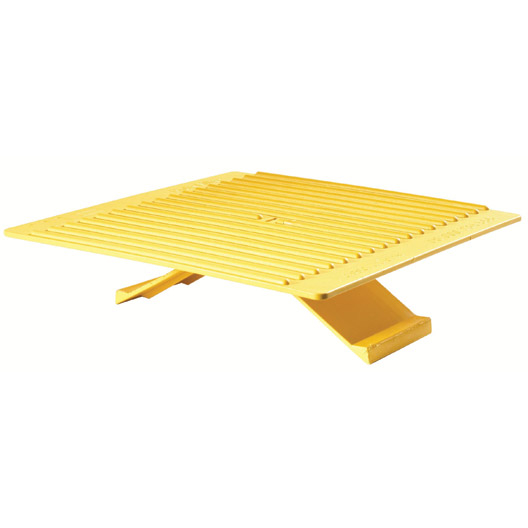
Kerb ramps and pedestrian ramps fill the step between road and footpath where wheels have to get up or down it. Compact kerb ramps, often bought as driveway ramps, take cars, motorcycles and wheelbarrows up a single kerb. The wheelchair kerb ramp has an even gradient that wheelchair users can approach from several angles, and the portable wheelchair ramp is a weighted, anti-slip footway ramp made for access around street works.
Shipping container ramps
A shipping container ramp lets a forklift drive from ground level into a container to load and unload it.

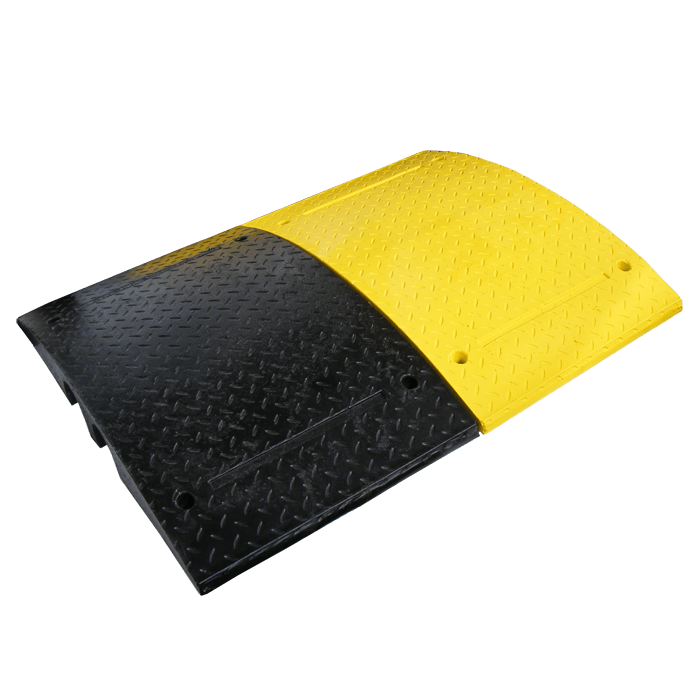
Steel or composite road plates
The crew and the plant on site usually decide between steel and composite before the load does. Steel road plates have a lifting eye in each corner and go in with an excavator or lifting gear, and the anti-skid plate can also be handled with a magnetic lifter.
Composite road plates, also sold as GRP or plastic road plates, are laid by two people without lifting equipment. The system is modular, with inner and end sections, so a crew builds the crossing to the length of the trench and takes it up again as the work moves along. Lighter covers go further still: footway boards such as the Tuff Tread are a one-person lift.
Weight also decides transport and storage. Composite sections and boards travel in a van and stack by hand in a yard or container, while steel plates need a lorry with a crane or a forklift at both ends of the journey.
Load ratings, trench widths and fixing
Matching the load rating to the traffic
Each cover in the range is rated for a class of traffic, and the ratings climb from pedestrian footway boards, through boards for cars and vans, to modular composite road plates tested to 44 tonne vehicles over a 700mm trench. Choose for the heaviest vehicle likely to cross, which on a footpath includes a delivery van mounting the kerb. Steel plates gain capacity with thickness, with the thinner plates for foot traffic and the thicker plates for heavy machinery.
Trench width and bearing on each side
A load rating applies only over the trench width it was tested at, so the rating and the span are read together. A board rated for a van over a narrow trench carries no such rating over a wider one, and a wider excavation needs a cover rated for that width. The cover must also bear on firm, level ground on both sides, with its edges resting on sound material clear of the broken lip of the cut. Where trench edges are soft or the cut has been widened, step up to a larger cover.
Loose-laid or bolt-down covers
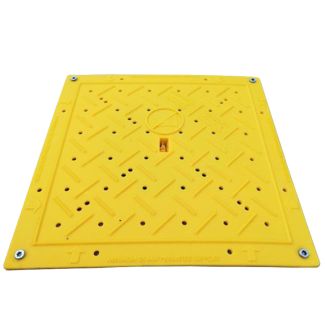
Boards with a flexible edge, such as the LowPro 11/11 and the LowPro 15/10, grip the surface and in most cases lie loose without anchoring. Lying loose saves fixing time where a crossing moves every day or two. The LowPro 16/12 bolt-down trench cover is designed to be fixed to the ground on footpaths, and the driveway board has fixing holes for entrances where cars turn as they cross. Fix down any cover that turning or braking wheels could shift.
Anti-skid, anti-slip and chamfered finishes
Plain steel is the standard plate for site roads, compounds and general covering. Anti-skid plates carry a bonded resin and bauxite coating that gives tyres and boots grip in wet weather, and anti-slip plates have a coarse bonded aggregate for the same purpose. Chamfered edges slope the step from road to plate, which eases wheels on and off and reduces the noise of traffic striking the plate, and they suit plates left in roads near homes and businesses.
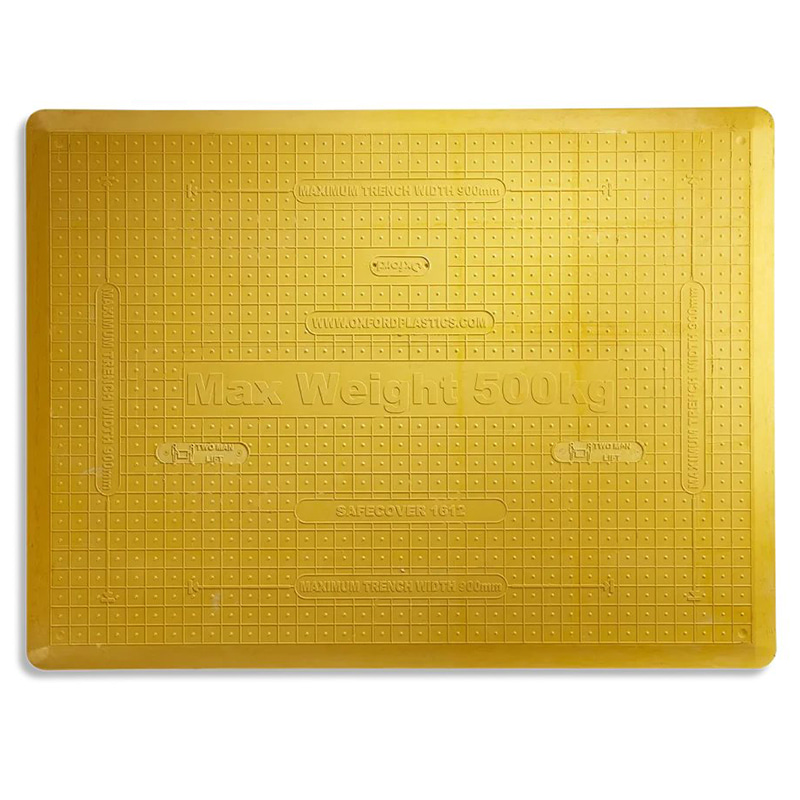
Pedestrian, driveway and road crossing covers by job
Footpaths kept open during street works
A footpath stays usable only when the trench is covered and the kerb step at each end of the diverted route is dealt with. Pair footway boards over the cut with a kerb or wheelchair ramp at every change of level, so a wheelchair user can follow the route from end to end. Guard the open excavation on either side of the crossing with road barriers. The signs, cones and layout for roadworks are planned to Chapter 8 of the Department of Transport's Traffic Signs Manual, and the roadworks signs and wider traffic management equipment ranges cover that side of the job.
Driveways and entrances during service connections
Fibre, water, gas and electricity connections often cut across a private entrance while the occupier still needs to drive in and out each day. A driveway board over the trench keeps the entrance open for cars and vans, and the same board moves to the next house as the connection crew works along the street. Lay it square to the line of travel, so wheels cross it straight and do not run along an edge.
Haul roads and construction site crossings
On haul roads, site entrances and compound crossings, steel plates carry dumpers, excavators and delivery lorries over drainage and service trenches. Inspect the plates at the start of each shift for movement, a gap opening at an edge or ground settling under a corner.
Events and temporary power
At events, festivals and outdoor broadcasts, generator and distribution cables cross walkways and service roads, and cable protectors and cable ramps keep them flat, enclosed and visible.
Hole covers, manhole covers and temporary footbridges
The size of the opening decides the product: hole covers for small service holes, temporary covers for open chambers and a footbridge where an excavation is too wide to cover.
Small and large hole covers
Small hole covers are interior covers for service openings and cored holes inside buildings, and large hole covers are screwed down over larger openings. The large covers are high-visibility and non-slip, and both suit floors and slabs where holes are left open between trades.
Temporary manhole covers
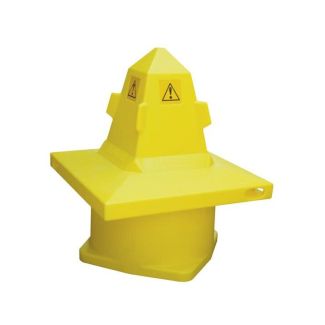
Open chambers need covering while the permanent frame and lid are waited on. Temporary manhole covers are plastic covers designed by groundworks contractors for exposed chambers on site. Manhole blockers are yellow cone-shaped covers that sit over square openings and warn the workforce and passers-by of the chamber from a distance.
Passerelle temporary bridge for wide excavations
When an excavation is wider than any cover in the range spans, the Passerelle temporary footbridge carries pedestrians across it, in lengths from 2 to 6 m.
Popular Categories

Road Barriers
View Products >

Water Filled Barriers
View Products >

Traffic Cones and Road Cones
View Products >
Frequently Asked Questions
On live roads and routes where vehicles turn or brake on the plate, steel road plates are pinned at the corners and their edges are ramped with cold lay asphalt so tyres do not strike the plate edge. The plate should sit flat without rocking before it is fixed. Check each plate daily for movement and settlement, and relay any that rock or have shifted.
The Safety, Health and Welfare at Work Act 2005 and the Safety, Health and Welfare at Work (Construction) Regulations 2013 set duties for excavations, including measures to stop people falling into them. On a construction project the PSCS co-ordinates those measures on site, and the Health and Safety Authority enforces the law. Opening a public road also needs a road opening licence from the local authority, and the works must follow its conditions.
Open ramps have channels that are open on the underside, so they drop straight over a hose or cable that is already laid and connected. Closed ramps enclose the line fully, protecting it from the ground beneath as well as the traffic above. A closed ramp is threaded onto the line before it is connected, so choose it when the run is being laid fresh.
Lay an end section first, connect inner sections to it one at a time along the line of the trench, and finish the run with a second end section. Check that every joint is fully connected and that the run sits flat before traffic is let on. To move the crossing, lift the sections in reverse order and relay them further along.
Yes, provided the cover is rated for the traffic and fixed to suit the time it stays down. Bolt-down footway boards are made for temporary and semi-permanent use, and steel plates are commonly left in for the life of a job. Covers left down for weeks need regular inspection, because the ground at the trench edge can settle or wash out under rain and traffic, and a cover that has moved or rocks has to be relaid.