







Lifting Equipment
HERMEQ's lifting equipment range moves heavy or awkward materials and equipment around site, from crane skips and concrete skips to the forks, handles and cages that carry bricks, stone and goods. Crane pallet forks turn an overhead crane into a pallet mover, and self levelling crane forks lift packs of bricks by crane. Multipurpose kerb stone handles and lifters carry kerb stones, steps, natural stone blocks and other bulky materials in adjustable jaws. Carriers and cages are each built for a specific load and attach to cranes and forklifts on building and construction sites. Chain slings, chain blocks, lever hoists and beam clamps are in the lifting and lashing accessories range.




Crane skips for muck, rubble and mortar
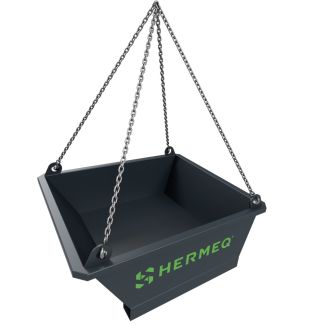
Crane skips in the range hold from 150 to 4,000 litres, and the choice between them turns mostly on how each one empties into the larger skip or bin at the end of the lift.
Boat skips
Crane lifted boat skips are long, low skips lifted on chains for muck away from excavations and bulk waste from demolition and strip-out. The self-dumping boat skip is chain lifted in the same way and empties itself over the receiving skip, so a full skip does not have to be reslung to tip it.
Drop bottom and bottom empty skips
Drop bottom skips open at the base and release bulk waste straight down into a skip or hopper below, which suits tight spots with no room to tip a skip over. The automatic bottom empty skip releases its base from the machine, and the driver stays in the cab while it empties into larger bins and skips.
Circular tipping skips and crane tipping skips
Circular tipping skips hang from a fold-down hanger with a safety lock, and once the lock is opened by hand the skip tips and empties under its own centre of gravity. Crane tipping skips are general site waste skips fitted with lifting lugs for an overhead crane.
Rubble skips
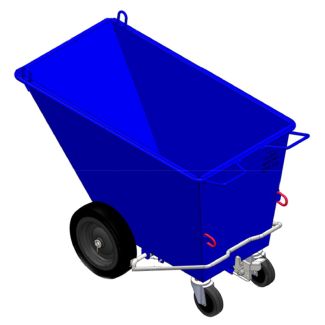
The rubble skip, also known as a rubble truck or box truck, is a wheeled bin that is pushed around a floor as it fills and held by a parking brake on uneven ground. Its welded lifting eyes let the crane take it to the skip once full.
Steel mortar skips and mortar tubs
A steel mortar skip holds bulk mortar on the scaffold or slab, stacks when empty and lifts on crane lugs with a four-leg sling. Crane and fork lift mortar tubs are UV-resistant plastic tubs with fork channels for mortar, materials or waste, and more site containers are in tubs, pallets and boxes. Skips that are carried and tipped on forks have their own category of forklift tipping skips.
Concrete skips for mass pours and formwork
A concrete skip is chosen by where the concrete has to go: in bulk onto a slab or base, or placed with control into formwork.
Bottom discharge or side discharge
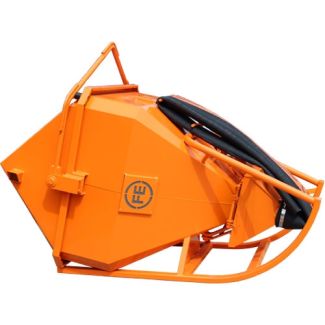
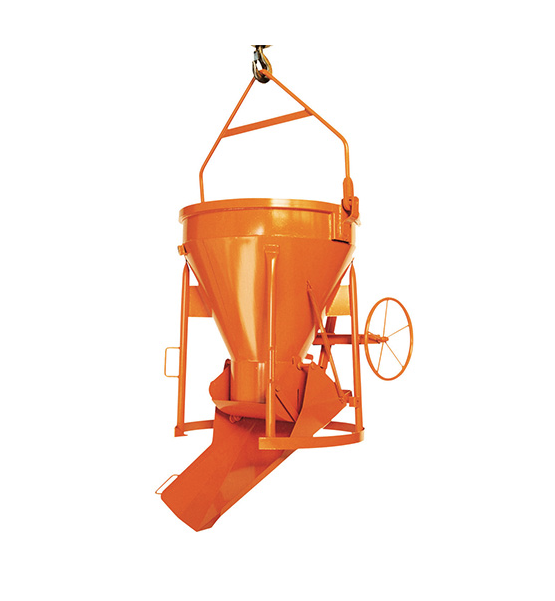
Bottom discharge releases the load straight down for mass pours into foundations, bases and slabs, and side discharge places concrete accurately into shuttering. Twinflow concrete skips do both, so one skip on the crane can move between a slab pour and wall formwork on the same day. The coneflow concrete skip discharges through a lateral outlet on a round body hung from a lifting beam, for side placing on larger pours. For walls and columns, the concrete pouring skip with a hose carries the concrete down inside the formwork, so the mix is not dropped from height and does not segregate.
Geared or levered release
A levered release opens with a single lever and is quick to work on mass pours where fine control matters less. A geared release opens the gate through gearing, which needs less effort at the handle and gives closer control of the flow when filling formwork to a level.
Excavator concrete pouring bucket
Where no crane is on site, the excavator concrete pouring bucket carries and places concrete from the excavator itself, for strip footings, bases and drainage beds within reach of the machine.
Crane forks, block grabs and brick baskets
Bricks, blocks and palletised materials reach the bricklaying gang by one of four routes, set by whether the load is on a pallet, in packs or loose, and whether a crane is on site.
Self levelling and self-balancing crane forks
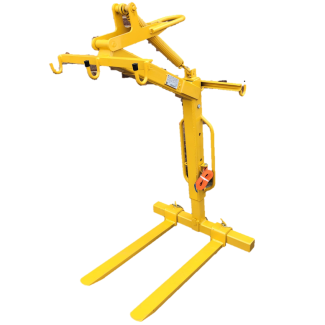
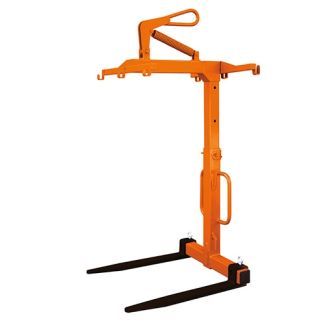
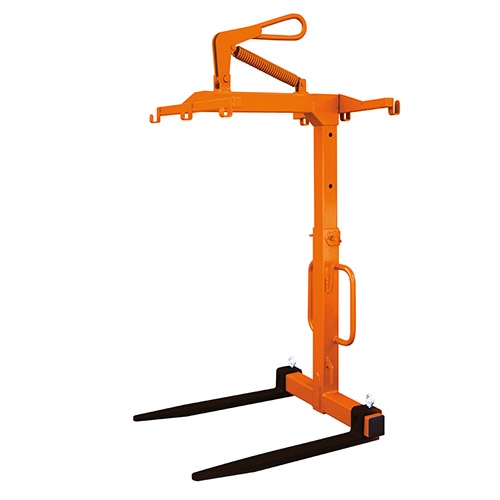
Self levelling crane forks hang from the crane hook and keep the tines level as the load goes on and comes off, and they are made for packs of bricks landed on scaffold loading bays. Crane pallet forks balance themselves in the same way, take full pallets of materials and have safety nets to contain the load in the air.
Block lifting grab
The block lifting grab clamps a palletised pack of bricks, slabs or paving blocks for a crane lift, and there are no forks to draw out once the pack is landed.
Brick basket
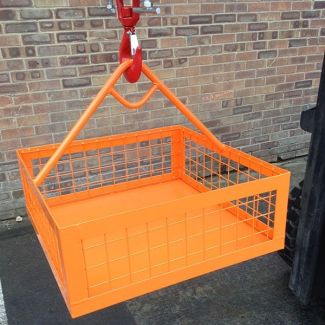
The brick basket hangs from a single overhead crane lifting point and carries loose bricks, broken packs and small materials that would not stay on forks.
Excavator pallet forks
Excavator pallet forks let the excavator on a groundworks job lift pallets of kerbs, blocks, pipes and bagged materials when there is no telehandler or crane on site.
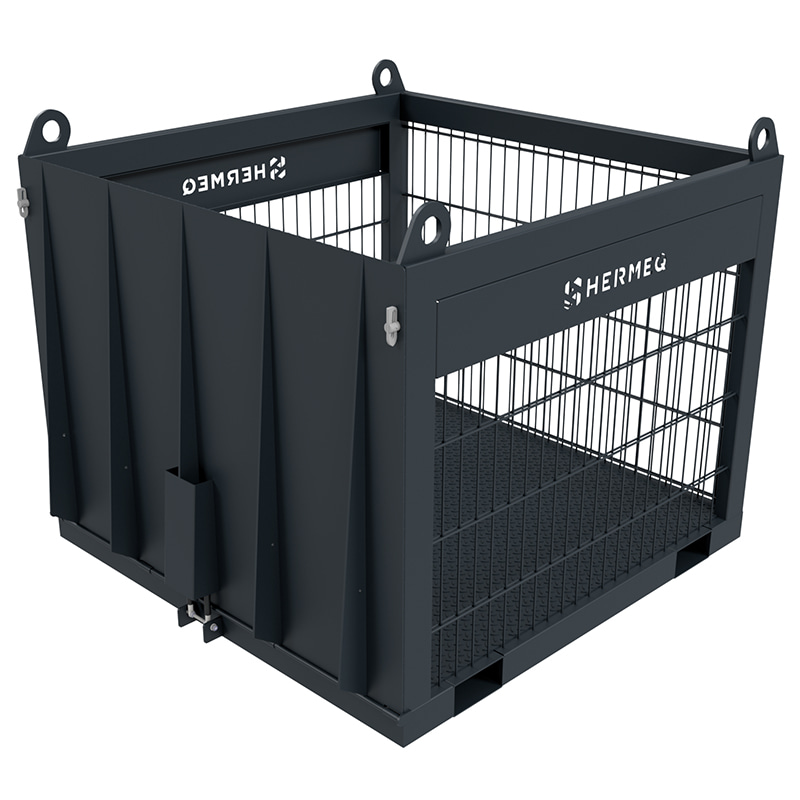
Goods carrying cages and lifting crates
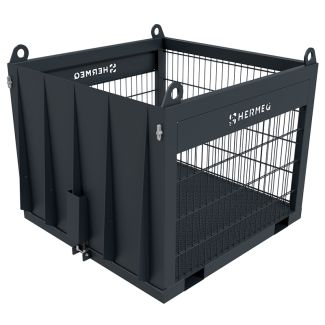
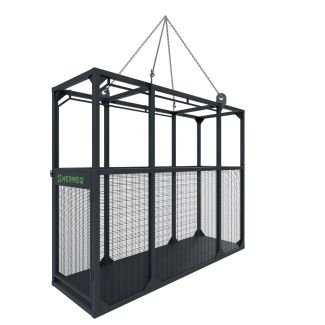
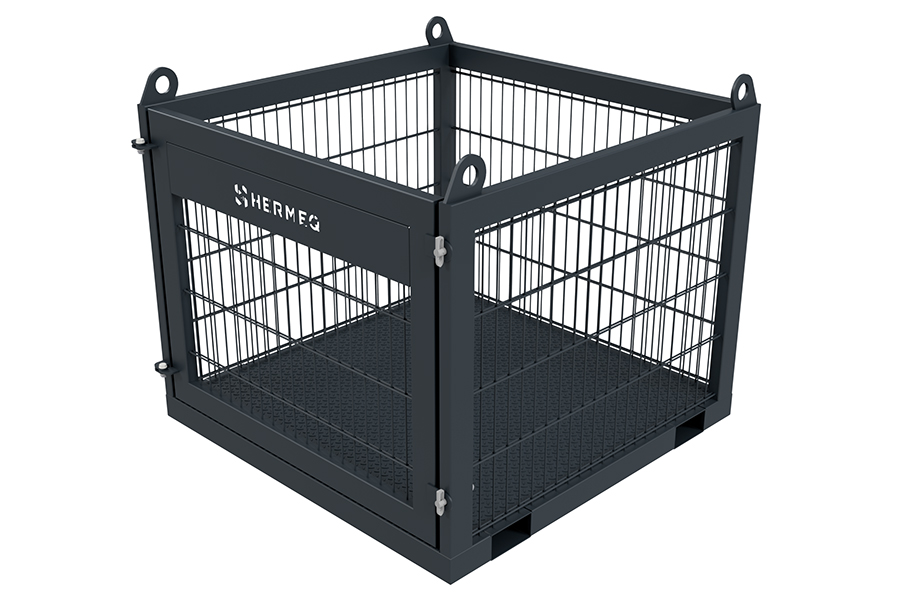
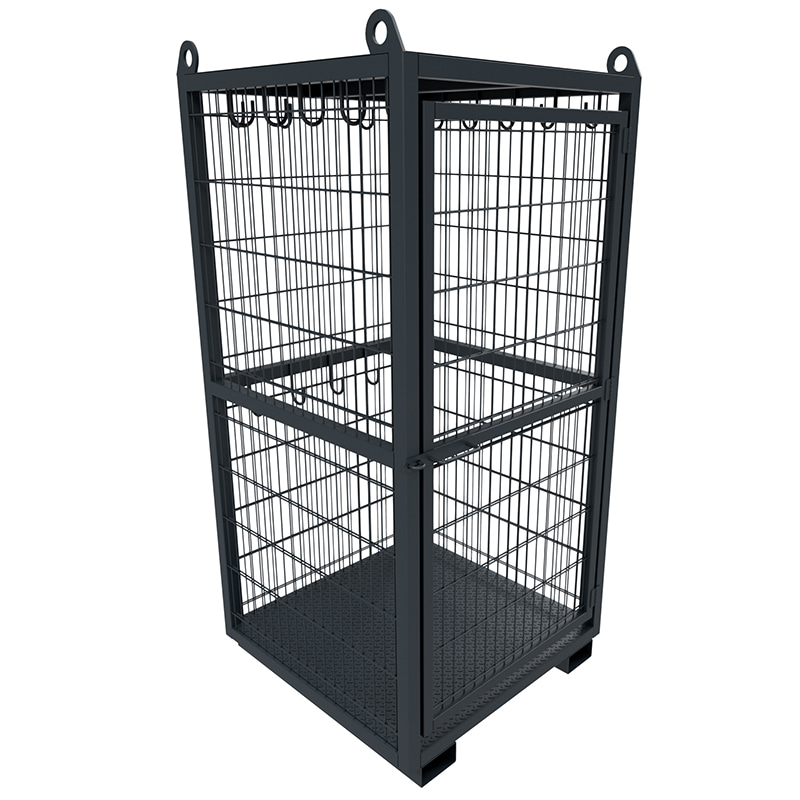
Goods cages carry materials, tools and equipment that would be unsafe to lift loose, with safe working loads of up to 3 tonnes across the range. Every cage in this group carries goods only, never people, and the cages built to lift people are set out in the next section.
Goods carrying cages
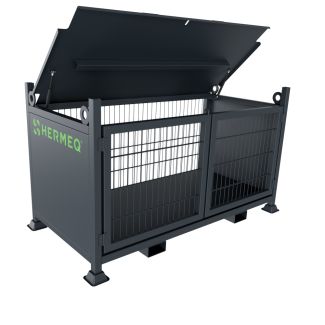
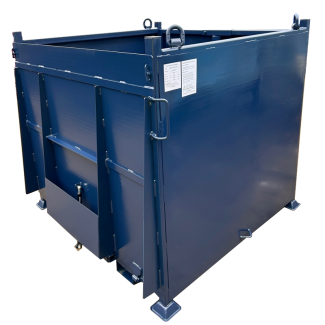
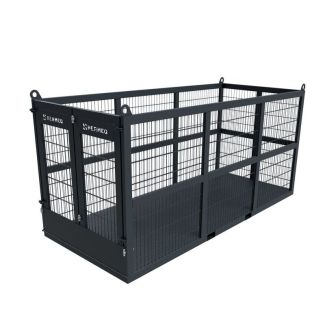
The heavy duty goods carrying cage is a steel cage with crane lifting eyes and forklift pockets, in a single version and double versions with a ramp on the long or short side, so wheeled loads and trolleys can be pushed in. The crane lift goods cages are solid steel cages in two load ratings for general materials moved by crane or forklift.
Lifting crates and telehandler cages
The forklift and crane lifting crate is a lockable sheet steel crate with full width doors and a lid, for tools and small plant that should stay secure between lifts and overnight. The telehandler cage works with forklifts, telehandlers and cranes, and has side ramps or swing doors with lashing points to hold the load in place.
Gas bottle lifting cages
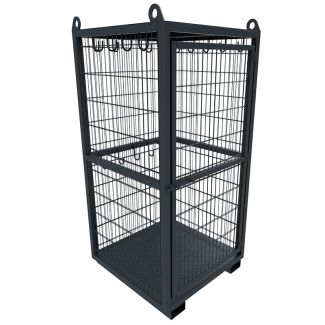
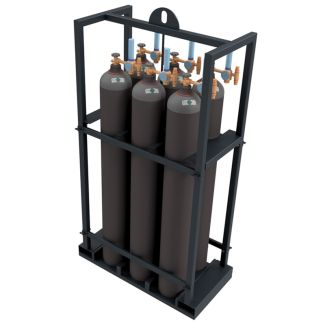
Gas bottle lifting cages hold cylinders upright for a crane lift and keep them secure in storage on site, in versions for small and large bottles.
Wheelie bin crane cage
The wheelie bin crane cage lifts several 660 and 1100 litre bins at once, with lockable gates and a loading ramp, for clearing waste from upper floors and enclosed yards without lifting each bin on its own.
IBC lifting cage
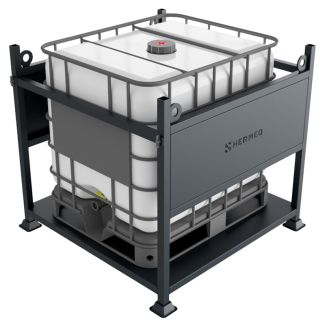
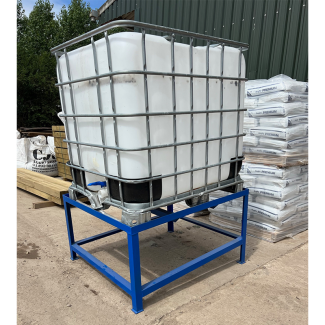
The IBC lifting cage is an open cage that houses an intermediate bulk container for a crane lift, with lifting eyes at all four corners and a removable front bar for access.
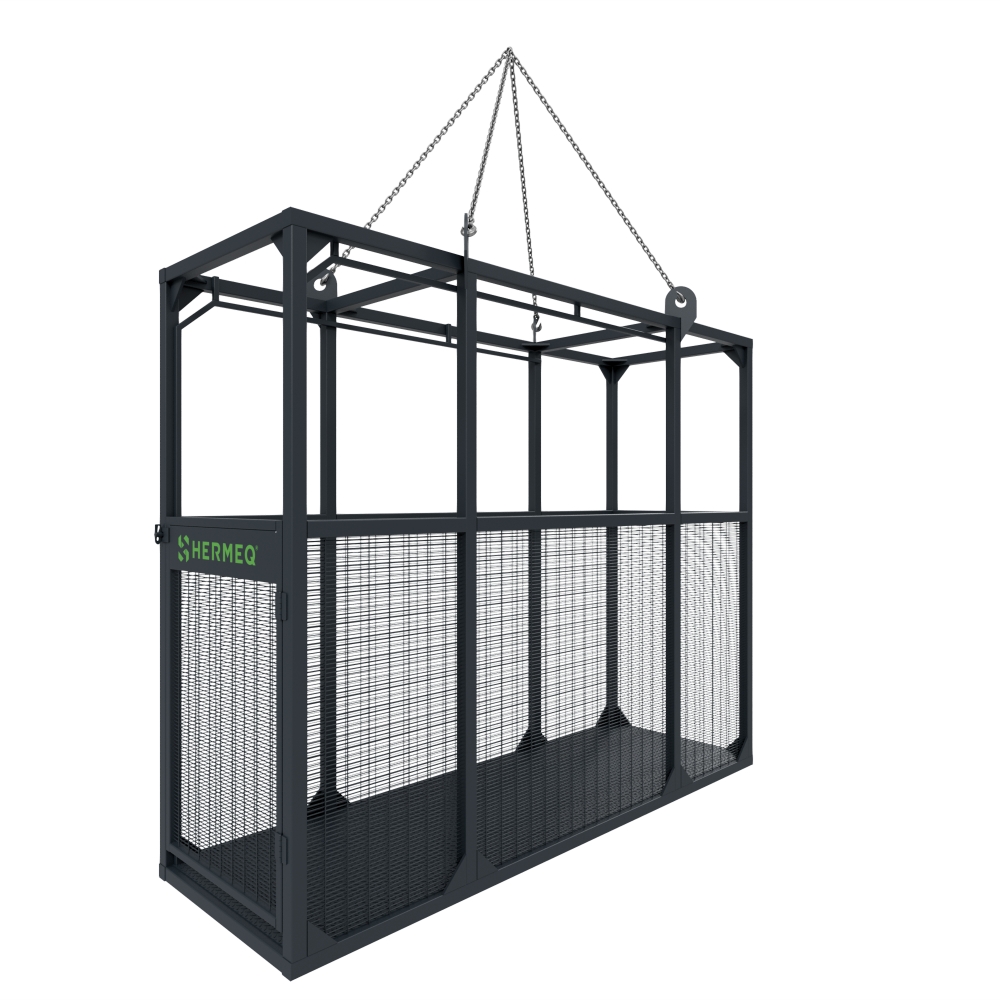
Rescue cages and access cages
The rescue cages in the range are made to carry people. The accident rescue cage takes a casualty on a stretcher with a first-aider alongside, and lifts by crane on four lugs to bring an injured worker down from height. The crane rescue stretcher cage is fully enclosed, with doors at both narrow ends so the first-aider can load the stretcher and leave from either side. The crane and fork mounted access cage lifts on the forks of a forklift or slung by chain from a crane. Both rescue cages are rated for two people, the casualty and the first-aider. A crane rescue cage works only as part of the site's rescue plan for work at height, with the crane, the cage and trained people ready before the work starts.
Kerb stone lifters and road plate magnets
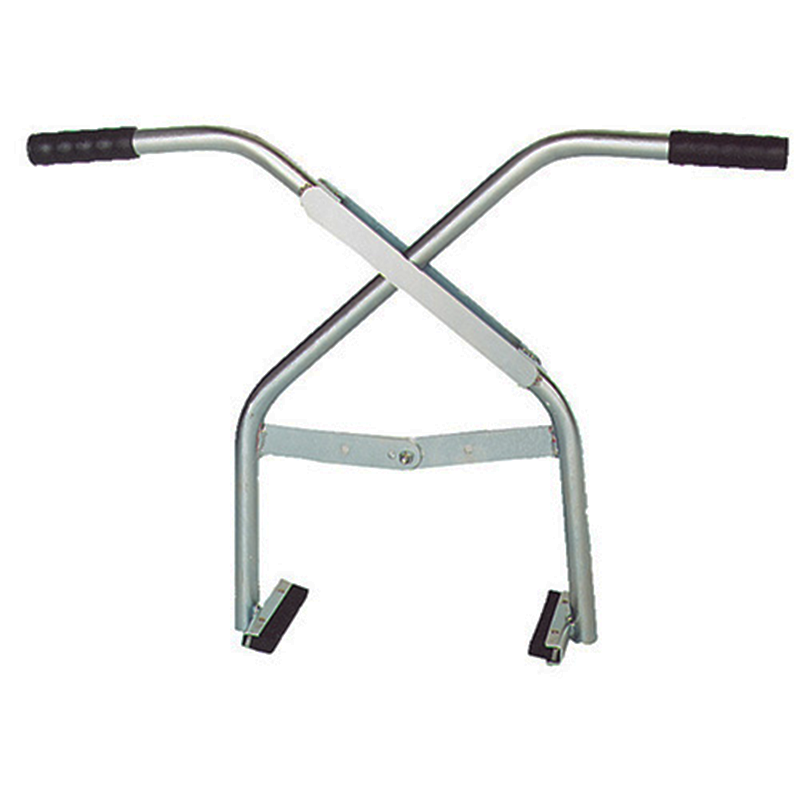
Kerbs, steps, edging and steel plates are heavy, awkward to grip and often set to a line, and the range handles them by hand, from a crane hook or by magnet.
Manual kerb stone handles
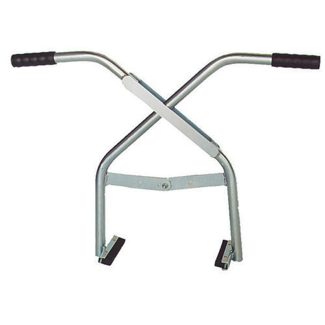
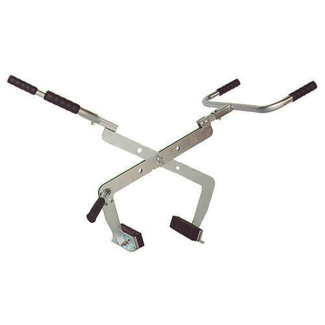
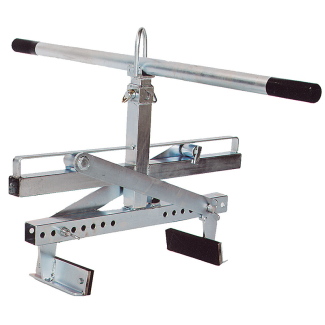
The manual kerb stone handle and the multipurpose handle clamp a kerb between adjustable jaws for a two-person carry, so the unit is walked to the line and set down without hands under the stone.
Crane-hung kerb lifters
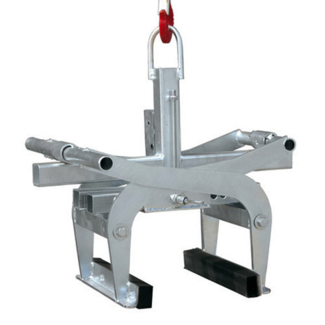
For heavier stone, the universal kerb stone lifter takes kerbs, steps, edging angles and other bulky units, and the crane-hung kerb stone handle has a lift ring that fits almost any crane hoist. The kerb lifters in the range handle loads of up to 500 kg, which covers large steps and natural stone blocks as well as standard kerbs.
Permanent magnetic lifters
The permanent magnetic lifter holds steel road plates by permanent magnet, so it needs no power supply on site, and it conforms to EN 13155. It lifts magnetic steel only, so kerbs and stone go on the kerb lifters above and palletised blocks on the block lifting grab.
Forklift jibs and drum handling attachments
These attachments let a forklift or telehandler lift loads that will not sit on forks, and the wider range for the truck itself is in forklift attachments.
Fork mounted jibs and the roof truss jib
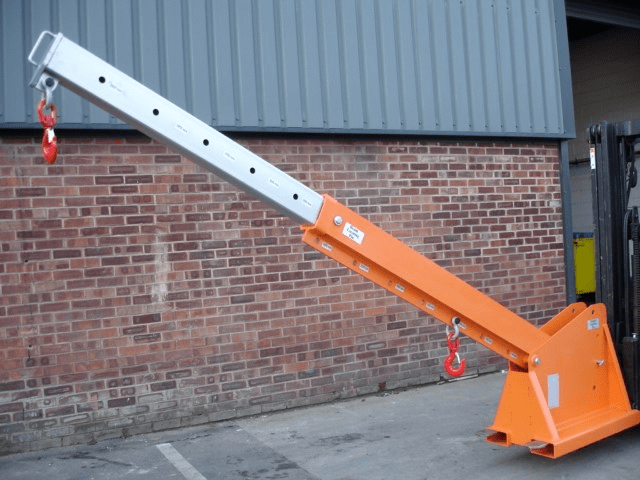
The fork mounted extendable jib slides onto the forks and gives an adjustable, angled hook point for tall and awkward loads that have to be slung, with ratings up to 5,000 kg across the range. The roof truss jib fits a quick hitch and lifts trusses into place on the wall plate. Other quick hitch equipment for the carriage is in telehandler attachments.
Drum lifters and drum tilters
The crane drum tilter hangs from a hook and tilts a steel or plastic drum to pour, and the forklift drum tilter does the same on the forks where space is tight. The rim grip drum lifter grips the rim of open and closed top drums automatically, and the drum lifter takes one or two drums on a forklift.
IBC tippers and gas bottle supports
The IBC tipper tilts an intermediate bulk container so it drains fully. The gas bottle fork lift support holds a gas bottle while it is loaded on and off a forklift truck.
Roll cage and pallet lifter
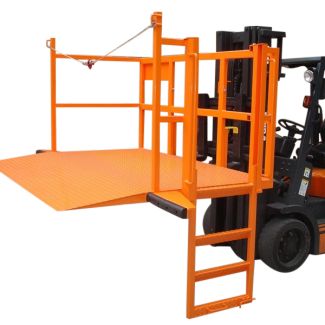
The roll cage and pallet lifter is a forklift platform for loading and unloading roll cages onto and from articulated lorries.
Crane, forklift or excavator attachments
Apart from the hand-carried kerb handles, each item in the range rides on a crane, a forklift or telehandler, or an excavator, and its own weight comes off that machine's rated capacity, so the load it can carry is the rated figure less the weight of the skip, cage or forks.
Crane-slung equipment
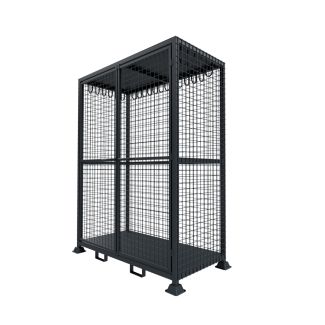
Crane skips, cages and forks lift on lugs or eyes with a chain sling of the right number of legs, rated for the load at the angle the legs will make, and with shackles sized to the lugs. Lifting slings, chains and shackles are in the lifting and lashing range. Between lifts, a rigging storage cage keeps them dry, off the ground and in one place, and the rigging storage locker does the same with forklift pockets to move it around site.
Forklift and telehandler equipment
Forklift and telehandler equipment sits on fork pockets, and the forks have to fit the pockets and reach their full depth before the load is lifted. For long cages and crates, heavy duty fork extensions lengthen standard forks, and the extension, the attachment's load centre and the truck's capacity plate are read together, since a load carried further out reduces what the truck can lift.
Excavator attachments
Excavator pallet forks and the concrete pouring bucket are matched to the machine class, and the range covers excavators from 8 to 20 tonnes, with an interchangeable fitting across 13 to 20 tonne machines. An excavator lifts less as the arm reaches further out, so its lifting capacity is read at the radius the job needs.
Popular Categories

Tipping Skips
View Products >

Forklift Attachments
View Products >

Telehandler Attachments
View Products >
Frequently Asked Questions
Lifting equipment is the work equipment that lifts or lowers a load, such as a crane, forklift or telehandler. Lifting accessories sit between that machine and the load: slings, chains and shackles, and attachments that hold the load below the hook, such as crane forks, block grabs, crane-hung kerb lifters and lifting magnets. Both come under the same regulations, and accessories are thoroughly examined more often.
The Safety, Health and Welfare at Work (General Application) Regulations 2007 set the duties for lifting equipment, including thorough examination and the reports that record it, which the trade calls GA1 reports. On construction sites, the Safety, Health and Welfare at Work (Construction) Regulations 2013 add duties for the PSDP and the PSCS in planning and coordinating the work. The Health and Safety Authority (HSA) enforces both under the Safety, Health and Welfare at Work Act 2005.
Lifting accessories and any equipment used to lift people are thoroughly examined at least every six months, and other lifting equipment at least every 12 months. Equipment is also examined after anything that could affect its safety, such as damage, a repair or a change to how it is used. The intervals come from the General Application Regulations, and the user checks the equipment before each use in between.
A thorough examination is carried out by a competent person: someone with the practical and theoretical knowledge and experience of the equipment to find defects and judge how serious they are. The findings are recorded in a report that stays with the equipment's records on site.
Machinery and lifting accessories placed on the market in the EU carry CE marking and come with a Declaration of Conformity from the manufacturer. In this range, the wheelie bin crane cage is supplied with a Declaration of Conformity and a six-month thorough examination certificate. The gas bottle lifting cages and the telehandler cage also arrive with a thorough examination certificate.
A coloured tag or cable tie shows at a glance which examination period an item belongs to, with a new colour for each period so that items overdue for examination stand out. The colour code is set by the site or its inspection company, and the key is written into the site's lifting records. A tag shows status only and never replaces the examination report.