







Site Gates
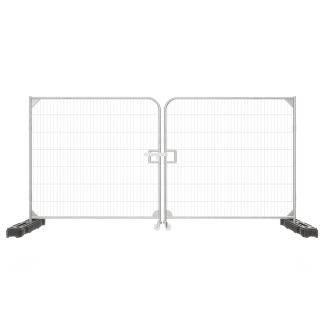
HERMEQ site gates are the vehicle and pedestrian security gates for a fenced or hoarded perimeter, with a gate for each type of line. The mesh pedestrian and vehicle gates are made to the height of Heras fencing panels and fix into the run with the same rubber block fence feet and clips as the panels. For steel hoarding, the range has a vehicle gate and pedestrian gates in standalone and built-in formats. The heavy duty range, with welded steel gates on dig-in or base plated posts, takes the daily plant and delivery traffic of long programmes.





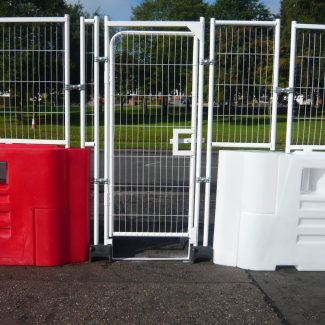
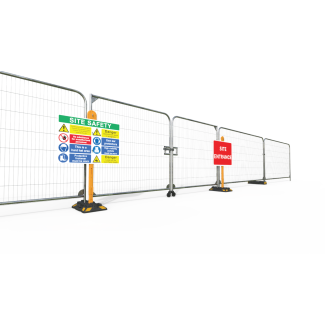
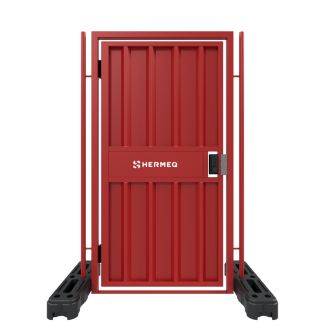
Site gates for harris fencing, hoarding and barriers
The first choice is the perimeter the gate joins, because most gates in the range are built for one kind of temporary fencing, hoarding or barrier line, most of them in 2.0m or 2.4m heights, with vehicle gates spanning openings of 4 to 7 metres.
Mesh vehicle gates for Heras fencing
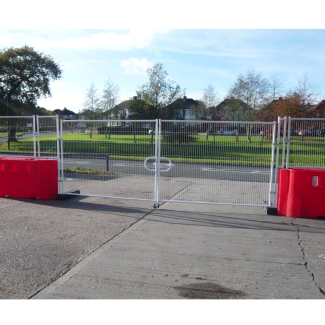
For a run of Heras fencing (often written Harris fencing), the mesh vehicle gates are the lightweight choice. They stand in the line like panels and move with the fence when a phase boundary shifts, which suits housing developments, compounds and events where the entrance is reset as the work moves.
Mesh pedestrian gates
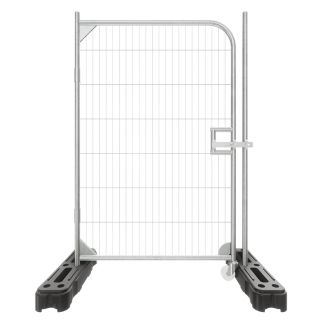
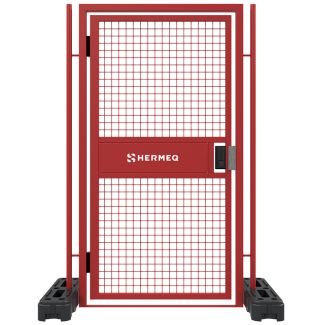
A mesh pedestrian gate gives workers and visitors a single-person entrance through a Heras line, so nobody unclips a panel to get in and the run stays whole. Its anti-climb mesh matches the fence, and a sliding latch holds it shut between uses.
Steel hoarding vehicle gates
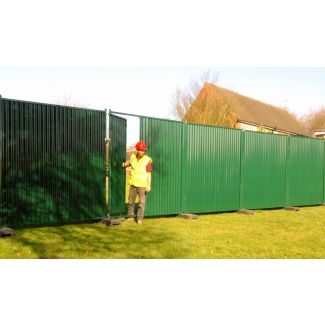
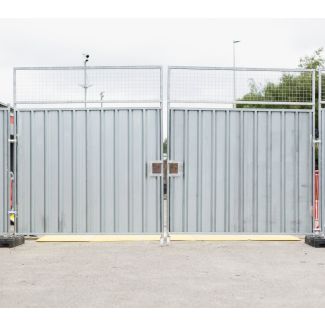
Where the perimeter is steel site hoarding, the steel hoarding vehicle gate closes the entrance in the same clad style as the panels. It is portable, so it comes down with the hoarding and goes up again on the next job.
Hoarding pedestrian gates
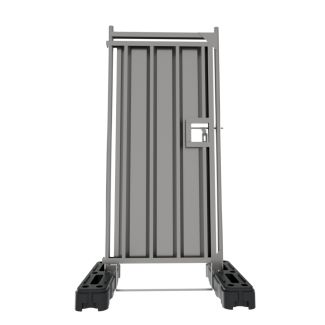
Steel hoarding takes a pedestrian gate in two formats. The standalone hoarding pedestrian gate is a narrow door that sits between two hoarding panels and suits a staff entrance added to an existing line. The built-in hoarding pedestrian gate is a wider, framed unit for the main pedestrian entrance to the site.
Heavy duty vehicle gates
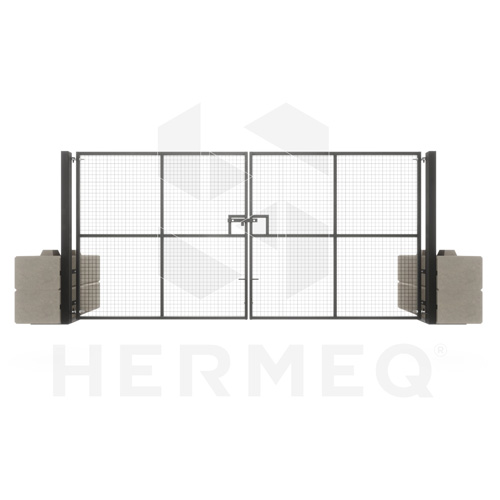
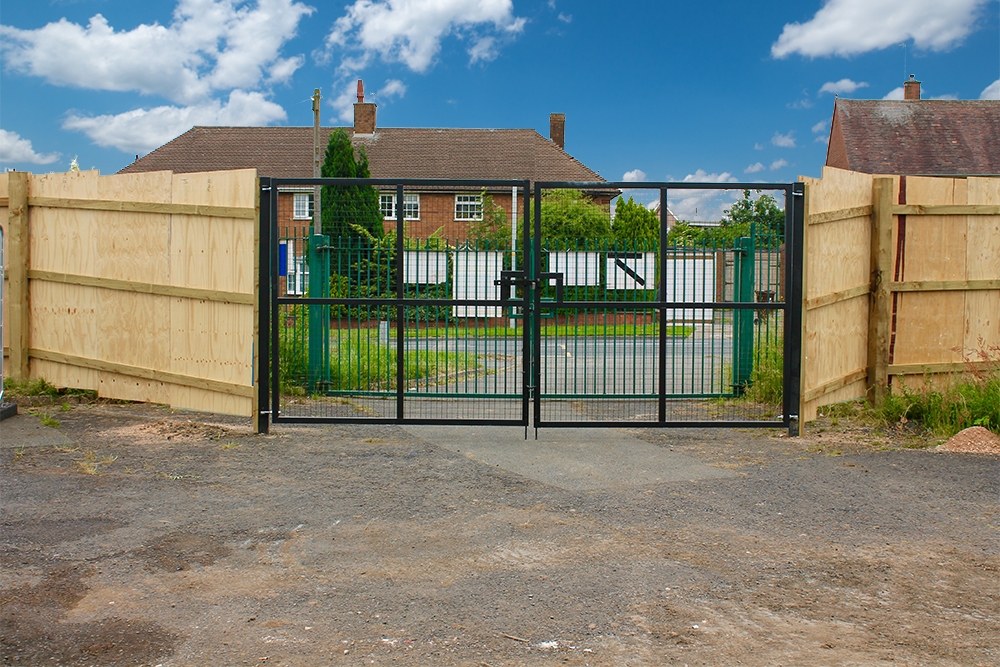
For an entrance that takes lorries, concrete mixers and plant every day over a long programme, the heavy duty vehicle gates are welded steel leaves hung on box section posts and closed with a slide bolt. The stock heavy duty vehicle gates are a single standard in-ground size, painted black.
Heavy duty pedestrian gates
The heavy duty pedestrian gate is an in-ground mesh gate built to sit alongside timber hoarding and SteelWall hoarding, giving the line a fixed, clear entrance and exit. Choose it where a hoarded site stays in place long enough to justify dig-in posts and the entrance carries the full workforce every shift.
DigiNox digital lock pedestrian gates
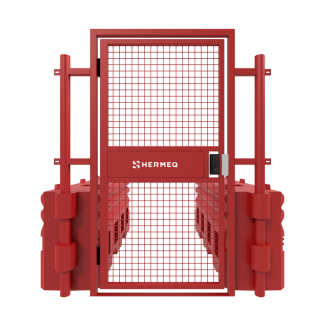
The DigiNox gates replace keys with a code, and both hang on reinforced Locinox hinges. The DigiNox pedestrian gate is made to integrate with temporary fencing and hoarding lines. The DigiNox hoarding pedestrian gate is built for HERMEQ hoarding panels. Choose either where a large or changing workforce needs access and handing out padlock keys is not practical.
Gates for plastic road barrier systems
Plastic road barrier lines around roadworks and footpath closures have their own gates, which connect to the barrier units. The RB2000 vehicle gate closes a vehicle opening in the line and moves on castors, the pedestrian gate for plastic road barriers connects to the barrier run with flags, and the RB22 DigiNox gate brings the coded lock to RB22 systems. Match the gate to the barrier system already on site, because the connections differ between systems.

In-ground or on-ground vehicle gates
The choice for a heavy duty gate comes down to whether the ground can be dug and how long the gate will stay. In-ground gates hang on dig-in posts set into the ground, which gives the stiffest entrance for a gate opened many times a day and suits greenfield and groundworks sites where the posts can be excavated and left for the programme. On-ground gates stand on base plated posts held down with concrete blocks, so nothing is dug. Choose them on hard standing, in car parks, over buried services and on short projects where the gate goes up and comes down quickly.
The on-ground range comes in four versions. The base plated on-ground gate (OG2) is for flat, even surfaces, and the single plate on-ground gate (OG4) is for uneven ground. The duo plate on-ground gate (OG1) is built for high security entrances on industrial sites and infrastructure projects. The TVCB vehicle gate (OG3) closes an opening in a line of TVCB concrete blocks and is held down by the same blocks.
No on-ground gate is supplied with its blocks. Order the concrete ballast blocks with the gate, in the number its product page gives, so the gate does not arrive on site with nothing to hold it down.
Mesh, hybrid and solid steel vehicle gates
The infill decides what the gate hides and how much wind it catches. A heavy duty mesh vehicle gate keeps clear sight lines at the entrance, so the gatekeeper or banksman can see vehicles and people on the road before the leaves open. Open mesh also catches far less wind than a clad leaf, which counts on exposed sites where wide leaves are held only at the posts.
A solid steel vehicle gate screens the site completely, keeps plant and materials out of view from the street and carries the look of a steel hoarding line across the entrance. The hybrid vehicle gate is clad on the lower half and meshed above, which screens stored materials at ground level while whoever controls the gate can still see the road over the cladding.
Sizing and securing a site entrance
Gate width and the vehicles using it
Size the opening for the largest vehicle the site expects, such as an articulated lorry, a concrete mixer or a mobile crane, and for the path it takes as it turns in from the road, which is wider than the vehicle itself. Check the arc each leaf sweeps as it opens: leaves that swing inward need clear, level ground kept free of stored materials, and leaves that swing out over a footpath put pedestrians in their way.
Height to match the fence line
A gate lower than the fence or hoarding either side is the easiest point on the perimeter to climb, so specify the gate at the height of the line it joins. Keep the gap between the leaves and the neighbouring panels as tight as the gate allows, so the entrance is as hard to pass as the fence.
Separate pedestrian and vehicle access
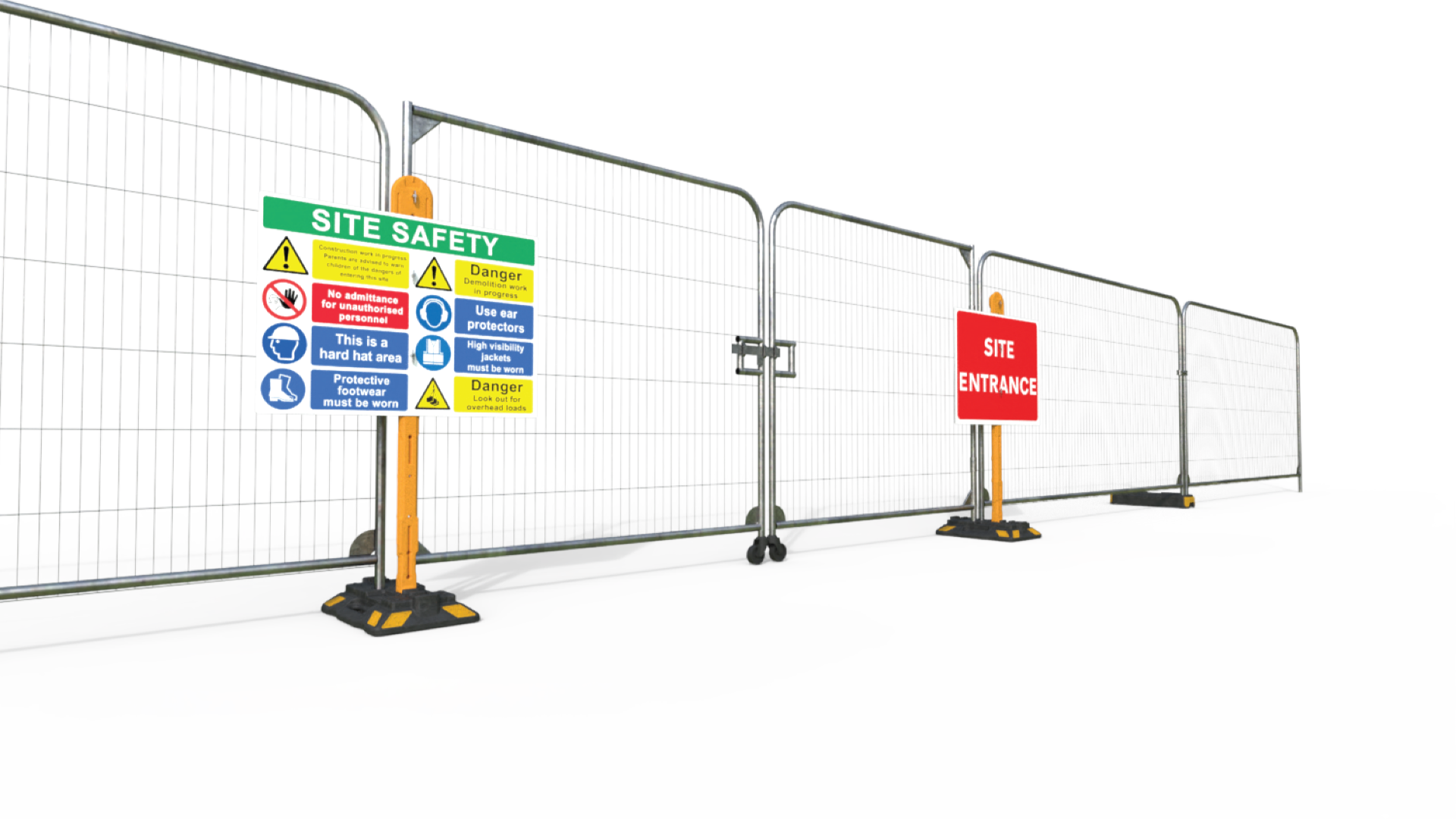
Give people their own gate a short distance from the vehicle entrance, so workers and visitors are not walking through the opening while a lorry reverses or the leaves swing. Placing it beside the site office or sign-in point brings everyone past the induction and visitor check, and entrance signs on the Site Entry Sign System direct pedestrians to it.
Locking and access control
Most vehicle gates close with a slide bolt or latch and lock with a chain and padlock through the leaves, which works where one site manager opens and closes the site each day. On the DigiNox hoarding gate the code lock is mechanical, so it needs no site power or batteries at the gate.
Popular Categories

Site Hoarding
View Products >

Heras Fencing
View Products >

Acoustic Barriers
View Products >
Frequently Asked Questions
A mesh gate takes the place of a panel in the run. Each upright stands in a rubber block fence foot, and the gate is joined to the neighbouring panel with fence couplers, the same clips that join the panels, at the top and bottom. Brace the panels either side of a wide vehicle gate so the run stays upright as the leaves are opened and closed.
The Safety, Health and Welfare at Work (Construction) Regulations 2013 give the project supervisor for the construction stage (PSCS) responsibility for site arrangements, which include keeping unauthorised people off the site. In practice that means a continuous perimeter with gates that are closed and locked whenever the site is unattended, and a controlled entrance for the workforce and visitors during working hours.
Galvanising protects the steel against corrosion and is the standard finish on the lighter mesh gates. Painted and powder coated finishes add colour, which makes the entrance easier to pick out and lets the gate match a coloured hoarding line. Powder coating is a baked-on finish that stands up to knocks better than wet paint.
The emergency push pad is an option on the DigiNox pedestrian gate. It sits on the inside of the gate and opens it with a push, so people on site can leave quickly without entering the code, while anyone outside still needs the code to get in. It suits a pedestrian gate that is also an emergency exit route from the site.
Signs fixed straight to a mesh gate or panel catch the wind and add load to the run. The HERMEQ Site Entry Sign System carries safety and directional signs on its own base and post, and fence panels or gates can stand directly in the base, so the signs add no wind load to the fencing.