







IBC Containers & Steel Drums
HERMEQ supplies IBC containers and steel drums for storing and moving water, liquids and loose materials on site. Our reconditioned steel drums are open topped and are often filled with ballast to act as counterweight along fence lines when temporary fencing goes up. Reconditioned 1000 litre IBCs hold water and other liquids or chemicals in bulk. As reconditioned containers, they keep sound units in service and out of the waste stream. For handling, the range includes drum lifters and drum tilters that work from a forklift or crane. It also covers IBC lifting cages, tipper units and covered storage for drums and IBCs.
IBC containers or steel drums
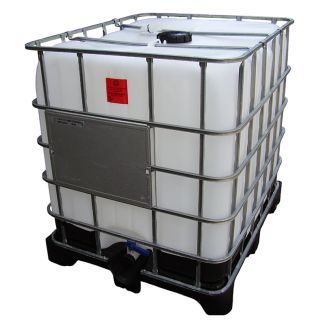
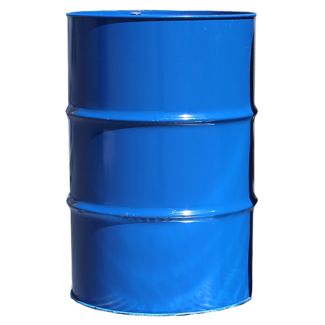
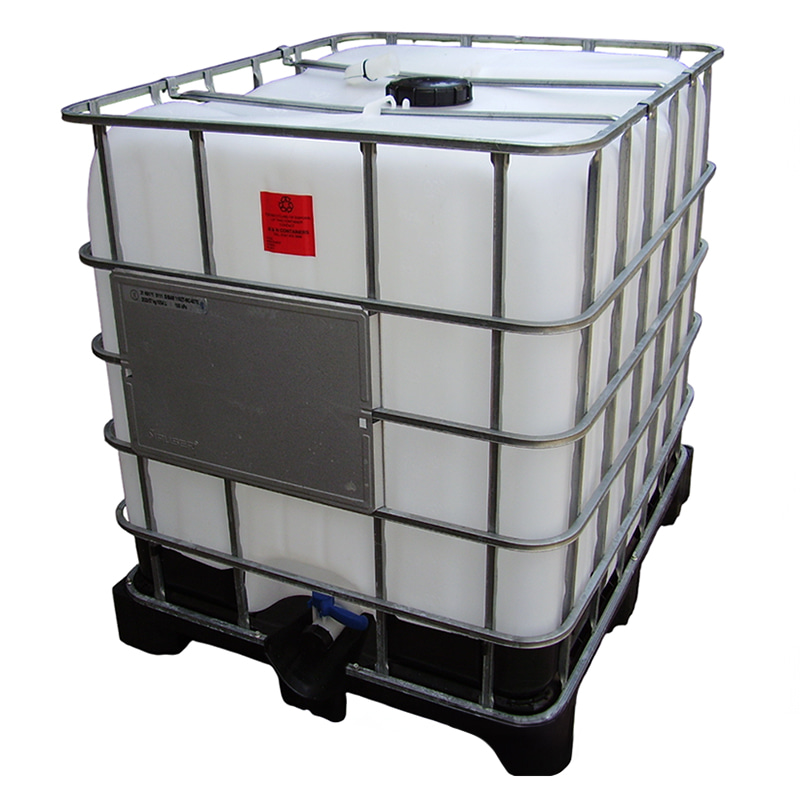
An IBC container holds around a tonne of liquid in a closed plastic container on a pallet base made for forks. A steel drum is a smaller open vessel that is filled by hand, stood where it is needed and moved by hand truck or a drum handling attachment.
1000 litre IBC tanks
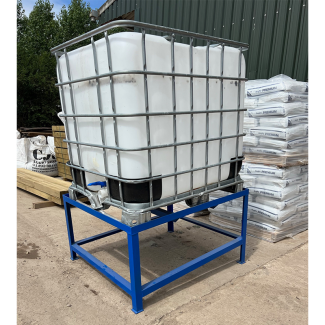
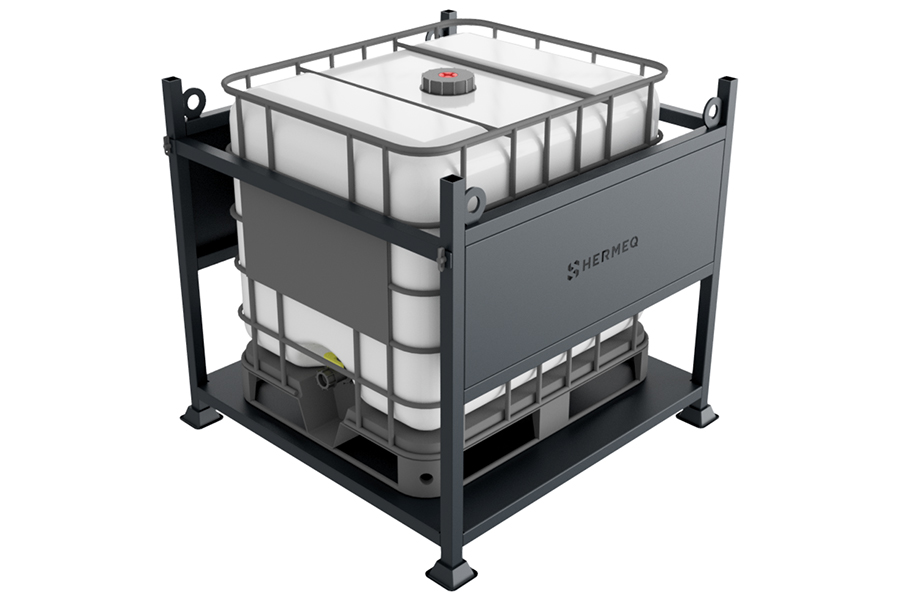
An intermediate bulk container, known on site as an IBC tank, is the choice when you need a bulk supply of liquid that can be drawn off as the work uses it. The plastic container sits inside a metal frame that protects it in handling. A capped valve at the base lets water or other liquid run into cans, mixers or a hose without the top being opened. Because the base fits a standard pallet footprint, a full unit moves on a forklift or pallet truck and travels on a lorry like any other palletised load. The reconditioned 1000 litre IBC is a used container brought back into service for water, other liquids and chemicals.
Open top steel drums and barrels
A steel drum, also sold as a steel barrel or oil drum, is the better container for heavy loose material and for loads that need to be split into many separate weights. The reconditioned steel drum is open topped, with no lid, and has been cleaned and shot blasted inside. It takes ballast, sand or gravel straight from the shovel and stands on ground where a pallet will not sit. Liquid that has to be kept sealed belongs in an IBC or one of the storage tanks in the wider range.
Site uses for IBC tanks and drums
Water for dust suppression, washing and mixing
An IBC gives a working water supply where there is no standpipe. It is used for damping down haul roads and stockpiles, washing tools and wheels, and mixing mortar, render or small batches of concrete. Stand it on firm, level ground and raise it on a stand or sound blocks. The outlet valve should sit clear of the ground, with room for a bucket or hose fitting beneath it. Larger and longer-term supplies are covered in site water storage.
Ballast and counterweight on fence lines
Temporary fencing or hoarding sometimes stands on concrete, tarmac or ground that cannot be pinned. There, drums filled with ballast give the run the extra weight it needs against wind load. Tie each one to the fence so the weight acts on the panel.
Lifting and moving IBCs and steel drums
The handling accessories divide by what carries the load. The IBC lifting cage hangs from a crane hook, the drum lifters and rim grip go on forklift tines, and the drum tilters work from either. The tipper unit stands on the ground to empty an IBC in place. Handling capacities across the drum attachments go up to 1500 kg.
IBC lifting cages for crane lifts
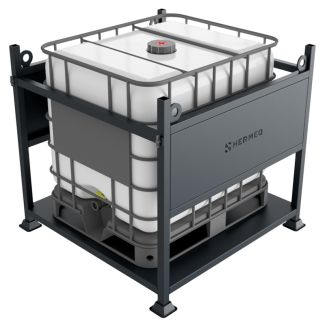
An IBC's pallet base is built for forks, and the container is not made to be slung. A unit that must go up to a scaffold lift, over a hoarding or down into a basement travels in an IBC lifting cage. The cage has a safe working load of 1.5 tonnes, with lifting eyes at each of its four corners for a four-leg sling set. Its removable front bar gives access to the IBC for loading and unloading.
Forklift drum lifters and rim grips
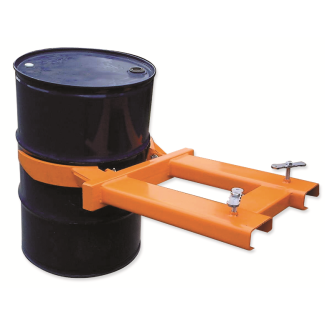
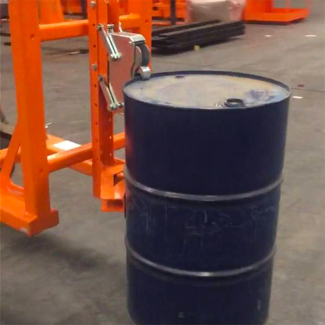
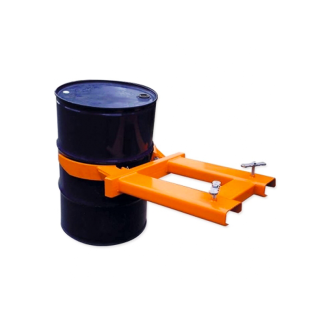
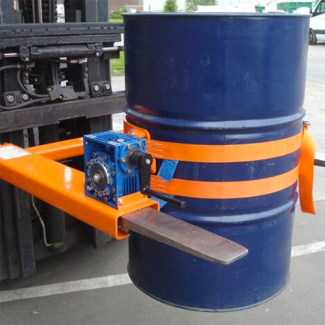
A fork-mounted attachment is the right tool when drums move regularly between a store and the work area. The forklift drum lifter slides onto the tines and holds drums for a controlled carry. It and the drum lifter both come in a single version for one drum and a double version for two, so the attachment can be matched to the number of drums moved at a time. Where drums are handled often, the rim grip drum lifter engages the drum rim automatically and takes open and closed top drums in plastic or steel.
Drum tilters for crane and forklift
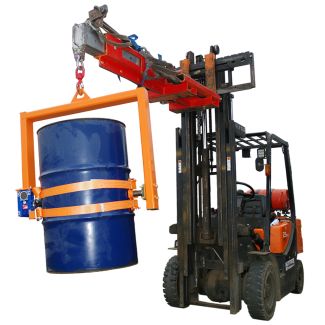
A drum tilter is the choice when the drum has to be tipped to pour, turned onto its side or set down in a space too tight for a straight lift. The crane drum tilter hangs from a hook, so it reaches over obstructions and into bays that forks cannot enter. The forklift drum tilter mounts on the tines and suits tight aisles and compounds where space is minimal. Both are worked by hand, by crank or chain, so the operator controls the pour at the drum.
IBC tipper units for emptying
Once the level in an IBC falls to the outlet, the last of the contents stays in the base of the container. An IBC tipper unit holds the IBC at an angle towards its valve so that the remainder drains out. This cuts waste and avoids tipping a part-full unit by forklift.
Covered drum and IBC storage
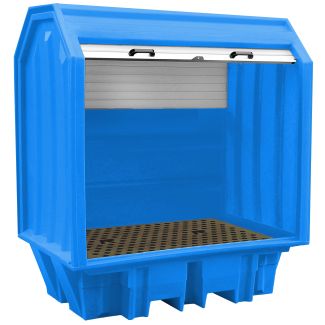
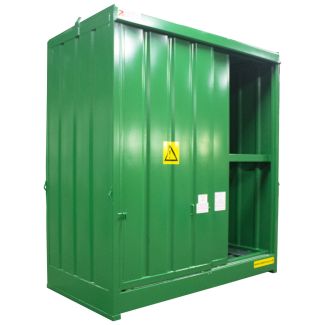
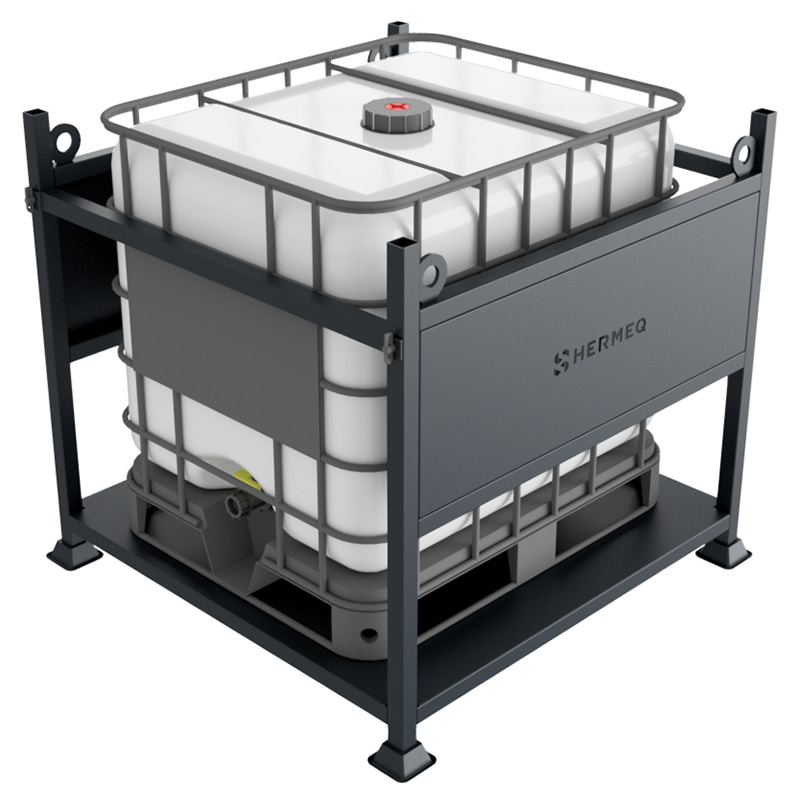
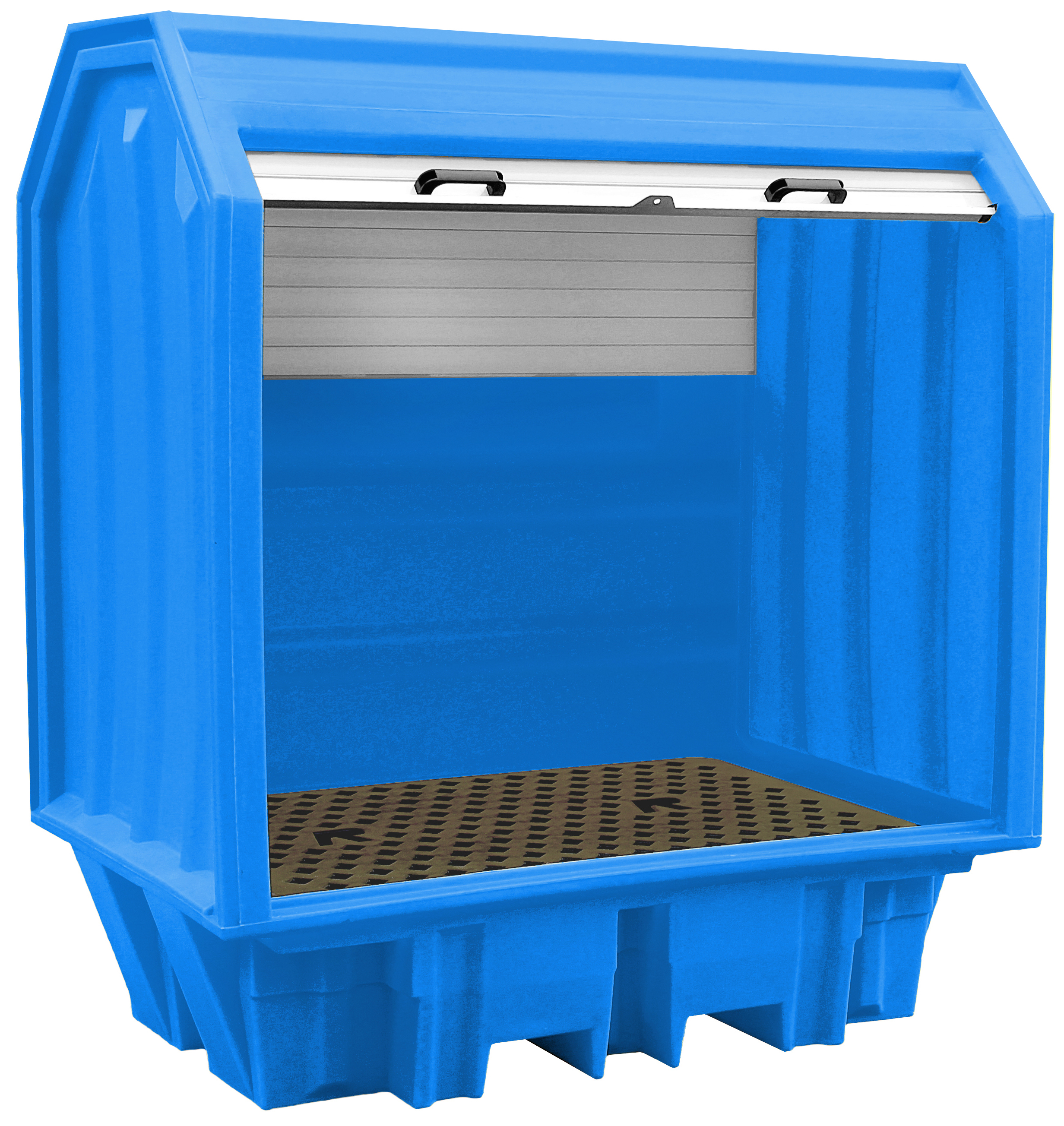
Covered storage suits drums and IBCs that stand for weeks at a time, and the right unit depends on how many there are. For a few drums of oil or fluid kept near the work, covered drum storage in HDPE holds two or four drums under a hard cover. For a compound or yard holding drums and IBCs together, the IBC and drum storage cabinet runs from two IBCs and eight drums up to 24 IBCs and 96 drums. Covering the store keeps rainwater out of the drums and out of any spill containment beneath them. Drums and IBCs of oil or chemicals that stand in the open go on a drum or IBC spill pallet from the drum and IBC spill containment range.
Popular Categories

Stillages, Bins & Cages
View Products >

Wire Mesh Pallet Cages
View Products >

Site Storage Boxes
View Products >
Frequently Asked Questions
IBC stands for intermediate bulk container. The name places it between a drum and a fixed bulk tank.
Whether a full IBC can carry another depends on two things: the stacking load marked on its identification plate, and the condition of its cage and top frame. Where stacking is permitted, full units stand on firm, level ground, with the upper pallet sitting square on the cage below. An IBC whose cage has been bent in handling is stored at ground level.
Empty it fully. Then wash the inside through the top opening with a pressure washer and a cleaning agent suited to what it last held. Flush the valve, rinse until the water runs clear and leave the lid off so the container dries. Wash water from a container that held oils or chemicals is collected and disposed of as waste, never run to a surface drain.
A reconditioned IBC has held other contents before it was cleaned and returned to use. It suits water for dust suppression, washing down and mixing on site. Drinking water for welfare facilities is stored in a container made and certified for potable use, filled from a clean supply.
Yes. The Safety, Health and Welfare at Work (General Application) Regulations 2007 require lifting equipment and lifting accessories to be thoroughly examined by a competent person. Examinations take place at set intervals and after any event that could affect their safety, with the results recorded. Drum lifters, drum tilters and IBC lifting cages all carry a load from forks or a crane hook, so they are normally managed under that regime.
No. The reconditioned steel drum is open topped and supplied without a lid, for ballast, sand, gravel and other loose material. Liquid that has to stay sealed goes in an IBC, which closes at the top and draws off through a capped outlet valve.