






Timber Mats
Timber mats form long-term temporary access roads and working platforms for heavy machinery on construction sites and on soft or fragile ground. Laid across the route, dense hardwood spreads the load of plant, keeps vehicles moving and limits rutting and lasting damage to the land beneath.
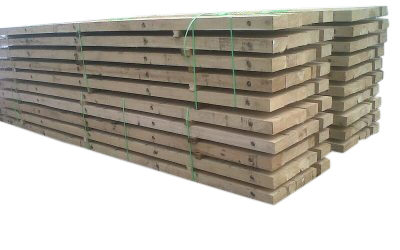
The range covers three timbers. Ekki timber bog mats are the heaviest duty and are weather resistant for wet and windy conditions, with high electrical resistance and a long working life. Tropical hardwood bog mats, sourced from West Africa and South America, suit any condition and location. European oak hardwood mats are the cost-effective choice for temporary roadways.


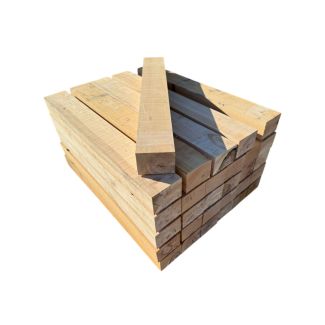

Ekki, tropical and European hardwood bog mats
HERMEQ supplies bog mats in three hardwoods, and the ground, the exposure of the site and the length of the job usually decide between them.
Ekki timber bog mats
Ekki is the most acid resistant of the commercial timbers and the heaviest duty mat in the range. Choose Ekki timber bog mats for long contracts, exposed upland sites and roads that stay down through the wettest months, where a mat has to go from job to job for years.
Tropical hardwood bog mats
This part of the range is made from dense marine hardwoods, whose interlocked grain gives them high bending strength. Tropical hardwood bog mats suit any ground and location. They are a strong choice where mats bear on uneven formation under heavy plant and have to resist bending between high spots.
European oak and beech bog mats
Oak and beech grown in Europe are among the most widely used timbers for temporary roadways, and they leave little disturbance in the ground beneath. European hardwood bog mats come in the widest choice of depths and lengths in the range. They suit access roads and working platforms on general construction sites, where acidic ground and severe exposure are not part of the job.

Bog mat sizes and thickness
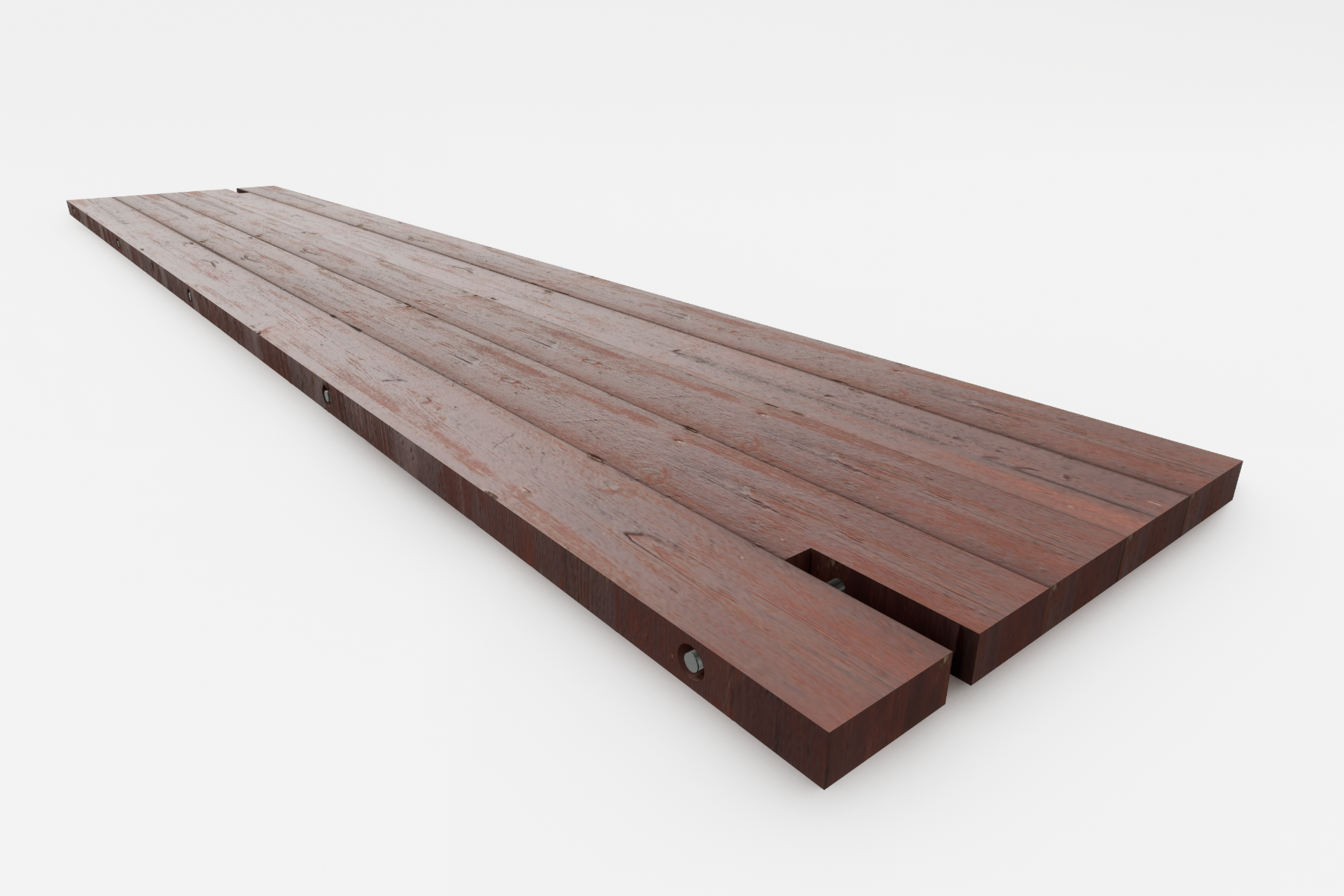
Depth decides how much load each mat spreads, and length decides how wide the road or platform will be. Across the range, mats run from 100mm to 300mm deep, in a choice of lengths.
A deeper mat is the right choice as the plant gets heavier and the ground gets softer. The thinner sections carry vans, dumpers and smaller excavators over ground that is soft on top and firm below. The deeper sections are for heavy tracked excavators, piling rigs and cranes, or for any plant on ground that is wet to depth.
Every mat in the range is the same width, so when mats are laid crossways to the line of travel, the length becomes the width of the road. Shorter mats give a single lane for dumpers and vans. Longer ones give room for wide tracked plant and lorries, or a platform the plant stands on fully.
Ekki mats are also made to order in other depths and lengths for jobs the standard sizes do not fit.
Timber mats for access roads, crane pads and soft ground
Temporary access roads and haul roads
A haul road takes repeated passes of loaded vehicles, so surface wear and the movement of mats under braking and turning matter more than a single peak load. The deepest mats belong where loaded lorries brake, turn or climb, and where the road leaves hard standing and the ground changes underneath.
Crane and piling platforms
Timber crane mats laid as a platform give piling rigs and mobile cranes a level, even base to track onto and work from. A mat road laid for tracking is ground protection. The outrigger pads under a crane are a separate item, specified by the lift plan and the temporary works design for that lift, and they are never taken from the road because they happen to be on site.
Peat, bog and wind farm sites
Peat and blanket bog are often soft too deep to dig out and replace, so a mat road sits on the surface and spreads each axle over as much ground as possible. Longer, deeper mats suit these sites. Ekki is the timber for naturally acidic peat and for wind farm access routes that stay down for the whole construction programme.
Utilities and work near live services
Mats spread the axle loads of plant across a wider area, which reduces the pressure on pipes and cables buried under a route that cannot be moved. Where plant works near live electrical cables, Ekki is the timber to choose for its high electrical resistance, within the safe system of work that the network operator sets for the job.
Timber mats, plastic ground mats or road plates
Timber is the choice for heavy plant and for long-running roads on soft ground. Lighter traffic and open excavations are served by other parts of the ground protection and access equipment range.
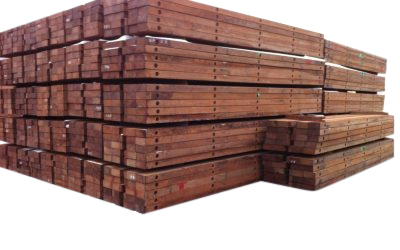
Hardwood mats carry tracked excavators, dumpers, cranes and loaded lorries, and they suit roads that stay down for months. Plastic ground protection mats are lighter and are laid by hand. Heavy duty plastic mats take plant and vehicles over soft ground on sites and at events, and they stack in less space between jobs.
A timber mat is not designed to span an open excavation. To carry traffic across a trench in a road or site route, use steel road plates, which are made to bridge the opening. For pedestrians crossing narrower openings and cable runs, choose trench covers and foot ramps.
Laying a timber mat road
The quantity follows directly from the route. Every mat in the range is 1m wide, so a road laid crossways needs one mat for each metre of route, and the mat length gives the width of the road. Mats for passing places, turning heads and any platform at the end of the run come on top of that count.
On very soft or waterlogged ground, lay a geotextile membrane first, so the mats do not press into the soil and mud does not pump up between them.
The mats are heavy. They are offloaded from the lorry and placed with plant, such as an excavator with suitable chains or a telehandler with forks, and never handled into position by hand. Lay from firm ground outwards, placing each mat from the one already laid. Butt every mat tight against the last across the route, so that wheels and tracks do not catch an edge or drop into a gap.
Popular Categories

Vehicle Access Mats & Track Mats
View Products >

Road Plates
View Products >

Trench Cover Plates
View Products >
Frequently Asked Questions
Yes. Bog mat, timber mat, timber ground mat, bog board and bog pad all name the same thing: heavy hardwood timbers fixed together into a mat for plant to travel or stand on. The name bog mat comes from its use on soft, boggy ground, and crane mat is used for the same mats when they form a crane platform.
Yes. Tracked and wheeled plant are the traffic that timber mat roads are laid for. Spinning a tracked machine on the spot scuffs the surface and can push mats out of line, so drive on and off squarely and turn gradually.
Hardwood mats are reused across many jobs. Between jobs, clean off mud and check each mat for split or broken timbers and for loose or missing fixings, then set damaged mats aside for repair.
Yes. European hardwood bog mats are made mostly from sustainably sourced European oak and beech. Oak and beech are also among the most widely used timbers for temporary roadways, with little disturbance to the ground beneath.
Mats spread the load of plant, so wheels and tracks do not rut grass, verges or reinstated ground. Grass beneath mats is starved of light, so on lawns, sports pitches and parkland, lift the mats as soon as the work allows.