







Warehouse Steps
HERMEQ supplies warehouse steps and mobile safety steps for reaching stock, fittings and plant at height in warehouses, factories, construction sites and offices. The Premium Red Steps run to 16 treads for the top levels of high racking, and the portable steps are the compact option, with one or two treads, for shelves and stores. For vehicles, the lorry access steps and side access trailer steps are built for loading and unloading at the trailer bed. Most types come in a choice of tread count, colour and tread surface, and the taller units roll on wheels and hold still with handlock anchorage or spring loaded castors.
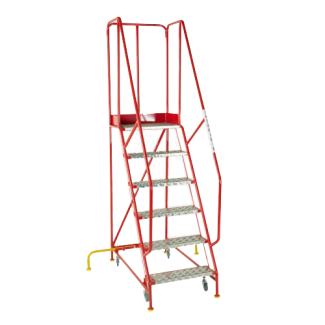
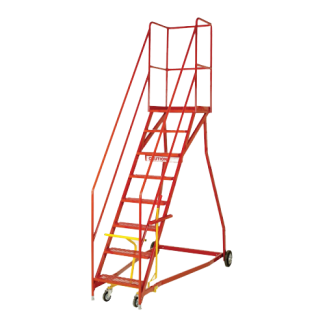
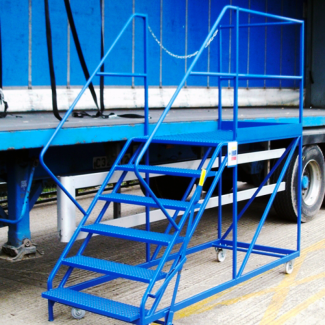
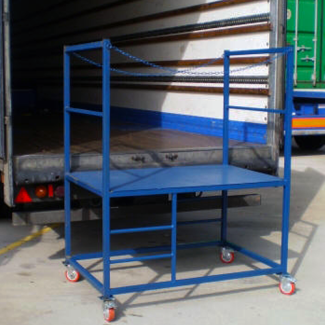
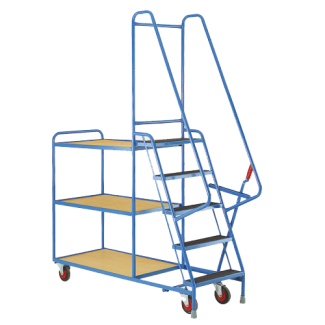
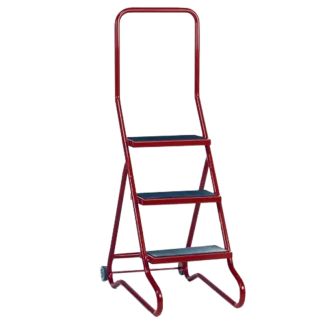
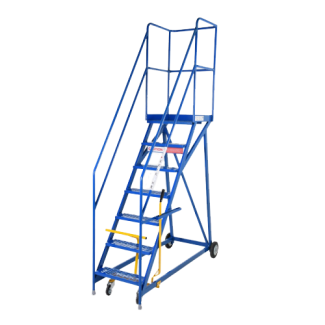
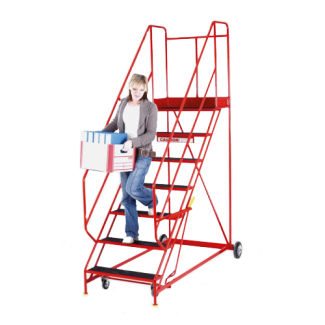
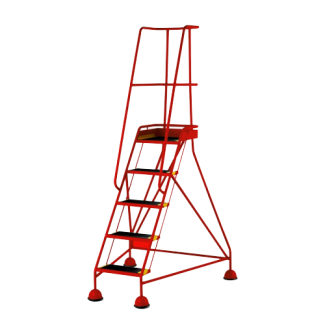
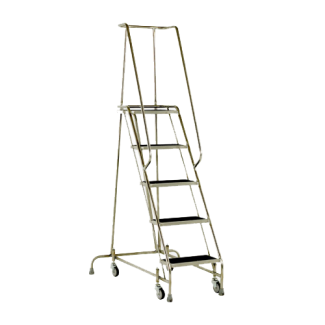
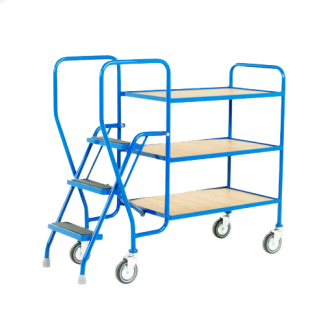
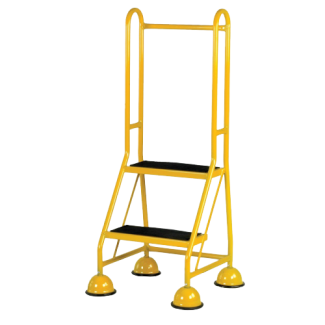
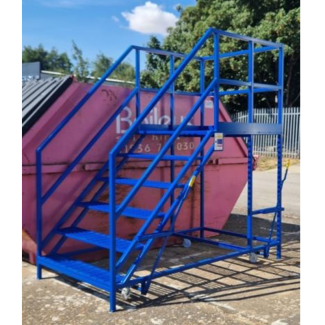
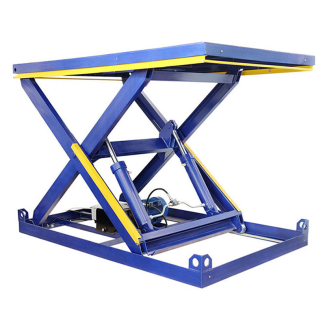
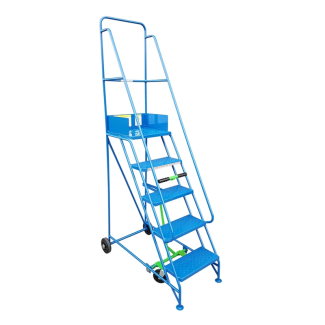
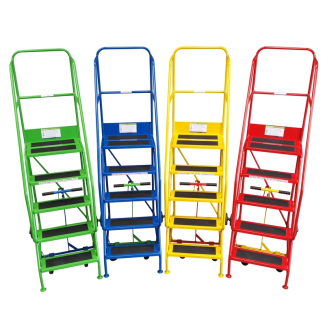
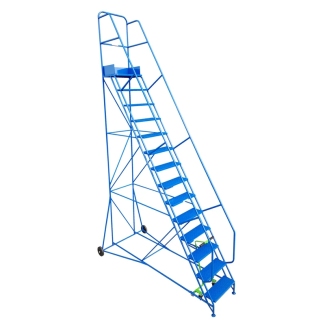
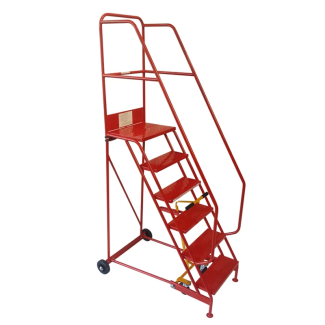
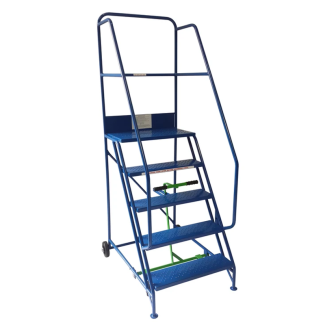
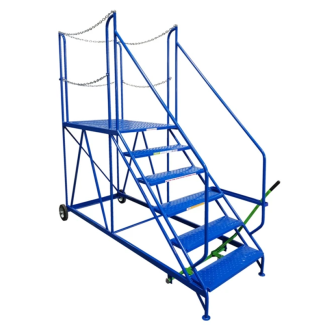
Warehouse steps and mobile steps
Portable steps and two step units
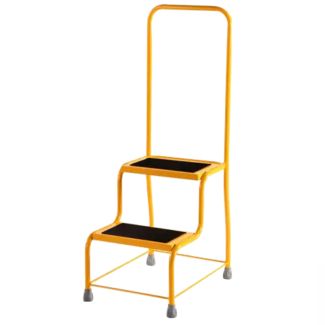
A one or two step unit is the quickest way to reach the top shelf in a stockroom, office, shop, school or hospital store. The portable steps come plain or with a handrail or post rail, and the single sided two step units add a choice of grab rails for a firmer hand hold. Where the steps move from bay to bay all day, the Wheelalong steps are warehouse steps on wheels that one person moves by hand.
Mobile steps with handrails
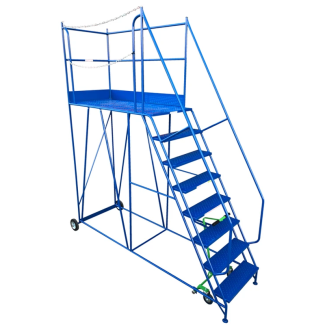
For work a few treads higher, mobile platform steps give the user a flat platform to stand on with a rail within reach. The Classic Steps carry one continuous guard rail around the platform and down both sides, and the mobile step units are a fully welded frame that moves easily around a building. The commercial warehouse steps are built for sustained use on factory and warehouse floors, and the lightweight mobile steps are made for shelving in shops, offices and stockrooms.
For picking, the 3 step tray trolley carries two or three tiers of trays, shelves or baskets on the same frame as the steps, so stock goes straight from the shelf onto the trolley. The 5 step tray trolley is the taller, heavier duty version with handrails on both sides.
Narrow aisle steps
Aisles between racking need a base narrow enough to stand in the aisle and still be moved along it. The spring loaded narrow aisle steps are built for this, as are the narrow aisle mobile steps, which come with a choice of brake types. For taller work in busy warehouses, the heavy duty narrow base steps keep the narrow footprint over more treads. The narrow aisle mobile steps have 450mm wide treads, against 550mm on the lightweight and industrial mobile steps. Before choosing, measure the narrowest aisle, including the point where the steps turn in from the main gangway, and compare it with the base of each set.
Heavy duty and industrial warehouse steps
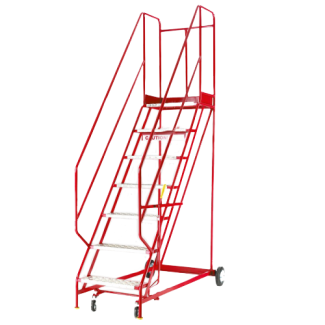
High racking and maintenance on large plant call for taller mobile access stairs on a wider, heavier frame. The Premium Red Steps and the stability base steps are made for years of sustained use in demanding warehouses and factories. The industrial mobile steps cover a similar span of heights for factory floors, warehouses and shops. The heavy duty mobile steps have a larger platform and treads for people handling heavy stock or tools at height.
Easy rise and extra wide steps
Before buying, check whether users will come down the steps carrying stock, because a standard flight is climbed down facing the treads. The easy rise steps are set at a shallower slope so the user can descend facing forward, which suits picking cartons from high shelves. The extra wide mobile steps give more room on each tread and stay stable on taller sets, for factory floors and maintenance work.
Knock down mobile steps
The knock down mobile steps arrive in parts and are assembled where they will be used, for stores and maintenance work in buildings with narrow doors, halls or low beams.

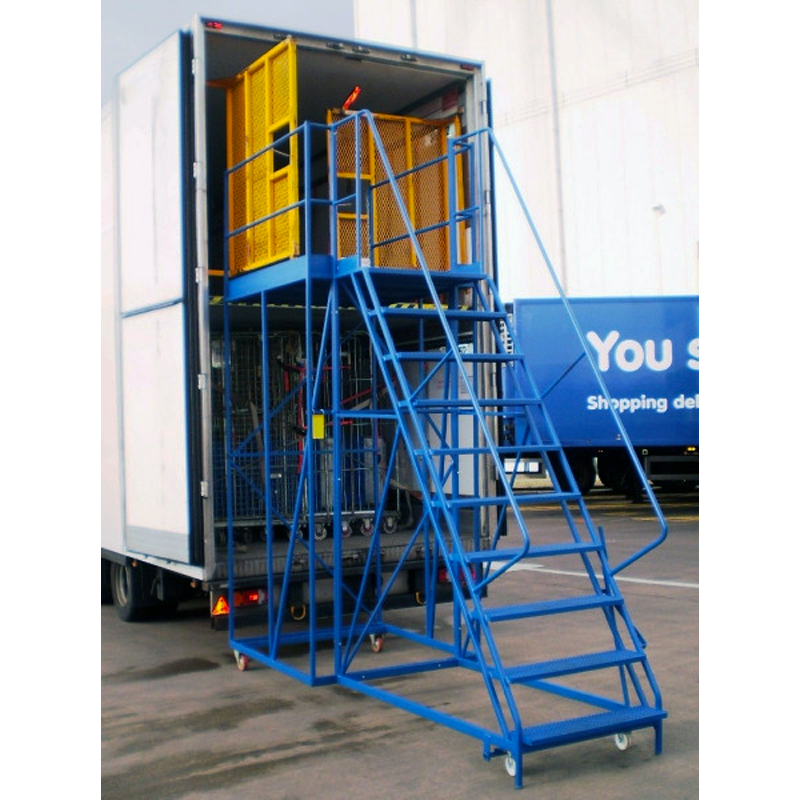
Lorry access steps and trailer steps
Warehouse steps are built for reaching shelves and racking, and for climbing onto a lorry bed or into a trailer the range has steps built for vehicles.
Mobile lorry access steps
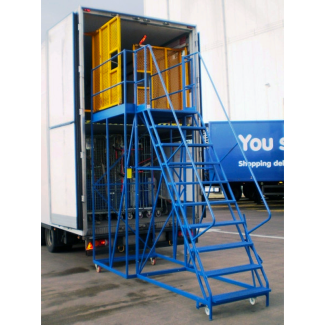
The lorry access steps stand at the rear or side of a lorry, and a double decker version reaches the upper deck of double deck trailers. For heavier goods, the mobile lorry access steps with a large platform give room to stand with the load at the trailer, side exit chains across the open sides and a slope the user can descend facing forward. The mobile access platform steps have a longer platform with a side exit, for loading and unloading vehicles by hand.
Side access trailer steps and unloading decks
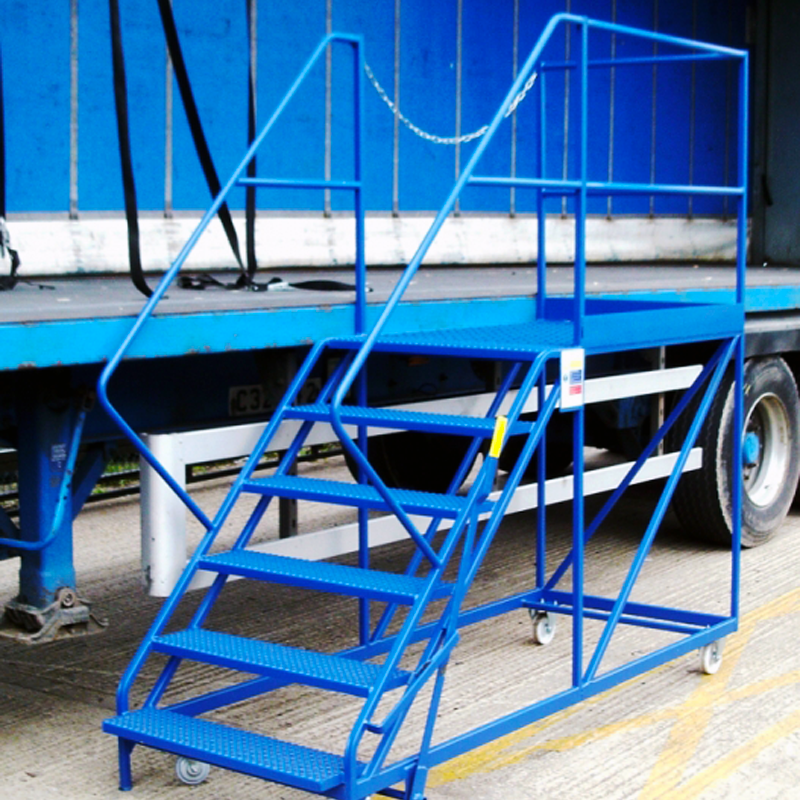
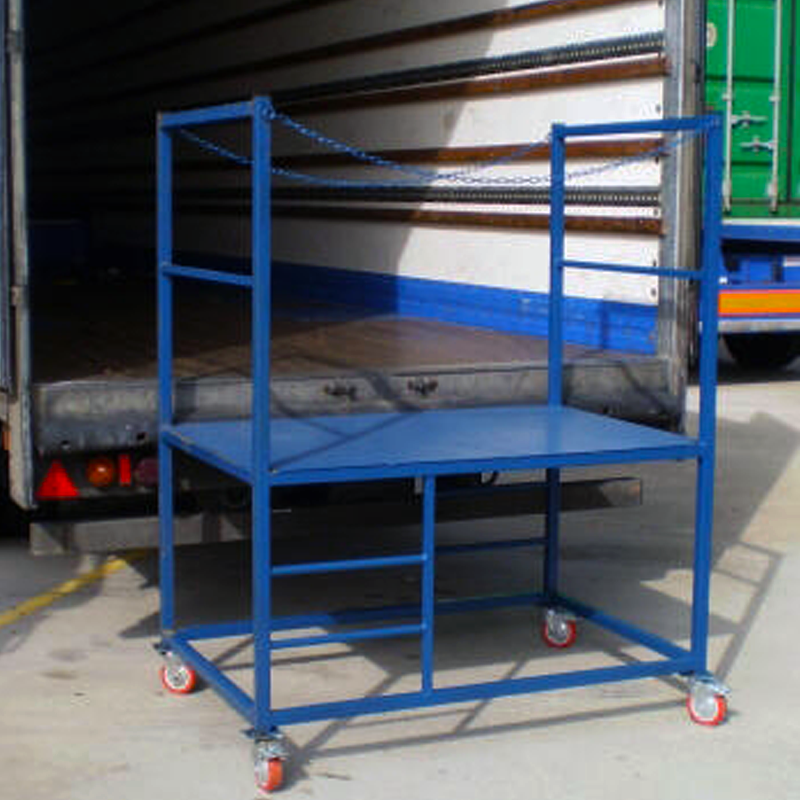
Where a trailer is loaded from the side, the side access trailer steps stand alongside it in lengths from a short unit to a long run down the trailer. Rear loading is the job of the rear unloading decks, which come as a simple or full width platform reached by rungs, or as a platform with integral steps.
Spring loaded, handlock or wheelalong mobile safety steps
Mobile safety steps hold still in one of three ways, and the right one depends on how often the steps move and how long the user stays at each place. On the spring loaded narrow aisle units, the castors are sprung so that the weight of the user presses the frame down until its feet rest on the floor, and with no one on the steps they ride on their castors again. That suits picking aisles, where the steps move a short way between every few picks.
Handlock anchorage, used on the Premium Red, stability base and easy rise steps, is a lever that lowers the front feet firmly onto the floor before anyone climbs, and the steps stay put until the lever is released. It is the better choice for long stays at one bay, such as a stock count or maintenance on one rack. The Wheelalong steps work by tilting: upright, they stand on their base, and tilted back they lift onto their wheels to roll to the next spot.
Taller units add width at the base. Hinged stabilisers fold out on the taller commercial and spring loaded narrow aisle steps, and the stability base and Premium Red steps have their rear wheels mounted outboard of the frame.
Platform height, load capacity and tread surface
Platform height and tread count
Platform height comes from the highest shelf or task the user must reach, and a person standing on the platform works most comfortably with the shelf between waist and shoulder height. Set the platform that far below the top shelf, and choose a set with a tread in hand over one that leaves the user stretching from the platform. The range runs from single steps up to 16 treads, and the platform height of each option is the figure to compare with the shelf.
Safe working load
Load classes across the range run from 150 kg to 500 kg, and the rating covers the user and everything on the steps with them: stock, tools, parts and packaging. Heavy stock handling goes to the heavy duty mobile steps, the large platform lorry access steps and the mobile access platform steps at the top of the range.
Tread surface
The tread surface follows the floor, the footwear and whether the steps will get wet, oily or dusty. Ribbed rubber is quiet underfoot and grips ordinary shoes in offices, shops and dry warehouses, and anti-slip treads give a slip resistant surface for general warehouse use. Punched steel and expanded mesh treads are open, so dirt, water and oil drop through and the soles of work boots bite into the surface, which suits factories, yards and loading bays.
Popular Categories

Tipping Skips
View Products >

Forklift Attachments
View Products >

Lifting Equipment
View Products >
Frequently Asked Questions
Warehouse steps are a fixed stair on a rigid frame, usually on wheels, with a platform at the top and a rail around it, and they stay set up from one job to the next. A stepladder folds, stands on its own feet and is opened and closed for each task.
Yes. On the Classic, Commercial, Premium Red, narrow aisle and heavy duty base steps, the tread count includes the platform at the top, so a 5 tread set has four treads to climb and the platform as the fifth.
The mobile step units come in a stainless steel version, which is the usual choice where steps are washed down or must not corrode, as in food production and other clean areas. Aluminium treads, available on the Commercial, Premium Red and easy rise steps, also resist corrosion and wipe clean.
The Safety, Health and Welfare at Work Act 2005 requires employers to provide safe equipment and the training to use it. The Safety, Health and Welfare at Work (General Application) Regulations 2007 set the duties for work at height, which includes work from mobile steps: the work is planned, suitable equipment is chosen for the task and the people using it are trained. The Health and Safety Authority publishes guidance on work at height, and on construction sites the Safety, Health and Welfare at Work (Construction) Regulations 2013 also apply.
Before climbing, check that the frame is not bent or cracked, that every tread is secure with its surface intact, and that guard rails and handrails are tight. Test the brake, handlock or spring loaded castors so the steps stand still on the floor, and look for damaged wheels, missing floor pads or loose fixings. The floor should be level, firm and free of spills, and steps found damaged should be taken out of use until repaired.