







Forklift Attachments
Forklift attachments mount on the forks of a standard truck and let one machine sweep a yard, lift from a hook, tip waste, handle drums and bags or raise a work platform. The HERMEQ range includes forklift road sweepers, access platforms, hooks, jibs and scissor grabs, together with self-tipping skips and drum handling attachments. Each one fits onto the existing forks with its own fixings, so the truck changes job without a second machine. The range is used in construction and groundworks, in yards, depots and warehouses, in waste handling, and by facilities teams and local authorities.
-
-
-
-
-
-
-
-
-

-
-
-
-
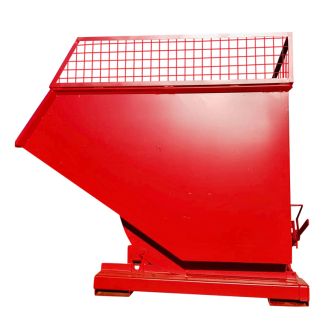 Advanced Forklift Self-Tipping Skips - Mesh ExtensionAs low as €1,037.80 €1,276.49
Quick 5 Day Delivery
-
-
-
-
-
-

-
-
-
-
Forklift lifting attachments: fork extensions, hooks and jibs
Lifting attachments do one of two jobs: fork extensions carry a long load on the forks, while hooks, jibs, poles and grabs hold a load below or around them so it needs no pallet. Rated loads across the hook and jib range reach 5,000 kg.
Fork extensions
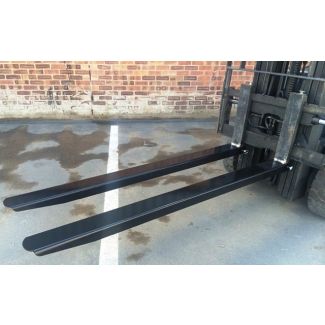
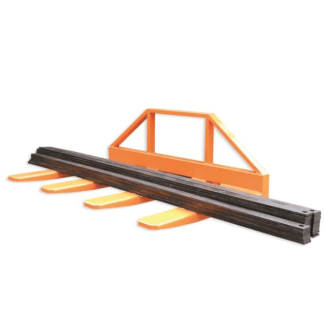
Extensions slide over the parent forks for the occasional long or wide load, such as timber, steel sections or packs of board, and come off again for normal pallet work. They are sized to the truck's fork section, with fork extensions for 100 x 50 forks and fork extensions for 150 x 60 forks. For heavier use on the larger section there are heavy duty fork extensions. Choose the shortest extension that carries the load, since a longer one moves the load centre further out.
Fork mounted hooks
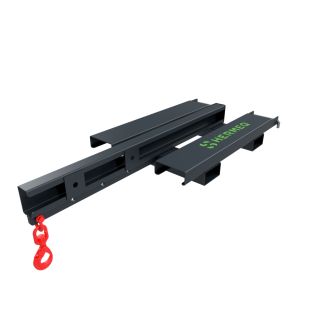
A hook lifts a slung load at short reach, such as a bundle of pipe in chains, a bag or a fabricated part with no pallet access. The adjustable forklift hook and the economy adjustable hook slide along the fork, so the hook sits close to the carriage for heavier lifts and further out where the load needs more reach. The fork lifting hook locks onto the forks for unpalletised loads.
Forklift jibs
A jib carries the hook further out and higher than a fork hook can, which is the difference that matters when a load has to be lifted over an obstruction, into a bay or onto a trailer bed. The forklift mounted jib has a set of fixed lifting centres, and the forklift extending jib adds more positions and more reach. The low profile jib and low profile extending jib keep the boom low on the forks for work where space is limited, while the articulated extendable jib lifts at an angle for tall and awkward loads.
Forklift poles and carpet booms
A pole slides through the core of a roll or coil, so carpet, floor coverings and coiled material are carried without slings or a pallet. Choose a forklift pole or carpet boom by the weight of the roll and how far along the pole it will sit, because each pole is rated at a stated distance from the carriage.
Scissor grabs and well ring lifters
A forklift scissor grab is a mechanical grab that closes on the load as it lifts, so blocks, kerbs and stone are picked up without fitting slings. The scissor lifting grab is the lighter model, rated at 1800 kg. The well ring lifter does the same mechanical job for concrete well rings on drainage and groundworks.

Forklift tipping skips and bin tippers
The choice follows the waste routine: what the waste is, where it is tipped and how often the container is emptied.
Self-tipping skips
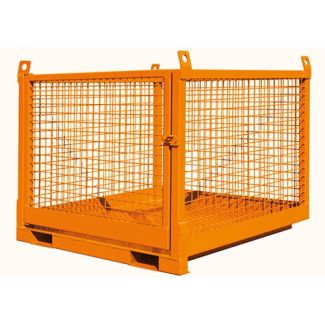
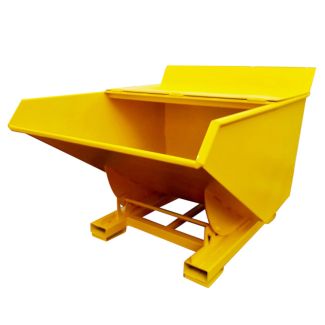
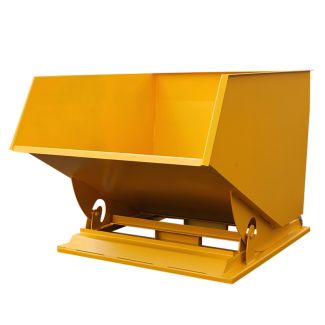
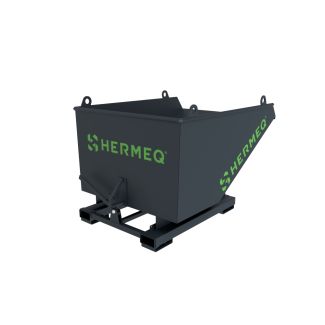
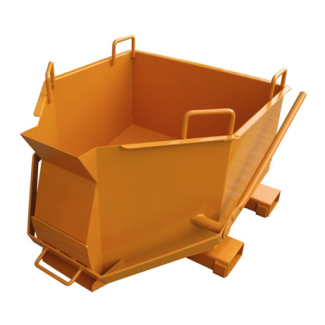
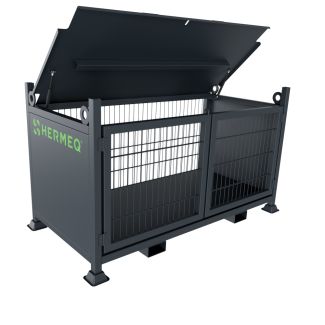
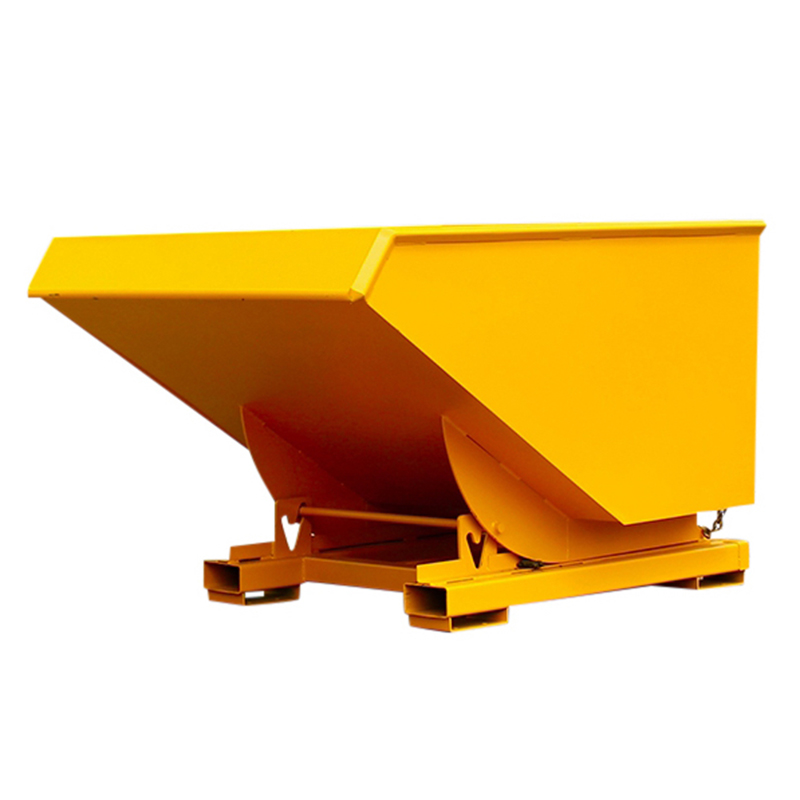
Forklift self-tipping skips carry rubble and general site waste, tip forward when released and right themselves for the next load. Open-top skips suit loose material that is tipped often. Lidded self-tipping skips hold the contents in while the truck travels, and self-tipping skips with a mesh extension take bulky, light waste and stop debris falling onto the driver or people nearby. The full choice of sizes, crane lift skips and heavy duty tippers is in the tipping skips range.
Bottom empty skips
A bottom empty skip opens through its base, so waste drops straight into a larger skip or bin and the driver stays in the cab.
Skip compactors
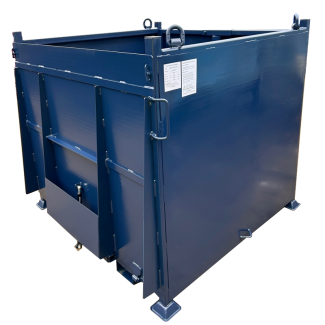
A skip compactor presses waste down inside a skip already on site, so each skip holds more before it goes for collection.
Wheelie bin tippers, lifters and stackers
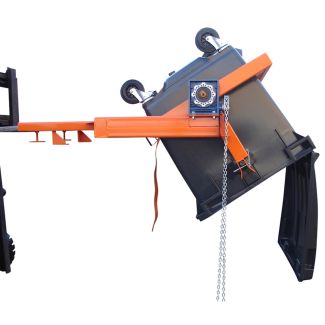
The wheelie bin tipper lifts and empties large four-wheeled bins fitted with side trunnions, worked by chain and gearbox from ground level. The wheelie bin lifter lifts, moves and empties smaller two-wheeled bins with a hand crank. The wheelie bin stacker moves nested stacks of bins, or a single stack of large ones, between the yard and the lorry.
Drum and bulk bag handling attachments
Drum attachments are chosen by whether the drum only has to move or also has to be turned, and bag attachments by whether the bag is being carried or filled.
Rim grips and drum lifters
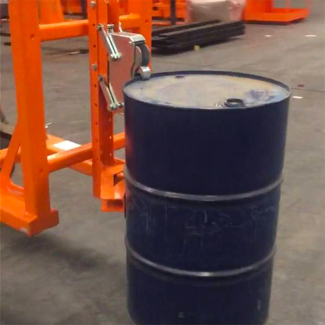
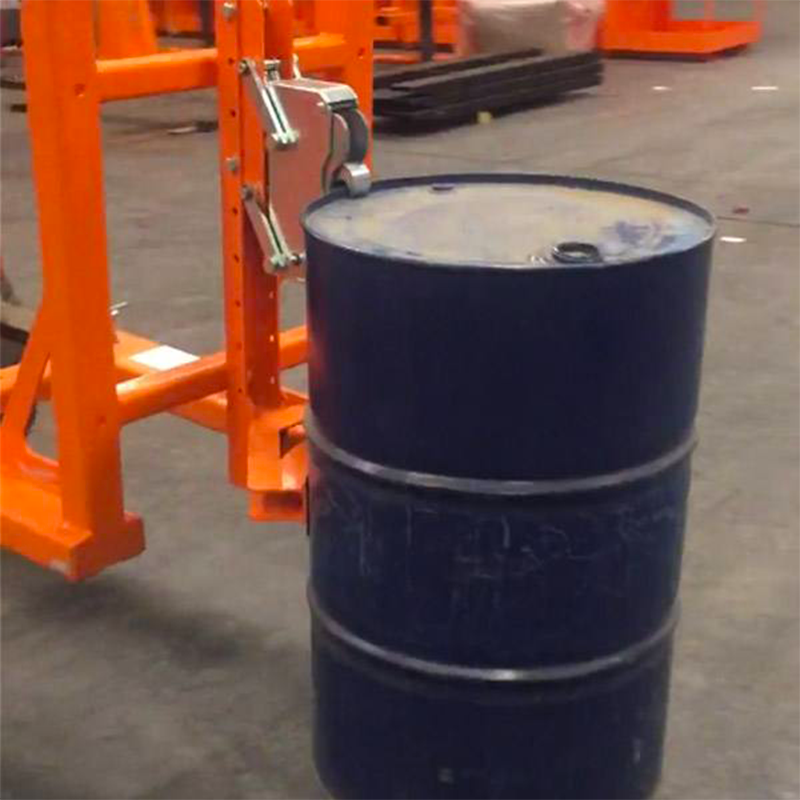
The rim grip drum lifter takes hold of an open or closed top drum by its rim automatically, which suits frequent moves with the driver staying on the truck. The forklift drum lifter carries one or two drums upright and is aimed at small and medium volume users of steel drums. For plastic drums, choose the rim grip or a tilter, which are listed for both plastic and steel.
Drum tilters
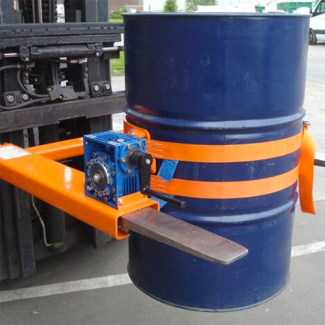
The forklift drum tilter moves a drum and turns it under control by crank handle or looped chain, and works where space is tight. The crane drum tilter is a forklift mounted crane version that lifts the drum from above.
Bulk bag and sand bag carriers
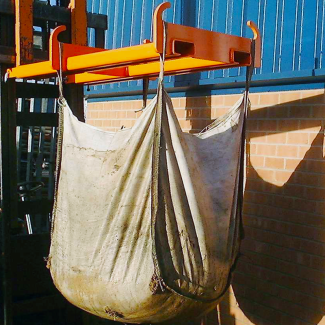
The bulk bag carrier and sand bag carrier lift full or part-filled bags by their loops.
Bag hopper
The fork mounted bag hopper holds an empty bulk bag open on four hooks over a pallet while it is filled, and its built-in fork sleeves let the truck move it to wherever filling takes place.
Forklift sweepers, snow ploughs and gritters
The truck already on site can keep yards, car parks and footpaths clean through the year and clear in winter with these attachments.
Forklift road sweepers
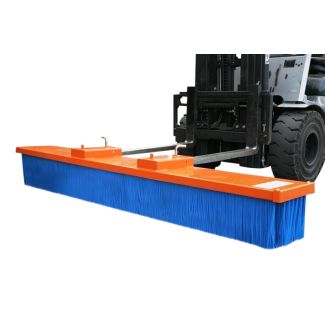
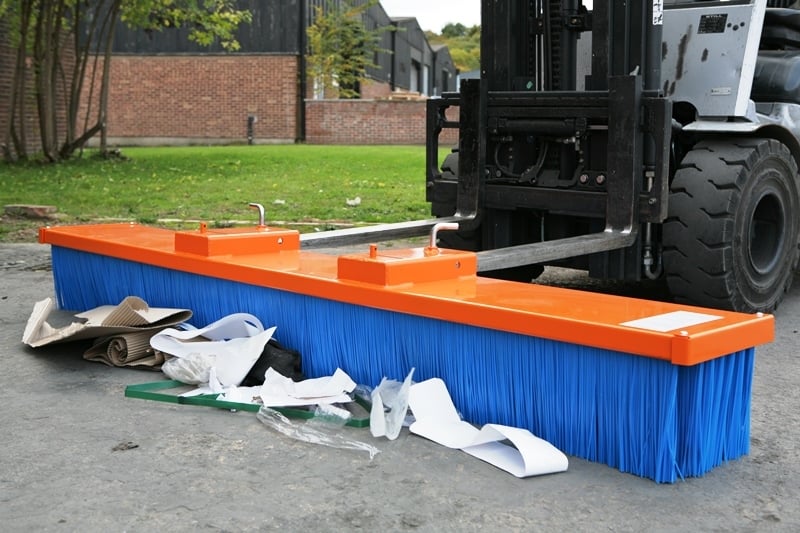
A forklift road sweeper pushes loose granules such as sand and topsoil into a pile across yards, roads, footpaths and warehouse floors, and its nylon brushes are interchangeable. The eco forklift sweeper suits lighter work where the volume and weight of material are low, while the standard sweeper carries more rows of brush for heavier sweeping.
Sweeper collector
The sweeper collector sweeps material up, holds it and dumps it, so sweepings go straight into a skip and are not left in a pile to shovel.
Fork mounted magnet
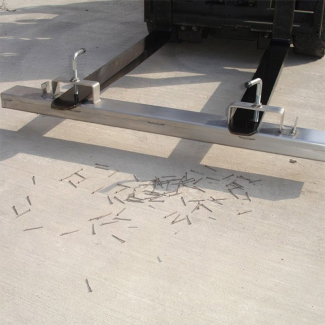
A fork mounted magnet picks up nails, screws and metal offcuts from yards and access roads before they reach a tyre. It can hang from the frame of the road sweeper, so one pass sweeps the surface and collects the metal.
Forklift snow plough
The forklift snow plough clears freshly fallen or compacted snow from pedestrian and vehicle routes.
Hydraulic gritter
The hydraulic gritter spreads salt or grit from a stainless steel disc, with the spread width set by hand to suit the route.
Forklift access platforms and man cages
A cage or basket for a forklift is chosen by how many people it carries, how they get in and how it is stored between jobs.
Forklift access platforms and man cages
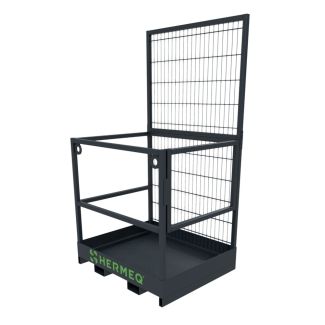
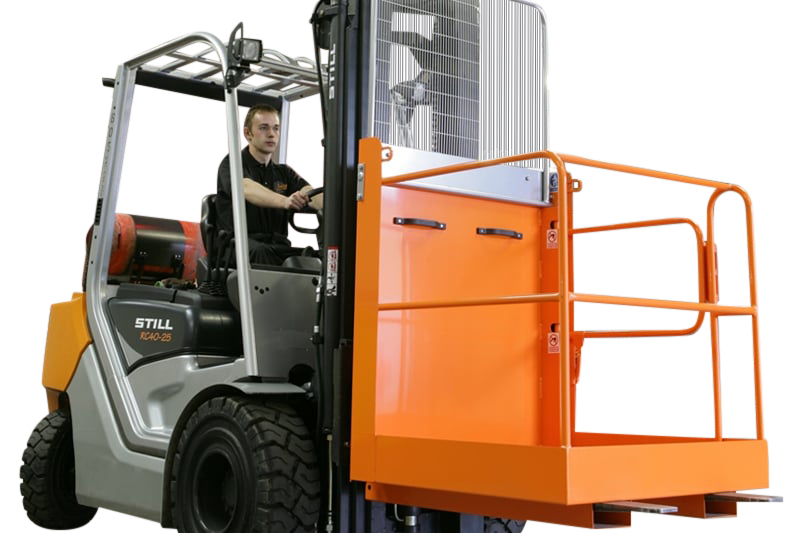
The forklift access platform and the forklift man cage each carry up to two people for maintenance, inspection and stocktaking at height.
Under the Safety, Health and Welfare at Work (General Application) Regulations 2007, people are lifted in equipment made for that purpose, such as these cages secured to the truck, and each lift is planned and supervised.
Folding access platform
The folding access platform carries one person and collapses when not in use, which suits a site or store where floor space is short.
Crane and fork mounted access cage
The crane and fork mounted access cage lifts on the forks of a standard truck or slung on chains from a crane, so one cage covers both machines.
Forklift scoops, concrete skips and carrying attachments
These attachments let the forklift move loose material and goods that will not sit securely on bare forks.
Scoop buckets
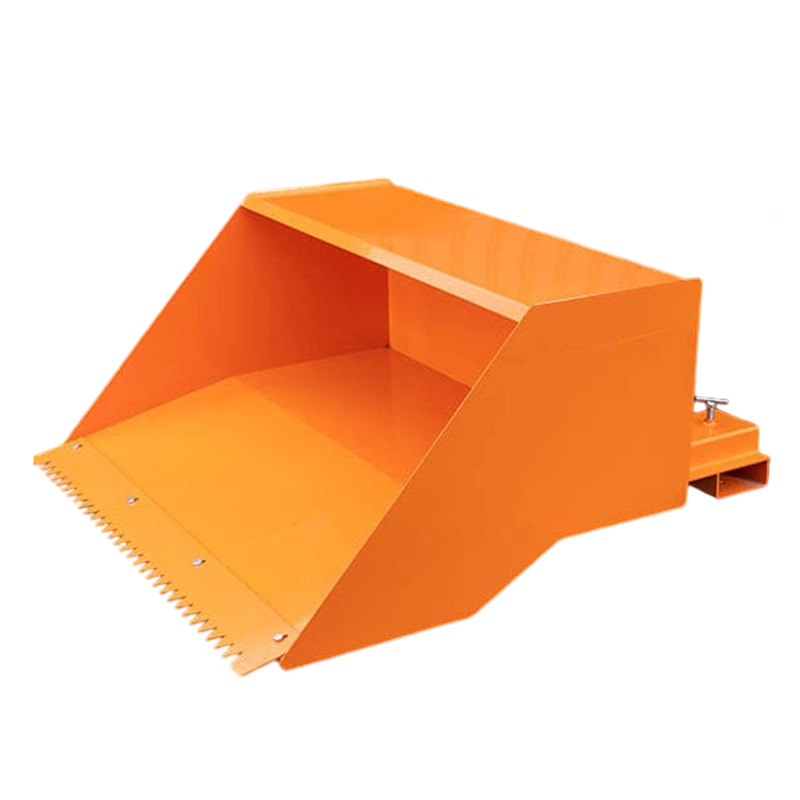
A forklift scoop bucket turns the truck into a light loading shovel for sand, gravel, topsoil and swept material. The underslung scoop sits below the forks, which brings the load closer to the truck, shortens the combined length and suits tight spaces.
Forklift concrete skip
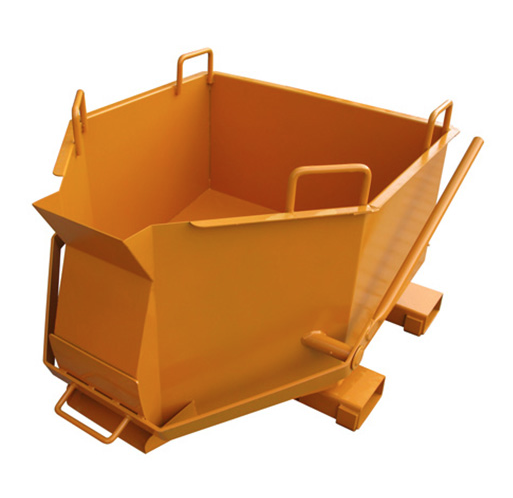
The forklift concrete skip carries concrete from the mixer to the pour and discharges it through a side outlet opened by a lever.
Four fork attachment
The four fork attachment puts four tines under a load, so wide packs and long bundles are supported across their width and not balanced on two forks.
Materials and goods cages
A materials lifting cage holds tools and small materials that would fall from a pallet, and the forklift and crane lifting crate keeps heavy tools and equipment shut away behind full width doors and a secure lid. For heavier loads, the goods carrying cages lift by crane or forklift, and the forklift telehandler cage moves material by forklift, Teleskip or crane with lashing points to hold it. The gas bottle fork lift support holds gas bottles on the forks, and the roll cage and pallet lifter loads roll cages onto and off articulated vehicles.
Fork sizes, fixings and rated capacity
Forklift attachments are not universal: each one is built around a fork size and a fixing method, and each takes some of the truck's lifting capacity.
Fork section and fork spread
Each listing gives the largest fork section the attachment's pockets accept, and across the range these run from 100 x 50 mm to 150 x 60 mm. Measure the width and thickness of the truck's forks at the heel and compare them with the listing before ordering. Fork spread matters as much, because the pocket centres are fixed and the forks have to be set to match them, and the fork length has to suit the pocket length so the attachment sits fully on the forks.
Fixing the attachment to the forks
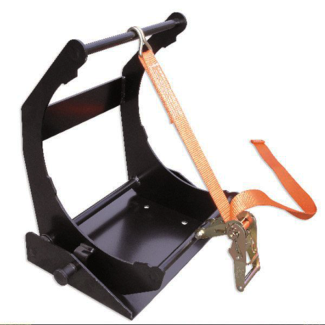
Attachments are held on by heel pins, twist screws, thumbscrews or a ratchet strap, depending on the design, and some use a different fixing depending on fork length.
Capacity with an attachment fitted
An attachment reduces what the truck can lift in two ways. Its own weight counts as part of the load, and its centre of gravity, with any load hung from it, sits further forward than a pallet on bare forks, so the load centre moves out. On a jib the rated load falls as the hook moves outward, and the listings give the rating at each lifting position. Work from the truck's capacity plate and the attachment's rating at the position you will use, never the headline figure, and ask the truck's supplier for a revised capacity rating where the attachment moves the load centre well beyond the plate.
Popular Categories

Tipping Skips
View Products >

Lifting Equipment
View Products >

Telehandler Attachments
View Products >
Frequently Asked Questions
Hooks, jibs, grabs, access platforms and other attachments that lift a load or people are lifting equipment. Under the Safety, Health and Welfare at Work (General Application) Regulations 2007, a competent person thoroughly examines a forklift and its interchangeable attachments at least every 12 months, or every six months where they are used to lift people, and lifting accessories such as chains and shackles at least every six months. Each examination is recorded in a written report, usually on the HSA's GA1 form, kept with the equipment's records.
The Safety, Health and Welfare at Work Act 2005 requires employers to give workers the instruction and training the work needs. In practice the operator is trained on the truck and then instructed on each attachment: how it fixes on, what it is rated to carry and how it changes the way the truck handles.
Some forklift attachments also fit a telehandler. The fork lifting hook and the low profile jib are listed for both machines, provided the telehandler's forks match the attachment's fork section and spread. Attachments made for telehandlers are in the telehandler attachments range.
In this range, the hydraulic gritter is the attachment listed as running from the truck's hydraulic supply, so the truck needs an auxiliary hydraulic service to drive it. Most of the other attachments work mechanically, by gravity, a lever, a crank handle, a chain or a gearbox, and need nothing from the truck beyond the forks.
Before each use, check that the fixings are fitted and tight, that the safe working load marking is legible, and that there are no cracks, bent sections or distorted fork pockets. On hooks and jibs, check that the safety catch closes and that chains and shackles are sound.